












































Can You Attend Ardh Kumbh Without Religious Belief?
Yes, you can attend Ardh Kumbh as a non-believer. Discover the cultural, social, and human experience of the world's largest gathering beyond faith.

The Open Gate - No Belief Required at the Entrance
Let me start with something simple and practical. When you walk toward the Ardh Kumbh grounds in Haridwar or wherever the Kumbh is happening, you will not see a ticket booth asking for your religious affiliation. You will not see a sign that says "Hindus Only Beyond This Point." You will not be stopped by a guard who asks, "Do you believe in reincarnation? Do you accept the authority of the Vedas? Do you perform sandhya vandanam every morning?"
None of that happens.
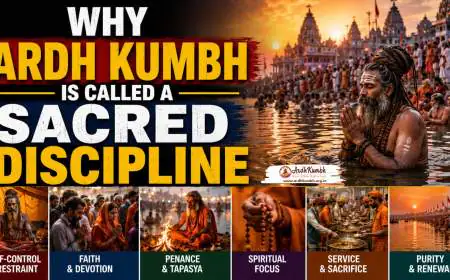
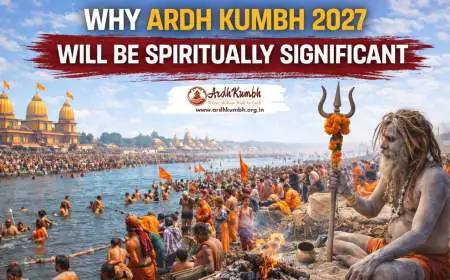
The Ardh Kumbh is a public gathering. It happens on public land. It is organized with massive support from the government of India, which is a secular state. The crowds include Hindus of every caste and sect, yes. But they also include Sikhs, Jains, Buddhists, Muslims, Christians, and people with no religion at all. They include foreign tourists who are just curious. They include journalists and researchers and photographers who are there to document, not to worship.
The gate of Ardh Kumbh is metaphorically and literally open to everyone. The only thing you need to bring is respect. Not belief. Respect. Do not mock what others hold sacred. Do not treat the Sadhus like zoo animals. Do not step over someone who is praying. Do not take photos of people bathing unless you have asked or you are at a respectful distance. That is it. That is the entire requirement.
Trending Guides Now
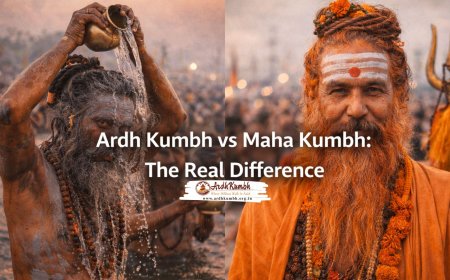
Ardh Kumbh vs Maha Kumbh: The Real Difference Explained
Read Guide →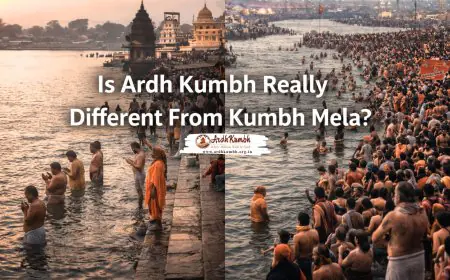
Is Ardh Kumbh Really Different From Kumbh Mela?
Read Guide →
How Many Days Are Actually Enough for Ardh Kumbh?
Read Guide →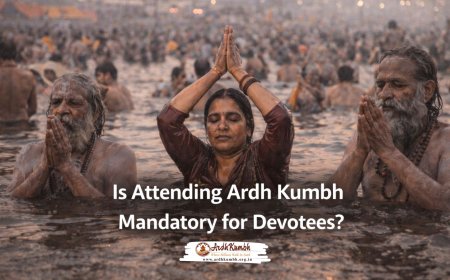
Is Attending Ardh Kumbh Mandatory for Devotees?
Read Guide →
Best Routes to Reach Haridwar for Ardh Kumbh Mela
Read Guide →
Essential Rules Every Ardh Kumbh 2027 Pilgrim Must Follow
Read Guide →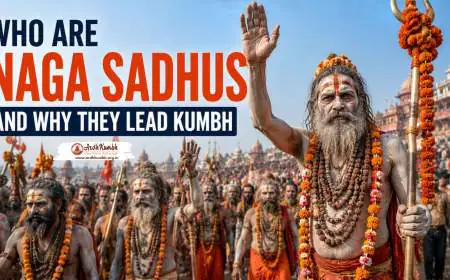
Who Are Naga Sadhus and Why They Lead Kumbh
Read Guide →
Biggest Crowds Ever Recorded at Ardh Kumbh
Read Guide →So if you have been hesitating because you thought Ardh Kumbh was only for believers, let that hesitation go right now. You are welcome. The Ganga does not discriminate. Neither does the Mela.
The Atheist's Pilgrimage - Finding Meaning Without Metaphysics
Here is something that might surprise you. Some of the most profound experiences at Ardh Kumbh are available to atheists precisely because they are atheists. Let me explain.
Religious believers come to Kumbh with a lot of baggage. They have expectations. They want to feel God. They want to wash away sins. They want to earn punya for their next life. They are constantly measuring their experience against what they were told it should feel like. "Am I feeling holy enough? Is my devotion deep enough? Did I say the right mantras?"
You, the non-believer, have none of that noise. You come with empty hands and an empty mind. You are not trying to feel anything specific. You are not checking boxes on a spiritual to-do list. You are just... there. Watching. Breathing. Walking. Sitting by the river.
And here is the beautiful irony. That emptiness is exactly what the mystics have been trying to achieve for thousands of years through meditation and renunciation. The goal of so much spiritual practice is to empty the mind of expectations, desires, and judgments. To just be present. To see things as they are, not as your beliefs tell you they should be.
As a non-believer at Ardh Kumbh, you get that emptiness for free. You do not have to meditate for twenty years to achieve it. You just have to show up without trying to force any religious meaning onto what you see.
What you will see, if you are paying attention, is humanity at its most raw and real. Millions of people doing something difficult - traveling long distances, sleeping on the ground, standing in long lines, enduring cold water - all because they believe it matters. You do not have to share their belief to be moved by their faith. You do not have to agree with their theology to admire their commitment.
That admiration, that respect, that wonder at human devotion - that is a meaningful experience. And it requires exactly zero religious belief to feel it.
What You Actually Get to Experience as a Non-Believer
Let me give you a practical breakdown of what Ardh Kumbh offers to someone who does not believe in anything supernatural. Because I want you to see that the value is not all theological. Much of it is human, cultural, sensory, and psychological.
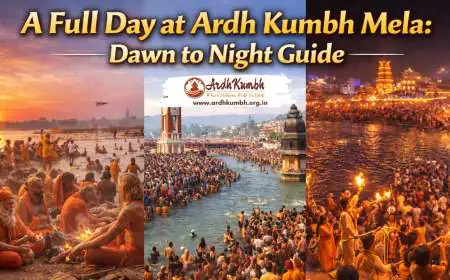
The Sensory Overload. Ardh Kumbh is one of the most intense sensory experiences available on planet earth. The sounds - chanting, bells, splashing water, shouting vendors, crying babies, laughing pilgrims. The smells - incense, marigolds, sweat, river water, cooking food, wood smoke. The sights - a sea of moving bodies, saffron robes, floating lamps, morning mist over the water, the sun rising like a blessing. Even if you believe nothing, your senses will be overwhelmed in the most glorious way possible.
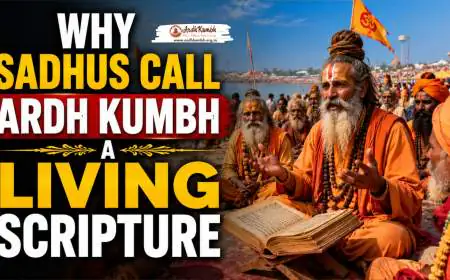
The Human Spectacle. You will see Sadhus who have not cut their hair for decades. You will see families bathing together across three generations. You will see disabled pilgrims being carried on stretchers so they can touch the water. You will see wealthy businessmen sitting next to homeless beggars. You will see humanity stripped of its usual social masks. This is not religious instruction. This is human observation at its most fascinating.
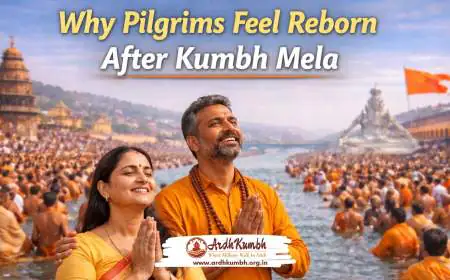
The Physical Challenge. Taking a dip in the Ganga during Ardh Kumbh is not a spa treatment. The water is cold. The crowd is thick. The current is real. Getting in and out requires courage and coordination. Doing it alongside millions of other people creates a strange camaraderie. You do not need to believe the water washes away sins to feel alive after plunging into it. You do not need to believe in salvation to feel accomplished.
The Quiet Moments. Between the chaos, there are moments of unexpected stillness. Sitting on the ghats at 4 AM, watching the river flow, watching the stars fade, watching the first light touch the water. In those moments, you are not a believer or a non-believer. You are just a human being on a planet with a river. And that is enough. That is more than enough.
The Culture Shock That Changes You Anyway
Let me tell you something honest. Even if you arrive at Ardh Kumbh as a completely convinced atheist, something will shift inside you by the time you leave. Not because you will suddenly start believing in Hindu gods. But because cultural immersion at this scale rewires something in your brain.
You will watch a mother bathe her disabled son in the Ganga with tears streaming down her face. You will not need to believe that the water heals to be moved by her love. You will watch a old man with no teeth and no money and no family, sitting alone on the steps, smiling like he has just seen the face of God. You will not need to share his vision to respect his peace. You will watch tens of thousands of people, from every corner of India, from every caste and class, all cooperating to make this impossible thing happen. You will not need to believe in divine intervention to be impressed by human coordination.
These experiences will not make you religious. But they might make you less certain that religion is nothing but superstition and control. You might start to see that faith serves real human needs - the need for meaning, for community, for ritual, for something bigger than yourself. You might start to respect what you used to dismiss.
That shift is not conversion. It is education. It is growth. It is what happens when you stop judging from a distance and start experiencing up close. And it is available to every non-believer who walks into Ardh Kumbh with open eyes and an open mind.
Respectful Observation - How to Be a Good Non-Believer
Let me give you some practical advice because being a non-believer at Ardh Kumbh comes with responsibilities. You are a guest in someone else's sacred space. Even if you do not consider it sacred, they do. And decency requires that you honor that.
Do not debate people about their beliefs. This is not the time or place. No one came to Kumbh to defend their theology to a skeptical foreigner. Keep your questions about belief to yourself. If someone asks you what you believe, you can say "I am here to learn" or "I am just watching" or "I am not religious but I respect your traditions." These are honest answers that do not start fights.
Do not take intrusive photos. Some Sadhus do not mind being photographed. Some will pose for you. Some will even ask for money in exchange. Others will wave you away or cover their faces. Respect that. If someone says no, put your camera down. And never, ever take photos of people bathing at close range. That is a violation of their dignity, even if they are in a public space.
Do not mock or imitate. You will see things that look strange to you. Matted hair. Ash smeared on bodies. Naked sadhus. Animal sacrifices (rare but present). Extreme ascetic practices. You might feel shock or even disgust. That is fine. Feel what you feel. But do not laugh. Do not point. Do not imitate for your friends back home. These practices are serious to the people doing them. Your discomfort is your problem, not theirs.
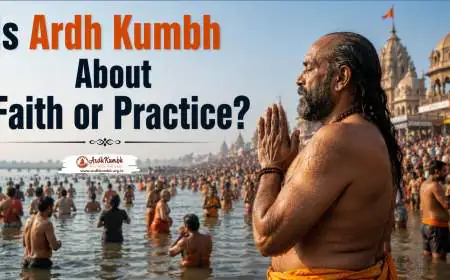
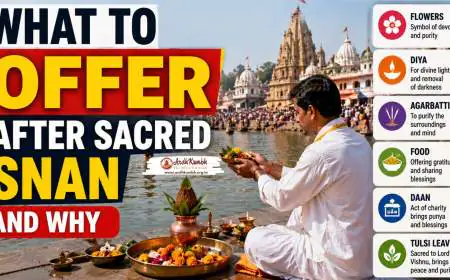
Do participate respectfully. You can take a dip in the Ganga if you want. Many non-Hindus and non-believers do. Just follow the basic etiquette: remove your shoes before stepping onto the main ghat areas, keep your clothes modest, do not splash water aggressively, and do not litter. You can also light a diya (lamp) and float it on the river. You can receive prasad (blessed food) and eat it. You can sit in a bhajan (devotional singing) session and just listen. No one will force you to chant or pray.
Following these simple rules will keep you welcome and safe. Breaking them will make you that person everyone complains about later. Do not be that person.
The Academic and Anthropological Goldmine
Let me speak directly to the researchers, students, writers, and curious minds reading this. Ardh Kumbh is an anthropological treasure that has no parallel anywhere in the world. Where else can you observe fifty million people practicing a single tradition in a single place at a single time? Where else can you see caste, class, region, language, and gender all intersecting in real time? Where else can you study ritual behavior, crowd psychology, temporary urbanism, and religious economics all in one field site?
You do not need religious belief to be a good researcher. In fact, many anthropologists and sociologists argue that belief can actually get in the way of clear observation. If you are too devout, you might see only what confirms your faith. If you are too hostile to religion, you might see only what confirms your skepticism. The best researchers are the ones who can step back, observe, document, and analyze without forcing their own worldview onto the data.
Ardh Kumbh offers you a living laboratory of human behavior under extreme conditions. How do strangers cooperate to manage crowds? How do rituals reduce anxiety? How do donations create social bonds? How do temporary communities form and dissolve? These are scientific questions, not theological ones. And you can explore them all at Ardh Kumbh without believing a single supernatural claim.
So if you have been avoiding Kumbh because you thought your academic skepticism disqualified you, think again. Your skepticism might be your greatest research asset. Pack your notebook, charge your recorder, and go. The data is waiting.
The Photographer's Paradise Beyond Belief
Let me talk to the photographers now because you have a special relationship with Ardh Kumbh. You do not need to believe anything to understand that this place is a visual feast unlike any other on earth.
The light at Kumbh is ridiculous in the best way. Morning mist rising off the Ganga with the sun breaking through. Evening aartis with flames reflecting on wet stone and moving water. The colors - saffron, white, red, pink, orange, gold - all set against the deep blue-grey of the river and the sky. The faces - wrinkled, smooth, joyful, tear-streaked, exhausted, ecstatic. The movement - bodies dipping, hands rising, flags waving, processions snaking through narrow paths.
Every photographer dreams of images like these. And Ardh Kumbh gives them to you by the thousands, every single day, for weeks on end.
But here is the catch. You must be ethical. You must ask permission when you are close. You must use a long lens when you are far. You must put the camera down sometimes and just be there. The worst Kumbh photographs are taken by people who never stop shooting, who never look up, who treat pilgrims like props rather than people. Do not be that photographer.
If you shoot with respect, if you engage with your subjects, if you share your images with them when they ask to see, you will leave Ardh Kumbh with a portfolio that will make your career. And you will leave with stories that no religious belief could have given you. Just human stories. Just light and shadow and water and grace.
The Unbelievable Gift of Not Believing
Let me end this with a confession. I have spoken to many non-believers who attended Ardh Kumbh. And almost all of them said something similar. They went expecting to feel like outsiders. They went expecting to feel bored or irritated or uncomfortable. They went because a friend dragged them or because they were in India anyway or because they wanted good photos.
And almost all of them came back... different.
Not converted. Not born again. Not suddenly buying guru calendars or chanting Gayatri mantra every morning. Just... softer. More patient. More willing to believe that other people's beliefs, however strange they seem, might be serving a real purpose. Less certain that their own skepticism made them superior to the faithful.
That is the gift of Ardh Kumbh for the non-believer. It does not ask you to surrender your mind. It does not ask you to pretend you believe things you do not. It just asks you to show up. To watch. To listen. To feel the cold water on your skin and the warmth of the morning sun and the strange, inexplicable peace that settles over you when you finally stop thinking and start being.
You can call that psychology. You can call that biology. You can call that nothing at all if you prefer. The Ganga does not care what you call it. She flows anyway. And if you stand at her edge long enough, without belief but also without resistance, something will flow through you too. Something that does not need a name.
That is what Ardh Kumbh offers the non-believer. Not salvation. Not enlightenment. Just a chance to stand in the largest gathering of humanity on earth and realize, maybe for the first time, how small your skepticism really is. And how big your heart could be if you let it.
Go. See. Feel. Do not believe a thing. Come back changed anyway.
Frequently Asked Questions