











































































Why Ardh Kumbh 2027 Is Not Just Another Kumbh Mela
Discover what makes Ardh Kumbh 2027 historic: first-time royal baths for all Akharas, massive infrastructure, and political significance. A pilgrimage like never before.

The Upgrade: Ardh Kumbh Becomes Purna Kumbh
Historically, the Ardh Kumbh (held every six years at Haridwar and Prayagraj) was a slightly quieter, smaller affair than the Purna Kumbh (held every twelve years). The Shahi Snan processions—where the Akharas march to the river on elephants and horses—were often scaled back.
Not in 2027. Chief Minister Dhami has announced that the 2027 Ardh Kumbh will be celebrated with the same grandeur as the Purna Kumbh. He made this declaration in November 2025 during a meeting with representatives of all 13 Akharas on the banks of the Ganga in Haridwar .
What this means in practice:
-
Full Shahi Snan processions for all 13 Akharas.
Trending Guides Now

How Zones and Sectors Will Work in Ardh Kumbh 2027
Read Guide →
Why Ardh Kumbh 2027 Will Be Spiritually Significant
Read Guide →
How to Plan a Five-Day Spiritual Journey During Ardh Kumbh 2027
Read Guide →
Complete Five-Day Haridwar Temple Circuit During Ardh Kumbh 2027
Read Guide →
Ardh Kumbh 2027 Dates (Official) - Haridwar Snan Schedule
Read Guide →
Dharamshala Stay During Ardh Kumbh: Free & Budget Guide
Read Guide →
Official Progress Report of Haridwar Ardh Kumbh 2027 Infrastructure Projects
Read Guide →
Where to Find 24-Hour Pharmacies in Haridwar During Ardh Kumbh 2027 Emergencies
Read Guide → -
Extended Mela grounds and upgraded ghats to handle the influx.
-
Larger budget and infrastructure investments.
This upgrade is not merely ceremonial. It is a recognition that the 2027 Ardh Kumbh will likely draw crowds as large as a Purna Kumbh—partly due to the pent-up demand from the curtailed 2021 Kumbh (which was limited due to COVID-19). The Akharas are treating this as a full Kumbh, and the government is following their lead.
Four Amrit Snans: A Historic First
Another unprecedented feature of the 2027 Ardh Kumbh is the number of Amrit Snans (royal baths). While most Kumbh Melas feature three Amrit Snans, the 2027 event will feature four :
| Date | Festival |
|---|---|
| March 6, 2027 | Mahashivratri |
| March 8, 2027 | Phalguna Amavasya |
| April 14, 2027 | Mesh Sankranti |
| April 20, 2027 | Chaitra Purnima |
This is a historic first for an Ardh Kumbh. The addition of Chaitra Purnima (April 20) as an Amrit Snan means that pilgrims have an extra opportunity to experience the most spiritually potent bath of the Mela. The astrological calculations for this date have been confirmed by the Akharas and the Mela administration.
For the pilgrim, this means more peak crowd days—but also more sacred opportunities. If you cannot make the Mahashivratri bath on March 6, you have another chance on April 20. Plan accordingly.
The ₹1,252 Crore Investment: Infrastructure Never Seen Before
The Uttarakhand government is spending unprecedented amounts of money on the 2027 Ardh Kumbh. Chief Minister Pushkar Singh Dhami has approved projects worth over ₹1,252 crore . This money is being channeled into:
-
Road widening and bridge construction to handle the massive traffic.
-
Drinking water systems and sewer line expansion.
-
Power supply upgrades and healthcare facilities.
-
Ghat renovations and construction of new ghats.
-
Police barracks (including a 100-bed modern barrack specifically for women police personnel) .
-
Permanent infrastructure that will serve Haridwar long after the Kumbh ends.
This is not temporary patchwork. This is nation-building level investment. The Haridwar Ganga Corridor project, which includes the redevelopment of North Har Ki Pauri at a cost of ₹69.06 crore , is part of this vision. The 2027 Kumbh is leaving a legacy.
The 17 Crore Crowd: Unprecedented Scale
The Mela administration is preparing for an estimated 17 crore (170 million) devotees over the four-month period . To put that number in perspective:
-
17 crore is more than the population of Russia or Japan.
-
It is roughly 10% of the population of India.
-
It is larger than the entire population of Germany, France, and the United Kingdom combined.
Managing this crowd requires a logistical miracle. The administration is deploying:
-
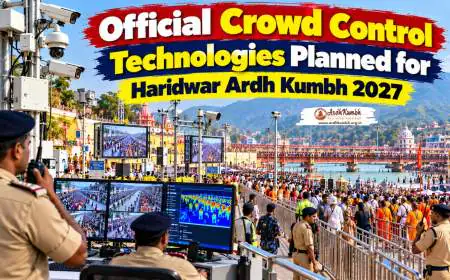
4,000+ AI-enabled CCTV cameras for crowd monitoring .
-
18 surveillance drones .
-
Integrated Command and Control Centres (ICCCs) .
-
Shuttle buses and outer parking zones to keep vehicles away from the ghats.
The 2027 Ardh Kumbh will be the most technologically managed Kumbh in history. The scale alone makes it different from any previous Ardh Kumbh.
The Naming Controversy: Ardh Kumbh or Purna Kumbh?
One of the most heated debates surrounding the 2027 event is what to call it. Traditionally, a Kumbh Mela occurs every twelve years when Jupiter enters Aquarius (Kumbh rashi). The Ardh Kumbh occurs every six years and does not meet that astrological condition.
The Shri Ganga Sabha, which manages Har Ki Pauri, has protested the government's decision to celebrate the 2027 event with Purna Kumbh grandeur. They argue that this violates "sacred religious tradition" . Astrologer Prof. B D Joshi stated that calling the 2027 event a Kumbh has "no astrological basis" .
The government defends its decision as a response to the COVID-19 curtailment of the 2021 Kumbh and as a tribute to the faith of millions. The Mela officer Sonika Singh has stated that the decision was made after "consultations with the community of seers" .
Whether you call it Ardh Kumbh or Purna Kumbh, the 2027 event will be grander than any previous Ardh Kumbh. The naming controversy reflects a deeper tension between tradition and political messaging—and it makes the 2027 Kumbh a historic battleground for spiritual and cultural authority.
Political Significance: The RSS and the Sangh Parivar
The Kumbh Mela has always been a political stage, but the 2027 event is occurring at a moment of intense Hindu nationalist mobilization. The Rashtriya Swayamsevak Sangh (RSS) —the ideological parent of the ruling BJP—is likely to play a prominent role.
During the 2019 Ardh Kumbh in Prayagraj, nearly 300 RSS activists marched through the Mela grounds in full uniform, accompanied by a martial band . The 2027 event is expected to see even larger Sangh Parivar participation. The Kumbh is being explicitly invoked as a symbol of Hindu India—a particular, exclusionary vision of the nation.
This political dimension is new to the Ardh Kumbh (though not to the Kumbh as a whole). If you attend 2027, you will witness not just faith, but politics—in the slogans, in the flags, in the speeches. This is not "just another Kumbh." It is a nationalist spectacle.
The Non-Hindu Ban Debate: A Watershed Moment
As discussed in our previous article, the Shri Ganga Sabha and Vishwa Hindu Parishad are demanding that the Kumbh Mela area be declared a restricted zone for non-Hindus before the 2027 Ardh Kumbh . They cite 1916 municipal bylaws (established during the British Raj) and argue that the sanctity of the ghats must be preserved.
The Uttarakhand government is "reviewing" these demands. Chief Minister Dhami has stated that Haridwar is a "sacred city" and that the government is "committed to upholding its spiritual sanctity" .
If the ban is enforced—covering 105 ghats across a 120-square-kilometer area —it would fundamentally change the nature of the Kumbh. The 2027 event would become a closed, exclusive pilgrimage, potentially barring millions of international and domestic non-Hindu visitors.
This decision has not yet been made, but it is the single most significant policy issue facing the 2027 Ardh Kumbh. The outcome will determine whether this Kumbh is remembered as inclusive or exclusionary.
The 2021 COVID Shadow: A Pent-Up Pilgrimage
The 2021 Kumbh Mela in Haridwar was a disaster—not because of mismanagement, but because of COVID-19. The event was curtailed, with only "symbolic" Amrit Snans allowed . Millions of devotees were unable to fulfill their spiritual duties.
The 2027 Ardh Kumbh is, in many ways, a make-up event. The pent-up demand is enormous. Families who missed their snan in 2021 are planning to come in 2027. The Akharas, who were forced to cancel their processions, are eager to march in full force.
This pent-up demand is one reason the government expects 17 crore pilgrims. It is also why the 2027 event is being upgraded to Purna Kumbh status. The faith that was denied in 2021 will be celebrated in 2027 with unprecedented grandeur.
The Women's Facilities: A Long-Overdue Reform
Another way the 2027 Ardh Kumbh is different is its focus on women's safety and dignity. Chief Minister Dhami has directed the construction of "pink toilets" and changing rooms specifically for women devotees . A 100-bed modern barrack for women police personnel is also under construction at Roshannabad Police Lines in Haridwar .
These are not small gestures. Previous Kumbhs have been criticized for inadequate facilities for women. The 2027 event is making women's safety a central priority. For women pilgrims, this is a historic shift—one that makes the 2027 Kumbh significantly different from its predecessors.
The Technology Leap: AI, Drones, and the Kumbh AI Stack
Finally, the 2027 Ardh Kumbh is the most technologically advanced Kumbh in history. The Mela administration is deploying:
-
4,011 AI-enabled CCTV cameras for predictive crowd monitoring .
-
18 surveillance drones .
-
An AI-powered multilingual assistant (KumbhDoot) available on WhatsApp and via IVR .
-
Integrated Command and Control Centres (ICCCs) that merge drone feeds, CCTV data, and social media analytics .
This technology is not just for show. It is designed to prevent stampedes, locate lost pilgrims (using facial recognition), and provide real-time information to millions of smartphone users. The 2027 event is a testing ground for AI in mass gathering management.
Not Just Another Kumbh
The Ardh Kumbh 2027 is not just another Kumbh Mela. It is the largest, most expensive, most politically charged, most technologically advanced, and most historically upgraded Ardh Kumbh ever held. Whether you are a first-time pilgrim or a veteran, this is the Kumbh to attend. The Ganga is rising. The sadhus are marching. The cameras are watching. The nation is arguing. And the faith—quiet, stubborn, ancient—is flowing like it always has.
Frequently Asked Questions