







































































Complete Guide to Safe Bathing at Har Ki Pauri During Haridwar Ardh Kumbh 2027
Complete guide to safe bathing at Har Ki Pauri during Ardh Kumbh 2027. Brahmakund rules, safety chains, Shahi Snan restrictions, water quality and ghat protocol.

Complete Guide to Safe Bathing at Har Ki Pauri During Haridwar Ardh Kumbh 2027
Quick Answer ⚡ Safe bathing at Har Ki Pauri during Ardh Kumbh 2027 depends on three non-negotiable rules. First, hold the safety chains — thick iron chains are bolted along the bridges and ghat edges specifically to stop pilgrims being swept away by the current . Second, never go beyond knee-deep water — most rescues and fatalities involve people who moved past marked safety zones into deep, fast water . Third, respect Shahi Snan restrictions — on Amrit Snan days, civilian bathing at Har Ki Pauri is suspended from roughly 3:00 AM to mid-afternoon while Akhara processions move through . The ₹108 crore Har Ki Pauri rejuvenation plan includes reconstructed ghat steps, structured access and exit points, widened walking tracks, modern lighting, and emergency management centres to make the ghat safer and more crowd-manageable . But infrastructure reduces risk; it does not remove it. Your behaviour in the water remains the decisive factor.
At a Glance 🔎 Har Ki Pauri Bathing Safety Parameters
Local Insight 📍 The single most important piece of safety equipment at Har Ki Pauri is not visible in photographs. It is the chain bolted to the bridge and the ghat edge. Locals grab it instinctively. Visitors often ignore it — and those are the people the SDRF pulls out .
The Brahmakund: What It Is and Why It Demands Respect
The Brahmakund at Har Ki Pauri is the ritual heart of Haridwar — the bathing ghat associated with the drop of amrit from the Samudra Manthan and the footprint of Lord Vishnu . It is also, on major bathing days, one of the densest crowd environments anywhere in the world .
The Crowd Reality at Brahmakund
On a Shahi Snan day, the Brahmakund is not a peaceful ghat. It is a directed, policed, slow-moving crowd where movement is controlled and individual choice is limited . The administration directs flow across multiple designated sectors to avoid dangerous overcrowding . For a family or an elderly pilgrim, the Brahmakund on a peak day is not the place for a leisurely dip.
Trending Guides Now
Personal Responsibility During Ardh Kumbh: Complete Guide
Read Guide →
How to Stay Safe in Crowded Areas Around Har Ki Pauri
Read Guide →
Essential Ganga Ghat Safety Rules Every Haridwar Ardh Kumbh 2027 Visitor Must Know
Read Guide →
Common Tourist Scams in Haridwar During Ardh Kumbh 2027 and How to Avoid Them
Read Guide →
Ardh Kumbh 2027 Dates (Official) - Haridwar Snan Schedule
Read Guide →
Dharamshala Stay During Ardh Kumbh: Free & Budget Guide
Read Guide →
Official Progress Report of Haridwar Ardh Kumbh 2027 Infrastructure Projects
Read Guide →
Where to Find 24-Hour Pharmacies in Haridwar During Ardh Kumbh 2027 Emergencies
Read Guide →Why the Brahmakund Is Different from Other Ghats
| Factor | Brahmakund | Quieter Ghats (e.g., Subash Ghat) |
|---|---|---|
| Crowd density | Extreme on peak days | Moderate |
| Ritual significance | Highest | High |
| Safety infrastructure | Chains, police, SDRF, CCTV | Chains, fewer personnel |
| Family suitability | Low on Shahi Snan days | Higher |
| Best time | Pre-dawn on non-peak days | Any morning |
Expert Tip 💡 If your goal is a safe, meaningful snan rather than “being at the exact spot”, choose a quieter ghat on peak days and visit the Brahmakund for darshan outside the bathing rush. The ritual merit of Ganga snan is not diminished by choosing a less crowded stretch of the same river.
The Safety Chain System: How It Works and How to Use It
The safety chains at Har Ki Pauri are not decorative. They are life-saving infrastructure.
What the Chains Are
Thick iron chains are bolted along the bridges near the Har Ki Pauri ghat and along the ghat edges . They are designed for one purpose: to give a bather something to hold when the current surges or footing slips. A man from Jammu and Kashmir was swept away during a holy dip but survived because he grabbed a chain near Hathi Bridge; the SDRF reached him by speedboat .
How to Use the Chains Correctly
-
Hold the chain with both hands when entering and leaving the water.
-
Keep one hand on the chain at all times while in the water.
-
Do not let go to pose for a photo or wave.
-
Do not pull on the chain or hang your full body weight on it — it is a stabiliser, not a climbing frame.
-
Teach children to hold the chain before they enter the water.
The Chain Is Not a Substitute for Depth Discipline
The chains do not make deep water safe. Most drownings and rescues involve people who went beyond the chain line into deep or fast water . The chain marks the boundary of relative safety, not a permission slip to swim.
Pro Tip 🧭 Stand at the chain line and observe the current for two minutes before entering. If the water is pulling hard against the chain, the current is too strong for a casual dip. Bathe quickly and get out.
Shahi Snan Restrictions: When Civilian Bathing Is Suspended
The most important scheduling rule for safe bathing at Har Ki Pauri is the Shahi Snan restriction.
The Suspension Window
On Amrit Snan (Shahi Snan) days, civilian bathing at Har Ki Pauri is completely suspended from roughly 3:00 AM to mid-afternoon while Akhara processions move through . This is not a suggestion. It is an administrative order enforced by police and mela officials.
What This Means for Your Plan
-
Do not plan a family snan on 6 March, 8 March, 14 April or 20 April 2027 at Har Ki Pauri unless you intend to bathe after the Akhara sequence (typically late afternoon).
-
Expect strict movement control and long walking distances if you are staying near Har Ki Pauri on peak days .
-
Use the suspension window for darshan, markets or rest — not for queuing at the ghat.
-
Plan your snan on a non-Shahi Snan day or at a quieter ghat if your dates are fixed around a peak day.
Expert Advice ✨ The safest snan during Kumbh 2027 is the one you schedule on a non-peak day. Late January and February offer cool weather, shorter queues and normal ghat access. March and April peak days offer spectacle but not safety.
Pre-Dawn Snan: The Quietest and Safest Window
For pilgrims who want a safe, spiritually fulfilling dip at Har Ki Pauri, the pre-dawn hours are the best-kept secret.
The Pre-Dawn Window
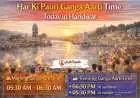
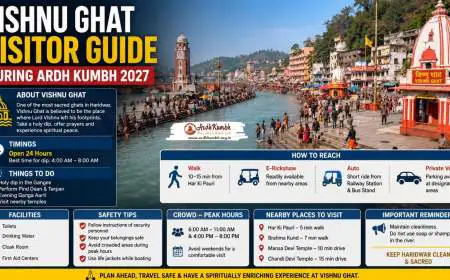
Har Ki Pauri is open 24 hours . Pilgrims begin arriving from 3:30–4:00 AM, and the best arrival window is 4:00–5:00 AM . The morning Ganga Aarti takes place at sunrise — around 6:30 AM in January–February and 5:45 AM in March–April .
Why Pre-Dawn Is Safer
-
Crowd density is low compared with mid-morning or Shahi Snan peaks.
-
The ghat is quieter and calmer, making it easier to supervise children and elderly family members.
-
Police and SDRF presence is active, but there is no crush.
-
The spiritual atmosphere — mist, diyas, conch shells — is at its most powerful .
The Pre-Dawn Risks
-
Cold temperatures: 7–12°C in January–March before sunrise . Hypothermia risk for elderly pilgrims and young children.
-
Low light: Even with modern lighting installed , steps can be hard to see. Carry a small torch.
-
Slippery steps: Condensation and wet steps are more dangerous in the dark.
Expert Tip 💡 For families with children or elderly parents, the pre-dawn snan is safer in terms of crowd but riskier in terms of cold and visibility. Dress in layers, carry a torch, and keep the dip short. A quick, safe dip at 5:00 AM is better than a stressful, crowded dip at 10:00 AM.
Bathing Protocol: A Step-by-Step Safe Snan at Har Ki Pauri
This is the protocol that locals, lifeguards and SDRF personnel would want you to follow.
Before Entering the Water
-
Check the day’s advisory — is it a Shahi Snan day? Is civilian bathing suspended?
-
Choose your ghat — Brahmakund for the full experience, quieter ghats for safety.
-
Locate the safety chain and plan your entry and exit points.
-
Remove footwear and secure your belongings — do not leave valuables unattended.
-
Observe the current for two minutes — if it is pulling hard, do not enter.
-
Brief children and elderly family members — hold the chain, stay knee-deep, no pushing.
In the Water
-
Hold the chain with at least one hand at all times.
-
Stay knee-deep — do not wade beyond the chain line.
-
Take a quick dip or sprinkle water — do not linger, swim or float.
-
Keep children within arm’s reach.
-
Do not jump or dive — the riverbed is uneven and rocks are slippery.
-
Exit immediately if you feel the current strengthen or hear a warning.
After the Bath
-
Change into dry clothes promptly, especially in winter months.
-
Shower with clean water if possible — coliform levels are elevated .
-
Drink clean, filtered water — do not swallow river water.
-
Watch for illness — fever, diarrhoea or skin infections — and seek medical help if symptoms appear.
Expert Advice ✨ The most dangerous moment is not the dip. It is the exit — wet steps, crowded ghats and distracted pilgrims create slip-and-fall risks. Exit slowly, hold the chain until you are on flat ground, and do not rush.
Water Quality: The Invisible Risk at Har Ki Pauri
The Ganga at Har Ki Pauri is spiritually pure in the eyes of pilgrims. Microbiologically, it is not pristine.
The Coliform Reality
The Comptroller and Auditor General (CAG) audit found that total coliform bacteria increased 32-fold between Devprayag and Har Ki Pauri over a 93-kilometre stretch . The audit attributed this to untreated sewage entering the river from towns along the way . Mass bathing events are associated with sharp, short-term increases in faecal and total coliform counts .
What This Means for Bathers
-
Do not swallow the water. Keep your mouth closed during the dip.
-
Do not immerse your head if you have cuts, wounds or skin conditions.
-
Shower with clean water after bathing.
-
People with weakened immunity, open wounds or illness should opt for a symbolic sprinkle rather than full immersion.
Local Insight 📍 The water quality is better in the upper stretch and worse after the river passes through urban areas . Har Ki Pauri is downstream of significant pollution load. Faith and hygiene are not in conflict — a mindful dip is both spiritually and physically safer.
Crowd Management and Emergency Response at Har Ki Pauri
The Kumbh administration is building a multi-layered safety net around Har Ki Pauri. Knowing it exists — and how to use it — is part of safe bathing.
The Safety Infrastructure
What to Do in an Emergency
-
Shout for the nearest lifeguard or SDRF jawan — they are stationed at key points .
-
Call the Kumbh Mela Helpline: +91-1334-222725, +91-1334-222726, +91-1334-222727 .
-
Do not jump in after a drowning person unless you are trained and equipped.
-
Give the exact location — ghat name, chain number, nearest landmark.
Pro Tip 🧭 Save these numbers before you travel, and write them on a paper card as well as on your phone. Network congestion on Shahi Snan days can make digital contact unreliable.
Special Groups: Elderly, Children and Non-Swimmers
Some pilgrims should not follow the general bathing protocol. They need a stricter version.
Elderly Pilgrims
-
Cold water and strong current are hard on the heart and joints.
-
Slippery steps are the biggest fall risk — hold the chain and use handrails.
-
Pre-dawn cold can cause hypothermia — bathe later in the morning or choose a warmer day.
-
Consider a symbolic snan — sprinkle water on the head from the steps.
Children
-
Keep children within arm’s reach at all times.
-
Hold their hand on the chain — do not let them enter alone.
-
Avoid the Brahmakund on peak days — use a quieter ghat.
-
Dress them in bright colours for easy spotting.
Non-Swimmers and Weak Swimmers
-
Do not enter beyond knee-deep water.
-
Hold the chain at all times.
-
Do not attempt to cross the river or swim.
-
The SDRF’s own message is blunt: “Don’t jump in if you can’t swim” .
Expert Advice ✨ The administration has specifically appealed to children under 10, people over 60, pregnant women and the unwell to avoid bathing during high-risk periods . Heed that appeal. A symbolic dip fulfils the ritual; a risky dip can end the pilgrimage.
Bathing Etiquette and Dress Code at Har Ki Pauri
Safe bathing is also respectful bathing. The ghat is a place of worship, not a swimming pool.
Dress Code
-
Women: Traditional Indian attire or modest swimwear that covers the torso and thighs. Avoid revealing clothing.
-
Men: Shorts or dhoti — avoid being bare-chested in the temple areas.
-
Change clothes in the designated changing areas, not in the open ghat.
Etiquette Rules
-
Do not take selfies in the water or on wet steps — several accidents have been linked to photo-taking.
-
Do not splash or play in the bathing area.
-
Respect the queue at the Brahmakund — do not push.
-
Do not leave offerings or plastic in the water.
-
Follow the instructions of police, lifeguards and mela officials without argument.
Local Insight 📍 The ghat is a living temple. The chains, the steps and the water are shared by thousands every hour. Etiquette is not formality — it is crowd safety. A respectful bather is a safer bather.
Final Safe Bathing Checklist for Har Ki Pauri During Kumbh 2027
-
Check the day’s advisory — Shahi Snan suspension or normal bathing?
-
Choose your ghat — Brahmakund for experience, quieter ghat for safety.
-
Hold the safety chain — both hands entering, one hand in the water.
-
Stay knee-deep — never beyond the chain line.
-
Keep the dip short — quick immersion or sprinkle, no lingering.
-
Supervise children and elderly — within arm’s reach.
-
Do not swallow water — keep mouth closed.
-
Shower after snan — clean water reduces infection risk.
-
Save emergency numbers — 112, 108, Kumbh Helpline.
-
Avoid peak days if safety is your priority — 6 March, 8 March, 14 April, 20 April.
-
Carry a torch for pre-dawn snan, and wear non-slip footwear.
-
Follow official instructions — do not argue with police or lifeguards.
The Har Ki Pauri snan is one of the most powerful spiritual experiences in India. The ₹108 crore rejuvenation is making the ghat physically safer . The SDRF, water police and CCTV network are making it better monitored . But the final safety layer is you — your grip on the chain, your discipline about depth, and your respect for the crowd. Bathe safely, and the Ganga will give you what you came for.
Frequently Asked Questions