











































































How to Plan a Haridwar Ardh Kumbh 2027 Trip Under ₹5,000
Plan a Haridwar Ardh Kumbh 2027 trip under ₹5,000 with this practical budget guide. Train fares, dharamshala rates, food costs and a full 3-day plan.

How to Plan a Haridwar Ardh Kumbh 2027 Trip Under ₹5,000
Quick Answer ⚡
A Haridwar Ardh Kumbh 2027 trip under ₹5,000 is absolutely achievable for a solo traveller or a couple sharing costs, provided you travel by sleeper-class train, stay in a basic dharamshala, eat at local bhojanalayas and walk or use shared e-rickshaws. The realistic formula is this: ₹300–₹600 for a return sleeper train ticket from Delhi, ₹200–₹500 per night for a dharamshala room, ₹200–₹400 per day for vegetarian food, and ₹100–₹200 for local transport. The three biggest budget killers are last-minute train bookings, AC dharamshala rooms and eating at tourist-facing restaurants near Har Ki Pauri. Avoid the three Amrit Snan dates — 6 March, 8 March and 14 April 2027 — when prices surge and transport is disrupted. A well-planned three-day, two-night trip fits comfortably under ₹5,000 per person if you follow the cost structure in this guide.
At a Glance 🔎
| Expense Head | Budget Range (Per Person) | Money-Saving Strategy |
|---|---|---|
| Return train (sleeper, from Delhi) | ₹300–₹600 | Book 60+ days in advance |
| Dharamshala stay (2 nights) | ₹400–₹1,000 | Choose non-AC, shared or basic room |
| Food (3 days) | ₹600–₹1,200 | Eat at bhojanalayas and street stalls |
| Local transport | ₹100–₹300 | Walk; use shared autos and e-rickshaws |
| Sightseeing | ₹0–₹400 | Free ghats, free temples, trek instead of ropeway |
| Miscellaneous | ₹200–₹500 | Keep a buffer for water, tea and essentials |
| Total (approximate) | ₹1,600–₹3,800 | Comfortably under ₹5,000 |
Note: Figures are indicative and based on published budget travel estimates. Prices rise during peak Mela dates and should be confirmed before travel.
Understanding What ₹5,000 Actually Covers
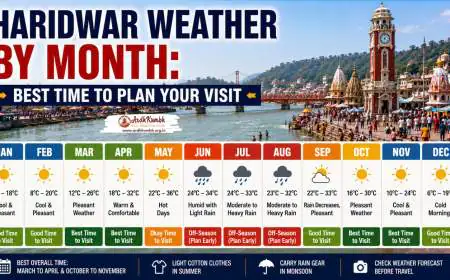
The Haridwar Ardh Kumbh 2027 trip under 5000 target is realistic because Haridwar is one of India’s most affordable pilgrimage cities. The city’s greatest experiences — the Ganga Aarti Har Ki Pauri free, the ghat walks, the holy dip, and the temple visits — cost nothing or very little.
A budget Haridwar Kumbh trip under ₹5,000 typically covers:
Trending Guides Now
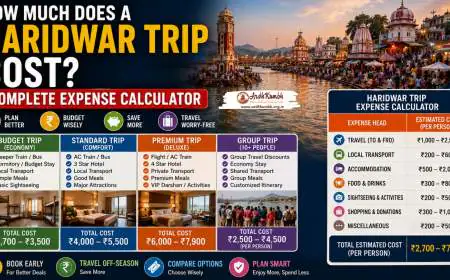
How Much Does a Haridwar Trip Cost? Complete Expense Calculator
Read Guide →
Jaipur to Haridwar: Train, Flight, Bus and Road Travel Guide
Read Guide →
How Much Does a Two-Day Haridwar Ardh Kumbh 2027 Trip Cost? Complete Budget Guide
Read Guide →
Haridwar Ardh Kumbh 2027 Trip Cost for a Family of Four: Complete Budget Planner
Read Guide →
Ardh Kumbh 2027 Dates (Official) - Haridwar Snan Schedule
Read Guide →
Dharamshala Stay During Ardh Kumbh: Free & Budget Guide
Read Guide →
Official Progress Report of Haridwar Ardh Kumbh 2027 Infrastructure Projects
Read Guide →
Is October a Good Time to Visit Haridwar Before Ardh Kumbh 2027?
Read Guide →-
Return transport from a nearby city such as Delhi.
-
Two to three nights of basic accommodation.
-
Three days of vegetarian meals.
-
Local transport between the station, ghats and temples.
-
One or two paid activities, such as a ropeway ride.
It does not comfortably cover:
-
AC hotel rooms.
-
Private taxis for all sightseeing.
-
Last-minute train bookings during peak dates.
-
Restaurant meals at premium locations.
The key is to treat ₹5,000 as a ceiling, not a target. Most disciplined budget travellers will spend well under it.
Transport: The Biggest Variable in Your Budget
How you reach Haridwar decides whether the ₹5,000 ceiling holds. Sleeper class train Delhi Haridwar fare is the single most important cost lever.
Train Travel Costs
| Class | Approximate Return Fare (Delhi–Haridwar) | Notes |
|---|---|---|
| Sleeper Class (SL) | ₹300–₹600 | Cheapest; book early |
| 3AC | ₹1,000–₹1,800 | Comfortable but pushes budget |
| 2AC | ₹1,800–₹3,000 | Not suitable for a ₹5,000 trip |
| General (unreserved) | ₹150–₹300 | Cheapest but no guarantee of seat |
Published estimates for sleeper class train Delhi Haridwar fare place one-way tickets in the range of a few hundred rupees, with return fares between ₹800 and ₹1,800 for sleeper class depending on the train and booking timing. For a strict ₹5,000 budget trip, sleeper class is the correct choice.
Expert Tip 💡: Book your train tickets 60–120 days in advance. Early booking is the single biggest saver on Haridwar Kumbh train booking tips. Avoid travelling one day before or after an Amrit Snan date, when surge pricing and demand peak.
Bus Travel Costs
State-run buses from Delhi to Haridwar are another affordable option. Ordinary buses typically cost less than private Volvo buses, which can range from ₹1,200 to ₹3,500 one way. For budget travellers, ordinary state buses are the better choice, though they take longer.
Accommodation: Dharamshalas Are the Budget Traveller’s Best Friend
A Haridwar budget dharamshala rates structure makes the ₹5,000 target achievable. Basic dharamshala rooms near Har Ki Pauri and Upper Road start from as low as ₹150–₹300 per night for a simple non-AC room, according to local listings. Slightly better rooms with attached bathrooms and basic amenities range from ₹300 to ₹1,000.
Dharamshala Cost Comparison
| Room Type | Approximate Nightly Rate | Best For |
|---|---|---|
| Basic non-AC (shared or simple) | ₹150–₹300 | Solo travellers, strict budgets |
| Non-AC with attached bathroom | ₹300–₹600 | Couples, small families |
| AC room (budget dharamshala) | ₹700–₹1,500 | Summer travellers, families |
| Budget hotel (non-AC) | ₹500–₹1,200 | Those wanting more privacy |
Published budget guidance places dharamshala and ashram stays in the ₹300–₹1,000 per night range, with peak-date prices rising 30–70%. For a two-night stay, a basic non-AC dharamshala costs ₹400–₹1,000 total, leaving ample room in the ₹5,000 budget.
Pro Tip 🧭: Do not book an AC room unless you are travelling in April. January and February nights in Haridwar are cool, and a non-AC room with a fan is perfectly comfortable. This single choice can save ₹500–₹1,500 over two nights.
Local Insight 📍: Dharamshalas within 100–300 metres of Har Ki Pauri are the best value for budget pilgrims. You save on transport because everything — the ghats, the aarti, the bazaar — is within walking distance.
Food: Eat Like a Local, Spend Like a Pilgrim
Haridwar street food budget is one of the city’s quiet advantages. A basic vegetarian thali at a local bhojanalaya costs ₹80–₹150. A standard restaurant meal costs ₹200–₹400, but budget travellers do not need restaurant meals every day.
Daily Food Cost Estimates
| Meal | Budget Option | Cost |
|---|---|---|
| Breakfast | Kachori, aloo-puri, tea | ₹50–₹80 |
| Lunch | Bhojanalaya thali (dal, roti, sabzi, rice) | ₹80–₹150 |
| Dinner | Simple thali or street food | ₹100–₹200 |
| Snacks and water | Fruit, tea, packaged water | ₹50–₹100 |
| Daily total | ₹280–₹530 |
Published budget guidance for Haridwar Kumbh food cost per day places backpacker daily food spending at ₹230–₹430. Over three days, food costs ₹700–₹1,300 — well within the overall budget.
Expert Advice ✨: Eat where pilgrims eat. Bhojanalayas near the railway station and Moti Bazar serve simple, filling thalis at prices that tourist-facing restaurants near the ghats cannot match. A ₹100 thali at a local bhojanalaya is often more satisfying than a ₹300 restaurant meal.
Local Transport: Walk, Share and Save
Haridwar local transport budget is minimal if you choose the right modes. The city’s core pilgrimage zone is compact.
Local Transport Fares
| Mode | Approximate Fare | Best Use |
|---|---|---|
| Walking | Free | Station to ghats, ghats to temples |
| Shared auto-rickshaw | ₹20–₹40 per person | Station to Har Ki Pauri |
| E-rickshaw | ₹20–₹100 | Short hops within the city |
| Private auto | ₹80–₹150 | Families with luggage |
| Cycle-rickshaw | ₹15–₹50 | Very short distances |
| Shuttle bus (Kumbh period) | ₹10–₹50 | Mela area transport |
The Haridwar railway station to Har Ki Pauri distance is only 1.5–3 km, and walking takes 20–30 minutes. On peak crowd days, walking is often faster than any vehicle because roads are restricted.
Expert Tip 💡: Use shared autos and e-rickshaws for longer hops and walk everywhere else. Over three days, local transport should not exceed ₹200–₹300 if you are disciplined.
Free and Low-Cost Things to Do in Haridwar During Kumbh
The free things to do Haridwar Kumbh list is long. This is why a ₹5,000 trip is possible without feeling deprived.
Free Experiences
-
Ganga Aarti at Har Ki Pauri — free to attend; donations voluntary.
-
Holy dip at the ghats — no charge for the snan itself.
-
Bharat Mata Mandir — free entry.
-
Ghat walks and temple visits — most temples have no entry fee.
-
Kumbh Mela atmosphere — the processions, akhara activity and street life cost nothing.
Low-Cost Paid Experiences
| Experience | Approximate Cost |
|---|---|
| Mansa Devi ropeway | ₹150–₹200 return |
| Chandi Devi ropeway or trek | Ropeway around ₹150–₹200; trek free |
| Local guide (optional) | Negotiable; not essential |
Expert Advice ✨: If your budget is tight, trek to Chandi Devi instead of taking the ropeway. The climb is manageable for reasonably fit travellers and saves ₹150–₹200. The views are the same.
Sample 3-Day Haridwar Kumbh Budget Itinerary with Costs
This Ardh Kumbh 2027 budget itinerary shows how the numbers add up for a solo traveller or a couple sharing a room.
| Day | Plan | Estimated Cost (Per Person) |
|---|---|---|
| Day 1 | Arrive by sleeper train, check into dharamshala, walk to ghats, evening Ganga Aarti | Train: ₹150–₹300; Stay: ₹200–₹500; Food: ₹250–₹400 |
| Day 2 | Morning snan, Mansa Devi ropeway or trek, Bharat Mata Mandir, rest, evening aarti | Stay: ₹200–₹500; Food: ₹250–₹400; Ropeway: ₹150–₹200 |
| Day 3 | Chandi Devi trek or darshan, local bazaar, return train | Food: ₹200–₹350; Train: ₹150–₹300; Local transport: ₹100–₹200 |
| Total (approximate) | ₹1,650–₹3,650 |
Even with a ₹500 buffer for water, tea, donations and unexpected costs, the total stays under ₹5,000. Couples sharing a dharamshala room spend even less per person.
Money-Saving Strategies That Actually Work
-
Book train tickets early. Last-minute sleeper tickets during Kumbh season are scarce and expensive.
-
Choose non-AC dharamshala rooms. January and February nights are cool; AC is unnecessary.
-
Eat at bhojanalayas and street stalls. Avoid restaurants with English menus near the ghats.
-
Walk the core pilgrimage zone. The station-to-ghat distance is short.
-
Use shared autos and e-rickshaws instead of private taxis.
-
Skip paid ropeways if budget is tight. Trek instead.
-
Avoid Amrit Snan dates. Prices surge and transport is disrupted.
-
Carry a reusable water bottle. Refill at dharamshala or trusted water points.
-
Do not buy souvenirs on impulse. Set a small gift budget and stick to it.
-
Travel with a companion. Sharing a room cuts accommodation costs per person.
Pro Tip 🧭: The Kumbh Mela money saving tips that matter most are advance booking and non-AC accommodation. These two decisions alone can keep a three-day trip under ₹3,000.
What to Avoid to Stay Under ₹5,000
-
❌ Last-minute train bookings during peak dates.
-
❌ AC hotel rooms in January–February.
-
❌ Private taxis for every sightseeing trip.
-
❌ Restaurant meals near Har Ki Pauri.
-
❌ Travelling on Amrit Snan dates without confirmed bookings.
-
❌ Buying packaged water at premium prices; carry a bottle.
-
❌ Hiring a guide unless you specifically need one.
Final Budget Trip Checklist for Haridwar Ardh Kumbh 2027
-
✅ Train tickets booked 60+ days in advance (sleeper class).
-
✅ Dharamshala confirmed — non-AC, near Har Ki Pauri.
-
✅ Budget envelope set: transport, stay, food, local transport, buffer.
-
✅ Offline maps downloaded for Haridwar.
-
✅ Reusable water bottle packed.
-
✅ Comfortable walking shoes — you will walk a lot.
-
✅ Emergency numbers saved, including Haridwar emergency helpline numbers.
-
✅ Amrit Snan dates avoided unless deliberately planned.
-
✅ Cash for small vendors who may not accept UPI.
-
✅ Realistic expectations — budget travel means basic facilities.
Frequently Asked Questions