















Latest Official Tent City Development Updates for Haridwar Ardh Kumbh 2027
Track the latest official tent city development updates for Haridwar Ardh Kumbh 2027. Sectors, Shyampur-Gandikhata-Chandighat zones, tenders, sanitation and timelines.
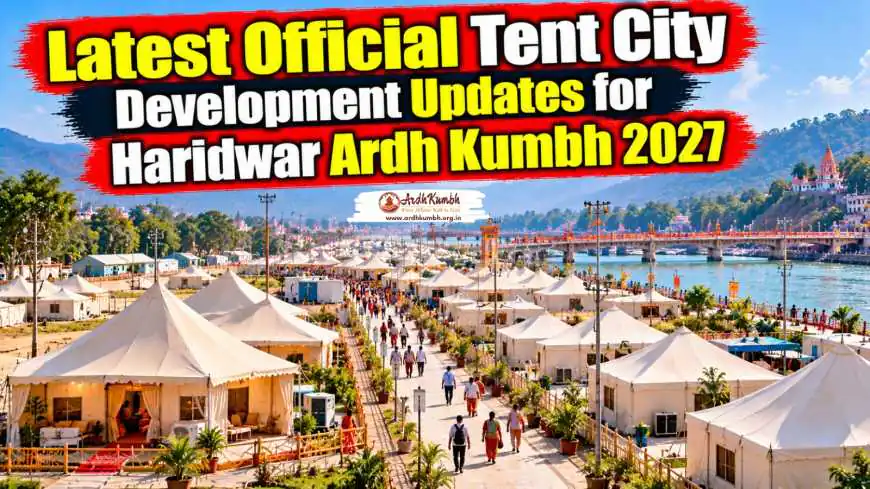
Latest Official Tent City Development Updates for Haridwar Ardh Kumbh 2027
Quick Answer ⚡ The Haridwar Ardh Kumbh 2027 tent city is no longer a concept on paper. As of late 2026, the Mela administration has confirmed that major permanent construction — bridges, roads and core infrastructure — is nearly complete, and the focus has shifted to temporary arrangements in the tent settlement areas . The temporary city is being developed across 32 sectors on roughly 500 hectares, with 10 public housing complexes designed to accommodate 25,000 pilgrims, 150 camps at the Mela Circuit House, and dedicated tent zones at Shyampur, Gandikhata and Chandighat . Land leveling, lighting, drinking water and sanitation works are being finalised, tentage vendor empanelment tenders have been issued, and a ₹115.61 crore sanitation package covering 13,915 toilets and 8,065 urinals has been approved . The official deadline for permanent works is October 2026, with temporary bridges targeted for completion by end-November .
At a Glance 🔎 Key Tent City Development Parameters
| Parameter | Official Status / Figure | Source Context |
|---|---|---|
| Temporary city area | ~500 hectares | Proposal sent to the Centre for the tent city layout |
| Sectors | 32 sectors | Crowd control, entry-exit, security and disaster management planned sector-wise |
| Dedicated tent zones | Shyampur, Gandikhata, Chandighat | Master plan ordered by the Chief Minister |
| Public housing complexes | 10 complexes, capacity 25,000 pilgrims | Part of the temporary city plan |
| Camps at Mela Circuit House | 150 camps | Additional tent accommodation |
| Convention hall | Capacity 1,000 | Within the temporary city |
| Sanitation budget | ₹115.61 crore | 13,915 toilets, 8,065 urinals, 491 waste vehicles |
| Expected devotees | Up to 20 crore | Mela Officer projection for the 90–100 day event |
| Permanent works deadline | October 2026 | Chief Minister’s directive |
| Temporary bridges deadline | End-November 2026 | Chief Secretary review |
Local Insight 📍 In Haridwar, the phrase “tent city” is used loosely. Officially, the administration speaks of a temporary city with permanent civic infrastructure — roads, power, water lines and sanitation — overlaid with tented accommodation. The tent zones at Shyampur, Gandikhata and Chandighat are the camp clusters within that larger temporary city framework.
What the “Tent City” Actually Means in the Haridwar 2027 Context
The Haridwar Ardh Kumbh 2027 tent city is not a single walled encampment. It is a distributed temporary urban system built on land that is leased or acquired for the mela period and then restored afterwards.
From Temporary City to Tent City: The Administrative Distinction
The temporary city is the administrative and civic envelope: 32 sectors, police station, hospital, administrative building, information centre, convention hall and public housing complexes . The tent city is the accommodation layer within it — the camps, tented halls and pilgrim housing that sit on levelled land with lighting, water and sanitation connections.
Trending Guides Now

Ardh Kumbh 2027: Haridwar Begins Major Road Expansion
Read Guide →
Official Progress Report of Haridwar Ardh Kumbh 2027 Infrastructure Projects
Read Guide →
Latest Official Road Development Projects for Haridwar Ardh Kumbh 2027
Read Guide →
Uttarakhand Considers Restricted Zones Ahead of Ardh Kumbh 2027 in Haridwar
Read Guide →
Ardh Kumbh 2027 Dates (Official) - Haridwar Snan Schedule
Read Guide →
Dharamshala Stay During Ardh Kumbh: Free & Budget Guide
Read Guide →
Where to Find 24-Hour Pharmacies in Haridwar During Ardh Kumbh 2027 Emergencies
Read Guide →
Can You Carry Luggage While Visiting Har Ki Pauri During Haridwar Ardh Kumbh 2027?
Read Guide →Why the 2027 Scale Is Being Compared to Maha Kumbh
Officials have indicated that the Ardh Kumbh is being planned at a Mahakumbh-like scale, with arrangements and facilities intended to be in no way inferior to the Maha Kumbh . That ambition explains the 32-sector structure, the 500-hectare footprint, and the ₹115 crore-plus sanitation package.
Expert Tip 💡 When tracking tent city development updates, distinguish between permanent works (bridges, roads, ghats) and temporary works (tents, toilets, lighting, water lines). The permanent works have an October 2026 deadline; the temporary works are still in the tendering and finalisation stage . The temporary layer is where last-minute changes are most likely.
The Three Core Tent Zones: Shyampur, Gandikhata and Chandighat
The Chief Minister has specifically directed that a master plan be prepared for special tents in Shyampur, Gandikhata and Chandighat . These three zones are the anchors of the tent city geography.
| Tent Zone | Strategic Role | Access Characteristics | Planning Notes |
|---|---|---|---|
| Shyampur | Large-scale pilgrim tent settlement on the eastern approach | Linked to the Bahadarabad–Shyampur bypass; vehicle-accessible | Bypass completion is intended to maximise tent city utility during the mela |
| Gandikhata | Tent cluster on the mela periphery, absorbing overflow from core ghat areas | Road access via mela circulatory routes | Included in the master plan for special tents |
| Chandighat | Tent zone near the Chandi Devi side, across the Ganga from Har Ki Pauri | Vehicle access via Nazibabad Road; ropeway base nearby | Positioned to reduce crowd pressure on the core Har Ki Pauri zone |
Local Insight 📍 Chandighat is the quietest of the three tent zones because it sits across the river from the Har Ki Pauri core. For pilgrims who want tent accommodation without sleeping inside the densest crowd envelope, Chandighat is the zone to watch in the official updates.
The 500-Hectare Temporary City: Layout, Sectors and Public Facilities
The temporary city plan places civic infrastructure inside the tent settlement footprint, so that pilgrims do not have to leave the tent zone for basic services.
What the 32-Sector Layout Includes
-
Police station and sector-level security posts .
-
Hospital and medical facilities within the temporary city .
-
Administrative building for mela officials.
-
Information centre for pilgrim guidance.
-
Convention hall with 1,000-person capacity .
-
10 public housing complexes with a combined capacity of 25,000 pilgrims .
-
150 camps at the Mela Circuit House .
-
Religious institution offices within the temporary city .
Why Sectorisation Matters for Pilgrims
The 32-sector structure is the basis for crowd control, entry-exit management, security and disaster response . In practice, it means that each sector has its own access routes, facilities and crowd-flow plan. For a tent city resident, the sector number determines which facilities are nearest and which routes are open on Shahi Snan days.
Pro Tip 🧭 If you are booking a tent or being allocated accommodation in the temporary city, ask for the sector number and cross-check it against the mela map once the final layout is published. Sector location will matter more than tent category on 6 March and 8 March 2027, when crowd diversions are in force.
Land Leveling, Lighting and Basic Amenities: Where the Work Stands
The Mela Officer has confirmed that temporary arrangements are being finalised in the tent settlement areas, with land leveling, lighting, drinking water and sanitation to be completed in a timely manner . This is the ground-level work that turns allocated land into a functional tent zone.
The Amenity Checklist Being Executed
-
Land leveling for tent pitching and drainage.
-
Lighting across sector roads and camp clusters.
-
Drinking water lines and dispensing points.
-
Sanitation infrastructure — toilets, urinals and waste collection.
-
Internal roads and pedestrian paths within the tent zones.
Expert Advice ✨ The land leveling and drainage work is the quiet indicator of whether a tent zone will be usable in unseasonal rain. When the final mela map is released, check whether your tent zone sits on levelled ground with marked drainage — this is more important than tent aesthetics for a comfortable Kumbh stay.
Tentage Procurement and Vendor Empanelment: The Official Tender Trail
The tent city is being built through a formal procurement process. The tenders reveal what is being procured and when.
Key Tender Categories
| Tender Category | Scope | Significance for Tent City |
|---|---|---|
| General tentage items | Empanelment of vendors for Kumbh 2027 | The core tent supply pipeline |
| Furniture on rental basis | Empanelment of vendors for rental furniture | Camp and tent furnishing |
| Housekeeping, toilets and bathrooms | Installation, operation, maintenance and de-installation | Sanitation operations inside tent zones |
| Event management agencies | Empanelment for Kumbh events | Tent city programming and ceremonies |
| Temporary media centre | German hangar structure on rental basis | Media infrastructure for the mela |
| Night shelters | 08 temporary night shelters | Emergency and overflow accommodation |
Local Insight 📍 The tentage empanelment tender (referenced as 138/01/Tentage/Mela/2027) is the single most important procurement signal for anyone tracking tent city readiness . Until vendors are empanelled, tent specifications, quality and delivery schedules remain fluid.
Sanitation, Waste Management and the Zero-Waste Mandate
Sanitation is the largest operational risk in any tent city, and the Haridwar 2027 plan is the most quantified part of the official updates.
The Sanitation Package in Numbers
-
₹115.61 crore approved for sanitation and waste management .
-
13,915 toilets and 8,065 urinals .
-
491 waste collection vehicles .
-
4,840 dustbins .
-
31.38 lakh liner bags .
-
2 trash boom installations for river waste interception .
-
24-hour cleaning on ghats and Ganga banks .
-
Pink toilets and changing rooms for women devotees .
-
Zero-waste model adopted for solid waste .
Why the Zero-Waste Mandate Matters for Tent City Residents
A tent city generates more visible waste than a hotel-based stay because cooking, packaging and camp cleaning happen in open clusters. The zero-waste directive — with segregation, recycling units and mobile toilets — is intended to prevent the tent zones from becoming sanitation black spots . For pilgrims, the practical takeaway is to expect segregated bins and designated waste points inside tent clusters.
Expert Tip 💡 The sanitation numbers are planned capacities, not guaranteed service levels. On Shahi Snan days, toilet queues in tent cities can be long. If you are staying in a tent, confirm whether your camp has attached toilets or relies on community blocks — this is the single biggest comfort differentiator in tent city accommodation.
Crowd Management, AI Monitoring and the 20-Crore Devotee Projection
The Mela administration is planning for up to 20 crore devotees over the 90–100 day mela period . That projection is the basis for the 32-sector crowd plan and the technology deployment.
The AI and Control Room System
-
A control room will integrate monitoring of traffic, crowds, security and arrangements .
-
New technology and artificial intelligence will be used to generate alerts when crowds gather suddenly or traffic pressure rises on a route .
-
The Mela administration and agencies will use these alerts for immediate action .
-
Special arrangements are being made for crowd control, entry-exit, security and disaster management across 32 sectors .
-
Priority is being given to facilities for women and devotees with disabilities, including adequate space and easy access .
Pro Tip 🧭 The AI alert system is an administrative tool, not a pilgrim-facing app at this stage. For real-time crowd information, rely on official mela helplines and information centres once they are operationalised. Do not assume that AI monitoring will automatically route you away from a crowded ghat.
Health, Safety and Pilgrim Facilities in the Tent City
The tent city is being planned with medical and water-safety infrastructure embedded in the mela area.
Health and Safety Provisions
-
Temporary hospitals in the fair area .
-
Ambulances and mobile medical teams .
-
Lifeguards, safety ropes and motor boats at each ghat .
-
Health facilities identified as a focus area by the Chief Minister .
-
IT and digital services for real-time information to devotees .
-
Mobile applications, helplines and information centres .
Local Insight 📍 The tent city is not a hospital-adjacent zone by default. If you are travelling with elderly pilgrims or people with medical conditions, confirm the distance from your tent sector to the nearest temporary hospital once the final sector map is published. The AI control room can coordinate response, but physical proximity still matters.
Connectivity to the Tent City: Roads, Bypasses and Temporary Bridges
The tent city is only as useful as the roads that reach it. The official updates on connectivity are more advanced than the tent procurement updates.
Road and Bridge Progress
| Project | Progress / Status | Relevance to Tent City |
|---|---|---|
| Spur to Haridwar (51 km, six-lane) | ~92% physical progress, 46 km completed | Links Delhi–Dehradun Economic Corridor to Haridwar, bypassing inner-city roads |
| Haridwar Bypass (Package-I) (15 km, four-lane) | ~77% physical progress, ~9 km finished | Diverts traffic from Har Ki Pauri, Chandi Chowk and Shankaracharya Chowk |
| Temporary bridges | Target: end-November 2026 | Direct access to tent zones and ghats |
| Bahadarabad–Shyampur bypass | Under construction; expedited | Critical for Shyampur tent zone access |
| Haridwar railway station redevelopment | ₹460 crore | Arrival infrastructure for tent city pilgrims |
| Advanced Traffic Management System (ATMS) | Being implemented on Spur, bypass and Haridwar–Muzaffarnagar corridor | Real-time traffic monitoring during mela |
Expert Tip 💡 The temporary bridges are the connectivity item to watch in the final quarter of 2026. If they are not completed by end-November, the tent zones that depend on them will face access constraints in January 2027. The Chief Secretary has directed continuous monitoring of temporary bridge construction .
Saint City and Akhara Land Allotment: The Parallel Tent Settlement
The tent city has a parallel track: the Kumbh Nagar for sadhus, saints and religious institutions. This is the spiritual core of the tent settlement system.
Kumbh Nagar Land Allotment Status
-
The Mela administration has invited applications for land allotment to religious and social institutions for setting up camps .
-
More than 100 applications had been received by early September 2026 .
-
The application window was extended to 30 October 2026 .
-
Land allocation is targeted for completion by December 2026 .
-
Kumbh Nagar includes Mahamandaleshwar Nagar, Shankaracharya Nagar, and camps of ashram-linked saints and institutions .
-
Camp plots are being requested at 100×150 feet, with seven-foot tin fencing in some representations .
Local Insight 📍 The saint city is where the Akhara Peshwai and Shahi Snan processions originate. The land allotment timeline — applications to October, allocation by December — is the administrative precursor to the processional season that begins in January 2027. If saint land allocation slips, the Peshwai calendar can be compressed, which affects crowd planning across the entire tent city.
What Is Still Pending: Timelines, Risks and What Pilgrims Should Watch
The tent city is not finished. The official updates show a clear split between completed permanent works and pending temporary works.
Pending Items to Track
-
Tentage vendor empanelment — tenders issued, final empanelment not confirmed.
-
Tent specifications and quality standards — not publicly detailed.
-
Final sector-wise tent layout — master plan being finalised.
-
Temporary bridge completion — target end-November 2026.
-
Land acquisition and leasing for tent zones — ongoing .
-
New project proposals — being assessed for necessity and feasibility .
-
Sanitation vendor mobilisation — housekeeping and toilet tenders in process .
-
Pilgrim-facing digital tools — mobile applications and helplines being established .
Expert Advice ✨ Do not book a tent city stay based on tender announcements alone. Wait for vendor empanelment, sector mapping and official camp operator listings. The gap between a tender being issued and a tent being pitched is where disappointment lives in Kumbh logistics.
Practical Takeaways for Pilgrims Planning a Tent City Stay
If you are considering tent accommodation for Ardh Kumbh 2027, the official updates translate into specific planning decisions.
What to Do Now
-
Track the three named tent zones — Shyampur, Gandikhata, Chandighat — rather than generic “tent city” listings.
-
Ask for the sector number and cross-check it against the final mela map.
-
Confirm whether the tent has an attached toilet or relies on community sanitation blocks.
-
Check the access route — temporary bridges and bypass completion will change travel times.
-
Treat the 20-crore devotee projection as a crowd-planning signal, not a comfort guarantee.
-
Book through an operator who can name the tent zone and sector in writing.
-
Keep official helpline numbers saved offline for Shahi Snan days.
Local Insight 📍 For elderly pilgrims, the tent city is not automatically the easier option. A ground-floor hotel room with a confirmed step-free entrance may still be safer than a tent on uneven ground with community toilets . The tent city is best suited to younger pilgrims, groups and travellers who value proximity to the mela core over hotel comforts.
Final Checklist: Tracking Tent City Updates Before You Travel
-
Follow the Mela administration’s official sector map release — not third-party tent listings.
-
Confirm tentage vendor empanelment before trusting a tent booking.
-
Check temporary bridge completion — target end-November 2026.
-
Verify the tent zone — Shyampur, Gandikhata or Chandighat — and its access route.
-
Ask about attached toilets versus community blocks.
-
Confirm the sector number and nearest medical facility.
-
Cross-check the cancellation policy for tent bookings — Kumbh-season terms can be strict.
-
Keep official helplines and the mela information centre number saved offline.
-
Reconfirm your tent allocation in December 2026, after saint city land allotment is complete.
-
Plan for Shahi Snan crowd diversions — 6 March, 8 March, 14 April and 20 April 2027.
Expert Tip 💡 The most reliable tent city update will come from the Mela administration’s final master plan and the empanelled vendor list — not from early-bird tent marketing. Book after the sector map is public, not before.
Frequently Asked Questions