













































































The Story Behind King Bhagirath and Haridwar's Sacred Connection During Ardh Kumbh 2027
Discover the epic story of King Bhagirath, the descent of Ganga, and Haridwar's sacred connection. Learn why this legend makes Ardh Kumbh 2027 a once-in-a-lifetime pilgrimage.

The Story Behind King Bhagirath and Haridwar's Sacred Connection During Ardh Kumbh 2027
Quick Answer ⚡
The story of King Bhagirath is the spiritual foundation of Haridwar's sacred connection and the reason millions gather for the Ardh Kumbh 2027. Bhagirath, a legendary king of the Ikshvaku dynasty, performed rigorous penance for a millennium to bring the Ganga down from heaven. His goal was to purify the ashes of his 60,000 ancestors — the sons of King Sagar — who had been reduced to ash by the fiery gaze of Sage Kapila. The Ganga agreed to descend, but only if Lord Shiva could break her fall in his matted locks. She then followed Bhagirath down to the plains, first touching the earth at Haridwar. This is why Haridwar is called Gangadwar — the Gateway of the Ganga — and why a holy dip here during Ardh Kumbh 2027 (14 January – 20 April 2027) is believed to carry the power of salvation that Bhagirath sought for his ancestors.
At a Glance 🔎
| Detail | Information |
|---|---|
| Legendary King | Bhagirath, Ikshvaku dynasty (Suryavamsha) |
| Ancestors | 60,000 sons of King Sagar |
| Cause of Death | Curse of Sage Kapila; reduced to ash by his fiery gaze |
| Bhagirath's Act | Penance for a millennium to bring Ganga to earth |
| Key Deity | Lord Shiva, who caught Ganga in his matted locks |
| First Earthly Touch | Haridwar, hence Gangadwar (Gateway of the Ganga) |
| Source Stream | Bhagirathi, named after King Bhagirath |
| Festival Commemorating It | Ganga Dussehra (Jyeshtha Shukla Dashami) |
| Ardh Kumbh 2027 Dates | 14 January – 20 April 2027 |
| Four Shahi Amrit Snans | 6 March, 8 March, 14 April, 20 April 2027 (historic first) |
| Har Ki Pauri | Site of Brahmakund, where Amrit is believed to have fallen |
| Primary Text Sources | Ramayana, Mahabharata, Puranas |
The Legend of King Bhagirath: A Story of Penance and Salvation
The story of King Bhagirath is told and retold in the Ramayana, the Mahabharata, and several Puranas. It is not merely a myth; it is the theological backbone of Haridwar's identity and the Kumbh Mela itself.
The Curse of Sage Kapila and the 60,000 Sons
The story begins with King Sagar, the great-great-grandfather of Bhagirath. Sagar performed the Ashvamedha (horse sacrifice), but Indra, the king of the gods, stole the sacrificial horse and hid it in Patala (the netherworld), where the sage Kapila was meditating . The 60,000 sons of Sagar searched for the horse, found it near Kapila's hermitage, and — believing the sage had stolen it — disturbed his meditation with their hoarse noises .
Trending Guides Now
What Is the Story Behind the Ardh Kumbh Mela?
Read Guide →
The Untold Stories of Har Ki Pauri
Read Guide →
How Saints and Sadhus Define the Ardh Kumbh Tradition
Read Guide →
Ancient Scriptures That Clearly Explain Ardh Kumbh
Read Guide →
Ardh Kumbh 2027 Dates (Official) - Haridwar Snan Schedule
Read Guide →
Dharamshala Stay During Ardh Kumbh: Free & Budget Guide
Read Guide →
Official Progress Report of Haridwar Ardh Kumbh 2027 Infrastructure Projects
Read Guide →
Where to Find 24-Hour Pharmacies in Haridwar During Ardh Kumbh 2027 Emergencies
Read Guide →Kapila opened his eyes, and his fiery gaze reduced all 60,000 sons to ash . Their souls were trapped in the netherworld, unable to attain salvation. The responsibility of performing their funeral rites and securing their liberation passed down through generations, eventually falling to Bhagirath .
Expert Tip 💡: The Kapila curse is not just a story of punishment. It establishes the theological premise of the entire Kumbh: that only the waters of the Ganga — then in heaven — could purify the ashes and grant salvation to the dead . This is why the Ganga is called moksha-dayini — the giver of liberation.
Bhagirath's Millennium of Penance
Upon ascending the throne of Ayodhya, Bhagirath left his kingdom and went to the Himalayas to perform austerities . He prayed to Lord Brahma and Goddess Ganga to descend to earth . His tapasya was so intense that it lasted for a thousand years .
Ganga appeared before him but warned that her descent from heaven would be too forceful for the earth to bear. She told Bhagirath to seek the favour of Lord Shiva, as no one except him could sustain her fall .
Shiva's Locks and the Descent of Ganga
Bhagirath then performed another penance at Mount Kailash to please Lord Shiva . Shiva agreed. When Ganga descended, Shiva caught her in his matted locks, breaking her fall and taming her force .
Ganga then flowed out from Shiva's locks in a controlled stream. Bhagirath led her down from the Himalayas into the plains — and the first place she touched the earth was Haridwar .
Pro Tip 🧭: The source stream of the Ganges in the Himalayas is named the Bhagirathi in honour of King Bhagirath's pivotal role in the avatarana (descent) . This is a living geographical reminder of the legend.
The Salvation of the 60,000 Sons
Ganga followed Bhagirath across the plains, eventually reaching Ganga Sagar, where she met the ocean, sank to the netherworld, and saved the 60,000 sons of Sagara . Their ashes were purified, and their souls attained liberation.
Expert Advice ✨: The story of the avatarana is told at Shraddha ceremonies for the deceased in Hinduism, and Ganges water is used in Vedic rituals after death . This is why Haridwar remains a primary site for Pind Daan and ancestral rites — it is where the Ganga's salvific power first touched the earth.
Haridwar: The Gateway of the Ganga
Haridwar — literally "Gateway to God" or "Har's Dwar" (Shiva's gate) — is the first major town where the Ganga emerges from the mountains to touch the plains . This geographical fact is the physical anchor of the Bhagirath legend.
Gangadwar: The Ancient Name
The Mahabharata refers to Haridwar as Gangadwar — the Gateway of the Ganga . The city is also known as Mayapuri and Kapila . The Har Ki Pauri ghat is where Lord Vishnu is said to have left his footprint on a stone , and where Bhagirath is believed to have performed his penance .
Brahmakund: The Amrit Connection
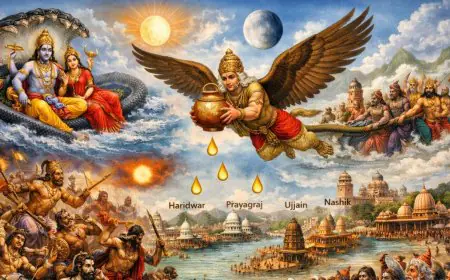
The Brahmakund at Har Ki Pauri is the most sacred point in Haridwar. According to tradition, drops of Amrit (the nectar of immortality) fell into the Brahmakund during the Samudra Manthan . This double sanctity — the Ganga's descent and the Amrit's fall — makes Haridwar uniquely powerful.
Local Insight 📍: Haridwar is one of the four places where the Kumbh Mela is held, rotating every twelve years for the Purna Kumbh and every six years for the Ardh Kumbh . The astrological trigger is Jupiter entering Aquarius (Kumbha) .
The Three Gods and the Footprint
Haridwar is said to have been sanctified by the presence of three Gods — Brahma, Vishnu, and Mahesh . Lord Vishnu's footprint on the stone at Har Ki Pauri is a living relic of this divine presence. Devout believers hold that a dip in the sacred Ganga at Haridwar can grant salvation .
Why the Bhagirath Legend Matters for Ardh Kumbh 2027
The Ardh Kumbh 2027 is not just a religious festival. It is a ritual re-enactment of the Bhagirath legend on a massive scale.
The Shahi Snan as a Collective Penance
Every Shahi Snan is a collective act of purification that echoes Bhagirath's individual penance. The crores of pilgrims who take the holy dip are, in a sense, repeating Bhagirath's quest — seeking purification for themselves and their ancestors.
The Four Amrit Snans: A Historic First
The Ardh Kumbh 2027 will feature four Shahi Amrit Snans for the first time ever — a decision approved by all 13 Akharas . This elevates the 2027 event to the scale of a Purna Kumbh.
| Date | Occasion | Snan Type |
|---|---|---|
| 6 March 2027 | Mahashivratri | First Amrit Snan |
| 8 March 2027 | Phalguna Amavasya (Somvati) | Second Amrit Snan |
| 14 April 2027 | Mesha Sankranti / Baisakhi | Third Amrit Snan |
| 20 April 2027 | Chaitra Purnima | Fourth Amrit Snan |
Source: Snan dates as announced by the Akhil Bharatiya Akhara Parishad and the Mela administration .
The Ganga Snan and Moksha
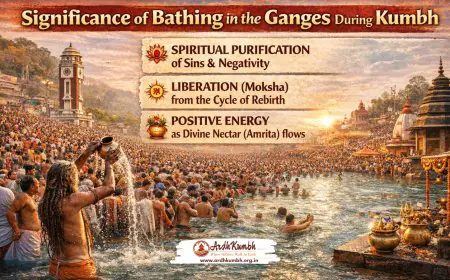
Hindu tradition holds that a dip in the Ganga during Kumbh absolves sins and confers salvation from the cycle of birth and death . This belief is directly rooted in the Bhagirath legend — the Ganga's power to purify ashes and liberate souls.
Expert Tip 💡: The spiritual merit of the Ganga snan is not diminished on quieter days. If you want a peaceful, contemplative experience that honours the Bhagirath legend without the crush of Amrit Snan, choose Basant Panchami (11 February) or Magh Purnima (20 February).
Ganga Dussehra: Celebrating the Descent
The descent of the Ganga — the Gangavatara — is celebrated every year as Ganga Dussehra on the Jyeshtha Shukla Dashami tithi . On this day, lakhs of devotees take a holy dip in Haridwar .
Ganga Dussehra holds immense significance because it commemorates the exact moment when Ganga descended from Shiva's locks to the earth, pleased by Bhagirath's penance . It is believed that a holy dip and acts of charity on this day grant liberation from ten types of sins .
Pro Tip 🧭: Ganga Dussehra falls outside the Ardh Kumbh 2027 window (January–April), but it is a powerful day to visit Haridwar if you want to connect with the Bhagirath legend without the Kumbh crowds.
Frequently Asked Questions