

























































Ancient Scriptures That Clearly Explain Ardh Kumbh
Which ancient scriptures explain Ardh Kumbh? Discover Vedic, Puranic, and Sanatan texts that define its timing, purpose, and sacred meaning.
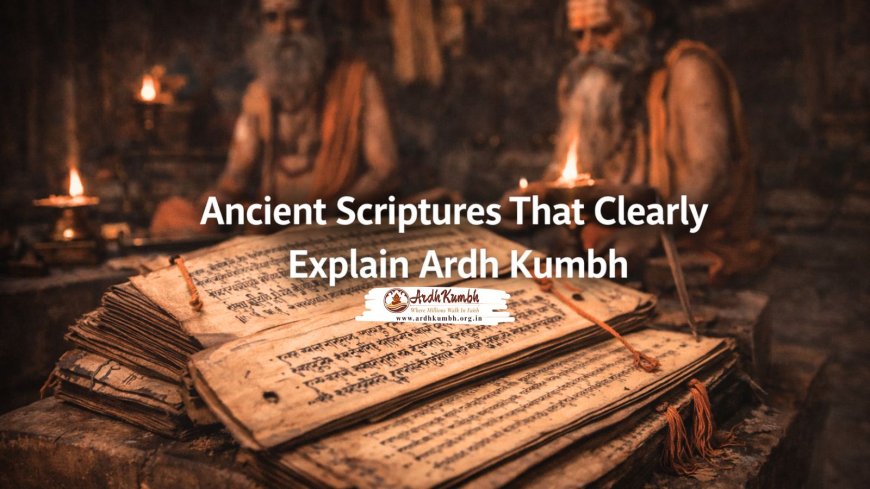
Ancient Scriptures That Clearly Explain Ardh Kumbh
Ardh Kumbh is often described as an ancient tradition, but many seekers ask a deeper question:
Which scriptures actually explain it?
The answer lies not in a single verse or one book, but in the collective scriptural framework of Sanatan Dharma. Ardh Kumbh emerges naturally when Vedic ideas of sacred time, river purification, planetary alignment, and collective spiritual discipline are read together.
Sanatan scriptures rarely announce events as modern schedules do. Instead, they define principles. Ardh Kumbh exists because those principles converge.
Attending the next Ardh Kumbh?
Get official dates, snan rules, Akharas, and planning guidance in our complete event guide.
→ Ardh Kumbh Mela 2027 Complete Guide
Trending Guides Now
History of Ardh Kumbh Mela From Samudra Manthan to Modern Times
Read Guide →
How Saints and Sadhus Define the Ardh Kumbh Tradition
Read Guide →
Why Saints Are Called Living Archives of Kumbh
Read Guide →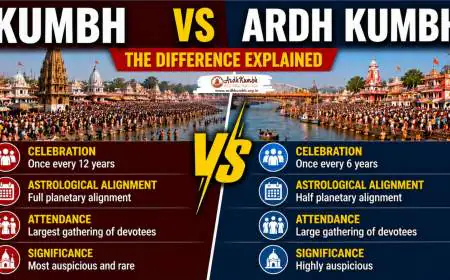
Kumbh vs Ardh Kumbh: The Difference Explained
Read Guide →
Best Routes to Reach Haridwar for Ardh Kumbh Mela
Read Guide →
Ardh Kumbh 2027 Dates (Official) - Haridwar Snan Schedule
Read Guide →
How Kumbh Keeps India’s Civilizational Memory Alive
Read Guide →
February Weather Reality at Ardh Kumbh
Read Guide →Vedic Foundations: Sacred Time and River Purification
The earliest layer of Sanatan knowledge, the Vedas, establishes two ideas essential to Ardh Kumbh:
-
Certain times are spiritually amplified
-
Sacred waters purify beyond the physical level
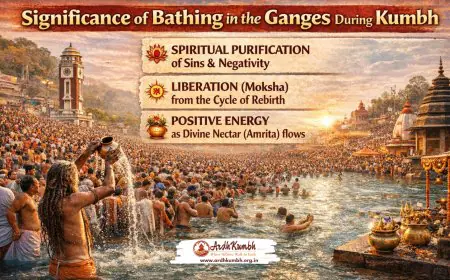
Rigvedic and Atharvavedic hymns repeatedly describe water as a carrier of cosmic order and rivers as forces that cleanse both inner and outer impurities. The Vedas also emphasize that rituals performed at astronomically aligned moments yield greater spiritual results.
While the word “Ardh Kumbh” is not used, the logic that makes Ardh Kumbh necessary is already present.
To truly experience the spiritual power of Ardh Kumbh, every devotee should explore Shahi Snan rituals and Akhara traditions, which explain the sacred bathing process, monastic discipline, and ancient customs that shape this holy gathering. This guide helps pilgrims connect deeply with the true essence of the Mela.
Brahmanas and Upanishads: Inner Meaning of Ritual
The Brahmanas and Upanishads move beyond ritual mechanics and explain why rituals work.
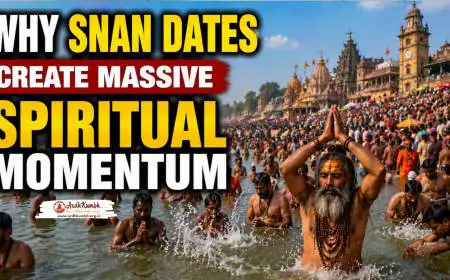
They clarify that purification is not symbolic but psychological and karmic. When an individual enters sacred water with awareness during an auspicious time, the mind becomes receptive to transformation.
This inner framework explains why Ardh Kumbh, occurring at the midpoint of a cosmic cycle, is spiritually effective. The Upanishadic emphasis on self-renewal and continuity aligns directly with Ardh Kumbh’s purpose.
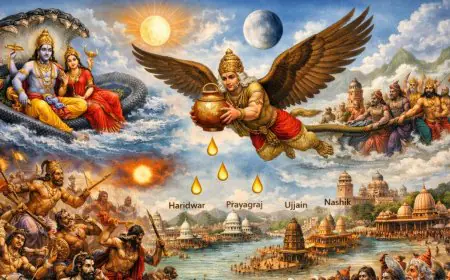
From the divine legend of Samudra Manthan to today’s massive spiritual gatherings, the History of Ardh Kumbh Mela reflects centuries of faith and devotion. This sacred festival continues to unite millions at holy rivers, blending ancient mythology with modern pilgrimage
Puranas: The Structural Explanation of Kumbh
The clearest explanations appear in the Puranic tradition. Texts such as the Bhagavata Purana, Vishnu Purana, Matsya Purana, and Padma Purana narrate the cosmic churning and the sanctification of specific rivers and times.
These texts establish:
-
Why certain rivers are sacred
-
Why planetary alignments matter
-
Why mass bathing holds spiritual value
The Puranas describe recurring sacred periods, not one-time events. This framework allows for intermediate gatherings, which later came to be known as Ardh Kumbh.
Thus, Ardh Kumbh is not an invention outside scripture. It is a logical outcome of Puranic cosmology.
Smriti Texts: Social and Dharmic Continuity
Smriti texts such as Manusmriti and Yajnavalkya Smriti emphasize the need for periodic communal purification, charity, and discipline to preserve dharma in society.
They stress that spiritual order weakens if renewal is delayed too long. This is a crucial justification for Ardh Kumbh.
Ardh Kumbh exists because Sanatan law recognized that human society requires mid-cycle correction, not only final culmination.
Itihasa Tradition: Living Memory Over Fixed Dates
The Ramayana and Mahabharata reinforce the idea that sages, kings, and seekers regularly gathered at sacred rivers during auspicious times for guidance and purification.
These gatherings were not named festivals, but they reflect the behavioral pattern that later matured into Kumbh and Ardh Kumbh traditions.
Sanatan Dharma preserves truth not only through verses, but through repeated lived practice.
Why No Single Verse Names Ardh Kumbh
A common doubt arises: if Ardh Kumbh is ancient, why is it not named directly?
Sanatan scriptures work through principle-based continuity, not event announcements. Ardh Kumbh follows all scriptural conditions for sacred gathering:
-
Auspicious cosmic timing
-
Sacred river geography
-
Collective purification intent
-
Renewal of dharmic discipline
When conditions are met, the tradition naturally manifests.
This is why Ardh Kumbh has endured without ever needing a founding date.
Scriptural Authority Without Rigidity
The strength of Ardh Kumbh lies in its scriptural flexibility. It is anchored in Vedas, clarified by Upanishads, structured by Puranas, and sustained by Smriti and Itihasa.
That is why no era could erase it.
Ardh Kumbh is not written in one scripture.
It is written across Sanatan civilization itself.
Frequently Asked Questions