







































































Who Are Naga Sadhus and Why They Lead Kumbh
Discover who the fierce Naga Sadhus truly are and the profound reason they lead the sacred Kumbh Mela procession. Uncover their secret initiation, warrior past, and spiritual power.

Who Are Naga Sadhus and Why They Lead Kumbh
To a casual observer, they appear like a hallucination ripped straight out of an ancient mythological scroll. Men with matted dreadlocks coiled like serpents on their heads, bodies smeared entirely in greyish-white sacred ash, and wearing absolutely nothing except the freezing winter air and a trident balanced in their hand. These are the Naga Sadhus, and the moment they thunder down to the riverbank for the first royal bath, the Kumbh Mela officially begins. But to reduce them to a spectacular visual, to just a photograph of a naked holy man, is to completely misunderstand the terrifying depth of what they represent. They are not just participants in the Kumbh; they are the very reason the Kumbh holds its spine straight. They are the spiritual shock troops of Sanatana Dharma, men who have voluntarily performed the ritual of their own death, cremated their past identities, and been reborn as entities who exist outside the laws of society. They lead the Kumbh not because of a committee decision, but because they embody the raw, unprocessed, and absolutely untamed energy of Shiva himself, and that energy must be the first to enter and charge the sacred waters for the entire gathering to have meaning.
The Birth of a Naga: Dying Before You Die
You cannot understand the Naga Sadhu unless you sit with the uncomfortable truth that they are technically dead men walking. The entire process of becoming a Naga is a funeral. It is not a symbolic initiation where you get a new name and some beads. It is a brutal, psychological and spiritual demolition of the human identity.
The path begins with a long, grueling period of discipleship under a Guru within a specific Akhara or monastic regiment. For years, sometimes twelve or more, the aspirant lives in complete servitude, breaking every bone of the ego. Then comes the moment of final initiation. The candidate performs his own Pind Daan, the ritual offering of rice balls and sesame seeds that a Hindu son performs for his dead parents. Except, the Naga aspirant performs it for himself. He symbolically feeds his own ancestors with the merit of his life, severing the karmic debt to the bloodline forever. He then performs his own Shraddh or last rites. He sits before the sacred fire, and mantras are chanted to guide his soul away from the physical plane. From that point on, he is a Brahmarishi, beyond the bonds of family and society. His old name is erased, his birth certificate is ash, and he emerges from this ritual womb as a completely new entity, with a new lineage traced directly back to Lord Dattatreya or Adi Shankaracharya. This is why they wear nothing. Clothes are a symbol of social conditioning and bodily shame. The Digambar or sky-clad form is the absolute declaration of freedom. The body is not hidden; it is weaponized into a vessel of spiritual power that has transcended shame, cold, and the judgmental gaze of the clothed world.
The Akhara System: The Army of Lord Shiva
Why are they organized like a military? The Akhara system is the key. A common misunderstanding is that these are loose bands of wandering hippies who have renounced the world. In reality, the Naga Sadhus belong to highly structured, disciplined, and sometimes fiercely territorial monastic military regiments. The Juna Akhara, the Niranjani Akhara, and the Mahanirvani Akhara are the most prominent, and they function with a strict hierarchy.
Trending Guides Now
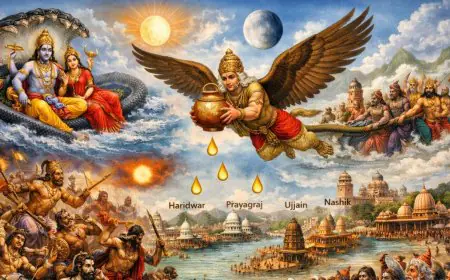
What Is the Story Behind the Ardh Kumbh Mela?
Read Guide →
History of Ardh Kumbh Mela From Samudra Manthan to Modern Times
Read Guide →
Historical Records of Ardh Kumbh Gatherings
Read Guide →
How Ardh Kumbh Quietly Strengthened Faith Networks
Read Guide →
Ardh Kumbh 2027 Dates (Official) - Haridwar Snan Schedule
Read Guide →
Dharamshala Stay During Ardh Kumbh: Free & Budget Guide
Read Guide →
Official Progress Report of Haridwar Ardh Kumbh 2027 Infrastructure Projects
Read Guide →
Where to Find 24-Hour Pharmacies in Haridwar During Ardh Kumbh 2027 Emergencies
Read Guide →The word Akhara itself means a wrestling arena or a garrison. This structure was born out of historical necessity. When Adi Shankaracharya reorganized the ascetic orders in the 8th century, he understood that pure spirituality, without the muscle to protect it, would be annihilated by invading forces. Thus, the scholarly brain and the warrior body were fused. A Naga Sadhu spends his life divided between the meditation cave and the wrestling pit. They are masters of stick fighting, swordsmanship, and the ancient martial art of Kalaripayattu. Their trident is not a prop. The Chimta or fire tongs they carry is not just for the sacred fire; it is a formidable weapon. The ash they wear is not just a cosmetic symbol of death; it is a cooling agent for the intense internal heat generated by their celibacy and Tapasya. When you see them with their fierce, bloodshot eyes, roaring "Har Har Mahadev," they are not performing anger. They are channeling the warrior aspect of Shiva, the destroyer. They are protectors of the faith, and their presence at the Kumbh is a reminder that the spiritual path demands the ferocity of a lion, not just the gentleness of a lamb. They are a living, breathing standing army that guards the intangible treasure of the Vedas, armed not just with weapons, but with the power of their unbroken celibacy.
Why Nakedness in the Freezing Cold is a Superpower
The most immediate question that strikes anyone seeing a Naga Sadhu at the Kumbh during the biting January winter is a purely physical one. How do they survive the cold completely naked? The answer lies in the science of Tapo, or internal heat generation. This is not a magician's trick; it is a physiological mastery born from decades of rigorous Pranayama and Kundalini practices.
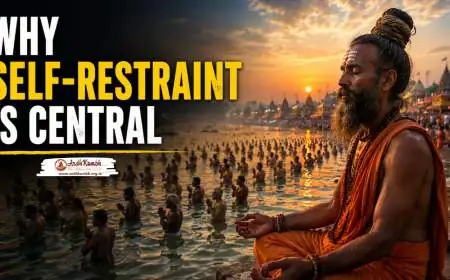
These saints practice a specific form of breathing called Surya Bhedi Pranayama and inner fire meditation known as Tummo in the Tibetan traditions, which has its parallels in the Shaivite Tapas techniques. Through a combination of deep, rhythmic bellows breathing, pelvic floor locks, and visualizations of an internal sun at the navel center, they are able to voluntarily raise their skin temperature. The sacred ash or Bhasma that they smear on their entire body acts as a natural thermal insulator, sealing the pores and preventing the escape of this internally generated heat. Furthermore, the continuous intake of bhang and cannabis, which is ritually offered to Shiva, acts as a powerful vasodilator and alters the perception of extreme temperature. Cold becomes a conceptual thought, not a physical threat. The nakedness is also a statement against the cardinal sin of hypocrisy. In a world where people wear expensive fabrics to hide their inner ugliness, the Naga wears nothing because he has nothing to hide. His body, to him, is a corpse that has been offered to the fire of yoga. The lack of clothing is the ultimate renunciation of protection, a physical declaration that the divine is his only shield. This is why they are the undisputed masters of the Shahi Snan. The common pilgrim trembles in the freezing water and rushes out. The Naga Sadhu storms into it, stays, meditates, and transfers that fire of endurance directly into the molecular memory of the river.
The Peshwai: A Royal Parade of Renouncers
The moment when the Naga Sadhus officially enter the Kumbh city is called the Peshwai, and it is the most electric, chaotic, and awe-inspiring procession on the planet. This is where the question of "why they lead" is answered in a visual spectacle that leaves no room for doubt. The procession is a carefully choreographed display of spiritual sovereignty.
The Peshwai is a statement. It declares that the world-renouncing monks are the true kings of the spiritual realm, and all earthly kings must make way for them. The procession is led by their Acharya Mahamandaleshwar, seated on a majestic elephant, followed by a roaring cavalcade of horses, chariots, and musical bands. The Naga Sadhus, riding their own vehicles or sprinting alongside, twirl their tridents, swords, and glistening spears in the air. The way they lead the Kumbh is not a symbolic walk; it is an energetic claiming of the territory. The ground where the Kumbh happens is considered a battlefield of spiritual forces, and the Akharas are the invading army of light. As they move towards the holy river, the air thickens with the smoke of burning incense and the deafening blast of Damru drums and conch shells. Pilgrims throw flower petals and prostrate on the road because the Peshwai is the only time you can witness the full spectrum of the Akhara's power. The naked, ash-smeared saints chant and display martial skills with an intensity that borders on the terrifying. They lead because their renunciation has given them a spiritual authority that far outweighs any political or financial power. In the hierarchy of the Kumbh, the man who owns nothing is the only king.
The Battle for the First Dip: A Controlled Spiritual War
One of the most misunderstood and often violent-looking aspects of the Kumbh is the intense, sometimes aggressive rush of the Naga Sadhus into the water. Why do they charge with such ferocity? Why do they scream and brandish weapons? This is not a breakdown of discipline; it is the enactment of a cosmic script.
Historically, different Akharas had massive disputes, often bloody, over the right to take the first dip. The order of entry into the Sangam or the river is a direct reflection of the spiritual hierarchy. The Juna Akhara, being the largest and most revered, is given the pride of the first Shahi Snan. The rush you see is a symbolic recreation of the ancient battles fought to protect the dharma and the pilgrimage rights. Even today, though the order is pre-negotiated by the Akhara Parishad, the raw, aggressive energy is retained as a ritualistic performance. When the Naga Babas sprint into the water, throwing water at the sky and roaring, they are not playing. They are shattering the inertia of the mundane world. They are acting as spiritual lightning rods. The intense, concentrated energy of their combined Tapasya is released into the water in that explosive moment. The belief is that the water is now sanctified and supercharged for the general public precisely because these living embodiments of Shiva have claimed it first. They are the vanguard. They take the first, most intense burst of the cosmic energy that descends during the astrologically aligned moment, and they distribute it through the water medium. If the Naga Sadhus were not the first to enter, the Kumbh bath would be, in the eyes of the faithful, just an ordinary swim in a very crowded river. Their leadership in the water is the single most critical spiritual technology of the entire Mela.
The Fearless Renouncers of the Four-Fold Path
The life of a Naga Sadhu is not defined by the Kumbh alone. The Kumbh is their rare public appearance. For the remaining twelve years of the cycle, they vanish into the Himalayas, into deep forests, and into caves that the modern world has forgotten. Their life is governed by a code of extreme severity, designed to break every attachment, including the attachment to life itself.
They take a vow of Sannyasa, which involves the renunciation of family, home, and fire. This means they cannot cook food. They survive on Madhukari, a term that translates to collecting food like a bee. They beg only for unprocessed, raw food from no more than a few houses a day, and eat only once, often just bland rotis or boiled rice. They are masters of standing sleep; some take a vow never to lie down for years. You will see them with a crutch-like stand called an Asana, on which they hang their armpits and sleep standing up, ensuring they never slip into the unconsciousness that binds the soul to the body. The consumption of Chillum or the smoking of cannabis is not recreational. It is a complex Tantric ritual dedicated to Shiva, where the smoke is inhaled and held with a specific mantra to still the mind's fluctuations. They twist their hair into heavy, rope-like Jata, smeared with ash, which acts as a grounding antenna, connecting their crown chakra directly to the earth's electromagnetic field. The trident they carry is a mobile temple, representing the three gunas—Sattva, Rajas, and Tamas—that they have conquered. Every aspect of their existence is a carefully engineered method to generate so much internal spiritual voltage that their very presence at the Kumbh becomes a public service, a distribution of the spiritual current they have painfully generated in solitude.
The Silent Language of Ash and Skin
The decoration of the Naga Sadhu is a complete grammar of silence. Every mark on their body is a scripture. The Bhasma or sacred ash is the most prominent feature. This is not wood ash from a stove. It is ash derived from a specific ritual fire, often a Dhuni, which is kept continuously burning. The ash represents the final, irreducible truth of matter. Everything you own, your car, your gold, your very flesh, will eventually reduce to this grey dust. Coating themselves in it is a permanent memento mori, a full-body reminder of impermanence.
The three horizontal stripes of ash on the forehead and body are the Tripundra, representing the three qualities of nature that have been burnt to purity. The red dot or Tilak applied with vermilion in the center of the forehead signifies the third eye of Shiva, the seat of awakened perception. The matted locks are not just dirty hair; they are the symbol of the untamed, wild logic of nature that refuses to be combed into social conformity. Even the nakedness has a visual grammar. The way they wrap the loincloth, when they occasionally do, and the way they position the rudraksha beads, all signal which specific Akhara they belong to and which particular lineage of philosophy they follow. An observer fluent in this language can look at a Naga Sadhu and know if he is a worshipper of the Bhairava form of Shiva or the peaceful Dakshinamurthy form. Their silence, because many take a Maun Vrat or vow of silence, is not an absence of speech but a different kind of communication that relies on eyes, gestures, and the sheer energetic pressure of a mind that has been held still. When they emerge from their caves for the Kumbh, they are walking libraries of a tradition that predates the written word, and their bodies are the manuscripts.
Why the World's Largest Gathering Needs Its Wildest Sages
The very structure of the Kumbh Mela explains why the Naga Sadhus must lead. The Kumbh is a chaotic, sprawling, and unmanageably vast tent city. It is a flood of humanity that can easily descend into a purely sensory, carnival-like circus of commerce and tourism if there is no spiritual anchor heavy enough to hold it. The Naga Sadhus are that anchor.
They represent the zero point. In a sea of people seeking money, progeny, and material healing, the Naga stands there wanting absolutely nothing. He is not asking the river for a job, a wife, or a cure. He has already left all that behind. This is the ultimate statement of authority. The one who needs nothing from the goddess is the one most qualified to introduce others to her. They are the reference point of pure, unadulterated intention. The Kumbh is held at specific astrological intervals where spiritual energies are available, but without a vessel capable of withstanding and channeling that energy, the voltage is wasted. The Naga Sadhus, through their practice, have made their bodies into high-voltage transformers. When they lead the Shahi Snan, they are not seeking blessings; they are dispensing them. They are the proof that the spiritual path is not just a comforting bedtime story for the weak, but a razor's edge that demands you strip away everything, even the skin you are comfortable in. The Kumbh without the Naga Baba at its head would be a river without a current, a body without a soul, a philosophical conference in a parking lot. They are the raw, beating, untamed heart of the gathering. The government manages the logistics, the pilgrims bring the devotion, but the Naga Sadhus bring the fire that makes the ritual a living, breathing miracle.
The Eternal Echo of the Damru in the Fog
As the mist rolls over the river at dawn and the last of the ash-smeared bodies disappears into the grey curtain of the water, a strange silence descends. The roar has passed. The Naga Sadhus, having fulfilled their cosmic duty of consecrating the waters, retreat to their camps, where the Dhuni fires burn ceaselessly and the chillums glow like fallen stars in the dark tents. They are inaccessible again, lost in a trance, indifferent to the cameras and the curious stares of the world they have permanently renounced. They led the Kumbh not as performers, but as the essential, irreplaceable spark plugs of a gigantic spiritual engine. They are a memory of what humanity can become when it sheds its fear of mortality. They are a window into a state of being where the body is not a fragile, clothed, shivering thing, but a pillar of fire wrapped temporarily in ash. The Kumbh will pack up, the tents will be dismantled, and the riverbanks will return to the farmers and the buffaloes. But the image of the Naga, sprinting fearless and naked into the frozen heart of the river, will remain seared into the collective retina of the civilization they silently protect, a reminder that before the saint, the priest, or the householder, comes the naked warrior of the void, the eternal first son of Shiva.
Frequently Asked Questions