































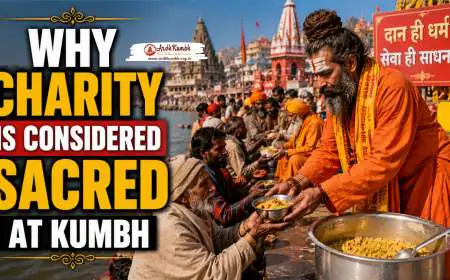






























History of Ardh Kumbh Mela From Samudra Manthan to Modern Times
Explore the complete history of Ardh Kumbh Mela from Samudra Manthan to modern India. Understand its scriptural origins, evolution through ancient, medieval, and modern times, and why Ardh Kumbh remains a living spiritual tradition.
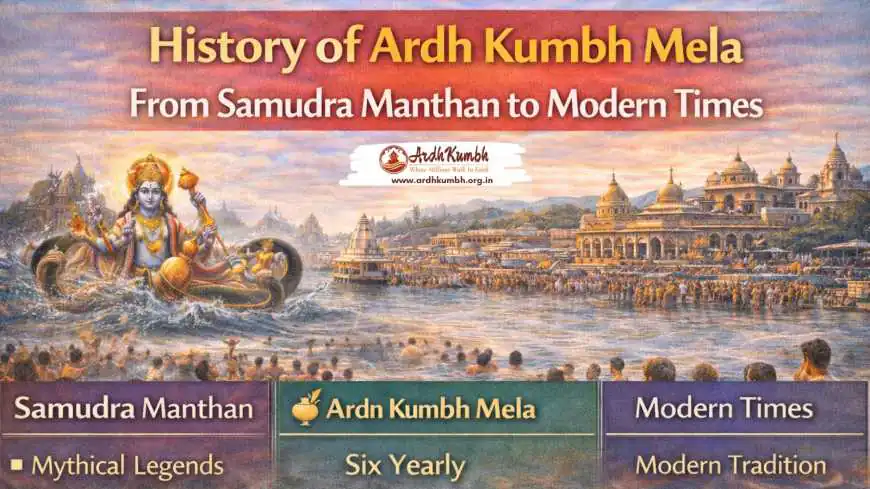
History of Ardh Kumbh Mela: From Samudra Manthan to Modern Times
The Origin of Ardh Kumbh Begins Before History
The history of Ardh Kumbh Mela does not begin with kings, calendars, or cities. It begins with a cosmic idea, described in Hindu scriptures, that explains why human life needs periodic spiritual pauses.
This idea is known as Samudra Manthan.
Understanding this story is essential to understanding why Ardh Kumbh exists at all.
Want to experience Ardh Kumbh in person?
Get official dates, snan guidelines, Akharas, and travel planning tips in our dedicated event guide.
→ Ardh Kumbh Mela 2027 Complete Guide
Trending Guides Now

Who Are Naga Sadhus and Why They Lead Kumbh
Read Guide →
Biggest Crowds Ever Recorded at Ardh Kumbh
Read Guide →
Significance of Bathing in the Ganges During Kumbh Mela Explained
Read Guide →
What Is the Story Behind the Ardh Kumbh Mela?
Read Guide →
Best Routes to Reach Haridwar for Ardh Kumbh Mela
Read Guide →
Ardh Kumbh 2027 Dates (Official) - Haridwar Snan Schedule
Read Guide →
How Kumbh Keeps India’s Civilizational Memory Alive
Read Guide →
February Weather Reality at Ardh Kumbh
Read Guide →Samudra Manthan Explained in Simple Words
In Hindu tradition, Samudra Manthan means the churning of the cosmic ocean.
In simple terms, the story explains that:
-
gods and demons worked together
-
the goal was to obtain Amrit, the essence of immortality
-
many forces emerged during the process
-
only discipline and balance led to the final outcome
This story is symbolic, not literal.
It does not describe a physical ocean.
It describes the human inner world.
From the divine legend of Samudra Manthan to today’s massive spiritual gatherings, the History of Ardh Kumbh Mela reflects centuries of faith and devotion. This sacred festival continues to unite millions at holy rivers, blending ancient mythology with modern pilgrimage
What Amrit Really Means
A common misunderstanding is that Amrit means a magical liquid.
In the scriptural meaning of Kumbh, Amrit represents clarity, balance, and liberation.
Amrit symbolises:
-
freedom from ignorance
-
release from mental burden
-
renewal of purpose
This is why Amrit is linked to time and discipline, not instant reward.
Also Read | Ardh Kumbh 2027 Official Dates (Haridwar)
Why Amrit Required Effort and Time
In the Samudra Manthan story:
-
Amrit did not appear immediately
-
chaos emerged first
-
patience was tested
-
balance was restored slowly
This teaches a core belief behind Ardh Kumbh Mela history:
Spiritual renewal cannot be rushed. It requires time, discipline, and collective effort.
This belief is the foundation of all Kumbh traditions.
Why the Kumbh Became a Symbol
The word Kumbh means pot or vessel.
In the historical and spiritual sense, Kumbh represents the human body and mind.
The idea is simple:
-
the vessel must be cleaned periodically
-
neglect leads to imbalance
-
purification restores function
Ardh Kumbh represents a mid-cycle cleansing of the vessel.
To truly experience the spiritual power of Ardh Kumbh, every devotee should explore Shahi Snan rituals and Akhara traditions, which explain the sacred bathing process, monastic discipline, and ancient customs that shape this holy gathering. This guide helps pilgrims connect deeply with the true essence of the Mela.
Why Time Became Central to Kumbh Traditions
Unlike festivals that repeat annually, Kumbh gatherings are time-specific.
This comes directly from the Samudra Manthan philosophy:
-
transformation happens in cycles
-
cycles have natural pauses
-
mid-points are especially powerful
This is why Ardh Kumbh exists as a halfway spiritual reset, not as a lesser event.
Why Place Matters as Much as Time
The Samudra Manthan story also explains why place matters.
In Hindu thought:
-
water represents flow and continuity
-
rivers symbolise life’s movement
This is why Kumbh Melas occur only at river locations, not randomly.
The history of Ardh Kumbh Mela is inseparable from sacred rivers.
From Cosmic Story to Human Practice
Over centuries, sages interpreted Samudra Manthan as a guide for human living.
They believed:
-
life accumulates mental and karmic weight
-
periodic gathering restores balance
-
collective discipline strengthens individuals
This belief gradually shaped the Kumbh system, including Ardh Kumbh.
Why Ardh Kumbh Is Not a Reduced Kumbh
A critical historical clarification:
Ardh Kumbh is not half in importance.
It is half in cycle.
Scriptures support mid-cycle observances, where:
-
people re-align
-
ascetics renew vows
-
society reconnects with discipline
This makes Ardh Kumbh structurally essential, not optional.
Why This Origin Still Matters Today
Modern readers often see Samudra Manthan as mythology.
In reality, it is a civilizational framework explaining:
-
why humans need pause
-
why chaos precedes clarity
-
why discipline leads to renewal
This is why Ardh Kumbh Mela continues, while many ancient traditions disappeared.
The Core Historical Truth
The most important historical fact is this:
Ardh Kumbh was never invented.
It evolved naturally from a worldview that understood cycles, balance, and renewal.
That worldview still exists.
Why History of Ardh Kumbh Cannot Be Compressed
Unlike political history, Ardh Kumbh history is living history.
It survives because:
-
people still practice it
-
discipline still works
-
meaning still resonates
This makes Ardh Kumbh unique among ancient traditions.
Simple Summary of the Origin
In simple words:
-
Samudra Manthan explains the need for renewal
-
Amrit symbolises clarity, not magic
-
Kumbh represents the human vessel
-
Ardh Kumbh represents mid-cycle purification
This is the true starting point of Ardh Kumbh history.
Why Certain Places Became Kumbh Sites
Rivers, Geography, and Scriptural Logic
After the idea of Samudra Manthan shaped the philosophy behind Kumbh gatherings, the next historical question naturally arose: where should such gatherings take place?
The history of Ardh Kumbh Mela makes one thing very clear.
Kumbh was never meant to be celebrated anywhere.
Place mattered as much as time.
Why Rivers Became Central to Kumbh Traditions
In Hindu civilization, rivers are not resources alone. They are treated as living carriers of continuity.
Scriptural thinking viewed rivers as:
-
symbols of flow and renewal
-
connectors between mountains, plains, and people
-
witnesses to generations
This is why Ardh Kumbh Mela history is inseparable from sacred rivers.
A static place cannot represent renewal.
Only a flowing river can.
Why Bathing Became the Core Act
The act of snan (ritual bathing) is not about physical cleanliness.
Historically, snan represented:
-
shedding accumulated burden
-
symbolic release of past imbalance
-
re-entry into disciplined life
This is why Kumbh and Ardh Kumbh always centre around river bathing, not temple rituals alone.
Why Not All Rivers Became Kumbh Rivers
India has thousands of rivers.
Only four locations became Kumbh sites.
This was not random.
Scriptural logic required:
-
ancient spiritual settlements
-
long-standing ascetic presence
-
stable river flow
-
geographic accessibility
Only four river locations fulfilled all conditions over centuries.
Haridwar: The Gateway of the Ganga
In the history of Ardh Kumbh Mela, Haridwar holds a special position.
Haridwar is where:
-
the Ganga enters the plains after descending from the Himalayas
-
ascetic traditions settled very early
-
ritual discipline remained uninterrupted
Because Haridwar represents transition, it became ideal for mid-cycle purification, which is the essence of Ardh Kumbh.
Why Haridwar Became the Primary Ardh Kumbh Site
Unlike other Kumbh locations, Ardh Kumbh is traditionally associated most strongly with Haridwar.
Historically, this is because:
-
Haridwar was accessible to large populations
-
ascetic orders gathered here more frequently
-
mid-cycle gatherings were practical and meaningful
This made Haridwar the natural home of Ardh Kumbh Mela.
Prayagraj: The Confluence Principle
Prayagraj represents the idea of confluence.
Here, rivers symbolise:
-
physical flow (Ganga)
-
mental discipline (Yamuna)
-
inner clarity (symbolic Saraswati)
The history of Kumbh and Ardh Kumbh recognises Prayagraj as a place of complete alignment, which is why full-cycle gatherings dominate here.
Ujjain: Time and Transformation
Ujjain is historically associated with time awareness.
Ancient scholars observed:
-
celestial movements
-
seasonal cycles
-
time measurement
This made Ujjain important for cosmic alignment, reinforcing the idea that Kumbh gatherings follow time, not convenience.
Nashik: Discipline and Continuity
Nashik developed as a centre of:
-
disciplined ascetic life
-
forest-based learning
-
sustained ritual practice
Its geography supported controlled gatherings, making it suitable for structured Kumbh observances.
Why These Four Sites Endured
Many ancient spiritual sites disappeared.
These four did not.
They survived because:
-
rivers continued flowing
-
ascetic orders stayed active
-
pilgrimage remained relevant
-
discipline adapted without losing meaning
This continuity explains why Ardh Kumbh Mela history is not fragmented.
Why Ardh Kumbh Is Location-Specific
A key historical clarification:
Ardh Kumbh is not rotated randomly.
It occurs where:
-
mid-cycle renewal is meaningful
-
large ascetic presence exists
-
ritual continuity is strongest
This is why Haridwar remains central to Ardh Kumbh Mela.
Scriptural Support for Place-Based Gatherings
Ancient texts consistently emphasise:
-
sacred geography
-
river alignment
-
continuity of practice
This confirms that Kumbh sites were recognised, not selected.
From Geography to Civilisation
Over time, these sites became:
-
centres of learning
-
hubs of spiritual discipline
-
meeting points of society and ascetics
The history of Ardh Kumbh Mela shows how geography shaped civilisation, not the other way around.
Why Place Still Matters Today
Modern infrastructure did not replace ancient logic.
Even today:
-
pilgrims feel different energy at these sites
-
rituals remain site-specific
-
spiritual discipline depends on environment
This proves that the original logic still works.
Simple Summary of Why Kumbh Sites Exist
In simple words:
-
Rivers symbolise renewal
-
Geography supports discipline
-
Ascetics ensure continuity
-
History preserves meaning
That is why only certain places became Kumbh and Ardh Kumbh sites.
How Ardh Kumbh Emerged as a Separate Observance
Mid-Cycle Renewal in Scriptures and Living Practice
After understanding the cosmic foundation of Samudra Manthan and the logic behind sacred Kumbh locations, the next question in the history of Ardh Kumbh Mela is crucial:
Why did Ardh Kumbh emerge as its own observance?
The answer lies in how ancient Hindu civilization understood time, cycles, and human fatigue.
The Concept of Cycles in Hindu Thought
Hindu tradition does not view time as a straight line.
It views time as cyclical.
Cycles exist in:
-
nature
-
seasons
-
human life
-
spiritual effort
Because cycles repeat, they also require periodic correction.
This understanding directly shaped the idea of Ardh Kumbh.
Why Mid-Cycle Renewal Was Necessary
Ancient sages observed something practical:
Long gaps between major spiritual gatherings caused:
-
weakening of discipline
-
fragmentation of ascetic groups
-
dilution of ritual consistency
Waiting only for full-cycle Kumbh gatherings was not enough.
A mid-cycle gathering became necessary to:
-
restore discipline
-
re-align ascetic vows
-
renew collective focus
This need gave birth to Ardh Kumbh Mela.
Scriptural Support for Mid-Cycle Gatherings
Contrary to modern assumptions, Ardh Kumbh is not a later compromise.
Scriptural traditions support:
-
partial observances
-
intermediate purification
-
renewal without completion
These ideas appear across texts that emphasise:
-
balance
-
moderation
-
continuity
The history of Ardh Kumbh Mela is grounded in this scriptural flexibility.
Difference Between Annual Baths and Kumbh Baths
To understand Ardh Kumbh clearly, one must separate it from annual ritual bathing.
Annual baths are:
-
routine
-
personal
-
local
Kumbh and Ardh Kumbh baths are:
-
collective
-
disciplined
-
time-bound
Ardh Kumbh sits between daily devotion and full-cycle Kumbh.
Why Ardh Kumbh Is Not Half in Importance
A critical historical clarification:
Ardh does not mean half importance.
Ardh means half cycle.
In historical practice:
-
rituals remained complete
-
discipline remained strict
-
ascetic leadership remained central
Only the position in the cycle changed, not the value.
Role of Ascetics in Establishing Ardh Kumbh
The history of Ardh Kumbh Mela is inseparable from ascetic communities.
Ascetics required:
-
regular collective reinforcement
-
renewal of vows
-
conflict resolution
Ardh Kumbh provided a controlled space for this renewal.
Without it, ascetic traditions risked fragmentation.
Why Ardh Kumbh Was Preserved Over Centuries
Many intermediate observances disappeared over time.
Ardh Kumbh did not.
It survived because:
-
it served a real need
-
it was not excessive
-
it balanced effort and rest
Communities preserved it because it worked.
Ardh Kumbh as a Preventive Tradition
Historically, Ardh Kumbh acted as prevention, not correction.
Instead of allowing:
-
decline in discipline
-
erosion of values
-
loss of coordination
Ardh Kumbh prevented decay.
This preventive nature explains its longevity.
Why Haridwar Became Central to Ardh Kumbh
Mid-cycle gatherings required:
-
accessibility
-
safety
-
established ritual authority
Haridwar fulfilled all three.
This is why Ardh Kumbh became historically anchored to Haridwar more strongly than other sites.
From Informal Gatherings to Formal Observance
In early periods, Ardh Kumbh was:
-
less structured
-
smaller in scale
-
more ascetic-focused
Over time, as participation increased, discipline and structure evolved, not belief.
This evolution strengthened, not diluted, the tradition.
Why Ardh Kumbh Is Not a Modern Invention
Some modern narratives incorrectly label Ardh Kumbh as recent.
Historical continuity shows otherwise:
-
oral traditions reference it
-
ascetic lineages preserved it
-
ritual patterns remained consistent
Ardh Kumbh was recognised, not created.
Civilizational Importance of Ardh Kumbh
Ardh Kumbh ensured:
-
continuity between generations
-
stability within ascetic orders
-
connection between society and renunciation
Without it, the Kumbh tradition itself may not have survived intact.
Simple Summary of How Ardh Kumbh Emerged
In simple words:
-
time moves in cycles
-
cycles weaken discipline
-
mid-cycle renewal restores balance
-
Ardh Kumbh provides that renewal
This is the true historical reason Ardh Kumbh emerged and endured.
Ardh Kumbh in the Ancient Period
Sages, Oral Tradition, and the Earliest Gatherings
To understand the history of Ardh Kumbh Mela, it is essential to step into a time when written records were rare, kingdoms were unstable, and spiritual knowledge was preserved through living memory rather than documents.
The ancient period of Ardh Kumbh was not defined by scale or organisation. It was defined by presence, continuity, and discipline.
Why Early Ardh Kumbh Was Not Recorded in Texts
Modern readers often ask:
“Why is there limited written history of Ardh Kumbh?”
The answer lies in how ancient Indian civilization functioned.
In the ancient period:
-
spiritual knowledge was transmitted orally
-
writing was reserved for essential philosophy
-
living traditions were trusted more than documentation
Ardh Kumbh Mela history survived because it was practiced, not written.
The Role of Sages in Early Ardh Kumbh
In ancient times, sages and ascetics were the custodians of spiritual continuity.
They:
-
lived near rivers
-
followed strict personal discipline
-
travelled between sacred sites
-
gathered periodically for renewal
These gatherings formed the earliest shape of Ardh Kumbh.
They were not announced.
They were understood.
Ardh Kumbh as a Meeting of Lineages
Early Ardh Kumbh gatherings were primarily for:
-
ascetic lineages
-
teacher–disciple transmission
-
renewal of vows
Society participated quietly, but leadership remained ascetic.
This ensured that Ardh Kumbh stayed focused on discipline, not spectacle.
Why Oral Tradition Was Reliable
Oral tradition in ancient India was not casual storytelling.
It followed:
-
strict memorisation methods
-
repetition across generations
-
community correction
Because of this, ritual continuity was more reliable than written law.
This explains why Ardh Kumbh practices remained consistent even without records.
Scale of Ardh Kumbh in the Ancient Period
Ancient Ardh Kumbh gatherings were:
-
small to moderate in size
-
ascetic-dominated
-
regionally significant
They were not mass pilgrimages.
The purpose was renewal, not expansion.
Why Rivers Were Central Meeting Points
In ancient India, rivers served as:
-
natural gathering spaces
-
sources of food and water
-
routes of travel
Holding Ardh Kumbh near rivers ensured:
-
accessibility
-
sustainability
-
ritual symbolism
This strengthened the river-centric identity of Ardh Kumbh Mela history.
Absence of Central Authority
There was no single authority controlling Ardh Kumbh in ancient times.
Instead:
-
senior ascetics guided gatherings
-
discipline was self-enforced
-
respect maintained order
This decentralised structure allowed Ardh Kumbh to survive political instability.
Why Ardh Kumbh Was Never Interrupted
Wars, dynasties, and migrations affected cities.
Ardh Kumbh survived because:
-
it was not tied to rulers
-
it did not require infrastructure
-
it depended on people, not power
This independence protected the tradition.
Relationship Between Society and Ascetics
In the ancient period:
-
society supported ascetics with food and shelter
-
ascetics guided society through example
-
gatherings reinforced mutual trust
Ardh Kumbh functioned as a bridge between renunciation and daily life.
Why Discipline Was Strict Even Then
Even without crowd pressure, discipline was non-negotiable.
Ancient ascetics believed:
-
disorder weakens spiritual focus
-
renewal requires restraint
-
discipline maintains clarity
This mindset shaped Ardh Kumbh culture permanently.
Transmission Across Generations
Young disciples attended Ardh Kumbh to:
-
observe senior ascetics
-
learn conduct
-
inherit responsibility
This ensured generational continuity, not dependency on texts.
Why Ardh Kumbh Did Not Become a Festival
Unlike seasonal festivals, Ardh Kumbh:
-
had no entertainment element
-
lacked commercial activity
-
avoided celebratory excess
This preserved seriousness and prevented dilution.
Ancient Ardh Kumbh as a Living System
Ardh Kumbh was not an event.
It was a system of renewal.
As long as:
-
ascetics practiced discipline
-
rivers flowed
-
society respected the process
Ardh Kumbh continued naturally.
What This Ancient Phase Proves
The ancient period proves one thing clearly:
Ardh Kumbh survived because it was needed, not because it was promoted.
This need-based survival is why the tradition remains credible today.
Simple Summary of the Ancient Period
In simple words:
-
sages preserved Ardh Kumbh
-
oral tradition ensured continuity
-
discipline replaced documentation
-
renewal remained the core purpose
This is how Ardh Kumbh Mela history moved safely through ancient times.
Ardh Kumbh in the Medieval Period
Rise of Akharas, Organisation, and Discipline
The medieval period marked a turning point in the history of Ardh Kumbh Mela. This was the time when Indian society experienced political instability, religious competition, and population movement. To survive these pressures, Ardh Kumbh needed structure without losing soul.
That structure came through the rise of Akharas.
Why Organisation Became Necessary
In ancient times, Ardh Kumbh gatherings were smaller and ascetic-dominated.
By the medieval period:
-
pilgrim numbers increased
-
travel became easier
-
different spiritual paths converged
Without organisation, gatherings risked:
-
disorder
-
conflict
-
dilution of discipline
Organisation was not introduced for power.
It was introduced for preservation.
Birth of the Akhara System
Akharas emerged as organised ascetic orders that:
-
preserved distinct spiritual paths
-
trained disciples
-
enforced discipline
-
protected ritual purity
In the history of Ardh Kumbh, Akharas became the custodians of continuity.
They did not replace ancient traditions.
They formalised them.
Role of Akharas in Ardh Kumbh
During Ardh Kumbh, Akharas:
-
coordinated bathing order
-
maintained crowd discipline
-
resolved inter-sect disputes
-
ensured ritual correctness
This system prevented chaos as participation expanded.
The presence of Akharas allowed Ardh Kumbh Mela to grow without becoming unmanageable.
Why Discipline Became Non-Negotiable
Medieval society faced:
-
external religious challenges
-
internal fragmentation
-
political uncertainty
Ascetic leaders understood that discipline was survival.
Strict discipline ensured:
-
focus on spiritual purpose
-
protection from external influence
-
continuity of belief systems
This period permanently embedded discipline into Ardh Kumbh culture.
Ardh Kumbh as a Unifying Platform
Despite diversity of belief, Ardh Kumbh became a place where:
-
different ascetic paths met
-
disagreements were settled
-
shared discipline overrode differences
This made Ardh Kumbh a civilizational stabiliser, not just a ritual gathering.
Why Rulers Did Not Control Ardh Kumbh
Unlike festivals sponsored by kings, Ardh Kumbh remained outside royal control.
Rulers:
-
respected its autonomy
-
avoided interference
-
sometimes provided protection
This separation ensured that Ardh Kumbh Mela history was shaped by spiritual authority, not political power.
Protection During Times of Conflict
During invasions and instability:
-
Akharas protected pilgrims
-
ascetics safeguarded rituals
-
locations shifted temporarily if needed
This flexibility ensured survival without compromise.
Why Ardh Kumbh Did Not Disappear
Many medieval traditions vanished.
Ardh Kumbh survived because:
-
Akharas institutionalised memory
-
discipline prevented dilution
-
society supported the structure
Organisation saved the tradition without commercialising it.
Expansion Without Dilution
The medieval period saw:
-
increased pilgrim participation
-
wider geographic reach
Yet the core rituals remained unchanged.
This balance between scale and sanctity is one of the strongest proofs of Ardh Kumbh’s resilience.
Transmission of Authority
Authority during Ardh Kumbh shifted from:
-
individual sages
to -
structured ascetic leadership
This transition ensured continuity across generations.
Why Medieval Changes Strengthened Ardh Kumbh
Instead of weakening the tradition, medieval organisation:
-
reinforced discipline
-
clarified ritual roles
-
strengthened identity
The history of Ardh Kumbh Mela shows that adaptation, when guided by values, leads to survival.
Simple Summary of the Medieval Period
In simple words:
-
crowds increased
-
Akharas organised discipline
-
rulers stayed out
-
rituals stayed intact
This is how Ardh Kumbh survived medieval challenges.
Ardh Kumbh in Pre-Modern and Early Modern India
Survival Through Political Change
The pre-modern and early modern period was one of the most unstable phases in Indian history. Kingdoms rose and fell, administrations changed, and cities transformed. Yet the history of Ardh Kumbh Mela shows remarkable continuity during this time.
This survival was not accidental. It was the result of spiritual independence, adaptability, and restraint.
Why Political Change Did Not Break Ardh Kumbh
Most large gatherings depend on rulers for permission, funding, or patronage. Ardh Kumbh did not.
Historically:
-
it was not state-owned
-
it was not temple-controlled
-
it was not ruler-sponsored
Because Ardh Kumbh belonged to no throne, it survived every throne.
Role of Local Communities
As kingdoms changed, local communities became the silent protectors of Ardh Kumbh.
They:
-
hosted ascetics
-
supported pilgrims
-
preserved routes and ghats
-
respected ritual authority
This grassroots support ensured that Ardh Kumbh Mela history remained continuous even when rulers changed.
Ascetics as the Stable Authority
In times when administrations were unstable, ascetic orders remained stable.
They:
-
followed fixed ritual calendars
-
maintained discipline
-
resolved disputes internally
Because of this, spiritual authority outlasted political authority.
This is a key reason why Ardh Kumbh never needed official sanction to exist.
How Ardh Kumbh Adapted Without Compromising
Adaptation was necessary, but compromise was not.
During unstable periods:
-
routes changed, not rituals
-
gathering size adjusted, not discipline
-
locations shifted slightly, not meaning
This flexibility allowed survival without dilution.
Early Modern Administration and Ardh Kumbh
As structured administrations emerged, especially during early modern times:
-
authorities focused on safety
-
logistics were observed, not dictated
-
ritual control remained with ascetics
This separation created a model still followed today:
-
state manages logistics
-
spiritual authority manages tradition
Why Ardh Kumbh Was Never Banned
Many religious practices were restricted during political transitions.
Ardh Kumbh was rarely interrupted.
Reasons:
-
it was peaceful
-
it did not challenge authority
-
it maintained internal discipline
This made Ardh Kumbh a non-threatening yet powerful tradition.
Continuity of Ritual Calendar
One of the strongest proofs of historical continuity is that:
-
the timing logic remained intact
-
cycles were respected
-
mid-cycle observance continued
The Ardh Kumbh calendar was preserved even without central records.
Why Written Records Increase in This Period
During early modern times:
-
documentation increased
-
travel records mention Kumbh gatherings
-
administrative notes refer to pilgrim movement
These references confirm that Ardh Kumbh was already established, not newly created.
Public Participation Increases
As travel improved:
-
more lay pilgrims joined
-
awareness spread
-
gatherings became socially visible
Yet ascetic discipline ensured that spiritual focus remained central.
Why Commercialisation Did Not Take Over
Despite larger crowds, Ardh Kumbh resisted becoming commercial because:
-
ascetics discouraged excess
-
offerings remained simple
-
rituals remained austere
This restraint preserved credibility and trust.
The Silent Strength of Ardh Kumbh
Unlike festivals that relied on spectacle, Ardh Kumbh relied on meaning.
Meaning travels quietly but survives longer.
This is why Ardh Kumbh Mela history passed safely through centuries of change.
What This Period Proves
This period proves one core truth:
Ardh Kumbh survives not because it is protected, but because it is balanced.
Balance made it adaptable.
Adaptability made it permanent.
Simple Summary of Pre-Modern and Early Modern Survival
In simple words:
-
rulers changed
-
society adjusted
-
ascetics guided
-
rituals continued
This is how Ardh Kumbh crossed political eras intact.
Ardh Kumbh in Modern India
State Role, Logistics, and Unchanged Spiritual Authority
Modern India introduced roads, railways, administration, and mass communication. These changes transformed how people travel and gather. Yet the history of Ardh Kumbh Mela shows something remarkable: the spiritual core of Ardh Kumbh did not change.
Only the support system changed, not the tradition.
Why the State Entered the Ardh Kumbh Framework
As pilgrim numbers grew into millions, certain responsibilities became unavoidable.
The state entered the Ardh Kumbh framework to manage:
-
crowd safety
-
sanitation
-
transport
-
temporary infrastructure
This involvement was administrative, not spiritual.
The state supports Ardh Kumbh.
It does not define it.
Clear Separation of Roles
One of the most important developments in modern times is the clear separation of roles.
-
Spiritual authority remains with ascetics and Akharas
-
Logistical responsibility rests with the administration
This separation preserves trust.
It ensures that Ardh Kumbh Mela history remains spiritually independent.
Why Ritual Control Never Shifted
Despite modern systems, ritual decisions are still made by:
-
ascetic leadership
-
traditional councils
-
lineage-based authority
The state does not decide:
-
bathing order
-
ritual timing
-
spiritual hierarchy
This continuity proves that modernisation did not dilute Ardh Kumbh.
Modern Infrastructure as a Support, Not a Replacement
Temporary bridges, tents, and facilities exist to:
-
protect pilgrims
-
reduce hardship
-
improve safety
They do not replace:
-
river-based rituals
-
ascetic discipline
-
scriptural logic
Modern tools support ancient practice, not replace it.
Why Ardh Kumbh Did Not Become a Festival Event
Modern India hosts many festivals.
Ardh Kumbh did not become one.
Reasons:
-
discipline remains central
-
entertainment is absent
-
rituals are not shortened
This distinction preserves seriousness and credibility.
Media Presence and Public Awareness
Media coverage increased awareness but did not alter practice.
While:
-
images spread
-
information travels faster
The ritual itself remains unchanged.
This balance protects authenticity.
Why Ardh Kumbh Still Attracts Ascetics
Even today:
-
ascetics travel long distances
-
vows are renewed
-
disputes are resolved
Ardh Kumbh remains essential to ascetic life, not symbolic.
This ensures continuity.
Public Participation in Modern Times
Modern pilgrims attend with:
-
curiosity
-
devotion
-
search for meaning
Ardh Kumbh accommodates them without compromising structure.
This inclusivity strengthens relevance.
Why Regulation Did Not Reduce Spiritual Freedom
Rules exist for:
-
safety
-
movement
-
hygiene
They do not restrict:
-
prayer
-
bathing
-
spiritual expression
This balance maintains trust between pilgrims and tradition.
Ardh Kumbh as a Living Institution
In modern India, Ardh Kumbh functions as:
-
a spiritual gathering
-
a social stabiliser
-
a cultural memory
It is not archived history.
It is living practice.
Why Ardh Kumbh Still Matters Today
Modern life creates:
-
speed
-
distraction
-
fragmentation
Ardh Kumbh offers:
-
pause
-
discipline
-
renewal
This relevance keeps the tradition alive.
What Modern India Proves About Ardh Kumbh
Modern India proves one truth:
A tradition rooted in balance can adapt without losing itself.
Ardh Kumbh did exactly that.
Simple Summary of Ardh Kumbh in Modern India
In simple words:
-
administration supports
-
ascetics guide
-
rituals remain
-
meaning survives
This is how Ardh Kumbh Mela history continues in modern India.
Why Ardh Kumbh Still Continues
Civilizational Meaning and Living History
After tracing the history of Ardh Kumbh Mela from Samudra Manthan through ancient, medieval, pre-modern, and modern India, one question remains:
Why has Ardh Kumbh survived when thousands of ancient traditions disappeared?
The answer is not sentiment.
It is function.
Ardh Kumbh as a Living System, Not a Historical Event
Most ancient traditions became:
-
symbolic
-
occasional
-
museum-like
Ardh Kumbh did not.
It continues because it functions as:
-
a system of renewal
-
a corrective pause
-
a discipline refresher
This makes Ardh Kumbh history different from recorded history.
It is living history.
Why Civilizations Preserve What They Need
Civilizations do not preserve everything.
They preserve what works.
Ardh Kumbh survives because it:
-
restores balance
-
reconnects society and renunciation
-
resets discipline before decay
This usefulness ensures continuity.
Ardh Kumbh as Mid-Cycle Civilizational Reset
In simple terms:
-
life creates accumulation
-
accumulation creates imbalance
-
imbalance requires correction
Ardh Kumbh Mela exists precisely at that correction point.
It is not an emergency response.
It is preventive maintenance for civilization.
Why Collective Renewal Matters More Than Individual Practice
Individual spirituality is powerful.
Collective renewal is stabilising.
Ardh Kumbh brings together:
-
ascetics
-
householders
-
seekers
-
communities
This collective alignment prevents fragmentation of values.
That is why Ardh Kumbh still matters even in modern times.
Why Ardh Kumbh Was Never Forced to Continue
Many traditions survive due to enforcement.
Ardh Kumbh never needed enforcement.
People return because:
-
meaning remains
-
discipline feels relevant
-
renewal is experienced, not promised
Voluntary continuation is the strongest proof of authenticity.
Transmission Without Textbooks
Even today, Ardh Kumbh teaches:
-
patience through waiting
-
humility through discipline
-
restraint through simplicity
These lessons are observed, not explained.
This silent transmission keeps the tradition alive.
Why Ardh Kumbh Resists Commercialisation
Commercialisation kills credibility.
Ardh Kumbh resists it because:
-
ascetic leadership discourages excess
-
rituals remain austere
-
focus remains inward
This restraint preserves trust across generations.
Ardh Kumbh as Civilizational Memory
Civilizations forget when memory breaks.
Ardh Kumbh acts as:
-
a memory checkpoint
-
a reminder of balance
-
a reaffirmation of restraint
It keeps civilizational values active, not archived.
Why Modern Life Needs Ardh Kumbh More, Not Less
Modern life creates:
-
speed
-
overload
-
distraction
Ardh Kumbh offers:
-
pause
-
discipline
-
recalibration
This contrast explains why participation continues to grow.
Ardh Kumbh Is Not About the Past
A critical clarification:
Ardh Kumbh is not about preserving the past.
It is about correcting the present.
That is why it never becomes outdated.
Why Ardh Kumbh Will Continue
As long as:
-
people accumulate imbalance
-
societies need correction
-
discipline requires renewal
Ardh Kumbh will continue naturally.
No promotion is needed.
No revival campaign is required.
The Final Historical Truth
The deepest truth of Ardh Kumbh Mela history is this:
Traditions survive when they serve life, not nostalgia.
Ardh Kumbh serves life.
Simple Final Summary of Ardh Kumbh History
In simple words:
-
Samudra Manthan gave the philosophy
-
rivers gave the setting
-
ascetics gave discipline
-
society gave continuity
-
balance gave survival
This is why Ardh Kumbh Mela moved from cosmic story to living civilization.
Final Closing Thought
Ardh Kumbh does not belong to a century.
It belongs to a cycle.
As long as cycles exist,
Ardh Kumbh will return.
Frequently Asked Questions