





















































How Ardh Kumbh Unified Diverse Sampradayas
Discover how Ardh Kumbh unified diverse sampradayas into a single sacred framework. Learn how competing Shaiva, Vaishnava, and Udasin akharas negotiated hierarchy, shared rituals, and created an enduring model of spiritual coexistence.
The Akhara Mosaic: Why Unity Was the Only Survival Strategy 🔱
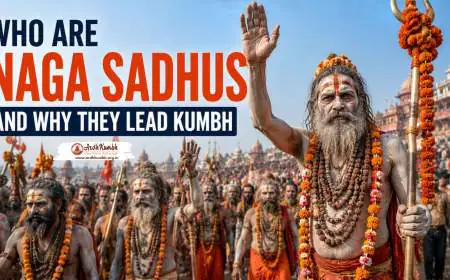
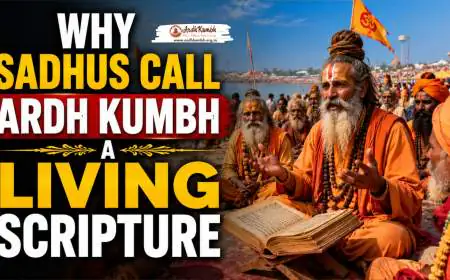
To understand how the Ardh Kumbh unified diverse sampradayas, one must first appreciate the intense, often competitive, diversity of India’s monastic landscape. The great akhara system, formalized by Adi Shankaracharya and expanded over centuries, was a vibrant but volatile ecosystem. The Shaiva akharas, like the Juna, Niranjani, and Mahanirvani, were guardians of Vedic ritualism and fiery, world-renouncing asceticism. Their naga sadhus, armed and ash-smeared, were both revered saints and formidable warriors. The Vaishnava sampradayas, often called Bairagis, organized into their own akharas (or anis), were devoted to Vishnu and his avatars, their approach often more devotional and their philosophical stance of qualified non-dualism clashing with the strict non-dualism of the Shaiva orders.
Beyond these two great poles existed the Udasin akharas, a syncretic order founded on the teachings of Sri Chand, blending Sikh and Hindu philosophies, and numerous other smaller, decentralized tantric and yogic lineages. Historically, these groups did not always see eye to eye. Disputes over doctrine, patronage, and precedence sometimes erupted into violent clashes, the most famous of which occurred at the 1760 Haridwar Kumbh. The Kumbh Mela, therefore, was not just a peaceful gathering; it was a potential flashpoint. The pressing need for a unifying framework was a matter of survival. The Ardh Kumbh became that framework, the recurring, non-negotiable event where these diverse sampradayas had to develop a modus vivendi. They had to learn to live together, or risk destroying the very pilgrimage that gave them their collective identity.
The Sacred Geography That Forced a Shared Destiny 🌊
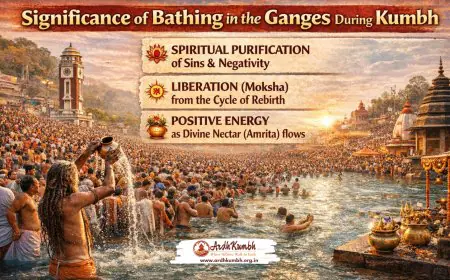
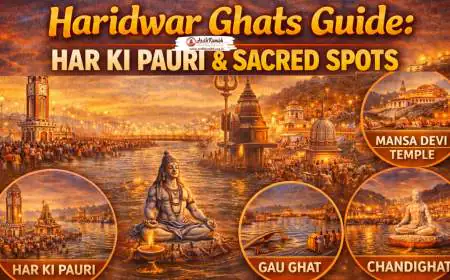
The first great unifier was the land itself. The Ardh Kumbh and the full Kumbh rotate among four sacred locations—Prayagraj, Haridwar, Ujjain, and Nashik—but the principle is the same: the river is the master, and the sampradayas are her guests. No single akhara owns the Ganga, the Shipra, or the Godavari. They flow from the Himalayas and the heart of India, a force of nature that transcends all human claims. When the Shaiva and Vaishnava orders pitched their camps at the Sangam, they were on neutral ground. The sacred geography itself acted as a leveler. The river did not ask for a tilak or a vibhuti mark. It embraced everyone in the same freezing, purifying current.
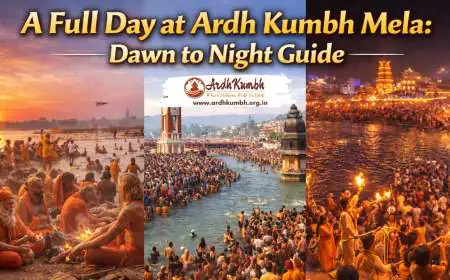
This shared sacred geography forced a practical, lived unity. The akharas had to cooperate on the layout of the vast temporary city. They had to manage the flow of millions of pilgrims, which required coordination between their warrior-sadhus and later with civil authorities. The pontoon bridges, the approach routes to the ghats, and even the sanitation zones were all shared resources that demanded negotiation. The Ardh Kumbh unified diverse sampradayas by presenting them with a logistical problem that could only be solved collectively. The very act of gathering at the same river, cycle after cycle, created a sense of shared belonging to a sacred tradition that was bigger than the walls of any individual monastery. It created a spiritual geography where the Vaishnava from Ayodhya and the Shaiva from the Himalayas could meet, not as rivals, but as fellow pilgrims answering the same cosmic call.
Trending Guides Now
What Is the Story Behind the Ardh Kumbh Mela?
Read Guide →
The Untold Stories of Har Ki Pauri
Read Guide →
How Saints and Sadhus Define the Ardh Kumbh Tradition
Read Guide →
Ancient Scriptures That Clearly Explain Ardh Kumbh
Read Guide →
Best Routes to Reach Haridwar for Ardh Kumbh Mela
Read Guide →
Ardh Kumbh 2027 Dates (Official) - Haridwar Snan Schedule
Read Guide →
How Kumbh Keeps India’s Civilizational Memory Alive
Read Guide →
Why Yagya Fires Burn Throughout Kumbh
Read Guide →The Shahi Snan: A Masterpiece of Negotiated Hierarchy 🛕
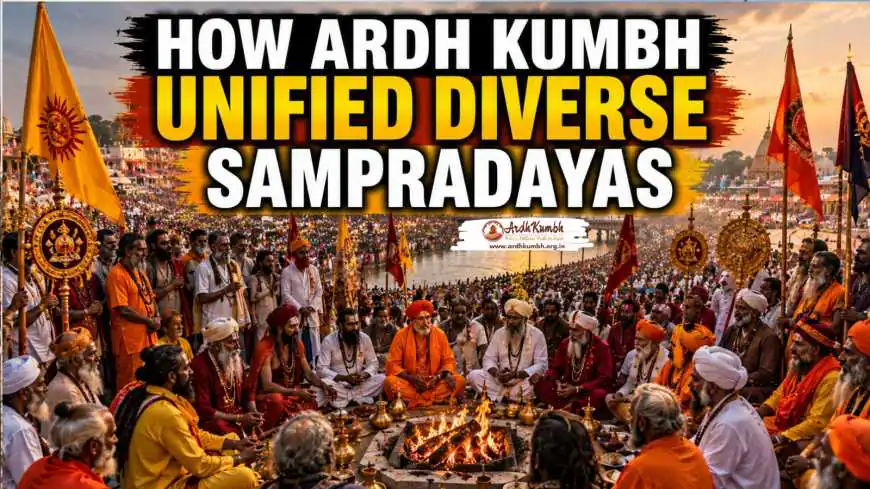
The most visible and potent symbol of sampradaya unity at the Ardh Kumbh is the shahi snan, the royal bathing procession. To the uninitiated, it looks like a magnificent, divinely ordered parade. In reality, the sequence of who enters the water first—the Juna, the Niranjani, the Mahanirvani, followed by the Vaishnava akharas—is a carefully calibrated, centuries-old peace treaty. The order of precedence is not random; it is the fossilized record of past power dynamics, negotiated agreements, and earned spiritual prestige. The Ardh Kumbh did not erase the hierarchies between sampradayas; it formalized them into a shared, accepted ritual. This transformed a potential source of violent conflict into a stable, predictable, and even sacred structure.
The process of deciding this order required intense, high-stakes dialogue between the mahants and leaders of the various orders. They had to meet, debate, and agree on a protocol that acknowledged the historical status of each group. This ongoing process of negotiation is itself a powerful unifying force. The Ardh Kumbh unified diverse sampradayas by creating a permanent diplomatic table at which the akharas were the key players. The shahi snan is their collective performance of this agreed-upon order, a yearly reaffirmation that the Shaiva and Vaishnava orders, despite their differences, are part of a single, grand, sacred script. They march to the river together, under the same sky, their distinct flags and chants creating a symphony of diversity that proclaims a deeper unity.
The Bhandara and Shared Austerity: Unity Through Humility 🤲
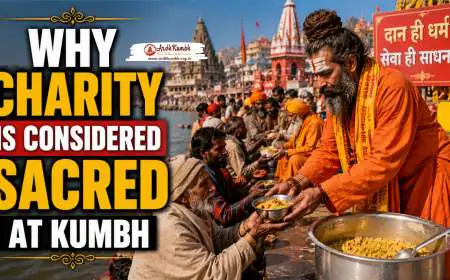
If the shahi snan formalized hierarchical unity, the bhandara—the free, communal kitchen—forged a unity of radical, ground-level equality. This is one of the most powerful and often overlooked ways the Ardh Kumbh unified diverse sampradayas. Inside a bhandara, all worldly and even spiritual titles are temporarily suspended. The Shaiva naga, the Vaishnava Bairagi, the Udasin sadhu, and the ordinary householder pilgrim all sit in the same long rows on the ground. They eat the same simple food, served from the same pots, on the same leaf plates. This is not just charity; it is a profound spiritual technology that cuts through the pride of sectarian identity.
The act of sharing food creates a bond of kinship that ideology cannot break. When a Juna akhara sadhu accepts food from a kitchen run by a Vaishnava trust, a subtle but powerful message is sent. It says: "We may disagree on the nature of the Supreme, but we share a common human hunger and a common dependence on the divine grace that provides this food." The Ardh Kumbh extended this principle across the entire Mela. The sampradayas that ran their own massive bhandaras were not just feeding their own followers; they were feeding the entirety of the gathered humanity. This collective act of nourishing a city of millions transcended theological boundaries and created a profound, unspoken unity of purpose. It demonstrated that compassion and service were the shared bedrock of their diverse paths.
The Intellectual Kumbh: Shastrartha and the Shared Pursuit of Truth 🧠
The Ardh Kumbh was never just a place for ritual and austerity; it was the world's greatest pop-up university, a marketplace of ideas where the deepest philosophical conflicts were aired in public. The tradition of shastrartha—formal, public philosophical debate—was a central feature. Shaiva philosophers of the Advaita school would engage Vaishnava scholars of the Dvaita or Vishishtadvaita schools in rigorous, logical combat. These were not polite academic seminars. They were high-stakes contests where reputations, disciples, and royal patronage hung in the balance.
Yet, this intellectual combat was itself a powerful engine of unity. It unified the diverse sampradayas by forcing them to take each other seriously. A Vaishnava acharya who debated a Shaiva pontiff publicly acknowledged that the Shaiva’s philosophy was a worthy challenge that required his best effort to address. This created a deep, mutual, albeit competitive, respect. Over centuries, this process sharpened the logical rigor of all traditions and weeded out irrational dogmas. More importantly, these debates were conducted in the shared language of Sanskritic logic, using a common set of hermeneutical rules. The Kumbh created a single intellectual arena where the truth was not a possession to be guarded but a summit to be climbed from different base camps. The Ardh Kumbh unified diverse sampradayas by giving them a shared intellectual project: the relentless, collective pursuit of the ultimate reality, even if they described it by different names.
The Pandas: The Neutral Archivists Who Wove the Social Fabric 📜
A hidden but crucial role in the unification of sampradayas at the Ardh Kumbh was played by the pandas, the hereditary pilgrim priests and genealogists. The pandas, with their vast vahis (record books), did not belong exclusively to any single akhara. They served as the neutral interface between the sacred river, the pilgrim families, and the entire spectrum of spiritual traditions. A panda’s vahi recorded the visit of a pilgrim's family, regardless of whether that family’s personal guru was a Shaiva or a Vaishnava. The river was the primary allegiance, and the panda served the river, not a specific sect.
This genealogical service was a quiet but continuous thread weaving the social fabric of the sampradayas together. The pandas ensured that spiritual lineages were not just monastic and exclusive but also domestic and inclusive. A householder who worshipped Rama and followed a Vaishnava guru would still come to the same panda at Prayagraj as his Shaiva neighbor. The panda’s records did not discriminate. This created a deep, subterranean unity that was stronger than the more visible but often theatrical rivalries between the monastic orders. The Ardh Kumbh unified diverse sampradayas at the level of the family, the village, and the ancestral memory, ensuring that sectarian identity was always contained within a larger, shared heritage of pilgrimage and devotion to the sacred river.
Shared Devotion to the Cosmic Cycle: The Astrology That Trumps Theology ⏳
Every debate about the nature of God, the soul, and the universe falls silent when Jupiter enters Aquarius and the Sun enters Aries. The astrological timing of the Kumbh is a universal, non-negotiable language that all sampradayas accept. The Shaiva may believe the ultimate reality is impersonal Brahman, and the Vaishnava may believe it is the personal Lord Vishnu, but both agree that the auspicious moment for the sacred bath is calculated by the same planetary movements. This is a profound unifying force. The cosmos itself calls the gathering, not a human authority.
The Ardh Kumbh calendar, governed by the Panchang and the precise calculations of the Brahmin astrologers who serve the entire spiritual community, is a shared framework that transcends sectarian divisions. It is a common language of time. The rituals of the snan, the hours of the aarti, and the timing of the processions are all synchronized to this celestial clock. When millions of pilgrims, guided by gurus from dozens of different sampradayas, all enter the water at the same pre-ordained muhurta, they are participating in a single, cosmic ritual that is older and more authoritative than any sectarian creed. The Ardh Kumbh unified diverse sampradayas by reminding them that they all live under the same sky, governed by the same rhythmic dance of the planets, and that their spiritual journeys are ultimately aligned with a universal order.
The Eternal Gathering That Proves Diversity Is a Strength
The tents will be folded, and the akharas will retreat to their mountain fortresses and riverside maths. The Shaiva will return to his dhuni and the Vaishnava to his temple. But they will have been changed by their time together. The Ardh Kumbh has done its invisible work. It has woven a single thread of shared experience through a thousand disparate traditions. It is the living, breathing proof that unity does not require uniformity. The strength of the Kumbh is not that it makes everyone the same, but that it creates a sacred container robust enough to hold the glorious, chaotic, and often conflicting diversity of the human search for the divine.
In a world fractured by religious and ideological conflict, the Ardh Kumbh Mela stands as a timeless, functioning model of peace. It shows that the path to harmony is not through dissolving difference, but through a shared commitment to a higher purpose that can be pursued through a thousand different paths. The diverse sampradayas of India did not unite because they were forced to agree on philosophy. They united because they agreed on something far more important: the sanctity of the river, the truth of the stars, the necessity of compassion, and the right of every soul, on every path, to seek liberation. That is the immortal, unifying message of the Kumbh, echoing through the ages from the banks of the eternal river.
Frequently Asked Questions