





























































Final Day Rituals: What Happens at the End
Discover what happens on the final day of Kumbh Mela. From the last sacred snan and closing aarti to the departure of akharas and dismantling of the temporary city, explore the rituals that bring the gathering to its sacred close.
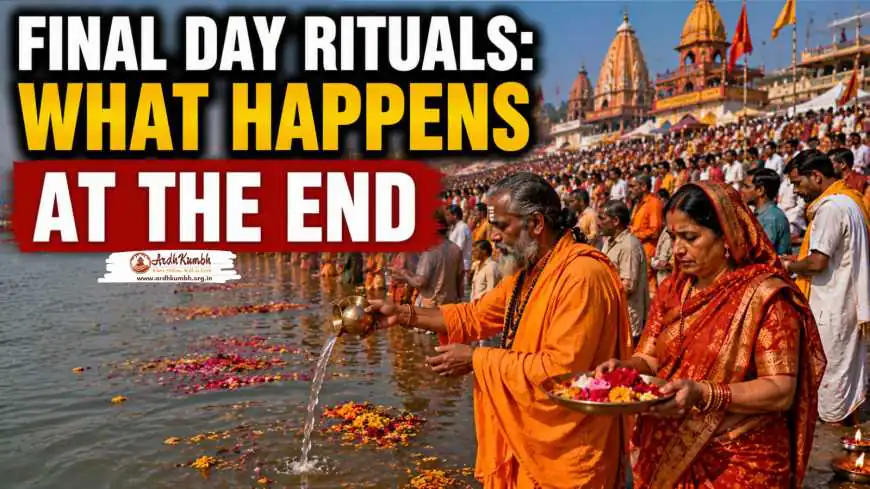
The Last Sacred Snan: Bathing as the Waters Return to Ordinary Time 🌊
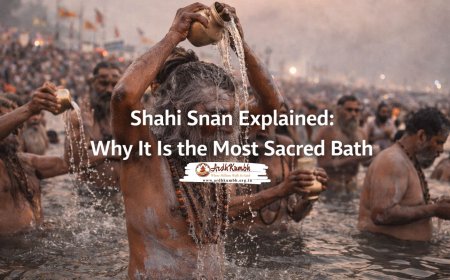
The final day at Kumbh begins as all Kumbh days begin—before dawn, with pilgrims walking through the cold darkness toward the river. But the quality of this last snan is different. There is no tomorrow's bath to anticipate. There is only this immersion, this moment, this final opportunity to receive what the sacred waters offer before the extraordinary period of grace concludes and the river returns to its ordinary, though still sacred, state.
The final snan is not astronomically distinct from the baths of the preceding days. The same Ganga flows. The same confluences meet. The same mantras are chanted. But the awareness of finality transforms the experience. Pilgrims linger longer in the water. Their sankalpas are offered with particular intensity—the intentions set on this last morning must sustain them until the next Kumbh, whether six or twelve years away, whether they will live to see it or not. There is a poignant urgency to the final bath that the first bath, for all its excitement, did not carry.
The priests at the ghats perform the last of the continuous rituals that have been maintained throughout the Mela. The havan kunds receive their final offerings of ghee and samagri. The evening aarti will still be performed, but the priests know that tonight's ceremony will be the last of its kind at this gathering. Every ritual act on the final day carries the awareness of ending, and this awareness deepens the devotion with which it is performed.
For many pilgrims, the final snan is also a moment of commitment. They make sankalpas to return for the next Kumbh, to maintain the spiritual practices they have adopted during the Mela, to carry the grace they have received back into their ordinary lives. The cold water that shocked them into presence on their first morning now receives their promises and their prayers with the familiar embrace of a beloved friend from whom they must soon part.
Trending Guides Now

Complete Guide to Ardh Kumbh Rituals
Read Guide →
Ardh Kumbh Mela Rituals Explained Shahi Snan & Akhara Traditions
Read Guide →
Why Sacred Bathing Is the Heart of Ardh Kumbh
Read Guide →
How Akharas Shape the Soul of Ardh Kumbh
Read Guide →
Best Routes to Reach Haridwar for Ardh Kumbh Mela
Read Guide →
Essential Rules Every Ardh Kumbh 2027 Pilgrim Must Follow
Read Guide →
Who Are Naga Sadhus and Why They Lead Kumbh
Read Guide →
Biggest Crowds Ever Recorded at Ardh Kumbh
Read Guide →The Final Akhara Procession: The Naga Sadhus Take Their Leave 🔱
Among the most visually and spiritually powerful final day rituals at Kumbh is the departure procession of the akharas. Having opened the Kumbh with the grand shahi snan processions that established their ritual precedence, the akharas now close the gathering with processions that are smaller in scale but deeper in emotional resonance.
The naga sadhus who captured the world's attention with their ash-smeared bodies and fierce devotion now walk one last time to the river's edge. Their procession is not the triumphal display of the opening days. It is quieter, more intimate, more reflective. They bathe without the massive crowds that surrounded them during the shahi snan. The river receives them as it has received them for centuries—in every Kumbh, in every cycle, the same bodies, the same ash, the same mantras, the same eternal renunciation.
After the final bath, the akharas begin the process of closing their camps. The dhuni fires that have burned continuously are carefully tended. Burning embers are transferred into specially prepared vessels—brass or copper pots filled with dried cow dung cakes, designed to keep the fire alive during the journey back to the akhara's permanent monastery. The fire that a pilgrim saw blazing in an akhara camp will continue to burn in that order's home shrine, maintaining the unbroken continuity that is one of the Kumbh's most profound spiritual commitments.
The akhara flags are lowered, folded, and prepared for transport. These flags are not merely decorative. They are consecrated objects, symbols of the order's identity and spiritual authority. Their lowering marks the formal end of the akhara's presence at this Kumbh. They will be raised again at the next gathering, but for now, they travel back to the monasteries where they will wait through the years until the cycle turns once more.
The Closing Ganga Aarti: The Last Great Offering of Light to the River 🔥
As dusk falls on the final day of Kumbh, the ghats prepare for what is always one of the most emotionally charged ceremonies of the entire gathering: the closing Ganga Aarti. The evening aarti has been performed every night of the Mela, but tonight's ceremony carries the weight of conclusion. It is the last time these priests will raise these lamps to this river during this sacred cycle.
The ritual itself follows the same precise choreography as every other evening—the synchronized movements of the priests, the circling of the multi-tiered oil lamps, the chanting of the Vedic mantras, the ringing of the temple bells. But the atmosphere is transformed. The crowds are thinner, composed mostly of pilgrims who have stayed until the very end. There is a stillness in the air, a collective awareness that something precious is ending. The sparks from the lamps seem to fly higher into the darkening sky. The mantras seem to echo longer across the water.
At the conclusion of the aarti, many pilgrims float their final diya lamps onto the river. These small clay bowls, filled with oil and a cotton wick, carry the prayers of the departing. Watching hundreds of tiny flames drift downstream in the darkness—each one a hope, a gratitude, a farewell—is an experience that stays with pilgrims long after the Kumbh has ended. The river receives these offerings as it has received everything else: silently, completely, and without judgment.
The priests perform a final arati specifically dedicated to bidding farewell to the sacred period. The mantras chanted during this concluding ritual include prayers for the safe return of all pilgrims to their homes, for the preservation of the spiritual merit accumulated during the Mela, and for the grace to return when the cycle brings the Kumbh back to this river. The last lamp is extinguished. The ghat falls silent. The Kumbh is, ritually speaking, complete.
The Dismantling of the Temporary City: An Impermanence Ritual 🏕️
The dismantling of the Kumbh city is itself a ritual of profound spiritual significance, though it is performed by workers rather than priests. The temporary metropolis that housed millions—the tents, the roads, the pontoon bridges, the electricity lines, the water supply systems—is systematically taken apart, piece by piece, returning the landscape to its original state.
This dismantling is a teaching in impermanence that no scripture can convey as powerfully as direct experience. The pilgrim who walks through the Mela grounds on the final day witnesses the transformation of a bustling sacred city into an emptying field. The tent where they slept is being folded. The bhandara where they ate is serving its last meals. The pathways they walked are being dismantled plank by plank. The scale of the gathering that seemed so permanent, so solid, so overwhelmingly real, is revealed as fleeting—a dream from which the land is now awakening.
The pontoon bridges that carried millions across the sacred rivers are among the last structures to be removed. Built by the Indian Army's engineering corps, they will be disassembled and stored until the next Kumbh. Their removal restores the river to its natural state, erasing the physical evidence of human intervention. The river flows as it has always flowed, as it will always flow, indifferent to the temporary structures that briefly spanned its current.
The cleanup operation is massive and meticulously planned. The Mela administration works to ensure that the sacred riverbanks are returned to their natural condition, that waste is processed and removed, that the land is ready for its ordinary use. This environmental stewardship is increasingly recognized as part of the sacred duty of the Mela organizers—a modern extension of the ancient principle that pilgrimage should leave a place more pure, not less.
The Final Entries in the Pandas' Vahis: Closing the Genealogical Record 📜
In the quiet corners of the ghats, away from the visible drama of dismantling, the pandas of Kumbh perform one of the most significant final day rituals: the closing of the vahis. These hereditary record books, which have been receiving entries throughout the Mela, now receive their last additions.
The panda sits with the final pilgrim families who have come to register their visit. He opens the vahi to the page where previous generations of this family are recorded. He adds the names of the current visitors, the date of their bath, the specific rituals they performed, and any donations they have made. Then, with a sense of ritual finality, he closes the book. The record is complete. The next entries will be made at the next Kumbh, when a new generation of this family returns to the same ghat and the same panda lineage receives them.
For families who have been coming to Kumbh for centuries, this closing of the vahi is an emotional moment. The book that contains the names of their ancestors—great-grandparents who bathed here in 1900, grandparents who came in 1950, parents who brought them as children in 1980—is now entrusted to the panda's care until the cycle turns again. The vahi is a physical link between generations, and its closing marks both an ending and the promise of continuation.
The pandas also perform a small ritual of their own: a prayer for the safe keeping of the records, an offering to the river that has witnessed all the entries, and a commitment to maintain the vahis until the pilgrims return. The relationship between panda and pilgrim family is one of the oldest continuous professional relationships in the world, and the final day of Kumbh reaffirms this bond for another cycle.
The Immersion of the Sacred Kalash and Ceremonial Objects 🌿
Throughout the Kumbh Mela, various sacred objects have been worshipped, carried in processions, and used in rituals. The final day includes the visarjan or immersion of these objects—a ritual return of the consecrated to the source from which they came.
The kalash pots that were installed at the beginning of the Mela, filled with sacred water and topped with mango leaves and coconuts, are now carried to the river's edge. The water from these pots is poured back into the Ganga, completing the cycle: water taken from the river at the start of the Mela is returned to the river at its end. The pots themselves are often immersed or given away to pilgrims as prasad.
The temporary murtis or images of deities that were installed in various camps and temples are also immersed. These murtis, made of clay or other biodegradable materials, are carried in procession to the river and surrendered to the water. The immersion is not a destruction but a release—the deity returns to the formless from which it was invoked, just as the Kumbh itself returns to potentiality until the next cycle.
The flowers, garlands, and other perishable offerings that accumulated at the temples throughout the Mela are gathered and offered to the river in a final act of worship. The ghats, which were decorated with marigolds and roses, return to their bare stone. The colors of the Mela—the brilliant oranges and yellows and reds—fade into the muted tones of the winter riverbank. This return to simplicity is itself a ritual, a recognition that the extraordinary is sustained by the ordinary and must eventually return to it.
The Departure of the Sadhus: Carrying the Eternal Fires Home 🚶
As the final day progresses, the sadhus of the akharas begin their departure from the Mela grounds. Their leaving is as ritualized as their arrival, though far less public. The crowds have thinned. The media cameras have departed. What remains is the quiet, intimate process of spiritual communities breaking camp and returning to their permanent homes.
The dhuni fires are the most carefully transported items. The akharas that maintain eternal fires—some burning continuously for centuries—prepare their flames for the journey. Specially designated sadhus are entrusted with the task of carrying the fire. They travel with the burning vessel, feeding it throughout the journey, ensuring that the flame never goes out. When they arrive at their monastery, the fire will be transferred back to its permanent altar, where it will continue burning through the years until the next Kumbh.
The gurus and senior mahants who received pilgrims throughout the Mela now offer their final blessings before departure. These farewell darshans are often deeply personal. A pilgrim who has developed a connection with a particular teacher during the Mela may receive a final word of guidance, a gift of prasad, or simply the silent blessing of the guru's presence. These moments, brief as they are, often become among the most treasured memories of the entire pilgrimage.
The sadhus' departure is also a practical migration. Thousands of renunciates, many of whom walked to the Kumbh from distant parts of India, now begin the journey back. Some travel alone. Others move in groups. The roads leading away from the Mela grounds are dotted with the distinctive figures of sadhus—ochre robes, matted hair, staffs and water pots—returning to the forests, the mountains, the ashrams, and the wandering life that is their permanent Kumbh, their continuous pilgrimage.
The Emotional Landscape of the Final Day: What Pilgrims Feel and Why 🕊️
The emotional experience of the final day at Kumbh is complex and deeply personal. Pilgrims who have spent days or weeks immersed in the spiritual atmosphere of the Mela must now prepare to return to ordinary life. This transition is not always easy.
Gratitude is perhaps the most universal emotion. Pilgrims feel grateful for the baths they have taken, the darshans they have received, the teachings they have heard, and the community they have experienced. The final day is often spent in a state of quiet thankfulness, walking the ghats one last time, offering final prayers, and making promises to carry the grace of the Kumbh back into daily life.
Sadness is also present. The bonds formed at Kumbh—with fellow pilgrims, with sadhus, with the river itself—are genuine, and leaving them is a real loss. The knowledge that some of the people you have met may never cross your path again, that the next Kumbh is years away and uncertain, that this particular configuration of souls will never assemble in exactly this way again—this awareness brings a gentle melancholy that many pilgrims describe as bitter-sweet.
Determination is the third emotional strand. The final day often brings a surge of resolve: to maintain the practices begun at Kumbh, to live according to the insights received, to return for the next gathering. The sankalpas made during the final snan are commitments that the pilgrim carries home. The final day is not an end but a beginning—the start of the real spiritual work, which is not performed at the Sangam but in the ordinary contexts of family, work, and community.
What the Final Day Teaches About Endings and Renewal
The final day rituals of Kumbh are, in their totality, a profound teaching about the nature of endings. Everything ends. The most glorious gathering disperses. The most sacred period concludes. The most intense spiritual experiences fade into memory. This is not a tragedy. It is the fundamental structure of existence, and the Kumbh tradition faces it directly rather than pretending it is otherwise.
But the ending is not absolute. The dhuni fires continue burning. The vahis wait to be opened again. The akharas maintain their lineages across the years between gatherings. The river flows continuously, receiving pilgrims on ordinary days as it received them during the Mela. The Kumbh does not really end. It enters a period of latency, of potential, of waiting. What appears to be an ending is, from the perspective of the tradition, merely a transition into the phase of the cycle where the visible becomes invisible and the gathered becomes scattered.
The pilgrim who understands this returns home not with a sense of loss but with a sense of having been entrusted with something precious. The Kumbh is not left behind. It is carried within. The cold water of the Sangam, the fire of the aarti, the sound of the mantras, the faces of the sadhus—all of these become internal possessions, portable sacred objects that can be accessed in memory and meditation wherever the pilgrim goes. The final day teaches that the truest pilgrimage is the one that continues after you leave the sacred ground.
The River That Does Not Know the Mela Has Ended
After the last pilgrim has departed, after the tents have been folded and the pontoon bridges dismantled, after the akharas have carried their fires back to distant monasteries and the pandas have closed their vahis, the river continues to flow. This is the final, silent teaching of the Kumbh's final day.
The Ganga at Haridwar, the Sangam at Prayagraj, the Shipra at Ujjain, the Godavari at Nashik—these rivers were sacred before the Kumbh tradition existed. They will remain sacred when every structure built for the Mela has been dismantled. The river does not know that the Mela has ended because, for the river, the Mela never really began. The river is always receiving. The river is always purifying. The river is always flowing toward the sea, carrying the offerings of the living and the ashes of the dead, carrying the memories of every Kumbh that has ever been and the anticipation of every Kumbh that is yet to come.
The final day rituals at Kumbh are, in their deepest meaning, an act of returning the river to itself. The human gathering that briefly occupied its banks disperses. The noise and color and movement fade. The river remains, flowing as it has always flowed, as it will always flow, the eternal witness to the temporary city, the eternal recipient of human devotion, the eternal presence that makes every Kumbh possible and that will receive the pilgrims of the next cycle with the same silent, complete, and unconditional embrace.
Frequently Asked Questions