




























































How Kumbh Keeps India’s Civilizational Memory Alive
Explore how Kumbh Mela keeps India's civilizational memory alive through unbroken oral traditions, akhara lineages, sacred rituals, and timeless pilgrimage practices that preserve cultural continuity across millennia.

The Unbroken Chain of Oral Transmission That No Book Can Replace 🕉️
The most fundamental way Kumbh Mela keeps India’s civilizational memory alive is through the oral traditions that find their fullest expression at the gathering. The Vedic mantras chanted at the ghats, the stotras sung at the evening aarti, the philosophical discourses delivered in the akhara camps—none of these were learned from printed texts. They were learned by listening, by repeating, by internalizing sound patterns that carry meaning far beyond the semantic content of the words.
This oral transmission is not a primitive precursor to written culture. It is a sophisticated technology of memory that preserves nuances—pronunciation, intonation, rhythm, emotional tone—that written texts inevitably lose. The guru-shishya parampara that governs the transmission of sacred knowledge within the akharas and among the panda families ensures that every generation receives not just information but the living presence of the teacher, the embodied context in which the knowledge becomes transformative rather than merely informative.
At Kumbh, this oral culture achieves its most spectacular public expression. The Vedic chanting that fills the air during the shahi snan processions is not a performance. It is a recitation that follows precise rules of tonal accuracy preserved without a single alteration for over three thousand years. The mantras that Adi Shankaracharya chanted when he established the Dashanami akhara orders are the same mantras chanted by the naga sadhus today. The words have not changed. The pronunciation has not drifted. The meaning has not been reinterpreted. This is civilizational memory with the highest possible fidelity.
The oral tradition at Kumbh also preserves knowledge that exists nowhere else. The akhara sadhus hold in their collective memory entire systems of yoga, tantra, and philosophy that have never been committed to writing. Some of this knowledge is deliberately kept oral—transmitted only from guru to disciple under strict conditions—because the tradition recognizes that certain understandings cannot be conveyed through text. They must be experienced in the presence of one who has realized them.
Trending Guides Now
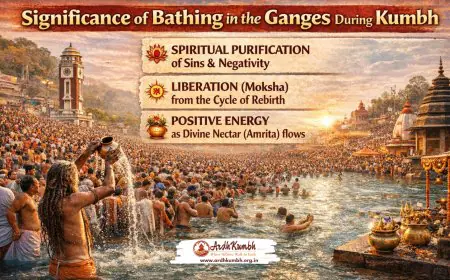
Significance of Bathing in the Ganges During Kumbh Mela Explained
Read Guide →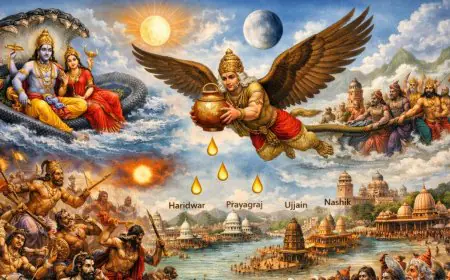
What Is the Story Behind the Ardh Kumbh Mela?
Read Guide →
Who Are Naga Sadhus and Why They Lead Kumbh
Read Guide →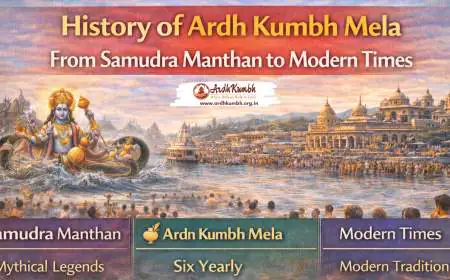
History of Ardh Kumbh Mela From Samudra Manthan to Modern Times
Read Guide →
Best Routes to Reach Haridwar for Ardh Kumbh Mela
Read Guide →
Essential Rules Every Ardh Kumbh 2027 Pilgrim Must Follow
Read Guide →
Biggest Crowds Ever Recorded at Ardh Kumbh
Read Guide →
How Akharas Were Formed and Why They Matter
Read Guide →Akhara Lineages as Living Repositories of Centuries-Old Wisdom 🔱
The akharas are not merely monastic orders. They are living repositories of India’s civilizational memory, preserving and transmitting specific lineages of knowledge, practice, and initiation that stretch back centuries and, in some cases, more than a millennium. Each akhara maintains its own unique tradition of yoga, its own philosophical interpretations, its own ritual procedures, and its own succession of teachers. At Kumbh, this diversity is on full display, offering pilgrims a living encyclopedia of Indian spiritual traditions.
The guru-shishya lineage within each akhara functions as a chain of memory. A young sadhu initiated at Kumbh today receives diksha from a guru who received it from their guru, in an unbroken line that traces back to the founder of the order. Along with the initiation, the disciple receives the accumulated wisdom of that lineage—the practices, the teachings, the stories, the specific interpretation of scripture that distinguishes that akhara from all others. This is memory transmitted through relationship, through years of daily contact between teacher and student, through the slow and careful cultivation of a living tradition.
The akharas also preserve historical memory that exists nowhere else. Their internal chronicles record significant events, lineage successions, and participation in Kumbh gatherings across centuries. When historians seek to establish the antiquity of the Kumbh tradition, they turn to akhara records as one of their primary sources. The akharas remember what academic history forgets. They remember the specific ghats where their founders bathed. They remember the sequence of processions across centuries of Kumbh gatherings. They remember the disputes and resolutions that shaped the ritual order that pilgrims witness today.
At Kumbh, the akharas perform their memory through the shahi snan processions. The order of procession, the flags and banners, the specific chants and musical instruments—all of these are encoded with historical information. The position of an akhara in the procession order reflects its historical status, negotiated and sometimes contested across centuries. The visual spectacle that pilgrims photograph is, for those who know how to read it, a complex historical document rendered in movement and sound.
Rituals That Reenact the Cosmic Memory 🌊
The rituals performed at Kumbh are not arbitrary ceremonies invented for the occasion. They are reenactments of cosmic events that the tradition holds to be eternally present. When a pilgrim performs the sacred snan at the Sangam, they are not simply bathing. They are participating in the Samudra Manthan—the churning of the cosmic ocean—that the Puranas describe as the origin of the Kumbh tradition. When a priest offers the evening aarti to the river, they are repeating a gesture of worship that connects the present moment to the timeless relationship between humanity and the sacred waters.
This ritual reenactment is a powerful form of civilizational memory. It encodes theological truths in physical action, making them accessible to every pilgrim regardless of their level of scriptural knowledge. The illiterate farmer who bathes at the Sangam on the astrologically determined day participates in the same cosmic drama as the learned scholar who can recite the relevant Puranic passages from memory. The ritual makes the memory democratic. It belongs to everyone who performs it with sincerity.
The yagya fires that burn continuously throughout the Kumbh grounds are another form of ritual memory. The specific arrangement of the fire altar, the specific offerings poured into the flames, the specific mantras chanted at each stage of the ritual—all of these are prescribed in texts that are thousands of years old and transmitted through practice that has never been interrupted. Every havan performed at Kumbh is a recreation of the original yagya that the Vedic rishis offered. The fire that burns today is the same fire, ritually speaking, that burned in the ancient past.
The ritual calendar itself is a repository of memory. The Kumbh occurs according to astrological calculations that require precise knowledge of planetary movements—knowledge that has been maintained and transmitted across millennia. The same calculations that determine the Kumbh dates today were used to determine them centuries ago. The mathematics has not changed. The astronomical observations have not been superseded. The Kumbh calendar preserves, in living practice, a system of astronomical knowledge that predates modern astronomy.
The Pandas and Their Vahis: Genealogical Records That Span Generations 📜
One of the most extraordinary and least appreciated ways Kumbh keeps India’s civilizational memory alive is through the pandas—the hereditary priests who serve as genealogists and ritual guides at the sacred ghats—and their vahis or record books. These handwritten volumes contain the names, dates, and ritual details of pilgrim families across centuries, creating a continuous written record of pilgrimage that has no equivalent anywhere else in the world.
The tradition of the vahi transforms the Kumbh from a gathering of anonymous individuals into a gathering of families whose connection to the sacred site is documented across generations. When a pilgrim family arrives at Kumbh, they are traditionally received by the panda whose family has served their family, often for centuries. The panda opens the vahi and records the current visit, adding the names of the present generation to a document that already contains the names of their ancestors who visited the Sangam in 1750, in 1820, in 1890, in 1940.
The vahis are civilizational memory in its most tangible form. They are a genealogical archive, a social history, and a religious record bound into volumes that are passed from father to son within panda families. They document patterns of pilgrimage, family migrations, changes in naming conventions, and shifts in ritual practice across centuries. A scholar examining a panda's vahi can trace the history of a single family's relationship with the sacred river across more than twenty generations.
The pandas themselves are keepers of oral traditions that complement their written records. They know the history of the ghats, the temples, and the rituals not from books but from the stories passed down within their families. They know which bathing spots are most auspicious for which rituals, which mantras are appropriate for which offerings, and which lineages of pilgrims have been coming to which ghats for how many centuries. This knowledge, transmitted orally across generations, represents a parallel historical record that academic scholarship is only beginning to appreciate.
The Sacred Geography That Encodes Myth into Landscape 🗺️
The geography of Kumbh—the rivers, the confluences, the ghats, the temples—is not neutral space. It is landscape encoded with memory. Every location at the Kumbh grounds carries a story, a myth, a historical association that pilgrims absorb simply by being present at that location. The Sangam is not merely a river confluence. It is the place where the Ganga, Yamuna, and the invisible Saraswati meet, where drops of amrit fell from the kumbha during the cosmic churning, where countless saints and sages have meditated across millennia.
This sacred geography functions as a memory device. Pilgrims who walk the ghats, who bathe at the Sangam, who visit the temples, are moving through a landscape that tells the story of Indian civilization at every step. The physical environment triggers the memory of the associated narratives. The sight of the river recalls the story of Ganga's descent. The sound of the conch at the aarti recalls the story of the Samudra Manthan. The geography itself is a teacher, and the pilgrimage is an education in the foundational narratives of the culture.
The four Kumbh locations—Prayagraj, Haridwar, Ujjain, and Nashik—are not randomly chosen. Each carries its own sacred geography, its own associated myths, its own specific role in the larger Kumbh cycle. The rotation of the gathering among these four sites ensures that the entire sacred geography of India is periodically activated, that pilgrims are drawn to different parts of the subcontinent, and that the memory encoded in each location is refreshed by the presence of millions.
The Festival Calendar That Links the Present to Cosmic Time ⏳
The timing of Kumbh is determined by astrological calculations that connect the gathering to cosmic cycles far larger than any individual human life. Jupiter’s transit into Aquarius, the Sun’s entry into Aries—these planetary positions that govern the Kumbh dates are part of a system of astronomical knowledge that has been maintained in India for at least three thousand years. The Kumbh calendar is a civilizational clock, marking time not in years but in cosmic ages.
This astrological timing preserves knowledge that might otherwise have been lost. The calculations required to determine Kumbh dates are complex, involving precise observations of planetary movements and sophisticated mathematical formulas. This knowledge has been transmitted orally and through practice within specific lineages of astronomers and priests. When a modern pilgrim checks the Kumbh dates, they are relying on a knowledge system that has functioned continuously since before the Common Era.
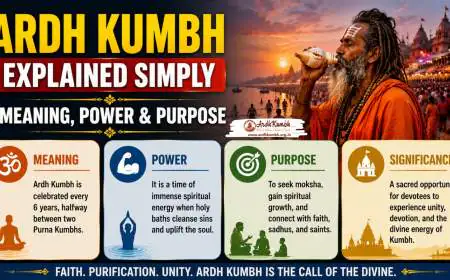
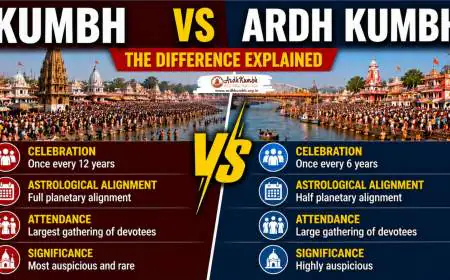
The calendar also embeds philosophical memory. The twelve-year cycle of the Poorna Kumbh, the six-year interval of the Ardh Kumbh, the 144-year cycle of the Mahakumbh—these are not arbitrary numbers. They correspond to specific astronomical realities that the tradition considers spiritually significant. The Kumbh calendar teaches, through practice, a particular understanding of time: time as cyclical rather than linear, time as governed by cosmic rhythms rather than human convenience, time as an arena for spiritual opportunity rather than merely a resource to be managed.
The Languages, Arts, and Crafts That Survive Because Kumbh Exists 🎭
The Kumbh Mela is not only a spiritual gathering. It is an economic and cultural ecosystem that supports traditional arts, crafts, languages, and knowledge systems that might otherwise have disappeared. The demand created by millions of pilgrims—for ritual items, for religious texts, for traditional music and performances—sustains communities of practitioners who depend on the Kumbh for their livelihood and whose crafts are living carriers of civilizational memory.
The artisans who produce puja items—the brass and copper vessels used for offerings, the clay lamps lit at the aarti, the rudraksha malas worn by sadhus and pilgrims—are practicing crafts that have been transmitted within their families for generations. The techniques they use, the designs they create, the materials they work with—all of these carry historical information about the material culture of Indian civilization.
The musicians and singers who perform at Kumbh are custodians of traditions that predate recorded music. The bhajans sung at the akhara camps, the Vedic chants recited at the ghats, the folk songs performed in the pilgrim camps—these are living archives of Indian musical heritage. Many of these traditions exist only because the Kumbh provides a regular, reliable context for their performance and transmission.
The linguistic diversity of Kumbh is itself a form of memory preservation. Pilgrims arrive speaking hundreds of languages and dialects, many of which are endangered or have no written form. The gathering provides a context in which these languages are spoken, heard, and transmitted to younger generations. The Kumbh is, among many other things, a living archive of India’s linguistic heritage.
The Democratic Spiritual Space Where Memory Belongs to Everyone 🙏
Perhaps the most significant way Kumbh keeps India’s civilizational memory alive is by making that memory democratic and accessible. At Kumbh, the great narratives of Indian civilization are not locked away in university libraries or guarded by scholarly elites. They are available to anyone who makes the pilgrimage—regardless of caste, class, gender, or education. The illiterate farmer who bathes at the Sangam participates in the same cosmic drama as the Sanskrit scholar. The memory is shared. It belongs to the entire civilization, not to any privileged segment of it.
This democratic character of Kumbh has profound implications for cultural continuity. When knowledge is restricted to elites, it becomes vulnerable. Elites are overthrown. Libraries are burned. But when knowledge is embedded in popular practice, when it is performed annually or cyclically by millions of ordinary people, it becomes nearly indestructible. The Kumbh has survived invasions, colonialism, modernization, and every other threat precisely because it does not depend on any single institution, any single text, or any single authority. It depends on the collective memory of the civilization itself.
The Kumbh also creates new memory. Every gathering adds another layer to the historical record, another chapter to the ongoing story of Indian civilization. The pilgrim who attends Kumbh in 2025 will tell their grandchildren about it. Those grandchildren will, perhaps, attend Kumbh themselves in 2055. The memory is not only preserved but renewed, generation after generation, in an unbroken chain that shows no sign of ending.
The River That Remembers Everything
The Ganga at Prayagraj has witnessed every Kumbh that has ever taken place. She has received the ashes of the dead and the offerings of the living across centuries beyond counting. She has heard the mantras of the Vedic rishis and the prayers of modern pilgrims. She has flowed through the rise and fall of empires, through the transformation of languages, through the coming of technologies that the ancient sages could not have imagined. Through all of it, she has continued flowing, carrying the memory of the civilization that has gathered on her banks.
The Kumbh Mela is, in its deepest essence, the periodic renewal of the relationship between the river and the people, between the land and its memory, between the present and the past. Every six or twelve years, millions of Indians make the journey to the sacred waters to remind themselves—and to demonstrate to the world—that their civilization has not forgotten who it is. They bathe in the same river. They chant the same mantras. They perform the same rituals. They honor the same lineages. And in doing so, they ensure that the memory lives.
This is how Kumbh keeps India’s civilizational memory alive—not through monuments or museums, not through textbooks or archives, but through the living, breathing, walking, bathing, chanting presence of millions of people who carry the memory in their bodies, in their voices, in their relationships, and in their faith. The Kumbh is memory made flesh, appearing every few years to remind a civilization of its own depth, its own continuity, and its own ineffable soul.
Frequently Asked Questions