















































































Is It Possible to Visit Ardh Kumbh for One Day?
Yes, you can visit Ardh Kumbh 2027 in just one day. Complete guide including travel logistics, ghat access, walking distances, and tips for a meaningful day trip.
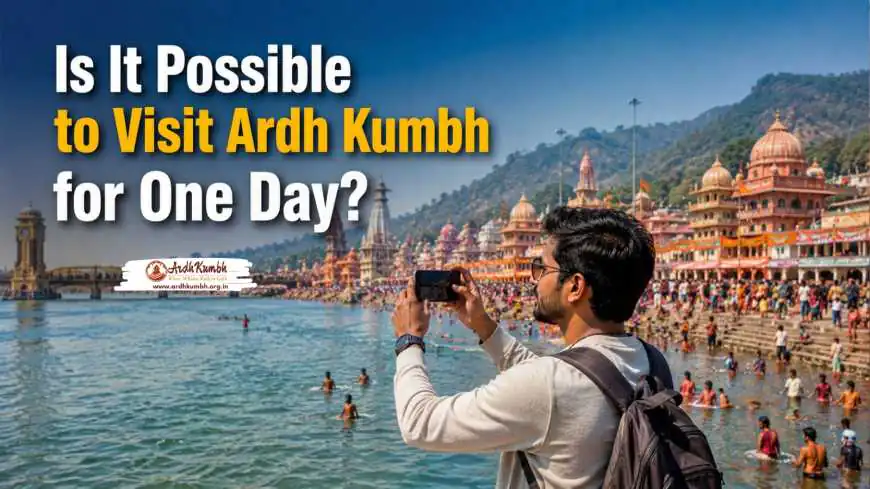
Quick Answer: Is It Possible to Visit Ardh Kumbh for One Day?
Yes, it is possible to visit Ardh Kumbh for one day, especially for travellers who live near Haridwar or can arrange convenient transportation. A one-day visit allows pilgrims to experience the spiritual atmosphere, visit selected ghats, observe religious ceremonies, attend Ganga Aarti where available, and explore important pilgrimage areas. However, the experience depends on travel distance, crowd conditions, bathing schedules, and the time available.
For Ardh Kumbh 2027 in Haridwar, visitors planning a single-day trip should check official bathing dates, traffic restrictions, entry arrangements, and crowd advisories before departure. Start early, choose a limited number of places, carry essential items, stay hydrated, and allow extra time for walking and security checks. Avoid trying to cover every attraction in one visit, particularly on major bathing days when crowds may be significantly heavier. 🙏 With realistic planning, a one-day Ardh Kumbh trip can offer a meaningful pilgrimage experience without requiring an overnight stay.
The Short Answer: Yes, But Prepare to Walk
Let me give it to you straight. Yes, you can visit the Ardh Kumbh in one day. The Kumbh Mela grounds are within Haridwar city itself . The main bathing ghats — Har Ki Pauri, Brahmakund, Vishnu Ghat, Subhash Ghat — are not in a remote location. They are in the heart of the city . You can take a train or flight in the morning and be at the ghat by mid-day.
However — and this is a big however — do not expect to drive up to the water's edge. On peak bathing days (especially the Amrit Snan dates), your vehicle will be stopped 3 to 8 kilometers away from the main ghats . You will walk the rest. Security barricades and crowd control measures mean you will be part of a controlled pedestrian flow . One-way routes and gate systems prevent you from walking back against the crowd until the density eases in the afternoon .
Trending Guides Now

Is Ardh Kumbh Really Different From Kumbh Mela?
Read Guide →
How Many Days Are Actually Enough for Ardh Kumbh?
Read Guide →
Can Families Attend Ardh Kumbh Comfortably Together?
Read Guide →
Can You Attend Ardh Kumbh Without Staying Long?
Read Guide →
Ardh Kumbh 2027 Dates (Official) - Haridwar Snan Schedule
Read Guide →
Dharamshala Stay During Ardh Kumbh: Free & Budget Guide
Read Guide →
Official Progress Report of Haridwar Ardh Kumbh 2027 Infrastructure Projects
Read Guide →
Is October a Good Time to Visit Haridwar Before Ardh Kumbh 2027?
Read Guide →So a one-day trip is not a "relaxed" trip. It is a mission. You need comfortable shoes, a small backpack, and the mindset that the walking is part of the pilgrimage. If you accept that, you can absolutely do it.
The 2027 Schedule: Choosing the Right Day
Your first decision is which day to visit. The Ardh Kumbh 2027 runs from 14 January to 20 April 2027 . The authorities expect approximately 17 crore devotees over the four months . However, the crowds are not evenly distributed. Ten major bathing dates attract the bulk of the crowds, with four designated as Amrit Snan (royal bath) days .
The 2027 Snan Schedule at a Glance
January – February (Regular Snans)
-
14 January – Makar Sankranti (First Snan)
-
6 February – Mauni Amavasya
-
11 February – Basant Panchami
-
20 February – Magh Purnima
March – April (Amrit Snans – Peak Crowds)
-
6 March – Mahashivratri (First Amrit Snan)
-
8 March – Phalguna Amavasya (Second Amrit Snan)
-
7 April – Nav Samvatsar
-
14 April – Mesh Sankranti (Third Amrit Snan)
-
15 April – Shri Ram Navami
-
20 April – Chaitra Purnima (Fourth Amrit Snan)
Sources:
Which Day Should You Choose for One Day?
If you can choose any day for your one-day trip, here is my ranking:
Best for manageable crowds: 7 April (Nav Samvatsar) or 15 April (Ram Navami). These are not Amrit Snan days. You will still find crowds, but not the crushing millions that come on 6 March or 14 April.
Avoid at all costs for one day: 6 March, 8 March, 14 April, and 20 April. These are the four Amrit Snan days . On these days, the crowd is so dense that even walking becomes difficult. Vehicle restrictions are strict. Queues at the ghats can take 3 to 5 hours. A one-day trip on these days is not recommended unless you have elite physical stamina and extreme patience.
Second best: 14 January (Makar Sankranti) or 20 February (Magh Purnima). These are early in the season, before the peak rush. The weather is colder (which actually helps control crowd density), and the atmosphere is still devotional without being overwhelming.
Your One-Day Timeline: Hour by Hour
Let me give you a practical timeline for a one-day trip. This assumes you are traveling from Delhi NCR (the most common starting point for day trips).
4:00 AM – Depart from Delhi
-
Take the earliest available train or bus. The Shatabdi Express or Special Kumbh Trains are reliable.
-
Distance from Delhi to Haridwar: 220 km .
7:30 AM – Arrive at Haridwar Railway Station
-
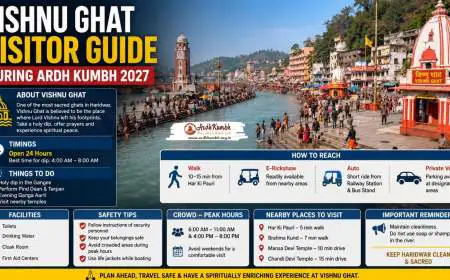
The station is approximately 2.5 km from Har Ki Pauri .
-
If you arrive early and vehicle restrictions are not yet in place, take an auto-rickshaw (10–15 minutes, fare approx ₹50–₹100) .
-
If vehicle restrictions are active, start walking. It takes 25–35 minutes on foot .
8:00 AM – Arrive at the Ghat Area
-
Keep your bag light — only essentials: water, ORS, dry snacks, towel, change of clothes, ID, cash.
-
Head to Har Ki Pauri or Brahmakund for your holy dip .
-
If the main ghat is too crowded, move toward Malviya Ghat or Vishnu Ghat — they share the same sacred water and often offer more space .
8:30 AM – Take the Snan (Holy Dip)
-
The Ganga water in January–February is cold (8–12°C). Do not stay in too long.
-
Change into dry clothes immediately after. Carry a waterproof bag for wet clothes.
9:30 AM – Quick Visit to a Temple
-
You have time for one temple, not more. Choose:
-
Mansa Devi Temple (hilltop, accessible by ropeway, but ropeway queues can be long on peak days) .
-
Chandi Devi Temple (also hilltop, quieter than Mansa Devi) .
-
If you are too tired, simply sit by the Ganga for 30 minutes. That is often more rewarding than rushing to a temple.
-
11:30 AM – Langar Meal
-
Find a langar (community kitchen) near the ghats. Eat a simple, hot meal of dal, roti, and rice.
-
Avoid street food for safety.
12:30 PM – Begin Exit
-
Start walking back toward the station or parking zone. On non-peak days, you can take an auto-rickshaw.
-
On peak days, you will walk the entire distance — 2.5 km or more.
2:00 PM – Reach Haridwar Railway Station
-
Board your pre-booked return train.
-
If you are driving, leave the parking area before 3 PM to avoid evening rush.
6:00 PM – Arrive Back in Delhi
-
You are home. Tired, but spiritually fulfilled.
Getting There: Transportation for the One-Day Pilgrim
By Train
Haridwar Junction is the main railway station, located just 2.5 km from Har Ki Pauri . During the Kumbh, Indian Railways runs special Kumbh Mela trains and increases frequency on major routes connecting Delhi, Uttar Pradesh, Rajasthan, and Maharashtra .
Pro tips for train travel:
-
Book your tickets 2–3 months in advance . Last-minute tickets on Amrit Snan days are nearly impossible to find.
-
Choose early morning arrival and late evening departure to maximize your day.
By Flight
The nearest airport is Jolly Grant Airport, Dehradun, 35 km from Haridwar . Travel time from the airport to Haridwar is 1 to 1.5 hours by taxi .
Taxi fare from Dehradun Airport to Haridwar :
-
Sedan: ₹1,500 – ₹2,500
-
SUV: ₹2,500 – ₹4,000
-
Tempo Traveller: ₹5,000+ (for groups)
Note: A one-day trip by flight is tight but possible. You would need to land in Dehradun by 7 AM, reach Haridwar by 8:30 AM, bathe, visit one temple, and leave by 2 PM to catch an evening flight. This is only for the most determined pilgrims.
By Road
Delhi to Haridwar: 220 km — 3.5 to 4 hours by car or bus, depending on traffic .
Warning: On Amrit Snan days, private vehicles are regulated far from the riverbanks . You may be directed to parking zones 3 to 8 km away from the main ghats . From there, you will walk or take a shuttle bus. Factor in at least 1 extra hour each way for parking and walking.
What You Will Miss (And Why That Is Okay)
Let me be honest about what you will not experience on a one-day trip.
-
Akhara Camps: The camps of the 13 akharas are spread across the Mela area . Exploring them takes half a day.
-
Shahi Snan Processions: The grand processions of Naga Sadhus on elephants and horses happen on specific days and times. You may not align with them.
-
Evening Ganga Aarti: The famous aarti at Har Ki Pauri happens at sunset. If you leave by 2 PM, you will miss it.
-
Rishikesh: Many pilgrims combine the Kumbh with a trip to Rishikesh (25 km away). That is impossible in one day .
-
Spiritual Discourses and Satsangs: These happen throughout the day at various camps, but you will not have time to sit through one.
-
Deep Exploration of Temples: You can visit one temple, not three or four.
But here is the thing. That is okay. A one-day pilgrimage is not about seeing everything. It is about one thing — the holy dip in the Ganga during the Kumbh. If you achieve that, you have achieved the core of the pilgrimage. Everything else is bonus. Do not feel inadequate because you did not spend a week. The Ganga does not measure your devotion by the hours you stay. She measures it by the sincerity of your dip.
Packing for the One-Day Pilgrim
Your packing for a one-day trip must be ruthlessly minimal. Here is your list.
Essential (carry on your body, not in a bag) :
-
Government ID (Aadhaar, Voter ID, Passport) — mandatory
-
Cash in small denominations — ₹500 to ₹1000 (ATMs may be empty)
-
Mobile phone with offline map and helpline numbers saved
-
Power bank (10,000 mAh minimum) — charging points are not accessible
In a small backpack :
-
One complete change of clothes (including underwear) in a waterproof bag
-
Quick-dry towel (1)
-
ORS packets (2–3) — critical for hydration
-
Water bottle (reusable, 1 liter)
-
Dry snacks (biscuits, dry fruits, energy bar)
-
Hand sanitizer and wet wipes
-
Plastic bags for wet clothes
-
Small first aid (band-aids, antiseptic cream, paracetamol)
-
Prescription medications if any
Do not carry :
-
Suitcases or multiple bags — you will walk kilometers
-
Expensive jewelry or watches — they attract theft
-
Large cameras — use your phone
-
Drones — banned
-
Meat, eggs, or alcohol — prohibited in the sacred zone
Crowd Management: What the 2027 Administration Is Doing
The 2027 Ardh Kumbh administration is preparing for an estimated 17 crore pilgrims over four months . To manage crowds, especially on Shahi Snan days, they are building new infrastructure.
Special evacuation route: A dedicated escape route from Har Ki Pauri to Bairagi Camp via Dhanush Pul, Aastha Path, Anandvan Samadhi, and Chandi Ghat will allow pilgrims to exit safely in 15–20 minutes if crowds surge . This route will also be used for the 2033 full Kumbh .
4-km pedestrian pathway: A 4-kilometer pedestrian pathway from Har Ki Pauri to Valmiki Chowk will be a no-vehicle zone with seating, drinking water stalls, and modern lighting . This pathway will connect to major temples including Mansa Devi, Chandi Devi, and Daksh Prajapati Temple .
Expanded Mela area: The notified Kumbh area now spans 1,454 hectares across four districts — Haridwar, Dehradun, Tehri, and Pauri . This includes ghats in Rishikesh, Tapovan, Neelkanth, and even Devprayag .
What this means for your one-day trip: The administration is making walking easier and safer. However, the expanded area also means you must be very clear about which ghat you are targeting. You cannot wander aimlessly. Have a plan.
Who Should NOT Do a One-Day Trip
Let me be honest. A one-day trip to the Ardh Kumbh is not for everyone.
Do not attempt a one-day trip if :
-
You have serious mobility issues or cannot walk 5–8 kilometers in a day .
-
You are bringing toddlers or young children who cannot walk long distances.
-
You are an elderly pilgrim with health conditions. The physical demands are too high. Stay for 2–3 days instead.
-
You have anxiety or claustrophobia that is triggered by dense crowds.
-
You are traveling from very far (south India, northeast India) — the travel time alone will exhaust you.
Who can do it :
-
Healthy adults aged 18–60 with no major medical issues.
-
Solo travelers or small groups of 2–3 people (larger groups are hard to coordinate in a day).
-
Experienced travelers who are comfortable with uncertainty and long walks.
-
Pilgrims who have already visited the Kumbh before and know what to expect.
Spiritual Validity: Does One Day "Count"?
Here is the question that haunts every one-day pilgrim. Does it count? Is my dip as valid as someone who stayed for a week? Will the Ganga bless me less because I rushed?
The answer is no. The Ganga does not have a stopwatch. She does not check your train ticket. She does not ask how long you stayed. She asks only one thing: Did you come with faith? If the answer is yes, your dip is as holy as any. The scriptures do not say, "Only those who spend three days bathing receive blessings." They say, "Whoever bathes in the Ganga during the Kumbh with a pure heart is purified."
A one-day pilgrimage is not a lesser pilgrimage. It is a different kind of pilgrimage. It requires intensity, focus, and sacrifice — you sacrifice comfort, you sacrifice rest, you sacrifice the luxury of time. That sacrifice has its own merit. You are not doing less. You are doing differently. Do not compare your journey to someone else's. The Ganga receives you both.
The One-Day Pilgrim's Mantra
Let me end with this. The one-day pilgrim has a mantra. Here it is: Arrive early. Walk willingly. Dip deeply. Leave peacefully. Do not try to do everything. Do one thing well — the snan. Let that be enough. Because it is enough. It has always been enough. Millions have come before you with less time, less money, less comfort. They stood where you will stand. They cupped the same water. They whispered the same prayer. And they left knowing they had done what they came to do. You will too. One day is enough. One dip is enough. One moment of faith in the cold water of the Ganga can change a life. Let it change yours.
Frequently Asked Questions