















Official Crowd Control Technologies Planned for Haridwar Ardh Kumbh 2027
Discover the official crowd control technologies planned for Haridwar Ardh Kumbh 2027, including AI monitoring, 27,500 CCTV cameras, drone surveillance and IoT sensors.

Official Crowd Control Technologies Planned for Haridwar Ardh Kumbh 2027
Quick Answer ⚡: The official crowd control technologies planned for Haridwar Ardh Kumbh 2027 include an AI-based Integrated Command and Control Centre (ICCC) at Rodi Belwala (₹30 crore budget), a network of 27,500 AI-enabled CCTV cameras, AI drone surveillance with facial recognition systems, IoT-based crowd density sensors, geo-fencing of sensitive locations, a heatmap-based crowd flow dashboard, digital IDs and e-passes for all pilgrims, an AI chatbot for pilgrim assistance, smart parking systems, centralised public address systems, and QR-based vehicle passes. The IT Development Agency (ITDA) has prepared a ₹45 crore digital plan covering six major categories, while the overall Kumbh budget exceeds ₹2,000 crore. The Uttarakhand government has set an October 2026 deadline for completing all technology installations.
At a Glance 🔎
| Key Technology | Details | Status |
|---|---|---|
| AI Control Room (ICCC) | ₹30 crore, Rodi Belwala, 24/7 real-time monitoring | Tender stage |
| CCTV Network | 27,500 AI-enabled cameras across Mela area | Planned |
| AI Drone Surveillance | Facial recognition, real-time activity analysis | Planned |
| IoT Crowd Density Sensors | Real-time monitoring, automatic alerts | Planned |
| Geo-Fencing | Sensitive locations, satellite-based alerts | Planned |
| Digital ID & E-Pass | Every pilgrim receives digital ID for tracking | ₹45 crore ITDA plan |
| AI Chatbot | Multilingual pilgrim assistance | ITDA plan |
| Public Address System | Centralised & standalone rental system | Tender issued (July 2026) |
| Smart Parking | Sensor-based, EV charging locator | ITDA plan |
| Overall Budget | ₹2,000+ crore requested from Centre | Approved |
The AI Control Room: The Brain of Kumbh 2027 🧠
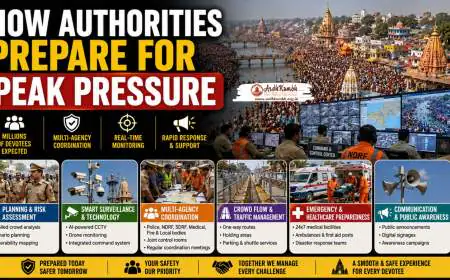
The AI-based Integrated Command and Control Centre (ICCC) is the single most important technology infrastructure for crowd management during Haridwar Ardh Kumbh 2027. This facility will serve as the central nervous system for all crowd control, security, and emergency response operations.
Key Features of the AI Control Room
| Feature | Details |
|---|---|
| Location | Rodi Belwala, Haridwar |
| Building | CCR-2 (Command and Control Centre-2), 4 floors |
| Budget | ₹30 crore (building); ₹50.27 crore approved for CCR-2 construction |
| First Instalment | ₹20.11 crore released |
| Helipad | On the rooftop for emergency helicopter landing |
| Monitoring Scope | Entire Mela area including Haridwar, Rishikesh, and Devprayag |
| Real-Time Command | Every minute of the event managed from this centre |
| High-Power Committee | Already approved the project |
The Mela administration has planned a new AI-based control room that will monitor the entire Mela area — from Haridwar to Rishikesh and Devprayag — from a single location. The CCR-2 building at Rodi Belwala will have four floors with modern technology-equipped control systems. All technical, security, and communication units of the Mela management will be shifted to this new building. The rooftop helipad will allow helicopters to land directly on the CCR tower for emergency response.
Expert Tip 💡: The AI Control Room will be the first point of contact for any crowd-related emergency. All alerts from IoT sensors, CCTV cameras, and drone surveillance will be routed to this centre for immediate action.
Trending Guides Now

How Security Screening Works at Ardh Kumbh 2027 Entry Points
Read Guide →
How CCTV and Security Monitoring Work in Haridwar During Ardh Kumbh 2027
Read Guide →
How Public Transport Changes in Haridwar During Major Bathing Days at Ardh Kumbh 2027
Read Guide →
How Volunteers Assist Pilgrims in Haridwar During Ardh Kumbh 2027
Read Guide →
Ardh Kumbh 2027 Dates (Official) - Haridwar Snan Schedule
Read Guide →
Dharamshala Stay During Ardh Kumbh: Free & Budget Guide
Read Guide →
Official Progress Report of Haridwar Ardh Kumbh 2027 Infrastructure Projects
Read Guide →
Where to Find 24-Hour Pharmacies in Haridwar During Ardh Kumbh 2027 Emergencies
Read Guide →27,500 AI-Enabled CCTV Cameras: The Eyes of Kumbh 2027 👁️
The CCTV network planned for Haridwar Ardh Kumbh 2027 is one of the largest surveillance deployments ever for a religious gathering in India.
CCTV Network Highlights
| Feature | Details |
|---|---|
| Total Cameras | 27,500 |
| Type | AI-enabled smart cameras |
| Coverage | Entire Mela area, ghats, transit hubs, parking zones |
| Functions | Crowd density analysis, suspicious object detection, traffic monitoring |
| Integration | Connected to AI Control Room for real-time analysis |
The 27,500 AI-enabled CCTV cameras will form a vast network across the entire Mela area. These cameras are capable of:
-
Crowd density analysis — Real-time assessment of crowd concentration
-
Suspicious object detection — Identifying unattended bags or metal objects
-
Traffic monitoring — Tracking vehicle movement and congestion
-
Facial recognition — For security and missing person searches
-
Real-time alerts — Automatic alerts when crowd density exceeds safe thresholds
Pro Tip 🧭: The AI-based cameras can identify suspicious objects like bags or metal items, significantly enhancing security during the Kumbh. This technology has been specifically designed for the massive gathering.
AI Drone Surveillance: Aerial Monitoring for Crowd Control 🛸
AI drone surveillance is a key component of the crowd control technology planned for Kumbh 2027. Drones will provide aerial views of crowd movement, enabling authorities to anticipate congestion and preemptively divert crowds.
Drone Surveillance Capabilities
| Capability | Purpose |
|---|---|
| Aerial Crowd Monitoring | Real-time views of crowd density and movement patterns |
| Facial Recognition | Identifying persons of interest |
| Real-Time Activity Analysis | Analysing every activity in the Mela area |
| Route Mapping | Monitoring procession routes and pilgrim flow |
| Emergency Response | Quick identification of bottlenecks and emergencies |
The AI drone surveillance system will enable real-time analysis of every activity in the Mela area. Combined with facial recognition technology, the system can identify persons of interest and track crowd movement patterns. Drones will also be used for GIS-based digital mapping of the entire Mela area.
Expert Advice ✨: The AI drone surveillance at Kumbh 2027 represents a significant upgrade from previous Kumbh events. The system's aerial perspective allows authorities to see bottlenecks forming before they become dangerous, enabling preemptive route diversions and holding area activations.
IoT Sensors and Geo-Fencing: Real-Time Crowd Density Monitoring 📡
The Internet of Things (IoT) is being deployed extensively for crowd density monitoring and geo-fencing of sensitive locations during Kumbh 2027.
IoT Crowd Density Sensors
| Feature | Details |
|---|---|
| Type | IoT-based crowd density sensors |
| Function | Real-time monitoring of crowd concentration |
| Alert System | Automatic alerts to administration when crowds increase |
| Coverage | Throughout the Mela area |
IoT-based crowd density sensors will be installed throughout the Kumbh area to monitor crowd conditions in real-time. As soon as crowds increase beyond safe thresholds, direct alerts will reach the administration, enabling immediate action.
Geo-Fencing of Sensitive Locations
Geo-fencing will be implemented for sensitive locations across the Mela area. This technology uses satellite-based monitoring to:
-
Detect unusual movement or crowd growth
-
Trigger automatic alerts when crowds exceed safe limits
-
Enable precise location-based responses
-
Monitor restricted zones and entry points
Heatmap-Based Crowd Flow Dashboard
An AI-powered heatmap-based crowd flow dashboard is being developed for Kumbh 2027. This dashboard will provide:
-
Real-time crowd density visualization — Shows which areas have how much crowd
-
Directional flow analysis — Tracks which way crowds are moving
-
Predictive analytics — Anticipates crowd surges before they occur
-
Decision support — Enables authorities to make data-driven crowd management decisions
Local Insight 📍: The heatmap dashboard will allow authorities to see exactly where crowds are building and which direction they are moving, enabling precise interventions before situations become dangerous.
Digital ID and E-Pass System: Tracking Every Pilgrim 📱
The Digital Kumbh initiative includes a comprehensive Digital ID and E-Pass system for all pilgrims attending Haridwar Ardh Kumbh 2027.
Digital ID Features
| Feature | Details |
|---|---|
| Digital ID Card | Issued to every pilgrim |
| E-Pass | For entry, accommodation, and service tracking |
| Purpose | Enables tracking of pilgrim movement and service access |
| Integration | Linked to the official Kumbh website and mobile app |
| Registration | Free QR-based digital registration |
Every pilgrim will receive a Digital ID card that will enable entry, accommodation tracking, and service access throughout the Mela period. The ITDA has prepared a ₹45 crore digital plan that includes this system as a core component.
AI Chatbot for Pilgrim Assistance
An AI chatbot will be available through the official Kumbh website and mobile app. The chatbot will:
-
Answer pilgrim queries in multiple languages
-
Provide real-time information on crowd levels, routes, and facilities
-
Assist with navigation and emergency contacts
-
Guide pilgrims to the nearest medical camps or help desks
Expert Tip 💡: The Digital ID and E-Pass system is the backbone of the Digital Kumbh. Every pilgrim's movement can be tracked, enabling precise crowd management and rapid emergency response.
Public Address System: Mass Communication for Crowd Control 📢
A centralised public address system is being procured on a rental basis for Kumbh 2027. The Urban Development Department has issued an open tender (Reference No. 03/PASYSTEM/MELA/2027) for the provision of centralised and standalone public address systems.
Public Address System Details
| Feature | Details |
|---|---|
| Tender Type | Open tender |
| Tender Reference | 03/PASYSTEM/MELA/2027 |
| Tender Fee | ₹5,900 |
| EMD | ₹7,82,000 |
| Purpose | Mass communication across the Mela area |
| Integration | Connected to the control room for coordinated announcements |
The public address system will be used for:
-
Crowd guidance — Directing pilgrims through designated routes
-
Emergency announcements — Alerting pilgrims to potential dangers
-
Route information — Informing pilgrims about diversions and closures
-
Real-time updates — Providing information about crowd levels and waiting times
Pro Tip 🧭: The public address system is one of the most direct ways to communicate with pilgrims during emergencies. Pay attention to announcements and follow instructions from authorities.
Smart Parking and Shuttle Services: Technology-Driven Mobility 🚗
The parking and shuttle system for Kumbh 2027 integrates smart technology for efficient pilgrim movement.
Smart Parking Features
| Feature | Details |
|---|---|
| Sensor-Based System | Real-time detection of available parking spaces |
| EV Charging Locator | Helps electric vehicle owners find charging stations |
| QR-Based Vehicle Passes | Digital passes linked to vehicle registration |
| Security Operation Centre (SOC) | Digital monitoring unit for parking areas |
| Live Dashboard | Shows real-time parking availability |
Shuttle Service Integration
-
High-frequency shuttle buses from outer parking zones
-
Separate routes for pedestrians, taxis, shuttle buses, and emergency vehicles
-
Bike shuttle services for senior citizens, Divyang pilgrims, and families
-
Continuous shuttle services between Ghats, Hotels, Dharamshalas, Tent Cities, and Parking Areas
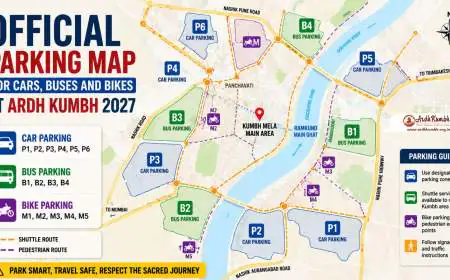
The smart parking system will use sensor-based technology to detect available parking spaces in real-time. Pilgrims will receive live updates through the Kumbh mobile app about available parking zones. QR-based vehicle passes will be issued for efficient entry and tracking.
Expert Advice ✨: The integration of smart parking with the shuttle service ensures that pilgrims can park quickly and reach the ghats efficiently. The bike shuttle services are a particularly innovative feature for senior citizens and differently-abled pilgrims.
ITDA's ₹45 Crore Digital Plan: The Blueprint for Digital Kumbh 🗺️
The IT Development Agency (ITDA) has prepared a comprehensive ₹45 crore digital plan for Haridwar Ardh Kumbh 2027. The plan is divided into six major categories.
Six Categories of the ITDA Digital Plan
| Category | Key Components |
|---|---|
| Digital Platform & Citizen Services | Integrated Control Centre (ICCC), official website, mobile app, AI chatbot, digital lost-and-found portal, e-pass/digital ID |
| Planning & Geospatial Mapping | Project Management Information System, inventory tracking, drone-based mapping of 10 km buffer zone, GIS layers |
| Crowd Management & Safety | AI-based crowd monitoring, CCTV surveillance, drone monitoring |
| Pilgrim Welfare Services | Digital help desks, tent monitoring, sanitation monitoring |
| Environmental Monitoring | IoT sensors along ghats and riverbanks |
| Disaster Mitigation | Emergency response systems, real-time alerts |
The ITDA Secretary, Nitesh Jha, stated that Kumbh 2027 is being developed as a "Digital Kumbh" where AI, IoT, and geo-fencing technologies will be used to their maximum potential. These technologies will enable the administration to make immediate and effective decisions on crowd control, security, and traffic management.
Expert Tip 💡: The ITDA's ₹45 crore digital plan is the most comprehensive technology deployment for any Kumbh Mela in India. It covers every aspect of pilgrim management — from entry to exit, from crowd control to emergency response.
Ujjain Comparison: What Pilgrims from Madhya Pradesh Should Know 🔄
Pilgrims familiar with Ujjain Simhastha Kumbh Mela will find Haridwar's crowd control technologies both similar and distinct.
Similarities
-
Both cities are deploying AI-based crowd monitoring systems
-
CCTV networks and drone surveillance are being implemented in both locations
-
Digital ID and e-pass systems are being developed
-
IoT sensors for crowd density monitoring are part of both plans
-
Command and Control Centres are being established in both cities
Key Differences
| Aspect | Haridwar | Ujjain |
|---|---|---|
| CCTV Cameras | 27,500 AI-enabled cameras | Fewer cameras |
| AI Control Room Budget | ₹30 crore | Varies by year |
| ITDA Digital Plan | ₹45 crore | Being developed |
| AI Chatbot | Planned for 2027 | Being developed |
| Geo-Fencing | Yes, for sensitive locations | Similar technology |
| Smart Parking | Sensor-based with EV locator | Being developed |
For pilgrims who have followed a Complete Ujjain Simhastha Kumbh Mela Crowd Control Technology Guide, the Haridwar experience will feel familiar. The key difference is Haridwar's 27,500 AI-enabled CCTV cameras, which represent one of the largest surveillance deployments for any religious gathering in India.
Local Insight 📍: Pilgrims accustomed to AI Crowd Monitoring Systems In Ujjain During Kumbh will find Haridwar's technology infrastructure significantly more advanced. The ITDA's ₹45 crore digital plan for Haridwar is a benchmark for future Kumbh Melas across India.
Final Preparation Checklist for Pilgrims ✅
-
Download the official Kumbh Mela app — For real-time updates and AI chatbot assistance
-
Register for Digital ID and E-Pass — Once the portal opens
-
Save emergency numbers — 108 (Ambulance), 100/112 (Police), 1091 (Women)
-
Follow public address announcements — For crowd guidance and route information
-
Use smart parking — Park at designated zones and use shuttle services
-
Pay attention to crowd density alerts — The AI system will alert you via app notifications
-
Stay connected — Share your live location with family members
-
Co-operate with AI-based monitoring — CCTV and drones are for your safety
-
Book accommodation 6–12 months in advance — Especially for Amrit Snan dates
-
Follow all instructions — From police, volunteers, and the Mela administration
Expert Tip 💡: The Haridwar Ardh Kumbh 2027 is being developed as India's first "Digital Kumbh" — a technological marvel that combines faith with innovation. The AI control room, 27,500 CCTV cameras, drone surveillance, IoT sensors, and digital ID systems represent a quantum leap in crowd management technology. Your cooperation with these systems — downloading the app, registering for e-passes, and following digital alerts — ensures a safer and smoother pilgrimage for everyone.
Frequently Asked Questions