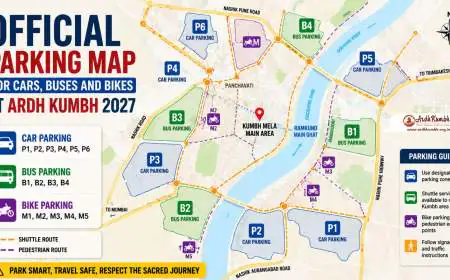










































































How Pilgrim Crowd Flow Is Managed on Shahi Snan Days During Haridwar Ardh Kumbh 2027
Discover how authorities manage pilgrim crowd flow on Shahi Snan days during Haridwar Ardh Kumbh 2027 through AI monitoring, holding areas, shuttle services, and zone-wise planning.

How Pilgrim Crowd Flow Is Managed on Shahi Snan Days During Haridwar Ardh Kumbh 2027
Quick Answer ⚡: On Shahi Snan days during Haridwar Ardh Kumbh 2027, pilgrim crowd flow is managed through a multi-layered system combining AI-based crowd monitoring, zone-wise ghat management, holding areas, shuttle services from outer parking zones, Akhara-specific procession schedules, and real-time surveillance through CCTV cameras and drones. The Uttarakhand Mela Authority coordinates with police, railway, health, and transport departments to ensure safe movement of an estimated 17 crore devotees across 10 major bathing festivals between January 14 and April 20, 2027.
At a Glance 🔎
| Crowd Management Component | Key Details |
|---|---|
| Event Duration | January 14 to April 20, 2027 |
| Major Snan Days | 10 bathing festivals including 4 Amrit Snans |
| Expected Footfall | Approximately 17 crore devotees |
| Main Bathing Ghat | Brahmakund at Har Ki Pauri |
| Akhara Participation | 13 Akharas confirmed for Shahi Snan |
| Primary Control Centre | Central Control Room-2 (CCR-2) near Har Ki Pauri |
| Holding Area Capacity | 10,000 passengers at Haridwar Railway Station |
| Surveillance Tools | AI-enabled CCTV cameras, drones, IoT sensors |
| Parking Strategy | Outer parking zones with shuttle services |
| Budget Allocation | Over ₹2,000 crore requested from central government |
Shahi Snan Dates and Amrit Snan Schedule for Haridwar Ardh Kumbh 2027 📅
The Haridwar Ardh Kumbh 2027 will commence on January 14, 2027 (Makar Sankranti) and conclude on April 20, 2027 (Chaitra Purnima). During this period, the Mela administration has announced 10 major bathing festivals, of which four are designated as Amrit Snan (sacred baths).
Complete Snan Calendar
| Date | Festival | Snan Type |
|---|---|---|
| January 14, 2027 | Makar Sankranti | Regular Snan |
| February 6, 2027 | Mauni Amavasya | Regular Snan |
| February 11, 2027 | Basant Panchami | Regular Snan |
| February 20, 2027 | Magh Purnima | Regular Snan |
| March 6, 2027 | Maha Shivratri | Amrit Snan |
| March 8, 2027 | Phalguna Amavasya | Amrit Snan |
| April 7, 2027 | Nav Samvatsar | Regular Snan |
| April 14, 2027 | Mesh Sankranti | Amrit Snan |
| April 15, 2027 | — | Regular Snan |
| April 20, 2027 | Chaitra Purnima | Amrit Snan |
The Shahi Snan dates 2027 are particularly significant because, for the first time in the history of an Ardh Kumbh in Haridwar, all 13 Akharas have assured the Mela administration of their participation in the Shahi Snan procession. This unprecedented participation requires an even more robust crowd flow management strategy.
Expert Tip 💡: Pilgrims planning to attend Amrit Snan days should arrive at least 12–24 hours in advance and secure accommodation within the Mela zone, as entry routes close several hours before the Akhara procession begins.
Trending Guides Now
How Queue Management Works During Major Bathing Days at Ardh Kumbh
Read Guide →
How Movement Will Be Regulated on Peak Days
Read Guide →
How CCTV and Security Monitoring Work in Haridwar During Ardh Kumbh 2027
Read Guide →
How Crowd Discipline Is Planned for Ardh Kumbh 2027
Read Guide →
Ardh Kumbh 2027 Dates (Official) - Haridwar Snan Schedule
Read Guide →
Dharamshala Stay During Ardh Kumbh: Free & Budget Guide
Read Guide →
Official Progress Report of Haridwar Ardh Kumbh 2027 Infrastructure Projects
Read Guide →
Where to Find 24-Hour Pharmacies in Haridwar During Ardh Kumbh 2027 Emergencies
Read Guide →How the Shahi Snan Sequence Works: The Foundation of Crowd Flow 🕉
Understanding the Shahi Snan entry sequence is essential to understanding how crowd flow is managed. The royal bath is not a free-for-all event—it is a choreographed sequence refined over centuries, where each Akhara enters the river at a pre-determined time slot.
The Step-by-Step Sequence
-
2:00 AM – 2:30 AM: Naga Sadhus awaken in the Sadhugram (temporary tent city). Preparation rituals begin with holy ash application and meditation.
-
3:00 AM – 4:00 AM: Senior Mahants of the 13 Akharas hold a final coordination meeting. The Akhara Parishad confirms the bathing order with the government control room.
-
4:00 AM – 5:00 AM: The Akhara Procession Assembly takes place. Each Akhara forms its procession in a designated order.
-
5:00 AM – 6:00 AM: Processions begin moving toward the Brahmakund at Har Ki Pauri. The Juna Akhara (largest and most senior) leads, departing at approximately 2:30 AM in some years.
-
6:00 AM onwards: Each Akhara receives a 40-minute window at the holy waters. The first procession completes its ritual and returns to camps by 8:30 AM.
The Shahi Snan procession follows a strict internal order: musicians first, then junior sadhus, then Naga Sadhus, then senior mahants on palanquins, then the main body, with a security contingent at the rear.
Pro Tip 🧭: Pilgrims who wish to witness the Shahi Snan procession without entering the bathing area should position themselves along the procession route rather than at the ghats. The route offers better visibility and significantly lower crowd density.
Multi-Layer Crowd Flow Management Architecture 🏗️
The crowd flow management for Haridwar Ardh Kumbh 2027 operates on five distinct layers, each designed to handle a specific aspect of pilgrim movement.
Layer 1: Pre-Entry Management (Outer Zones)
The first layer begins outside the city limits. Large parking spaces are being developed at entry points, from where devotees will be transported directly to the fair area via shuttle services.
-
Outer parking zones at Rodi Belwala, Khadda, and other designated sites
-
Shuttle bus services operating on dedicated lanes to reduce traffic congestion
-
Multi-level parking for two-wheelers near the post office on Upper Road
-
Traffic diversion plans to keep private vehicles away from the core Mela zone
Layer 2: Transit and Holding Management
Once pilgrims arrive at the Mela periphery, they enter the holding area system.
-
10,000-passenger holding area at Haridwar Railway Station to manage crowd flow
-
Zonal waiting areas at key entry points such as Bhimgoda Barrage and Laljiwala
-
Organized arrival and departure routes with separate corridors for entry and exit
Layer 3: Zone-Wise Ghat Management
The Mela area is divided into distinct ghat management zones, each with dedicated entry and exit points.
| Zone | Primary Ghat | Management Strategy |
|---|---|---|
| Zone 1 | Brahmakund, Har Ki Pauri | Highest security, restricted access during Shahi Snan |
| Zone 2 | Subhash Ghat, Dhanush Ghat | Expanded bathing areas, crowd barriers |
| Zone 3 | Astha Path, Boardwalk Bridge | Emergency evacuation routes |
| Zone 4 | Jwalapur, Chandighat | New ghats under construction |
| Zone 5 | Rori Belwala | Redeveloped with modern civic amenities |
The Brahmakund at Har Ki Pauri remains the most sensitive zone. During Shahi Snan days, this area operates under restricted access, with entry permitted only through designated corridors.
Local Insight 📍: The Dhanush Ghat area is being expanded to provide adequate space for holy baths, as pilgrim footfall will increase significantly during Kumbh 2027.
Layer 4: Real-Time Surveillance and Monitoring
The fourth layer is technology-driven, providing live crowd density monitoring and emergency response coordination.
-
AI-based crowd management systems using computer vision and machine learning
-
IoT-enabled monitoring for real-time data on crowd movement, parking, and ghat occupancy
-
Central Control Room-2 (CCR-2) near Har Ki Pauri serving as the integrated command centre for security, health, and traffic
-
Helipad on CCR-2 for quick helicopter deployment during emergencies
-
CCTV camera networks and drone surveillance covering all major ghats and approach roads
-
Public address systems for real-time announcements and crowd guidance
The AI crowd management system is designed to detect crowd density thresholds and trigger automatic alerts when specific zones exceed safe capacity limits.
Layer 5: Emergency Response and Medical Support
The final layer ensures that when incidents occur, response is immediate and coordinated.
-
Emergency medical units stationed every few hundred meters along major ghats
-
Dedicated health surveillance for water-borne diseases and crowd-related injuries
-
Specialized teams trained in crowd crush management, water rescue, and mass casualty incidents
-
Administrative transit route for smooth movement of emergency vehicles and VIPs
Expert Advice ✨: Pilgrims should note the nearest emergency response station upon arriving at their chosen ghat. In case of crowd pressure, follow instructions from Mela security personnel and move toward designated holding areas rather than attempting to exit through the main ghat.
Traffic and Transportation Management 🚌
Traffic management is the backbone of pilgrim crowd flow management during Shahi Snan days. The Uttarakhand government has initiated major infrastructure projects to ensure smooth vehicular movement.
National Highway Projects
Two major NHAI projects are being expedited ahead of Kumbh 2027:
-
51-km six-lane Access Controlled Spur to Haridwar – approximately 92% complete
-
15-km Haridwar Bypass (Package-1) – 77% complete
These projects are designed to reduce traffic congestion in and around Haridwar, allowing pilgrims to reach the Mela area faster and with less friction.
Railway Arrangements
Haridwar Railway Station is a major entry point for devotees. The Mela Officer has directed comprehensive preparations:
-
Holding area with 10,000-passenger capacity at the station
-
Additional special trains on major bathing days, with 15 extra trains planned alongside the regular 33 pairs
-
Increased ticket counters and help desks
-
Special assistance counters for persons with disabilities, senior citizens, and women
-
Coordination with GRP and RPF for security and crowd management at platforms
-
Strengthening of nearby stations including Motichur, Jwalapur, and Raiwala
Parking and Shuttle Strategy
The parking strategy follows a "park outside, shuttle inside" model:
-
Outer parking zones are established at entry points on the city's periphery
-
Shuttle buses transport pilgrims from parking zones directly to the Mela area
-
Dedicated shuttle lanes prevent mixing with private vehicles
-
Multi-level parking for two-wheelers near the post office on Upper Road
-
Real-time parking monitoring through the IoT-enabled system to direct pilgrims to available spaces
Pro Tip 🧭: If you are travelling by private vehicle, park at the designated outer parking zone and use the shuttle service. Attempting to drive into the core Mela area during Shahi Snan days will result in long delays and possible diversion to distant parking sites.
Infrastructure Projects Supporting Crowd Management 🏗️
The Uttarakhand government has launched four major infrastructure projects worth approximately ₹235 crore under the Haridwar–Rishikesh Ganga Corridor development project.
| Project | Cost | Purpose |
|---|---|---|
| Administrative Route Corridor Development | ₹43.25 crore | Dedicated route for emergency vehicles and VIPs |
| Har Ki Pauri–Subhash Ghat Revitalisation | ₹66.76 crore | Safe, organised bathing facilities; crowd management systems |
| Northern Har Ki Pauri Development | ₹66.34 crore | Modern infrastructure; smooth movement during large gatherings |
| Rori Belwala Redevelopment | ₹58.84 crore | Upgraded civic amenities for religious and tourism activities |
Additionally, four new ghats are being constructed on the Upper Ganga Canal at a cost of ₹13.21 crore, featuring platforms, staircases, seating benches, and safety walls.
The Administrative Route Corridor is particularly important for crowd flow management, as it ensures that emergency vehicles can move through the Mela area without being blocked by pilgrim crowds.
Local Insight 📍: The Rori Belwala area redevelopment is significant because this location serves as a major parking and holding zone for pilgrims arriving from the Haridwar-Delhi highway. The upgraded facilities will improve crowd management at this critical entry point.
Role of AI and Technology in Crowd Flow Management 🤖
Technology plays a transformative role in Shahi Snan crowd management for Haridwar Ardh Kumbh 2027.
AI-Based Crowd Monitoring
The AI-based crowd management system uses:
-
Computer vision algorithms to analyze crowd density in real time
-
Machine learning models to predict crowd movement patterns
-
Automatic alerts when specific zones exceed safe capacity thresholds
-
Face detection and recognition for missing person searches and security monitoring
IoT-Enabled Infrastructure
IoT sensors are deployed across the Mela area to monitor:
-
Crowd density at ghats, holding areas, and transit routes
-
Parking occupancy in real time
-
Water levels at bathing ghats for safety
-
Air and water quality for health surveillance
-
Power supply and lighting systems
Drone and CCTV Surveillance
-
AI-enabled CCTV cameras installed at all major ghats, parking areas, and transit routes
-
Drone surveillance providing aerial views of crowd movement and early identification of bottlenecks
-
Underwater drones for water rescue operations
-
Anti-drone systems to prevent unauthorized drone activity
The Central Control Room-2 (CCR-2) integrates all these data streams into a single dashboard, allowing Mela officials to make real-time decisions about crowd diversion, route closures, and emergency deployment.
Expert Tip 💡: The AI crowd management system at Haridwar Ardh Kumbh 2027 represents a significant upgrade from previous Kumbh events. The system's predictive capabilities allow authorities to anticipate crowd surges before they become dangerous, enabling preemptive route diversions and holding area activations.
Akhara Coordination and Peshwai Processions 🚩
The 13 Akharas participating in Shahi Snan are integral to crowd flow management. Each Akhara's Peshwai (procession) follows a designated route and time slot, coordinated through daily meetings between Akhara representatives and the Mela administration.
How Akhara Coordination Works
-
Daily coordination meetings are held with all Akharas to review crowd management plans
-
Each Akhara is assigned a specific bathing window (typically 40 minutes) at the ghat
-
Procession routes are pre-determined and cleared of general pilgrims before the Peshwai begins
-
Security personnel accompany each Akhara procession to maintain order
-
Return routes to Akhara camps are also designated to prevent cross-traffic with pilgrims
The Peshwai is a major crowd attraction, drawing thousands of pilgrims to the procession routes. Managing this dual flow—Akhara processions and pilgrim movement—requires precise timing and spatial separation.
Local Insight 📍: During Shahi Snan, the Peshwai processions typically begin from the Sadhugram area and move toward Har Ki Pauri. Pilgrims should avoid crossing the procession route during these hours and instead use designated pedestrian corridors.
Pilgrim Safety Guidelines for Shahi Snan Days 🛡️
The Mela administration has issued comprehensive safety guidelines for pilgrims attending Shahi Snan days.
Before You Arrive
-
Check the snan schedule and plan your visit on a non-Shahi Snan day if you wish to avoid peak crowds
-
Book accommodation well in advance; options within the Mela zone fill up months before the event
-
Download the official Mela app (when available) for real-time crowd updates and route information
-
Note emergency helpline numbers and the location of the nearest medical station
During Your Visit
-
Follow designated entry and exit routes — do not attempt to create shortcuts
-
Avoid carrying large bags or valuables to the ghats
-
Stay with your group — establish a meeting point in case of separation
-
Heed announcements from the public address system
-
Move to holding areas if you feel crowd pressure building
-
Do not enter restricted zones during Akhara processions
After the Snan
-
Exit through designated routes — do not reverse against the flow of pilgrims
-
Use shuttle services to return to outer parking zones
-
Report any missing persons to the nearest help desk immediately
Expert Advice ✨: The most common cause of crowd emergencies is counter-flow — pilgrims trying to move against the main direction of crowd movement. Always move with the flow and exit through the route designated for your zone.
Final Thoughts: A Coordinated Effort for a Sacred Experience 🙏
The crowd flow management for Shahi Snan days during Haridwar Ardh Kumbh 2027 represents one of the most sophisticated logistical operations in the world. From AI-based crowd monitoring and IoT-enabled infrastructure to zone-wise ghat management and Akhara coordination, every element is designed to ensure that the 17 crore pilgrims expected at this sacred gathering can bathe safely and peacefully.
The success of this operation depends not only on technology and infrastructure but also on pilgrim cooperation. By following designated routes, heeding announcements, and respecting the Akhara processions, devotees can contribute to a safe and spiritually fulfilling Kumbh experience.
Expert Tip 💡: Plan your visit around the Shahi Snan schedule, use the shuttle services, and always keep the emergency helpline numbers handy. The Mela administration has left no stone unturned in preparing for this historic event — your cooperation completes the picture.
Frequently Asked Questions