The Sacred Core Lockdown: The One-Way System That Saves Lives 🚶
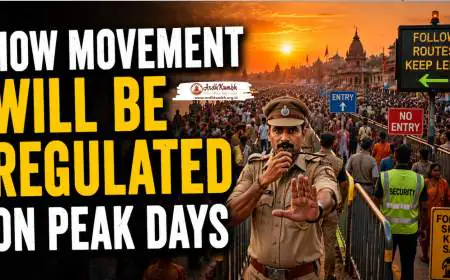
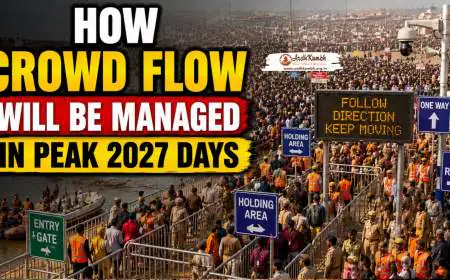
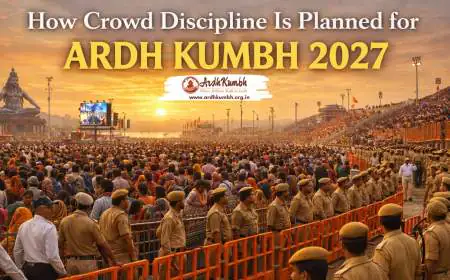
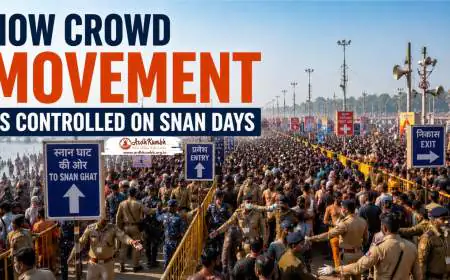
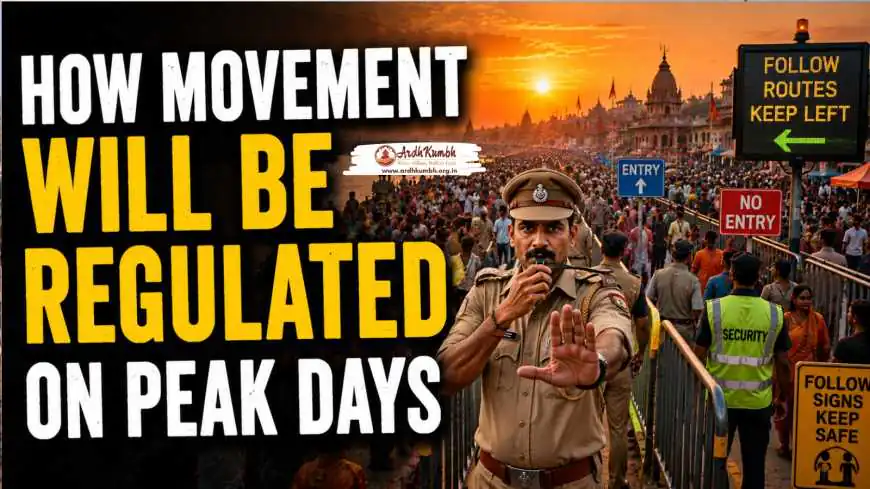
At the heart of the peak day movement regulation is a simple, non-negotiable principle: the Sacred Core Zone, the area immediately surrounding the bathing ghats, becomes a strictly controlled, one-way circulatory system. Hours before the first procession, the entire area is sealed off. A network of metal barricades, manned by police and volunteers, channels the entire crowd into a single, pre-determined direction of flow. There is no wandering, no doubling back, and absolutely no entry through an exit gate. This rigid, almost military discipline is the single most important factor in preventing the fatal crushes that occur when two massive, opposing flows of people collide. The temporary city is redesigned for the day, with every narrow lane, every open square, and every approach to the water assigned a specific function in the grand, unidirectional current.
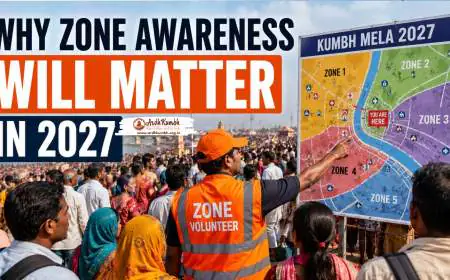
Pilgrims are guided toward specific, color-coded entry gates based on their sector. From the moment you pass through that gate, your path is set. You will walk along a designated route, often flanked by barricades, moving steadily toward the river. After your sacred bath, you will be guided away from the water along an entirely different, separate exit route. The two streams of humanity—the eager, approaching crowd and the wet, satisfied, departing crowd—never meet. This separation is absolute. It is enforced by physical barriers and the calm, persistent presence of the security forces. The one-way system is not just a logistical plan; it is a sacred geography of safety, a temporary, life-saving architecture that every pilgrim must respect. Your journey to the river and back is not a personal exploration; it is a participation in a collective, sacred flow.
The Pontoon Bridges: Gated Arteries Across the Sacred River 🌉
The pontoon bridges spanning the river are the most critical and potentially vulnerable points in the entire movement system. On peak days, their regulation is precise and uncompromising. Each bridge is assigned a single, dedicated function: some are exclusively for pilgrims heading toward the main ghats, while others are solely for those returning. This one-way bridge assignment is non-negotiable and clearly marked with massive banners. But the regulation goes deeper. At the entry point to every bridge, a gating system is in operation. Trained personnel, often using digital counters, continuously monitor the number of people on the bridge. When the safe capacity is reached, the flow is halted. Pilgrims are held in a designated holding area, a spacious, secure pen where they can rest and wait. The bridge is allowed to clear before the gates are opened again, creating a rhythmic, stop-and-go pulse that prevents dangerous overcrowding.
This gated, pulsatile flow is a masterpiece of crowd physics. It transforms a potentially lethal, surging mob into a series of manageable, calm waves. The approach paths to these bridges are deliberately designed like funnels, wide at the start to gather the crowd and gradually narrowing to the bridge's exact width. This ensures a smooth, laminar flow of people, not a turbulent, crushing press. Pilgrims are urged to keep moving, not to stop on the bridge for any reason, and to follow the instructions of the personnel. The pontoon bridge is the most sacred and the most fragile artery of the peak day pilgrimage, and its regulation is the single most critical task of the entire event.
The Holding Areas: The Buffers That Absorb the Human Tide 🏟️
Scattered throughout the Mela grounds, particularly at the approaches to the main bathing zone and the critical pontoon bridges, are vast, open spaces designated as holding areas. These are the secret buffers that make the entire system work. The Kumbh crowd on a peak day is not a steady, uniform stream; it comes in massive, surging pulses, especially after a major akhara has cleared the route. If these pulses were allowed to slam directly into the narrow entry gates of the bridges or the ghats, the pressure would become instantly fatal. The holding areas absorb this kinetic energy. They are the pens where the surging crowd is contained, calmed, and gradually released in a controlled, metered flow. Within these areas, volunteers often distribute water and basic snacks, and first-aid posts are stationed nearby. They are not prison yards; they are spaces of temporary, safe pause.
The regulation of movement relies on pilgrims cooperating with this holding system. When you are directed into a holding area, the most spiritual and practical thing you can do is to be patient. The wait is not a delay; it is a vital part of the safety mechanism that protects you and everyone around you. Use the time for silent prayer, for mantra repetition, or simply for rest. The holding area is a microcosm of the Kumbh's greatest teaching: that waiting, when embraced, becomes a form of meditation. The system releases pilgrims in phases, often prioritizing them based on the sector they came from, to prevent any single ghat from being overwhelmed. The holding area is the gentle, compassionate hand that transforms a potentially deadly rush into a sequence of calm, orderly waves.
The Akhara Procession: A Choreographed, Protected Sacred Corridor 🔱
The Shahi Snan is the spiritual apex of the Kumbh, and the grand procession of the akharas to the river is its most spectacular and volatile element. The movement of these vast, ecstatic, and heavily populated monastic orders is not a chaotic free-for-all. It is a precisely choreographed, diplomatically negotiated, and tightly protected operation. The exact timing, route, and duration of each akhara's procession is agreed upon months in advance. On the day, a "rolling wave" system is implemented. The entire route from the akhara camp to the royal bathing ghat is cleared of all other pilgrims and sealed by security forces. One akhara is allowed to move at a time, in a spectacular, singing, and dancing procession. The rest of the vast crowd is held safely behind pre-designated lines, their anticipation building but their movement completely controlled.
The route itself is a sacred corridor, lined with barricades and security personnel. Once an akhara completes its ritual bath, it is guided away along a separate exit route that never crosses the incoming path of the next procession. Then, and only then, are the barriers opened for the next akhara to begin its journey. Only after all the monastic orders have completed their sacred bath are the ghats systematically opened to the general public in a controlled, phased manner. This coordination between the ancient ritual hierarchy of the akharas and the modern demands of crowd science is a marvel of mutual respect and practical wisdom. The regulation of movement here respects the deep sanctity of the tradition while ensuring the absolute physical safety of the millions who have come to witness it.
The Digital Eye and the Central Command 🛰️
Above the sea of humanity, a silent, digital network monitors every pulse of the crowd. The peak day movement regulation of the modern Kumbh is orchestrated from a high-tech Integrated Command and Control Centre (ICCC) . Thousands of CCTV cameras, mounted on poles, drones, and even tethered balloons, provide a live, bird's-eye view of the entire Mela grounds. This video feed is streamed into the ICCC, where police, disaster management, and administrative officials sit before a vast video wall, watching the city's pulse. But the real revolution is the use of Artificial Intelligence. The AI algorithms analyze the video feeds in real-time, measuring crowd density, calculating the speed and direction of flows, and instantly detecting dangerous anomalies—a sudden surge, a bottleneck forming, a person falling, or a flow moving in the wrong direction.
The moment the AI detects a potential danger, such as a crowd density exceeding a critical threshold, it triggers an instant alarm. An official can zoom in, assess the situation, and dispatch a response team or issue a localized audio warning through the public address system within seconds. This is predictive crowd management. It allows the authorities to redirect the flow, open a new holding area, or temporarily close a gate before a dangerous crush develops. The digital eye is not a tool of oppressive surveillance; it is a benevolent, watchful presence, a silent guardian that ensures the sacred flow is also a safe one. It is the fusion of ancient faith and modern science, working together to protect the pilgrim.
The Human Chain: Volunteers and Police as the Gentle Shepherds 👮🤝
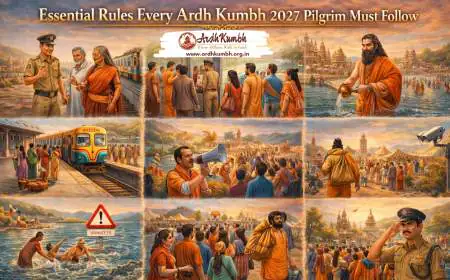
Technology and infrastructure are only as effective as the human beings who operate them. The final, and perhaps most crucial, layer of movement regulation on peak days is the vast, trained human safety net of police, paramilitary forces, and an army of volunteers known as sevadars. Thousands of uniformed personnel are stationed at every critical point: the entry and exit gates, the approaches to the pontoon bridges, the perimeters of the holding areas, and along every major artery. Their role is not just to enforce the rules but to guide, to reassure, and to serve. A calm, authoritative voice directing you to the correct lane, a friendly face helping a lost child, a volunteer offering a cup of water to an exhausted elder—these human interactions are the living soul of the movement system.
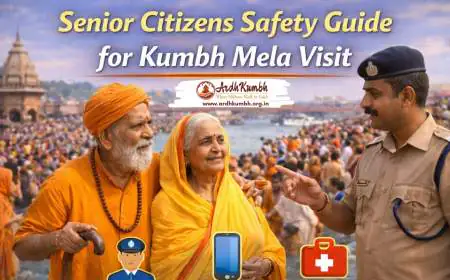
These "gentle shepherds" are trained in the psychology of crowds. They know that panic is the greatest enemy. Their presence is deliberately calm and non-threatening, even as they stand firm against any movement that could cause danger. They use loudspeakers not to bark orders but to provide a constant, reassuring stream of information and guidance, often mixed with devotional music to keep the atmosphere peaceful. The sevadars, in particular, embody the spirit of selfless service that is at the heart of the Kumbh. They are pilgrims themselves, serving other pilgrims. If you are lost, confused, or exhausted, look for them. They are your guides, your protectors, and they are the final, human link in the great chain of safety that holds the Kumbh together.
The Pilgrim's Role: How Your Choices Become the Sacred Flow ✅
The most sophisticated regulation system in the world is amplified when the crowd itself is aware and cooperative. Every pilgrim is a cell in the great, moving body of the Kumbh, and your individual choices have a direct impact on the safety of the whole. The most helpful choice you can make is to avoid the peak of the peak. The most revered bathing moment is in the deep, dark hours of the Brahma Muhurta, before 4 AM. If you are physically able, bathing during this time is not only spiritually potent but has the thinnest, calmest crowds. The late morning and midday hours see the densest crush. Similarly, staying for several days instead of just rushing in for the main snan date allows you to move through the city with more leisure and less pressure.
On the day itself, travel light. A single, small cross-body bag is ideal. Bulky luggage is a hazard to you and others. Wear sturdy, closed shoes that won't slip on wet steps. Most critically, follow the instructions of the authorities at all times, even if they seem to be taking you the long way. The one-way systems, the detours, the holding areas—they are all there for a reason, calibrated to manage a flow that you, as an individual, cannot perceive. Do not try to find shortcuts. Do not stop in the middle of a moving crowd. Do not push or rush. Your patience is not just a virtue at the Kumbh; it is a vital component of the safety system. When you move calmly, you are not just helping yourself. You are contributing to a peaceful, flowing river of humanity, and that collective, conscious movement is a form of worship as powerful as the snan itself.
The Dispersal: The Quiet, Controlled Ebb After the Great Flow 🌅
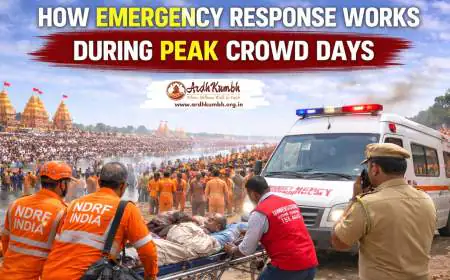
The peak day movement regulation does not end when the last pilgrim exits the water. The dispersal of millions back to their camps, parking lots, and railway stations is just as critical and just as carefully managed. The same one-way bridges, the same phased openings, and the same watchful AI eyes that guided everyone to the river now reverse the flow to guide everyone safely away. The exit routes are kept separate from any remaining incoming pilgrims. Shuttle buses are staged in massive numbers at pre-designated pickup zones, and their movement is coordinated to match the ebbing human tide. The holding areas are re-purposed as waiting zones for transport.
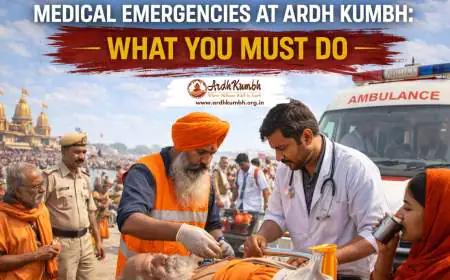
There is no triumphant siren signaling the end of the operation, only the quiet, steady work of ensuring every last pilgrim is safely on their way. The loudspeakers, which earlier broadcast the roar of the processions, now provide calm directions to exits and transport hubs. The medical teams remain on high alert for the exhausted and the injured. The regulation of movement is a complete cycle: a controlled, powerful systole that brought millions to the water's edge, followed by a gentle, sustained diastole that returns everyone home. The peak day is a masterpiece of planned flow, a testament to the human capacity to organize not through force but through intelligent design, compassionate service, and a shared, deep respect for the sacred purpose that has drawn everyone there. The river flows, and the pilgrims flow with it, a single, immense, and peaceful body, returning to rest