
















































Why Pilgrims Accept Hardship Voluntarily
Discover why pilgrims accept hardship voluntarily at Kumbh Mela. Explore the spiritual logic of tapas, the alchemy of discomfort, and how willingly endured suffering purifies the soul, builds resilience, and leads to profound inner freedom.

The Sacred Fire of Tapas: Why Discomfort Purifies the Soul 🔥
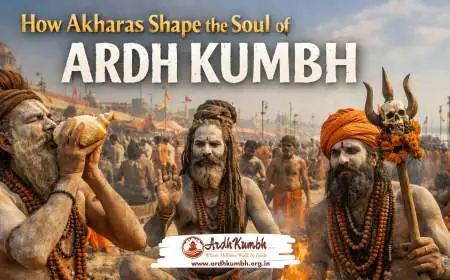
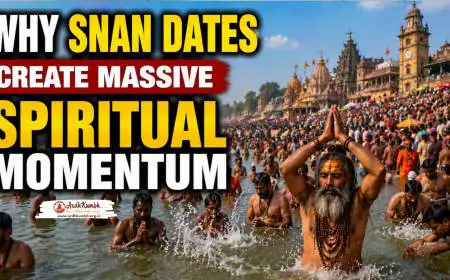
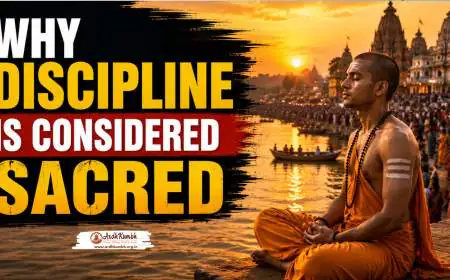
To understand why pilgrims accept hardship voluntarily, one must first understand the concept of tapas, a Sanskrit word that literally means "heat" or "fire." In the Vedic tradition, tapas is the fundamental creative and transformative force. The Rig Veda describes how the primordial being performed tapas—generated intense, focused spiritual heat—and from that heat, the entire cosmos was born. The same principle applies to the human soul. The accumulated karmas, the mental impurities, the layers of ego that obscure our true nature—these are not removed by comfort. They are burned away by the sacred fire of willingly endured austerity. When a pilgrim steps into the freezing water of the Sangam at 4 AM, they are not just bathing. They are placing their body and mind into a crucible, a controlled fire that consumes the accumulated lethargy, attachment, and fear of a lifetime.
This is not self-punishment. It is spiritual alchemy. The cold water shocks the nervous system into a state of intense, pure presence, silencing the endless chatter of the mind. The long walk, performed day after day, breaks the ego's addiction to convenience and teaches the body to obey the will. The simple, tasteless food of the bhandara, eaten with gratitude, purifies the palate and weakens the grip of sensual craving. Every discomfort accepted voluntarily at the Kumbh is a deliberate, conscious offering into the inner fire. The pilgrim knows, through the inherited wisdom of the tradition, that this fire will not destroy them. It will refine them. It will burn away the non-essential and reveal the gold of the soul beneath. The hardship is the heat, and the heat is the grace. This is the first and deepest reason the pilgrim walks willingly into the cold and the crowd, not with grim resignation but with a quiet, inner joy.
The Alchemy of Pain: How Suffering Becomes Spiritual Currency 💰
In the material world, suffering is a problem to be avoided at all costs. In the spiritual economy of the Kumbh, suffering voluntarily embraced is a form of spiritual currency. The pilgrim knows that the merit (punya) gained from a single snan taken on the astrologically perfect moment, after a night of shivering in the open, is exponentially greater than a comfortable bath taken at noon. The hardship adds value. It is the weight that makes the spiritual transaction real. A prayer offered from a soft bed is one thing; the same prayer gasped out between chattering teeth in the grip of the sacred river is another thing entirely. The universe, the tradition teaches, responds to sacrifice. The pilgrim who gives their comfort, their sleep, their physical ease, as an offering, is making a tangible, costly gesture of devotion. And that gesture, that yagya of the body, attracts grace.
This is not a crude transaction. It is not about bribing the divine. It is about the internal transformation that the sacrifice produces in the pilgrim. The willingness to endure pain for a higher purpose fundamentally restructures the psyche. It proves to the doubting mind that the soul is in charge, not the body. It builds a deep, unshakeable confidence. The pilgrim who has walked fifteen kilometers in the cold, bathed in freezing water, and sat in silent meditation amidst a roaring crowd has earned a profound self-respect. They have paid a price for their spiritual growth, and what is paid for is valued. The hardship becomes a form of sacred offering, a personal tapas that is the most potent prayer a human being can make. The pilgrim leaves the Kumbh not feeling depleted but feeling immensely, spiritually wealthy, their merit account overflowing, their heart rich with the grace they have purchased with the honest currency of their own effort.
Trending Guides Now
Har Ki Pauri Ganga Aarti Time Today in Haridwar
Read Guide →
Complete Guide to Ardh Kumbh Rituals
Read Guide →
Shahi Snan Explained: Why It Is the Most Sacred Bath
Read Guide →
Ardh Kumbh Mela Rituals Explained Shahi Snan & Akhara Traditions
Read Guide →
Best Routes to Reach Haridwar for Ardh Kumbh Mela
Read Guide →
Ardh Kumbh 2027 Dates (Official) - Haridwar Snan Schedule
Read Guide →
How Kumbh Protected Knowledge Without Books
Read Guide →
How Ardh Kumbh Unified Diverse Sampradayas
Read Guide →The Forge of Resilience: Building a Soul That Cannot Be Broken 💪
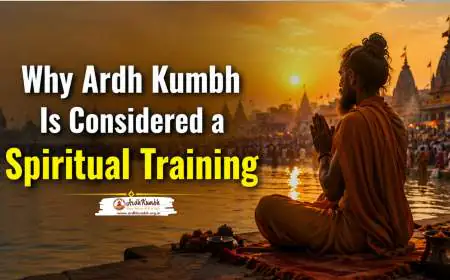
A hidden reason why pilgrims accept hardship voluntarily is the deep, intuitive understanding that they are building a resilient soul. The modern world, for all its comforts, produces fragile human beings. Unaccustomed to any real physical or mental challenge, people crumble at the first sign of difficulty. The Kumbh is a deliberate, intensive training program in resilience. Every cold bath is a rep in the gym of the spirit. Every long, aching walk is a lesson in persistence. Every frustrating hour spent in a queue is an advanced course in patience. The pilgrim enters this training ground not as a victim but as a willing student. They know that the strength they build on the ghats of the Sangam will serve them for a lifetime. The next time they face a life crisis—a loss, a failure, a sickness—they will have a deep, visceral memory of having endured something hard and having come through it.
This resilience training works on the body, the mind, and the emotions. The body learns that it can survive and even thrive without its usual comforts. The mind learns that the endless stream of complaints and demands can be observed and overruled. The emotions learn that the storms of grief, anger, or fear that the Kumbh often stirs up can be weathered without being destroyed. The pilgrim who has willingly faced the cold and the chaos and found a still point within it has been forged into something far stronger than they were before. They return to their ordinary life with a new baseline. The traffic jam, the difficult boss, the family conflict—these are no longer crises. They are simply situations, and the pilgrim has been trained to meet them with a calm, steady heart. The voluntary hardship of the Kumbh is an investment in a lifetime of unshakeable strength.
The Ego's Crucible: Why the False Self Must Suffer to Surrender 🤲
The ego, that constructed sense of a separate, important self, thrives on comfort, control, and recognition. The voluntary hardship of the Kumbh is a direct, sustained assault on the ego's power supply. When you are cold, tired, hungry, and anonymous in a sea of millions, the ego has no foothold. Your job title, your bank balance, your carefully curated image—none of it can warm your shivering body. None of it can get you to the front of the queue. The Kumbh forces the ego to hit a wall, again and again, until it finally, exhaustedly, surrenders. This is a painful process, but it is the most liberating spiritual experience a human being can have. The pilgrim learns, through the undeniable evidence of their own suffering body, that they are not the ego. They are the awareness that witnesses the ego's discomfort and can still choose to take the next step, offer the next prayer, and extend the next kindness.
This ego dissolution is the hidden prize inside the hardship. The pilgrim who has been broken open by the cold, the crowd, and the exhaustion finds a strange, weightless freedom on the other side. They are no longer so concerned with being special, being right, or being comfortable. They have touched a deeper self that is humble, resilient, and profoundly connected to all the other suffering and striving souls around them. The voluntary suffering of the Kumbh is a masterfully designed tool for this purpose. It is the heat that melts the false self, leaving only the pure, luminous awareness that is our true nature. This is why pilgrims, even the wealthy and powerful, willingly strip themselves of their privileges and stand equal and shivering in the same water. They are seeking, consciously or unconsciously, the liberation that only the death of the ego can provide.
The Ancestral Echo: Honoring Those Who Walked Before 👣
Pilgrims do not invent their hardships from scratch. They inherit them. The cold bath, the long walk, the simple food—these are the exact same difficulties that their parents, grandparents, and ancestors endured for generations. Accepting hardship voluntarily is therefore a profound act of ancestral connection. When a modern pilgrim shivers in the pre-dawn mist at the Sangam, they are stepping into the same physical experience as their great-great-grandfather who walked there in 1890. The hardship is a living link to the past. It is a way of honoring the sacrifices made by those who came before, of keeping their memory and their faith alive not in words but in the very cells of the body. To refuse the hardship, to seek a comfortable, air-conditioned pilgrimage, would be to break the chain of embodied memory.
This ancestral dimension gives the voluntary suffering a deep, emotional sweetness. It is not a lonely ordeal. It is a communion. The pilgrim feels the presence of their ancestors walking beside them. The pandas' vahis, the genealogical records, make this connection explicit. When the panda points to the name of a pilgrim's ancestor who came in 1920, the hardship of the current pilgrim is placed in a sacred, multi-generational context. The difficulty is no longer just their own. It is a family heirloom, a sacred duty, a way of belonging to a lineage of faith that has proven its strength across centuries. This transforms the pain from a burden into a privilege. The pilgrim is not suffering alone. They are adding their own footsteps to a path that has been walked by their blood for a thousand years.
The Simplicity That Sets You Free 🏕️
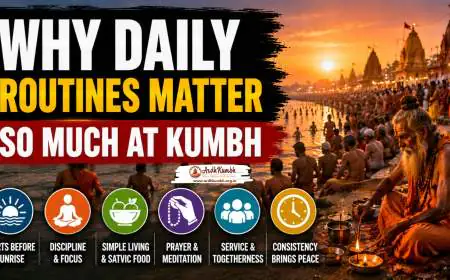
Modern life is exhausting not because it is physically hard but because it is psychologically overwhelming. We are drowning in choices, in notifications, in the relentless pressure to optimize every moment. The voluntary hardship of the Kumbh offers a radical, liberating antidote: forced simplicity. At the Mela, your life is stripped down to its absolute essentials. You have one bag. You wear the same clothes. You eat what you are given, when it is served. You have no control over the weather, the noise, or the schedule. This sounds, to the modern ear, like a nightmare. But pilgrims discover it is a profound relief. The burden of endless choice is lifted. The exhausting performance of a curated identity is impossible. You are reduced to a simple, physical being, walking, eating, sleeping, and praying.
This radical simplification is one of the most powerful and attractive reasons pilgrims accept the hardship. They find, in the enforced simplicity, a peace they have not felt since childhood. The mind, freed from the tyranny of decision-making, becomes quiet and clear. The simple dal and roti, eaten with hunger after a long walk, tastes like the most exquisite meal. The warmth of a shared blanket and a few hours of sleep on a hard floor feels like the deepest luxury. The Kumbh teaches, through the body, a lesson that no amount of meditation can fully impart: that happiness is not found in more. It is found in enough. The voluntary hardship of letting go of material complexity is the doorway to a profound inner richness, a lightness of being that pilgrims carry home long after the tents are dismantled.
The Collective Endurance: Finding Strength in Shared Struggle 🤝
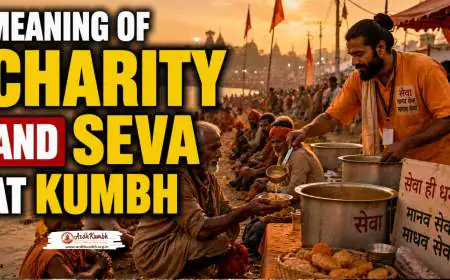
Hardship endured alone can break a person. Hardship endured together creates an unbreakable bond. At the Kumbh Mela, you are never suffering alone. You are part of a sea of millions, all voluntarily sharing the same cold, the same exhaustion, the same simple food, and the same sacred goal. This collective endurance transforms the individual experience of pain into a shared, even joyful, camaraderie. The stranger who offers you a sip of chai, the hand that steadies you on the slippery ghat, the eyes that meet yours in the freezing water and silently say, "I am here too"—these are the moments that make the hardship not just bearable but deeply meaningful. The crowd is not an obstacle. It is a support system, a vast, distributed family of fellow sufferers who have all chosen the difficult path for the sake of the sacred.
This shared struggle creates a powerful, temporary sangha (spiritual community). The hierarchies of the outside world dissolve in the face of the common cold. The millionaire and the laborer shiver identically. The old woman and the young athlete help each other down the steps. The collective endurance of the Kumbh is a living demonstration of human solidarity. It is a proof that we are not isolated, competitive individuals but members of a single, interdependent body. The hardship is the glue that binds this temporary society together. Pilgrims who have walked and wept and shivered together share a bond that lasts long after the Mela ends. This experience of collective strength is one of the most profound gifts of the Kumbh, and it is only possible because of the voluntary hardships everyone has agreed to endure.
The Joy on the Other Side of Pain 😌
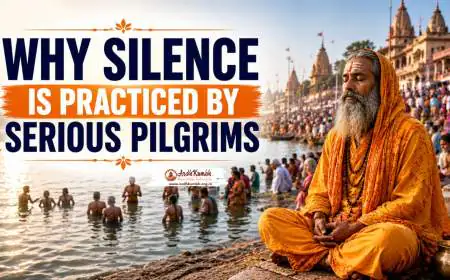
There is a secret that every veteran pilgrim knows: on the other side of the voluntary suffering, there is a joy that is unlike any other. It is not the fleeting pleasure of comfort. It is a deep, serene, and radiant peace that floods the entire being. After the shock of the cold bath, as the blood begins to warm, a profound sense of well-being spreads through the body. After the long walk, sitting in silence by the river, the mind falls into a stillness so deep it feels like a taste of liberation itself. The hardship accepted voluntarily is the doorway to this joy. The contrast between the struggle and the release is what makes the peace so vivid, so earned, and so unforgettable. The pilgrim does not just remember the cold water; they remember the extraordinary, golden peace that followed it.
This is the ultimate reason why pilgrims accept hardship voluntarily. They are not masochists. They are seekers of a joy that the pampered, comfortable life cannot provide. They have learned, through the living tradition of the Kumbh, that the path to the deepest peace often leads through the narrow gate of difficulty. The cold, the exhaustion, the simplicity—these are not punishments. They are the midwives of a spiritual rebirth. The pilgrim emerges from the waters of the Kumbh not just purified of sin but filled with an ineffable, radiant joy, a peace that passes all understanding. And this joy, this peace, is the priceless treasure that makes every shivering step, every aching muscle, and every moment of surrendered comfort completely, overwhelmingly, and eternally worthwhile.
Frequently Asked Questions