















































How Kumbh Became a Platform for Social Reform
Discover how Kumbh became a platform for social reform through its bhandaras, anonymity of the crowd, Bhakti saints, anti-caste messages, and women's spiritual empowerment that challenged rigid hierarchies for centuries.
The Bhandara: A Daily Revolution Against Caste and Class 🍚
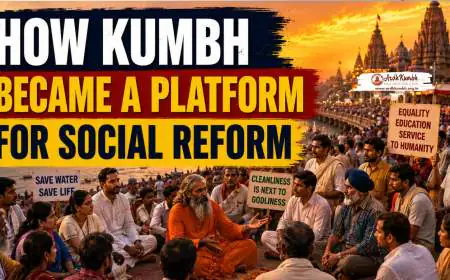
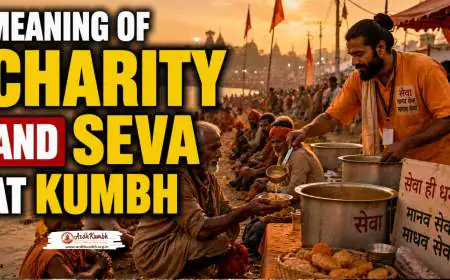
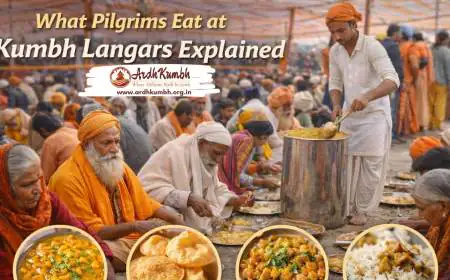
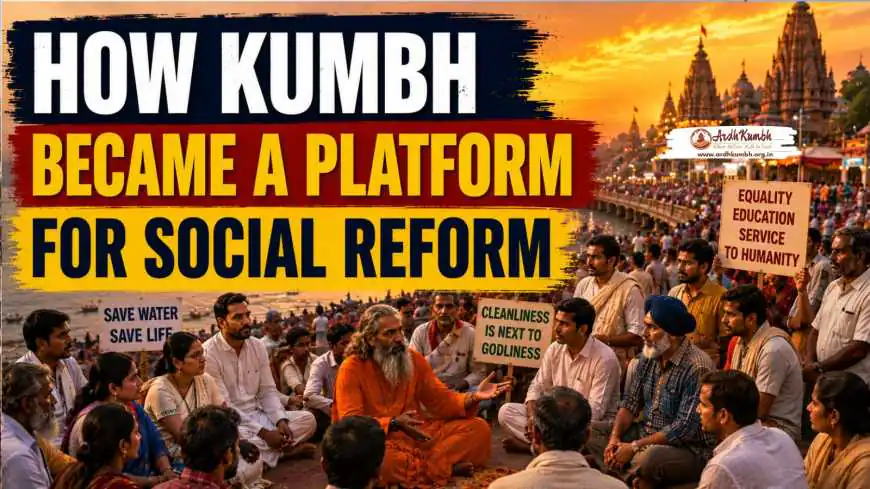
The most powerful engine of social reform at the Kumbh is not a sermon. It is a meal. The bhandara, the free community kitchen, is a daily, practical refutation of the entire caste system. In a society where who could eat with whom, and who could touch whose food, was brutally policed for centuries, the Kumbh created a space where all distinctions were temporarily dissolved. Anyone, from any background, could sit in the row. They were served the same dal, the same roti, the same simple, sattvic food, by volunteers who did not ask for their lineage. This was not a charitable handout. It was, and is, a sacred ritual of radical equality.
This bhandara tradition did not just feed the hungry. It actively subverted the logic of purity and pollution that undergirds caste discrimination. When you share a meal with someone, you become kin. The Kumbh's bhandaras, operating on a massive, industrial scale, created a fleeting but potent community of equals. A high-caste pilgrim who ate food prepared and served by hands that, in the outside world, would be considered "polluted," was performing a quiet act of social revolution. The reformers of the Bhakti movement understood this. Saints like Ravidas, a leather-worker, and Kabir, a weaver, were vocal critics of caste, and their followers would have found at the Kumbh a rare space where their master's teachings of a casteless devotion to the one divine could be physically, tangibly lived, if only for the duration of the Mela. The Kumbh's bhandara is proof that social reform can be delicious, nourishing, and profoundly spiritual.
The Sacred Anonymity That Unmade Social Identity 🤲
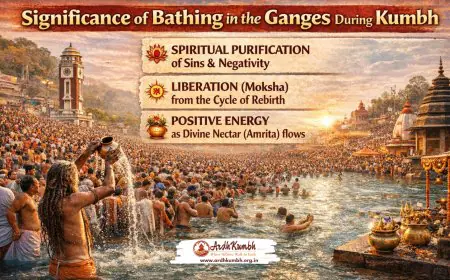
If the bhandara reformed the rules of commensality, the sheer, overwhelming anonymity of the Kumbh crowd reformed the rules of social identity itself. In the dense, moving throng of millions on a main bathing day, your social mask is stripped away. Your caste mark, your sacred thread, your expensive clothes, your carefully curated social media persona—none of it is visible, and none of it matters. You are reduced to your most fundamental, irreducible self: a soul in a body, seeking purification and grace. This is a profound and humbling experience, and it is one that no law could ever mandate. The Kumbh creates the conditions for a direct, personal experience of an identity that exists beneath and beyond the social categories we are born into.
This anonymity was a powerful shield for those on the margins. A Dalit who might face constant humiliation in his village could walk the ghats of the Kumbh as simply another pilgrim. The rich and the poor shivered in the same cold. The powerful politician and the landless laborer were indistinguishable in the pre-dawn fog. This was not a temporary escape from reality. It was a temporary immersion in a more fundamental reality. The Kumbh, as a platform for social reform, allowed people to experience the equality that the saints and sages spoke of. They could feel, in their own bones, what it was like to be free of the burden of caste, a memory that could not easily be erased and which planted a seed of dissatisfaction with the oppressive structures of the world they returned to.
Trending Guides Now
Who Are Naga Sadhus and Why They Lead Kumbh
Read Guide →
Biggest Crowds Ever Recorded at Ardh Kumbh
Read Guide →
Why Haridwar Is Spiritually Central to Ardh Kumbh
Read Guide →
How Ardh Kumbh Evolved Over Centuries of Faith ?
Read Guide →
Best Routes to Reach Haridwar for Ardh Kumbh Mela
Read Guide →
Ardh Kumbh 2027 Dates (Official) - Haridwar Snan Schedule
Read Guide →
Why Snan Dates Create Massive Spiritual Momentum
Read Guide →
Why Daily Routines Matter So Much at Kumbh
Read Guide →The Bhakti Saints and Their Casteless Gospel at the Kumbh 🛕
The Kumbh Mela was never just a gathering of the orthodox. It was the great amplifier for the voices of spiritual dissent and reform, particularly those of the Bhakti saints who emerged from the medieval period onward. These poet-saints—Kabir, Ravidas, Mirabai, Chaitanya, and Tukaram—preached a simple, powerful message: that the divine was accessible to all, regardless of caste, gender, or learning. Their gospel was one of direct, personal, and ecstatic devotion, and it rendered the elaborate, expensive, and often exclusionary rituals of the priestly class irrelevant. The Kumbh, with its massive, diverse audience, was the perfect stage for this casteless gospel.
While we cannot always trace specific historical appearances, the influence of these reformist movements is woven into the very fabric of the modern Kumbh. The singing of their devotional poetry (bhajans), the presence of monastic orders that admit from all castes, and the general atmosphere of accessible, popular devotion are all a direct inheritance from the Bhakti era. The Kumbh became a platform for social reform by allowing these radical, egalitarian ideas to be broadcast to millions. A pilgrim who came to bathe might also hear a beautiful, soul-stirring bhajan of Kabir that cut straight through the justifications for untouchability. The seed of a new, more egalitarian spirituality was planted in the fertile ground of the pilgrimage, and its fruits have been ripening for centuries.
Women and the Kumbh: A Quest for Spiritual Autonomy 🌸
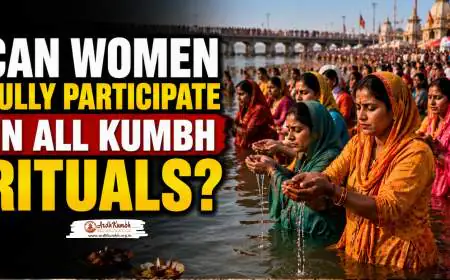
The question of women's roles in traditional Hindu society is complex, but the Kumbh Mela has, in its own way, served as a platform for their spiritual reform and empowerment. For a woman trapped in the confines of a patriarchal household, the pilgrimage to the Kumbh offered a rare and legitimate reason to leave the domestic sphere. It was a journey undertaken for the highest spiritual purpose, and in that journey, she could experience a degree of autonomy and spiritual agency that was often denied in her daily life. She could go directly to the river, the divine Mother, without needing a male priest or family member as an intermediary. Her tears, her prayers, her sankalpa—these were between her and the divine alone.
The presence of female sadhvis and sannyasinis at the Kumbh, some with their own respected akhara camps, provided a powerful alternative model of womanhood. These were not women defined by their roles as wives and mothers. They were spiritual seekers, teachers, and masters of their own destiny, who had renounced the world to pursue liberation. Their very existence was a quiet but powerful critique of the limited roles society offered to women. A female pilgrim visiting a sadhvi camp could see, embodied in the flesh, that a life of spiritual authority and radical freedom was possible for a woman. The Kumbh, by providing a sanctioned space for this female spiritual quest, has been a quiet engine of reform, expanding the boundaries of what is possible for women within the tradition itself.
The Akhara Reform: Renunciation as an Escape From Caste 🔱
The great akhara orders, the warrior-monk institutions that are the backbone of the Kumbh, are themselves a kind of social reform mechanism. Initiation into an akhara involves a ritual death. The novice's old name, family, and caste are all symbolically burned away. He is reborn as a sannyasi, with a new spiritual name, and becomes part of a new family—the akhara—where the only hierarchy is based on spiritual attainment and seniority of initiation. A former outcaste and a former prince can become brothers in the same order. This is a radical, institutionalized rejection of the caste system at the very heart of the Hindu monastic tradition.
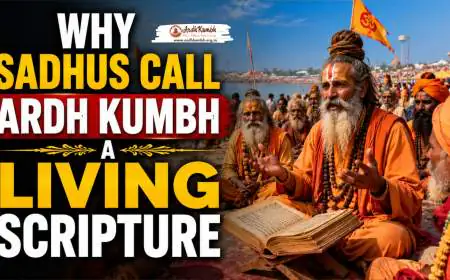
While the akharas have their own internal politics and have not always been perfectly egalitarian, their foundational principle is spiritually revolutionary. They demonstrate, permanently and publicly, that a human being's true identity is not their birth caste. The Kumbh, where all the akharas gather in their full, magnificent diversity, is the grand display of this principle. The spectacle of the shahi snan, where the ash-smeared, naked naga sadhus—who have renounced all social markers—are venerated as the holiest of beings, is a powerful, embodied sermon on the irrelevance of worldly status. The Kumbh became a platform for social reform by making the renunciate, who is outside and above the caste system, the very center of its sacred ritual.
The River of Reform That Flows Beyond the Mela 🌊
The Kumbh Mela does not exist in a bubble. The seeds of reform that are planted here are carried back by the millions of pilgrims to their villages and towns across the subcontinent. A pilgrim who has shared a meal with an "untouchable" at the bhandara can never quite see their own village's segregation in the same way. A woman who has walked alone to the Sangam and offered her own prayers has tasted a spiritual freedom that cannot be taken back. A householder who has heard a sadhu sing a Kabir bhajan condemning empty ritualism might begin to question the practices in their own local temple. The social reform that happens at the Kumbh is not a dramatic, sudden revolution. It is a slow, silent, distributed transformation, carried in the hearts of millions, that gradually, over decades and centuries, reshapes the social consciousness.
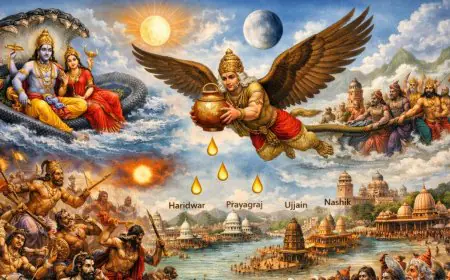
This is the genius of the Kumbh as a platform for change. It works not through force or legislation, but through the power of direct, transformative experience. It creates a powerful, recurring memory of a different kind of world—a world of radical equality, shared nourishment, and genuine spiritual community. This memory acts as a leaven in the lump of society. The Kumbh shows what is possible when humanity is organized around a shared sacred purpose, not around the hierarchies of power and birth. It is an annual reminder, written in water and fire, that the soul has no caste, that all hunger is the same, and that the divine Mother's love does not discriminate among her children.
The Gathering That Still Challenges the Status Quo
Today, as the Kumbh navigates the complexities of the 21st century, its role as a platform for social reform remains as relevant as ever. New voices are using the gathering to address modern injustices. Environmental activists speak of the sacred duty to protect the rivers. Social organizations run campaigns against dowry and female foeticide. The Mela administration itself enforces rules against discriminatory practices at the ghats. The ancient, sacred space of the Kumbh continues to be a powerful amplifier for messages of compassion, justice, and human dignity. It is a living tradition that proves that a deeply rooted faith can be a powerful engine for positive social change, not by abandoning its ancient rituals, but by finding within them the eternal, radical, and liberating truth of human equality. The pilgrimage that began with a pot of divine nectar continues to pour out a different kind of grace—the slow, steady, and sacred work of reforming the human heart.
Frequently Asked Questions