



























Meaning of Charity and Seva at Kumbh
Discover the true meaning of charity and seva at Kumbh Mela. Learn how daan and selfless service complete the pilgrimage, dissolve ego, and transform giving into a powerful spiritual practice.
Daan: The Sacred Art of Giving Without Expectation 🤲
The Sanskrit word daan is often translated as "charity," but this English word carries a faintly condescending, transactional echo that the original term lacks. Daan is derived from the root da, to give, and it signifies a gift that is given freely, with humility, to a worthy recipient, at the right time and place, without any expectation of return. At the Kumbh Mela, all these conditions converge with unique power. The time is the astrologically charged muhurta. The place is the sacred river. The recipients include the holiest sadhus, the most learned pandits, and the most vulnerable pilgrims. The act of giving here is not merely a good deed. It is a sadhana, a spiritual practice in its own right, one that directly purifies the giver's heart of greed, attachment, and the illusion of a separate self.
The scriptures speak of various forms of daan, each carrying its own unique spiritual fragrance. Anna daan, the gift of food, is considered the highest, for it sustains life itself. Vastra daan, the gift of clothing, shields the body from the elements. Vidya daan, the gift of knowledge, dispels the darkness of ignorance. Aushadha daan, the gift of medicine, heals the sick. At the Kumbh, all these forms of giving are practiced on a scale that defies imagination. Yet the tradition insists that the value of the gift is not measured in rupees. A wealthy donor who gives a large sum with a proud, calculating mind accumulates less spiritual merit than a poor widow who offers a single roti with a heart full of love. The quality of the intention—the bhava—is everything. The Kumbh Mela is a school for this sacred art of giving, teaching the pilgrim that the true gift is not the material object but the inner act of letting go, the surrender of the ego's tight grip on "mine" and "thine."
Seva: Selfless Service as the Highest Worship 🙏
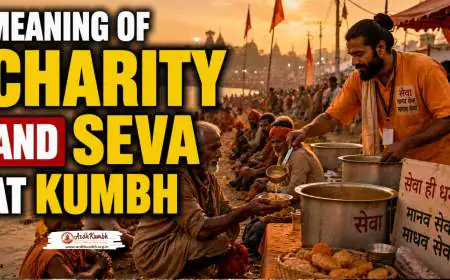
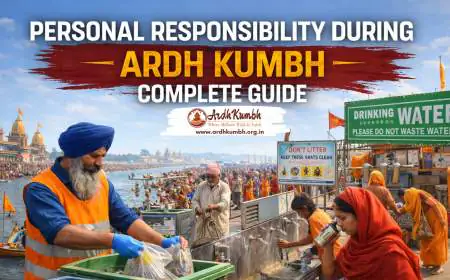
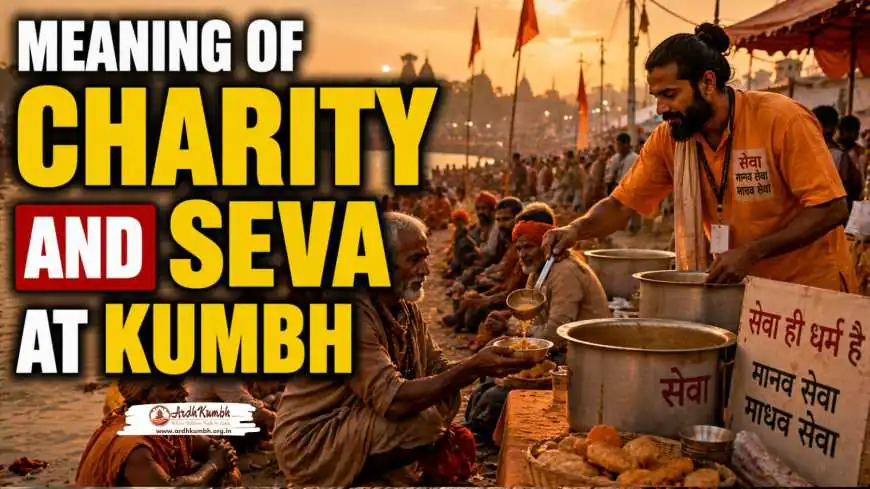
If daan is the giving of material resources, seva is the giving of one's time, energy, and presence. It is karma yoga, the path of selfless action, performed as an offering to the divine that resides in all beings. At the Kumbh Mela, seva is the invisible river that sustains the entire pilgrimage. The vast temporary city, with its millions of inhabitants, runs not on money but on an immense, decentralized network of voluntary service. The young man who spends hours ladling dal in a steaming bhandara kitchen, the woman who sweeps the ghat steps before dawn, the retired doctor who offers free consultations in a makeshift medical camp, the anonymous donor who funds a water station—all of these are practitioners of seva.
The spiritual genius of seva is that it dissolves the ego even more effectively than solitary meditation. When you serve, you are placing yourself in the position of a humble instrument. You are not the giver; you are the channel through which grace flows. The food you serve is not yours. The strength in your arms is not yours. The opportunity to serve is itself a gift, a chance to burn away the accumulated karmic residues of selfishness. The Kumbh Mela provides an unparalleled field for this practice. The needs are immense, obvious, and everywhere. You do not have to search for an opportunity to serve. The opportunity presents itself at every turn: a lost pilgrim to guide, an elderly person to steady, a piece of trash to pick up, a queue to manage with a smile. The pilgrim who comes to the Kumbh with the intention not just to receive but to give, to serve, to be useful, will find that the pilgrimage transforms from a personal quest for salvation into a joyous participation in a sacred community.
Trending Guides Now
Har Ki Pauri Ganga Aarti Time Today in Haridwar
Read Guide →
Complete Guide to Ardh Kumbh Rituals
Read Guide →
Shahi Snan Explained: Why It Is the Most Sacred Bath
Read Guide →
Ardh Kumbh Mela Rituals Explained Shahi Snan & Akhara Traditions
Read Guide →
Best Routes to Reach Haridwar for Ardh Kumbh Mela
Read Guide →
Ardh Kumbh 2027 Dates (Official) - Haridwar Snan Schedule
Read Guide →
Why Early 2027 Planning Will Decide Your Experience
Read Guide →
Why Daily Routines Matter So Much at Kumbh
Read Guide →Annadanam: Feeding the Divine in Every Hungry Pilgrim 🍚
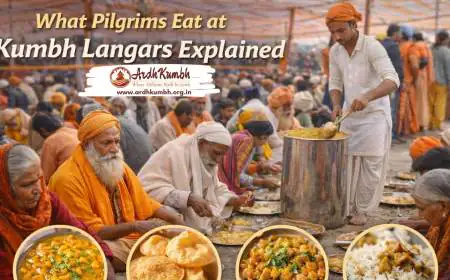
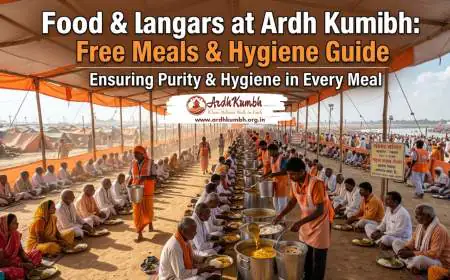
Of all the forms of charity at the Kumbh, none is more visible, more celebrated, or more spiritually potent than annadanam, the offering of food. The Taittiriya Upanishad declares, "Food is Brahman"—the ultimate reality. To give food is to give life, to give energy, to give the very substance of existence. The great bhandaras of the Kumbh are not merely feeding centers. They are temples where the deity being worshipped is the hungry pilgrim, and the offering is a hot, nourishing meal. The long rows of people sitting cross-legged on the earth, eating simple dal and roti from leaf plates, are participating in a ritual as ancient and as sacred as any aarti or yagya.
The annadanam tradition reveals the deepest meaning of charity at Kumbh as an act of recognition. You are not feeding a stranger. You are feeding the divine in one of its countless forms. The volunteer serving the food is trained to see the recipient not as a beggar but as Narayana, the Lord himself, who has come to grant the server an opportunity for spiritual growth. This transforms the entire dynamic of giving. There is no condescension, no pity, no power imbalance. There is only gratitude on both sides. The giver is grateful for the chance to serve. The receiver is grateful for the nourishment. Both are enriched. The bhandara is a living demonstration of the Advaitic truth that the giver, the receiver, and the gift are ultimately one. This is why pilgrims who could easily afford to eat at private restaurants often choose instead to sit in the bhandara lines. They are not saving money. They are seeking the spiritual nourishment that comes from sharing a meal in an atmosphere of grace and equality.
The Spiritual Economics of Grace 💰
In the ordinary world, economics is governed by scarcity. At the Kumbh, a different kind of economics operates—an economics of grace, based on abundance and flow. The tradition understands that wealth, like water, must circulate to remain pure. When it stagnates in the hands of a few, it becomes a source of corruption. When it flows freely, it purifies and nourishes everything it touches. Charity and seva at Kumbh are the practices that keep the spiritual and material economies flowing. The pilgrim who receives the immense, priceless gift of the sacred bath is meant to become a conduit for that grace. By giving dakshina to a temple, by donating to a bhandara, by offering a warm blanket to a shivering sadhu, the pilgrim completes the sacred circuit. Grace received becomes grace returned.
This is the antidote to the spiritual danger of the pilgrimage: that it becomes a purely selfish pursuit of personal salvation. The Kumbh could easily become a gathering of spiritual consumers, each seeking their own merit, their own purification, their own liberation. Daan and seva shatter this self-centered frame. They force the pilgrim to look outward, to recognize the community, to feel the interconnectedness of all beings. The moment you place a roti in the hands of a hungry stranger, you are jolted out of the private drama of your own spiritual journey. You are reminded that you are part of a vast, interdependent web of life, and that your own liberation is inextricably linked to the well-being of others. This is the radical, transformative message of the Kumbh's charitable traditions. They teach that true spiritual wealth is not measured by what you have accumulated, but by what you have given away.
The Invisible Seva: Service Without Recognition ✅
The most spiritually powerful seva at the Kumbh is often the least visible. It is the service performed not on a stage, not in front of cameras, not with a plaque bearing the donor's name, but in the quiet, unnoticed corners of the Mela. The volunteer who cleans the toilets without complaint. The person who stays up all night to guide lost pilgrims to the medical camp. The anonymous donor who funds an entire bhandara for a day and insists that no one know their name. This is gupta seva, hidden service, and the tradition considers it the highest form of giving because it is utterly free from the subtle contamination of ego. There is no one to applaud, no reputation to enhance, no social credit to accumulate.
The Kumbh Mela provides a perfect training ground for this invisible service. In a crowd of millions, your individual act of kindness is swallowed up in the immensity. You can practice being useful, being kind, being generous, without anyone ever knowing it was you. This is an extraordinary liberation. The ego, which constantly seeks recognition, is starved of its fuel, and the deeper self, which simply loves to serve, begins to emerge. The pilgrim who has practiced gupta seva at the Kumbh returns home with a new understanding of what it means to be a genuinely good person. It is not about being seen doing good deeds. It is about doing them for the sheer joy of doing them, in secret, as an offering to the divine. The Kumbh teaches that the invisible, anonymous acts of service are the threads that hold the universe together.
Common Mistakes in Charity and How to Avoid Them ⚠️
Like any powerful spiritual practice, daan and seva can be corrupted by the very ego they are meant to dissolve. The first and most common mistake is giving with a calculative mind. The pilgrim who thinks, "If I donate this much, I will receive ten times the blessing," has missed the point entirely. This is not charity. It is a spiritual investment, a transaction dressed in sacred clothing. The grace of the Kumbh is not a commodity to be bought. It is a gift to be received and passed on. Giving with a demand, spoken or unspoken, pollutes the act. The second mistake is giving with pride or a sense of superiority. The donor who insists on a banner with their name, who wants to be seen and acknowledged, who treats the recipient as inferior, has allowed the ego to poison the well.
Another common error is ignoring the deservingness of the recipient. While the highest form of giving is done without judgment, the scriptures do speak of the importance of giving to worthy recipients—those who will use the gift for spiritual or genuine survival purposes. The Kumbh attracts both genuine sadhus and fraudulent beggars. The pilgrim must develop a discerning compassion, neither hardening the heart against all who ask nor naively giving to every outstretched hand. The safest and most spiritually potent channel for daan at the Kumbh is through the established institutions: the temple trusts, the akhara bhandaras, and the recognized charitable organizations. When you donate to a bhandara, you are not just feeding one person. You are contributing to a system that has been feeding millions efficiently and impartially for centuries. This is a wise, structured form of giving that avoids the pitfalls of personal, impulsive charity.
Practical Tips for Meaningful Giving at Kumbh ✅
For the pilgrim who wishes to integrate charity and seva deeply into their Kumbh experience, a few practical approaches can make the act more meaningful. First, set aside a specific portion of your pilgrimage budget for daan before you arrive. Decide the amount, and mentally release it. This transforms the giving from a reactive, last-minute impulse into a conscious, pre-meditated spiritual act. Second, consider the form of giving that resonates most with your heart. If food speaks to you, donate to a bhandara or volunteer to serve. If knowledge is your gift, perhaps you can teach, share, or help translate for confused pilgrims. If you have medical skills, the free clinics always need help. The most powerful seva is that which uses your natural talents in the service of the community.
Third, practice seva not as a grand, one-time gesture but as a continuous, humble attitude. Pick up litter when you see it. Offer your seat to an elderly person. Share your water bottle with someone who looks dehydrated. These small, constant acts of service create a spiritual current in your day that is more transformative than a single large donation. Finally, give with a prayer. As you hand over your donation or perform your service, inwardly offer it to the divine. A simple thought like, "May this serve the divine in all beings," sanctifies the act and severs the ego's attachment to the result. The Kumbh Mela is a once-in-a-lifetime opportunity to practice generosity on a scale and in an atmosphere that is uniquely charged. Approach it with a plan, an open heart, and the intention to leave the Mela having given more than you received.
The River of Giving That Flows Both Ways
On the final day of the Ardh Kumbh, as the tents are folded and the pontoon bridges are dismantled, a quiet truth settles over the riverbank. The millions of pilgrims who have come and gone have taken something precious with them: the memory of the sacred bath, the blessings of the sadhus, the taste of the bhandara food. But they have also left something behind. They have left their offerings, their service, their love, woven into the very fabric of the temporary city. The charity they gave has fed the hungry, clothed the naked, and supported the ancient institutions that keep the Kumbh alive. The seva they performed has lightened the burden of the administration and brought comfort to the weary.
This is the ultimate meaning of charity and seva at Kumbh. It is the recognition that giving and receiving are not two separate acts but two ends of the same sacred spectrum. The river flows both ways. The grace you received in the snan was always meant to flow outward, through your hands, your voice, and your presence, back into the world. The pilgrim who truly understands the Kumbh leaves not with a sense of having accomplished a private, spiritual transaction, but with a quiet, glowing awareness of having participated in a vast, divine circulation of love. And this awareness, more than any ritual, is the true liberation that the pilgrimage offers. It is the knowledge that you are not an isolated self, striving for salvation. You are a channel, a conduit, an instrument of the infinite generosity that sustains the universe. The Kumbh has simply reminded you of who you have always been.
Frequently Asked Questions