
























































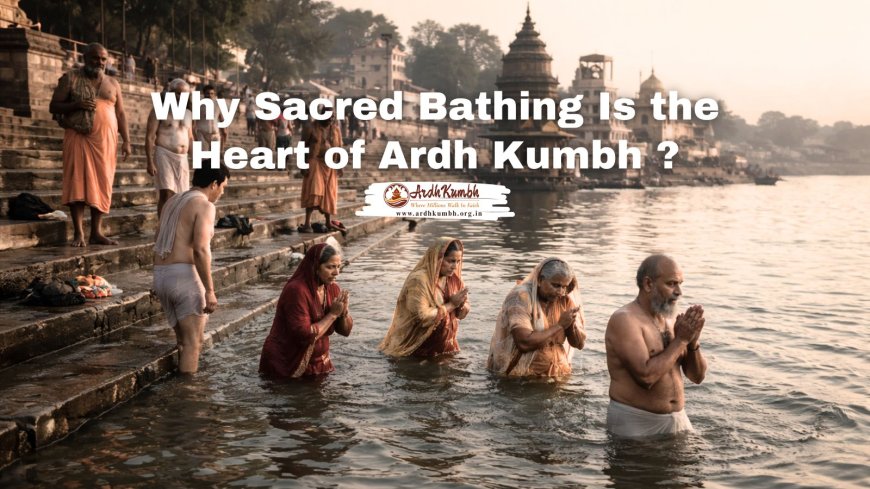
Why Sacred Bathing Is the Heart of Ardh Kumbh
Sacred bathing defines Ardh Kumbh. Discover why holy river snan is the spiritual core, its Sanatan meaning, cosmic timing, and inner purpose.
Why Sacred Bathing Is the Heart of Ardh Kumbh
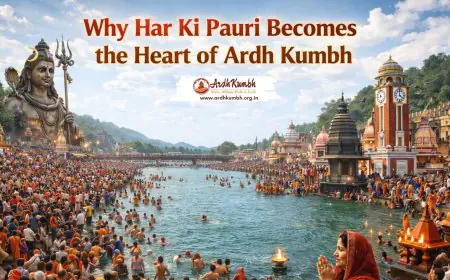
At Ardh Kumbh, millions gather, tents rise, discourses echo, and ascetics walk the ghats. Yet at the center of everything stands one silent act.
Stepping into the river.
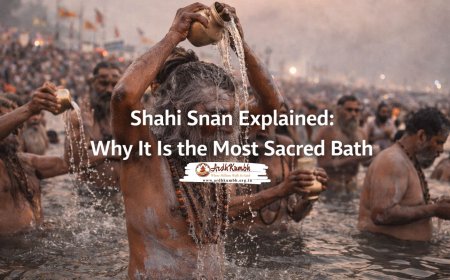
Sacred bathing is not one ritual among many at Ardh Kumbh. It is the axis around which the entire event revolves. Remove it, and Ardh Kumbh ceases to exist as a Sanatan phenomenon. What remains would be a gathering, not a pilgrimage.
To understand why sacred bathing is the heart of Ardh Kumbh, one must understand how Sanatan Dharma views the human body, water, time, and liberation.
Attending the next Ardh Kumbh?
Get official dates, snan rules, Akharas, and planning guidance in our complete event guide.
→ Ardh Kumbh Mela 2027 Complete Guide
Trending Guides Now

Har Ki Pauri Ganga Aarti Time Today in Haridwar
Read Guide →
Complete Guide to Ardh Kumbh Rituals
Read Guide →
Why Order and Cleanliness Are Strictly Enforced
Read Guide →
Why Pilgrims Wake Up Before Sunrise at Kumbh
Read Guide →
Best Routes to Reach Haridwar for Ardh Kumbh Mela
Read Guide →
Ardh Kumbh 2027 Dates (Official) - Haridwar Snan Schedule
Read Guide →
How Kumbh Keeps India’s Civilizational Memory Alive
Read Guide →
February Weather Reality at Ardh Kumbh
Read Guide →The Sanatan View of Water as a Living Purifier
In Sanatan thought, water is not an inert substance. Rivers are described as living carriers of consciousness, shaped by cosmic rhythms and planetary influence. This belief is not poetic symbolism. It is foundational.
Rivers such as the Ganga, Yamuna, Kshipra, and Godavari are revered because they flow through sacred geography, absorb centuries of spiritual practice, and respond to specific cosmic alignments.
During Ardh Kumbh, these alignments intensify the river’s purifying role. Sacred bathing is timed not for convenience, but for maximum spiritual potency.
Bathing as Inner Purification, Not Physical Cleansing
A common misunderstanding is to view the holy bath as symbolic or hygienic. Sanatan Dharma makes a clear distinction.
Sacred bathing is not about washing the body.
It is about loosening karmic residue.
The act represents a conscious decision to step into a state of humility, surrender, and inner reset. When a pilgrim enters the river during Ardh Kumbh, they are not performing a gesture. They are participating in a civilizational method of renewal refined over millennia.
To truly experience the spiritual power of Ardh Kumbh, every devotee should explore Shahi Snan rituals and Akhara traditions, which explain the sacred bathing process, monastic discipline, and ancient customs that shape this holy gathering. This guide helps pilgrims connect deeply with the true essence of the Mela.
Why Ardh Kumbh Bathing Is Timed, Not Random
Sacred bathing happens daily in India. Yet Ardh Kumbh bathing is different because it is synchronized with cosmic time.
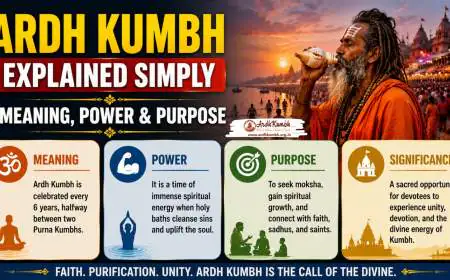
Sanatan astronomy recognizes that certain planetary positions amplify the subtle energies influencing human consciousness. Ardh Kumbh occurs at the midpoint of the Kumbh cycle, when spiritual forces are believed to be in balanced intensity.
Bathing during this window is considered especially powerful because:
-
The mind is more receptive
-
The body is more responsive
-
The collective intent is unified
Sacred bathing becomes a mass spiritual alignment, not an individual act.
The Collective Power of Mass Bathing
One of the most overlooked aspects of Ardh Kumbh snan is collective consciousness.
Sanatan Dharma does not isolate spirituality to private spaces. When millions enter the river with a shared purpose, the environment itself changes. The river becomes a field of collective intent, magnifying the impact of individual effort.
This is why ascetics, householders, scholars, and first-time pilgrims all bathe together. Sacred bathing dissolves hierarchy. In the river, all are simply seekers.
Why All Other Rituals Lead Back to the River
Discourses, akharas, initiations, and charity are all essential components of Ardh Kumbh. But each of them ultimately points back to the act of bathing.
-
Discourses prepare the mind
-
Charity purifies intent
-
Discipline strengthens resolve
Sacred bathing seals the transformation.
It is the moment where preparation becomes experience.
The Body as a Temporary Vessel in Sanatan Philosophy
Sanatan Dharma views the human body as a temporary carrier of accumulated karma. Water, especially sacred river water, is believed to soften and release these imprints.
Sacred bathing at Ardh Kumbh symbolizes stepping out of habitual identity and re-entering life with renewed awareness. This is why even those who may not fully understand the philosophy still feel compelled to bathe.
The ritual speaks directly to something older than intellect.
Why Sacred Bathing Has Survived Every Era
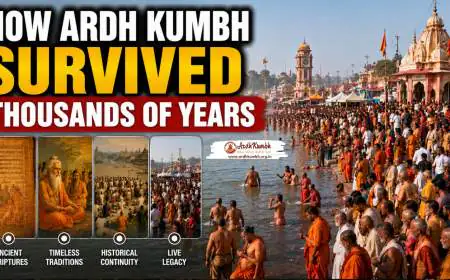
Empires rose and fell. Social structures changed. Technology advanced. Yet sacred bathing remains untouched.
This is because it fulfills a fundamental human need. The need to let go.
Ardh Kumbh did not survive because of promotion or preservation. It survived because sacred bathing works as a psychological, spiritual, and communal reset.
Sacred bathing is the heart of Ardh Kumbh because it is where Sanatan philosophy meets human vulnerability.
You enter the river carrying your past.
You emerge carrying silence.
Everything else is secondary.
Frequently Asked Questions