




























































Why Late Planning Creates Stress in 2027
Discover why late planning creates stress in 2027 for Kumbh pilgrims. From sold-out trains to distant camps, learn how last-minute preparation leads to anxiety, financial strain, and lost spiritual focus.

The Vanishing Ticket: Transport Nightmares of the Last-Minute Pilgrim 🚆
The first, most predictable, and most painful consequence of late planning is the transportation crisis. The Indian Railways system, the primary artery through which the majority of pilgrims reach the Kumbh, opens its reservation window 120 days in advance. For a gathering of this magnitude, special Mela trains are announced, and every sleeper berth, every air-conditioned seat, on every train bound for the host city is devoured by those who have been watching the calendar. The pilgrim who decides, in February 2027, that they will simply book a ticket for the April snan is already living in a fantasy. Those tickets were gone by the end of 2026. The reality that awaits them is a waitlist in the hundreds, a desperate scramble for a seat on a general compartment where they may stand for twenty hours, or a last-minute flight with a fare that has been inflated to five times its normal price.
This transport stress is not just a physical discomfort. It is a spiritual wound. You arrive at the sacred city already exhausted, your back aching from the journey, your nerves frayed by the uncertainty of whether you would even get there. The first few hours of your pilgrimage, which should be a slow, gentle acclimatization to the holy atmosphere, are instead spent recovering from an ordeal. The late-planning pilgrim has already spent a significant portion of their spiritual capital simply on reaching the destination. And that is assuming they even get a confirmed ticket. Many are forced to make multi-stage journeys, arriving late and leaving early, their entire pilgrimage compressed and rushed. The train ticket is the first sacred object of the Kumbh pilgrimage. The early planner secures it with reverence, and in doing so, purchases peace of mind for the journey ahead. The late planner begins their pilgrimage in a state of desperate, exhausting anxiety, and that initial flavor can poison the entire experience.
The Distant Bed: How Last-Minute Accommodation Destroys Presence 🏕️
If transport is the first stress, accommodation is the second and more enduring one. The Kumbh Mela is a temporary city of staggering scale, but the prime real estate—the tents and rooms within a few kilometers of the bathing ghats—is fiercely limited. The akharas and the large spiritual organizations book their sectors years in advance. The Mela administration's official tent city opens for bookings many months before the event, and the best camps, with basic but essential amenities like clean bedding and attached bathrooms, sell out almost immediately. The pilgrim who starts planning in late 2027 will find a grim landscape. Everything close to the river is gone. What remains is accommodation in distant sectors, perhaps ten or fifteen kilometers from the ghats, or in nearby towns where the nightly rate has been inflated to a punitive level by the desperate demand.
The consequence of staying far away is not just an extra expense on rickshaws and shuttles. It is the destruction of the pilgrim’s daily rhythm. The Kumbh's spiritual schedule is built around the pre-dawn snan. If you must wake at 2 AM to navigate a long, cold commute, you will be exhausted before you even reach the water. The sacred silence after the bath, that precious hour of integration by the river, is stolen from you because you must immediately begin the long trek back for a meal or rest. You cannot easily return to your tent to change, to meditate, or to simply pause. The entire pilgrimage becomes a series of commutes rather than a continuous immersion. The late-planning pilgrim is a commuter, not a resident of the sacred city. They spend their days in transit and their nights in a place that feels disconnected from the spiritual heart of the Mela. The early planner, by contrast, secures a base within walking distance of the ghats, and their pilgrimage unfolds with a natural, unhurried rhythm that allows for deep presence and genuine rest.
Trending Guides Now
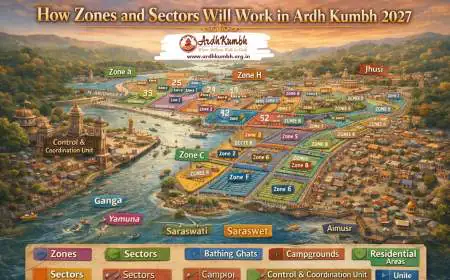
How Zones and Sectors Will Work in Ardh Kumbh 2027
Read Guide →
Why Early Planning Makes Kumbh Easier
Read Guide →
Why Ardh Kumbh 2027 Is Not Just Another Kumbh Mela
Read Guide →
Why Ardh Kumbh 2027 Will Be Spiritually Significant
Read Guide →
Best Routes to Reach Haridwar for Ardh Kumbh Mela
Read Guide →
Ardh Kumbh 2027 Dates (Official) - Haridwar Snan Schedule
Read Guide →
Why Zone Awareness Will Matter in 2027
Read Guide →
Why Certain Ghats Are Considered Spiritually Superior
Read Guide →The Physical Toll: Why Last-Minute Preparation Fails the Body 💪
The Kumbh is a marathon, not a sprint. It demands a body that is conditioned to walk ten to fifteen kilometers a day, to stand for hours in cold water, and to function on less sleep than usual. The pilgrim who plans late has almost certainly not prepared their body. In the frantic rush of booking and packing, there is no time for the gradual, necessary training. They arrive at the Mela with a body that is still calibrated for a sedentary life—a body that will be shocked, not strengthened, by the sudden demands placed upon it. The long walks become a source of agony, not a moving meditation. Blisters form and fester. Muscles ache with a pain that distracts the mind from every prayer. The cold of the pre-dawn snan, which could have been a sacred fire, becomes a terrifying, teeth-chattering ordeal that the body is not conditioned to handle.
Beyond physical conditioning, late planning often means a rushed, incomplete packing job. Essential items are forgotten in the chaos—the sturdy, broken-in walking shoes are replaced by new sneakers that will cause blisters; the thermal layers are left behind because the weather app was not checked; the essential medications are missing because the doctor's appointment was never made. The pilgrim is forced to spend precious time and money at the Mela buying overpriced, low-quality replacements. Every forgotten item is a source of stress and discomfort, a constant, low-grade reminder of their lack of preparation. The late planner's body, which should have been a willing, supple instrument of the pilgrimage, becomes a complaining, painful burden. The early planner, by contrast, has spent months walking, acclimatizing to cold water, and meticulously testing their gear. Their body is an ally, not an obstacle, and their physical preparedness directly translates into spiritual receptivity.
The Financial Punishment: How Procrastination Costs You Dearly 💰
The hidden tax of late planning is financial. The Kumbh, for all its divine grace, operates on a brutally efficient market logic when it comes to last-minute demand. Train tickets, if available, are only in the highest classes. Flights, as the dates approach, become exorbitant. The remaining accommodation, far from the ghats, is priced at a premium because the owners know you have no other choice. Every rickshaw ride, every cup of tea, every forgotten essential purchased at the Mela costs more at the last minute. The budget that the early planner uses to secure a comfortable, well-located tent and a peaceful journey is the same budget that the late planner spends on a cramped, distant room and a stressful arrival. The money you save by booking early is not just financial prudence; it is a form of seva, a donation to your own peace of mind.
But the financial stress goes deeper than the numbers on a price tag. The late-planning pilgrim often arrives at the sacred river with a mind still buzzing with the extra costs they have incurred, the loans they may have had to take, the budget they have blown. This mental noise is the direct enemy of the spiritual state the Kumbh is meant to induce. You stand in the cold water, and instead of chanting your mantra, a part of your mind is calculating the money you lost. The early planner, by contrast, has paid their costs months ago, mentally settled the accounts, and arrived at the Sangam with a clean financial slate. Their mind is free to focus entirely on the sacred. The financial stress of late planning is not just a burden on your wallet; it is a thief of your spiritual attention, and it is one of the most easily avoidable pitfalls of the entire pilgrimage.
The Sankalpa in Chaos: How a Rushed Vow Lacks Power 🙏
The heart of the Kumbh snan is the sankalpa, the sacred intention or vow that you formally make at the moment of immersion. A powerful sankalpa is not a last-minute, panicked thought. It is a seed that has been planted, watered, and nurtured over months of quiet reflection. The pilgrim who plans early has the immense luxury of time—time to sit with their life, to discern what they truly need to release, to pray for clarity on the vow they should make. Their sankalpa, by the time they reach the river, is a mature, deeply rooted intention, a clear and steady flame that has been burning in their heart for months.
The late-planning pilgrim has no such luxury. In the chaos of the final weeks, their inner life has been consumed by logistics. There has been no quiet time for reflection. The sankalpa is often formulated on the train, or worse, on the ghat steps in the frantic moments before the snan. It is a rushed, anxious thought, not a sacred, grounded vow. While the river's grace is infinite and can work with any sincere intention, the depth of the internal alignment that the early planner brings is profoundly different. The late planner arrives with a scattered mind and a vague intention; the early planner arrives with a focused mind and a powerful, heart-felt resolve. The difference in the spiritual potency of the snan is immense. The quality of your sankalpa is directly related to the time you have given it, and the late planner has robbed themselves of that essential, sacred time.
The Mental Cost: Trading Sacred Anticipation for Panic 🧘
Perhaps the most damaging impact of late planning is not on the wallet or the body, but on the mind. The months leading up to the Kumbh should be a period of joyful, sacred anticipation, a time when the approaching pilgrimage infuses daily life with meaning and purpose. The early planner experiences this. They look forward with calm excitement, their heart growing steadily warmer as the date approaches. This mental state is itself a form of spiritual practice. It lifts you above the petty anxieties of daily life and gives you a horizon of hope. You are preparing not just your logistics but your soul.
The late planner experiences the exact opposite. The final weeks and months are a period of escalating panic. Will I get a ticket? Will I find a room? Have I left it too late? The pilgrimage, which should be a source of peace, becomes a source of acute anxiety. You arrive at the river not with a heart full of devotion but with a nervous system exhausted by stress. And here is the cruelest paradox: the very stress that late planning creates is the thing that most effectively blocks the spiritual receptivity that the Kumbh is meant to provide. You cannot be open to grace when your mind is in survival mode. The late planner has traded the sweet, slow ripening of anticipation for the bitter, frantic scramble of panic, and the spiritual cost of that trade is incalculable.
The Unhurried Pilgrim: A Practical Timeline for 2027 ✅
The antidote to all this stress is not complex. It is simply a decision, made now, to become an unhurried pilgrim. Here is a practical timeline. By early 2027, you should have settled the fundamental question: will you attend? If the answer is yes, mark the key snan dates on your calendar. Begin your physical preparation with a daily walking routine. Open a dedicated savings account and start putting aside a small amount each month. By mid-2027, you should be actively researching accommodation. As soon as the official zone map is released, study it and decide which sector best fits your needs. Book your tent or room the moment bookings open. This is the single most important logistical decision you will make. Also, begin to deepen your spiritual preparation: read the Puranic stories of the Kumbh, listen to the mantras, and start journaling about your sankalpa.
By late 2027, your train or flight tickets should be booked and confirmed. Your packing list should be finalized, and all essential gear, especially your shoes, should be purchased and tested. Consult your doctor and ensure you have all necessary medications. By early 2028, in the final weeks before the Mela, your logistics should be complete. This is the time to intensify your spiritual practice, to sit in silence, and to let the excitement of the approaching pilgrimage fill you with joy. Your sankalpa should be clear. When you finally step onto the train or into your car, you will not be escaping a month of frantic stress. You will be beginning a journey for which you are physically, mentally, financially, and spiritually prepared. Your mind will be quiet. Your heart will be open. The pilgrimage will have already begun, and it will have begun in peace.
The Early Pilgrim’s Secret: Peace Is the Ultimate Preparation
The early pilgrim and the late pilgrim may stand in the same water, on the same sacred day, under the same auspicious stars. But they do not stand there as equals. The early pilgrim is light, carrying nothing but a quiet heart and a clear intention. The late pilgrim is burdened, their mind still reverberating with the echoes of stress, their body still aching from a rushed and uncomfortable journey. The Kumbh Mela is a mirror. It reflects back to you the quality of your own preparation. The stress of late planning is not a punishment from the gods; it is simply the natural, predictable consequence of ignoring the reality of what this pilgrimage demands. But the peace of early planning is not a reward you have to earn through austerity; it is simply the natural, predictable consequence of giving yourself the gift of time. The choice is yours, and it is made not at the Sangam, but now, in the quiet of your own home. Choose peace. Choose preparation. Choose to be an unhurried pilgrim, and the journey to the sacred river will be, from the very first step, a journey into grace.
Frequently Asked Questions