














































































How Ardh Kumbh Sustained Leadership Traditions
Discover how Ardh Kumbh sustained leadership traditions across centuries. Explore akhara succession, the mahant system, and the sacred public rituals that ensure spiritual authority is transmitted flawlessly from one generation to the next.
The Akhara Parliament: Where Spiritual Leaders Are Chosen and Crowned 🔱
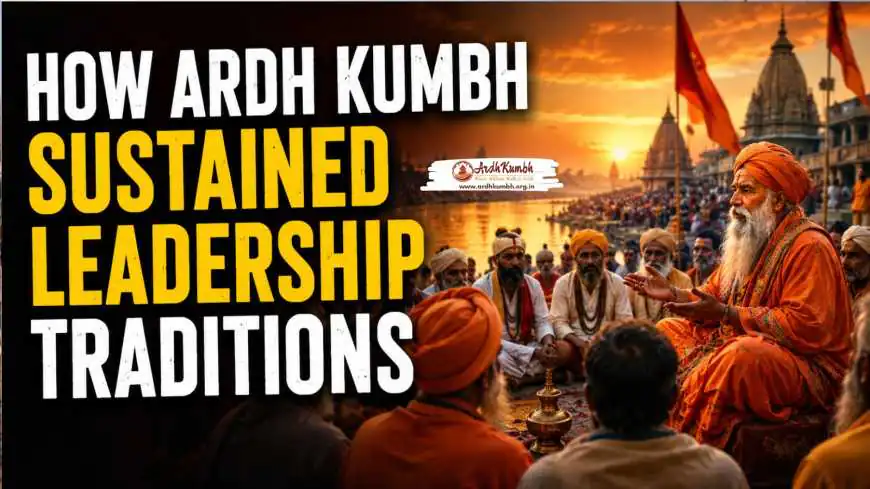
The akhara is not a democracy in the modern, electoral sense, but it is a profoundly collegial and consultative body. The leadership of an akhara, typically vested in the supreme abbot known as the Mahant or Acharya Mahamandaleshwar, is not inherited by birth. It is earned through a lifetime of spiritual practice, administrative competence, and the deep trust of the guru and the senior sadhus. The Ardh Kumbh is the definitive moment when a new leader is formally installed and presented to the world. The ceremony, known as Pattabhisheka (coronation) or the public granting of the sacred seat, is a ritual of immense power and gravity. It involves the chanting of Vedic mantras, the offering of sacred ash and sandalwood paste, and the public seating of the new mahant on the gaddi (the throne of authority), often a specific, historic seat that has been occupied by his predecessors for centuries. This ritual, performed at the Kumbh, transforms a private appointment into a cosmic and communal event.
The public nature of the Kumbh is the key to the integrity of this leadership tradition. A guru cannot simply appoint a favorite or an incompetent successor in secret. The new leader must be presented before the gathered assembly of their own akhara, the leaders of the other akharas, and the millions of pilgrims. The respect, or lack thereof, that the new mahant commands from this assembly is a powerful, real-time validation or rejection of the succession. The collective spiritual intuition of the gathered masters and the devotional response of the crowd act as a final, sacred litmus test. This system prevents the dynastic, familial corruption that has plagued so many religious institutions worldwide. Leadership at the Kumbh is based on spiritual merit, publicly acknowledged and ritually sealed. The Ardh Kumbh sustains leadership traditions by ensuring that the transfer of power is not just a legal formality but a sacred, communal, and witnessed act, binding the new leader to the lineage and the lineage to the community.
The Guru-Shishya Crucible: Forging Leaders in Decades of Discipleship 🧘
Before a leader ever steps onto the public stage of the Kumbh for their coronation, they have undergone a training that is one of the most demanding leadership development programs ever conceived: the guru-shishya parampara. This is not a weekend workshop. It is a total, lifelong submission to a living master. The future mahant is often identified in childhood or young adulthood. They may spend twenty, thirty, or even fifty years in the silent, obedient shadow of their guru, performing the most menial tasks, mastering the most advanced yogic techniques, and slowly, imperceptibly, absorbing not just the guru's teachings but the guru's very state of being. The leadership that is forged in this crucible is not based on charisma or ambition. It is based on a profound, embodied realization that has been tested and refined over decades.
The Kumbh is the great examination hall for this long apprenticeship. In the years between gatherings, the disciple is hidden, being shaped in the monastery. At the Kumbh, they are revealed. They may be asked to give a discourse, to lead a ritual, or to manage a complex aspect of the camp. The senior leaders of the akhara observe them closely. Other gurus, with a lifetime of experience in reading souls, watch and assess. This is a peer review of spiritual development that has no parallel in the modern world. The Ardh Kumbh sustains leadership traditions by providing the periodic, scheduled moment when these hidden apprentices are brought into the light and tested. It ensures that the leadership pipeline is never dry. The guru knows he must prepare a worthy successor to present at the next Kumbh, and the disciple knows they must be ready. The rhythm of the gathering drives the entire system of leadership development.
Trending Guides Now
What Is the Story Behind the Ardh Kumbh Mela?
Read Guide →
How Akharas Were Formed and Why They Matter
Read Guide →
The Untold Stories of Har Ki Pauri
Read Guide →
How Saints and Sadhus Define the Ardh Kumbh Tradition
Read Guide →
Ardh Kumbh 2027 Dates (Official) - Haridwar Snan Schedule
Read Guide →
Dharamshala Stay During Ardh Kumbh: Free & Budget Guide
Read Guide →
Official Progress Report of Haridwar Ardh Kumbh 2027 Infrastructure Projects
Read Guide →
Is October a Good Time to Visit Haridwar Before Ardh Kumbh 2027?
Read Guide →The Resolving of Succession Crises: The Kumbh as a Spiritual High Court ⚖️
Disputes over succession are inevitable in any human institution, including spiritual orders. When a powerful mahant dies without clearly designating a successor, or when multiple claimants compete for the gaddi, the resulting conflict can fracture an akhara and break a spiritual lineage. The Ardh Kumbh has historically served as the supreme court for resolving such crises. Because all the major leaders of an akhara, and the leaders of other, neutral akharas, are gathered in one place, the Mela provides a forum for mediation, debate, and final arbitration. The collective wisdom of the entire spiritual community is brought to bear on the dispute. A solution that might be impossible to enforce in a distant, isolated monastery can be ratified and made binding by the public, communal authority of the Kumbh.
This function of leadership dispute resolution is one of the most critical and least appreciated ways the Kumbh has sustained India's spiritual traditions. It prevents the fragmentation that would otherwise occur from internal conflict. The threat of presenting a disputed claim at the Kumbh, where it will be scrutinized by the holiest and most detached minds of the age, often discourages frivolous or power-hungry claimants. The solution, when it comes, carries the immense weight of the sangha, the collective assembly of the realized. It is an unchallengeable verdict. The Ardh Kumbh sustains leadership traditions by providing a mechanism for the peaceful, authoritative resolution of the most dangerous threat to any organization: a power vacuum at the top.
The Hierarchy of the Shahi Snan: A Living Map of Spiritual Precedence 🛕
The spectacular Shahi Snan, the royal bath, is often viewed as a purely devotional event. But for the akharas, it is also a highly formalized, ritual display of their leadership hierarchy and an affirmation of their historical precedence. The order in which the akharas process to the water—the Juna, the Niranjani, the Mahanirvani, and the others—is not random. It is a carefully negotiated, centuries-old treaty of spiritual status. The leader of each akhara, the Mahant, leads his procession. His position in the grand parade is a public, visible declaration of his akhara's place in the spiritual cosmos and, by extension, his own authority within his order. To be the Mahant who leads a prestigious akhara at the head of the Shahi Snan is to occupy one of the most revered leadership positions in the Hindu world.
This ritualized hierarchy is a powerful force for stability. It gives every akhara, and every leader within it, a clear, publicly acknowledged place. It channels competitive energy into a sacred, non-violent form. The elaborate protocol of the Shahi Snan trains both the leaders and the millions of pilgrims in the values of respect, order, and the acceptance of a spiritual hierarchy that is based not on force but on agreed-upon tradition. The Ardh Kumbh sustains leadership traditions by providing this magnificent, recurring stage where the abstract order of spiritual authority is made physically, dramatically, and unforgettably real. A new mahant taking his place in this procession for the first time is not just participating in a ritual; he is being publicly inserted into the living history of his lineage, his authority sealed by the very stars that govern the Kumbh's timing.
The Living Archive of Pandas and Vahis: Documenting the Leaders of the Lineage 📜
While the grand rituals affirm leadership publicly, a quieter, more meticulous system preserves its historical and legal record. The pandas, the hereditary pilgrim priests, and their genealogical registers, the vahis, are the living, decentralized archive of leadership succession. The vahis do not just record the visits of ordinary pilgrim families. They also contain detailed records of the guru-shishya lineages, the dates of a mahant's initiation and assumption of office, and even notes on the significant spiritual achievements of a lineage's leaders. These handwritten, privately held documents are a form of spiritual land registry, a ledger of authenticity that goes back centuries. When a dispute arises, the vahis can be consulted as a vital source of evidence.
The Kumbh is the moment when these records are verified, updated, and publicly acknowledged. A new leader, after being installed, will often formally register his succession with the panda families, ensuring the administrative and archival continuity of the tradition. The pandas, who are neutral, hereditary record-keepers, provide an unbroken administrative spine to the more charismatic and ritualistic aspects of leadership. The Ardh Kumbh sustains leadership traditions by maintaining this essential, mundane, but utterly critical documentary infrastructure. The flash of the Shahi Snan passes, but the entry in the vahi remains, a permanent, unalterable testament to the legitimate transfer of spiritual authority.
The Monastic Model of Shared, Decentralized Power 🔄
Perhaps the most important leadership lesson the Ardh Kumbh teaches the world is that the greatest spiritual traditions are sustained not by a single, all-powerful leader but by a decentralized federation of autonomous leaders. The akharas are a brilliant example of distributed power. No single mahant or akhara rules over the others. Each is sovereign within its own domain, yet all are bound together by a shared commitment to the Sanatana Dharma and the sacred protocol of the Kumbh. This federal, non-centralized model is the secret of the system's extraordinary resilience. The death or corruption of one leader does not topple the entire tradition. It is a network of leaders, each accountable to his own sangha and to the collective assembly of his peers at the Kumbh.
The Kumbh is the great periodic convening of this distributed leadership network. Here, the leaders meet as equals, negotiate, debate, and coordinate. They model a form of spiritual governance that is profoundly democratic in its respect for autonomy, yet deeply united by a common, sacred purpose. This is a living refutation of the idea that a strong institution requires a single, dominant CEO. The Ardh Kumbh sustains leadership traditions by proving, cycle after cycle, that a shared, collegial, and decentralized model of authority is not only more resilient but also more aligned with the pluralistic, diverse genius of Indian spirituality.
The Training Ground for the Next Generation of Leaders 👣
The Kumbh is not just a stage for the current generation of leaders; it is the most intensive training ground for future leaders that the tradition possesses. Young sadhus, who have spent years in the quiet of the monastery, are thrust into the immense, complex, and high-stakes environment of the Mela. They are given responsibilities—managing the camp's logistics, serving in the bhandara, guiding lost pilgrims, assisting in the complex rituals. They watch their own mahant and the leaders of other akharas navigate the intricate protocol of the Shahi Snan, resolve disputes, and offer spiritual counsel to everyone from peasants to politicians. This is an immersive, hands-on education in spiritual leadership that no classroom could ever replicate.
For a young sadhu, the Kumbh is a crash course in the skills that no amount of solitary meditation can teach: managing a vast organization, communicating with diverse groups of people, maintaining grace under immense pressure, and wielding spiritual authority with humility and compassion. The Ardh Kumbh sustains leadership traditions by ensuring that the next generation is not only theoretically prepared but has been blooded in the real, chaotic, and sacred arena of the Mela. The young sadhu who successfully manages a section of the akhara camp during the Kumbh is being visibly groomed for higher responsibility. The pilgrimage is the leadership crucible, and it has been producing capable, grounded, and deeply realized leaders for over a thousand years.
The Festival of Leadership: Ensuring the Chain Never Breaks
As the last tents are folded and the final chants fade over the Sangam, the most important work of the Ardh Kumbh has been silently accomplished. A new mahant has been crowned, his authority sanctified by the stars and the sangha. A disputed succession has been peacefully resolved by the collective wisdom of the realized. A shy young sadhu, tested in the chaos of the Mela, has discovered a capacity for leadership he never knew he possessed. The decentralized, distributed network of spiritual authority has been re-synchronized, its shared protocols reaffirmed, its collective memory updated. The leadership traditions that are the backbone of Indian spirituality have been, once again, invisibly but irrevocably, sustained and renewed.
The Kumbh Mela is, in this sense, a profound gift to the future. It is the guarantee that the wisdom of the sages will not be lost to a single failed succession or a single corrupted leader. It is a machine for the transmission of authority, as reliable in its own way as the planetary cycles that govern its timing. The leaders come and go, each playing their sacred role in their appointed time, but the chain they are part of—the unbroken, golden chain of the guru-shishya parampara—continues, shining and indestructible, into an eternal future. The Kumbh is the great, periodic, joyful celebration of this continuity, a promise to the world that the light will never be extinguished, as long as the rivers flow and the stars shine, and there are souls brave enough to lead and souls humble enough to follow.
Frequently Asked Questions