























































Entry Rules Every Pilgrim Must Follow
Discover the essential entry rules every pilgrim must follow at Kumbh Mela. From vehicle restrictions and zone access to prohibited items and dress code, ensure a safe, smooth, and sacred pilgrimage journey.

The Gateways to the Sacred: Understanding the Zone Entry System 🗺️
The Kumbh Mela is not an open field where you wander freely until you stumble upon the water. It is a meticulously planned temporary city, divided into concentric zones, each with its own access rules. The first and most important entry rule is to understand that your movement will be progressively restricted as you approach the sacred core. The outermost layer is the Vehicle Buffer Zone, a vast perimeter where all private cars, taxis, and buses are stopped. This is the point of surrender for your automobile. From here, the pilgrimage is either walked or completed on designated shuttle services. Trying to drive past this point is not just a violation; it is an impossibility. The barricades are absolute, and the police presence is firm but courteous.
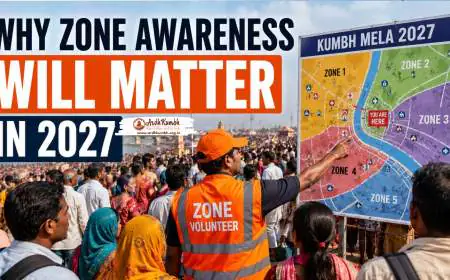
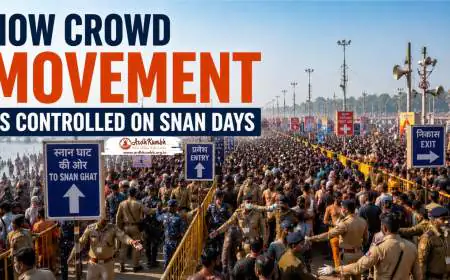
Within this lies the Restricted Access Zone, a vast, pedestrianized area where the main camps, bhandaras, and akhara encampments are located. Entry into this zone is generally open to all pilgrims on foot, but on major bathing days, even this zone may have controlled entry points to manage the flow. The innermost layer is the Sacred Core Zone, which directly surrounds the bathing ghats. On ordinary days, access is free, but on Shahi Snan days, this zone becomes a high-security, one-way circulatory system with specific, color-coded entry and exit gates. You cannot enter through an exit, and you cannot simply approach from any direction. The entry rule here is to identify your designated gate in advance, follow the signs, and move with the flow. The zone system is the skeleton that holds the body of the Kumbh together. Respecting it is not just about following a rule; it is about participating in a sacred, collective choreography that keeps millions safe.
Vehicle Rules: Where Your Car Must Stop and Why 🚗
The most common point of friction for first-time pilgrims is the moment their vehicle is stopped, often kilometers from their intended destination. The vehicle entry rules are non-negotiable and are enforced with military precision. Only authorized vehicles—those with special Mela passes, emergency services, and designated supply trucks—are permitted beyond the outer buffer zone. If you are arriving by private car, taxi, or bus, you will be directed to one of the massive, organized parking lots that are established on the periphery of the Mela grounds. This can be a frustrating moment if you are unprepared, especially if you are carrying heavy luggage or are with elderly relatives. But this rule is the single greatest safety measure of the entire event. A single car trying to navigate a crowd of millions is a recipe for tragedy.
The rule applies to two-wheelers as well, though they may sometimes be allowed slightly closer. Do not assume your scooter can weave through. The best approach is to pre-book accommodation within the pedestrian zone, so that from the parking lot, you only need to take a short shuttle ride or a manageable walk. If you are being dropped off, do so at the designated drop points. Do not argue with the traffic police; their directions, however inconvenient they may seem, are based on a real-time understanding of crowd density and flow. The surrender of your vehicle is the first spiritual act of the pilgrimage. It is the moment you leave the private, controlled shell of your car and step, equal and vulnerable, into the river of pilgrims. Embrace this rule, plan for it, and the transition from the road to the path will be a peaceful one.
Trending Guides Now

Entry Rules and Conduct Guidelines for 2027
Read Guide →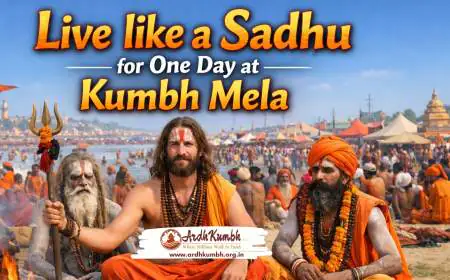
Live Like a Sadhu for One Day at Kumbh Mela
Read Guide →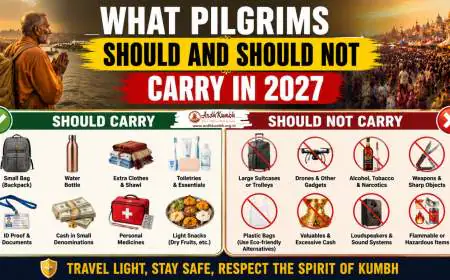
What Pilgrims Should and Should Not Carry in 2027
Read Guide →
How Ardh Kumbh Mela Keeps Sanatan Culture Alive
Read Guide →
Best Routes to Reach Haridwar for Ardh Kumbh Mela
Read Guide →
Ardh Kumbh 2027 Dates (Official) - Haridwar Snan Schedule
Read Guide →
How Ardh Kumbh Changes the Way You See Life
Read Guide →
How Kumbh Protected Knowledge Without Books
Read Guide →What You Can and Cannot Carry: The Prohibited Items List 🎒
Before you approach the security checkpoints that guard the inner zones, you must be intimately familiar with the prohibited items list. This is not a suggestion. Your bag will be scanned, and prohibited items will be confiscated, potentially causing delays and distress. The overarching principle is that nothing which could be used as a weapon, nothing that could start a fire hazard, and nothing that could pollute the sacred river is permitted. The standard list includes all obvious dangers: firearms, knives, sharp instruments of any kind, and explosives. But it also includes items you might not consider: alcohol, tobacco, and any intoxicating substances. The Kumbh is a strictly sober, sacred space, and this rule is enforced.
Items that are often forgotten include large metal water bottles, which can be seen as potential projectiles; instead, carry a reusable plastic bottle or rely on the water stations. Plastic bags are increasingly banned for environmental reasons; a cloth bag is far better. Cameras are generally allowed for personal use, but professional equipment with large lenses and tripods may require a special media pass. Drones are strictly prohibited. Large suitcases are deeply impractical; you will be walking for miles. The entry rule is to carry a single, small, cross-body bag with your absolute essentials: a photocopy of your ID, a small medical kit, a power bank, and warm layers. The lighter you travel, the faster you will move through security, and the freer you will feel on the long walk to the ghat. Traveling light is not just a convenience; it is a spiritual discipline that the entry rules gently enforce.
Dress and Demeanor: The Unwritten Rules of Sacred Conduct 🛕
While not printed on every sign, the dress code and behavioral rules are an essential part of the Kumbh's entry protocol. This is a sacred pilgrimage, not a tourist attraction. Modesty and respect are the primary requirements. For both men and women, clothing should be loose, comfortable, and cover the body appropriately. A salwar kameez or simple kurta-pajama is ideal. Shorts, tank tops, and tight, revealing clothing are not only culturally inappropriate but also deeply impractical in the cold pre-dawn hours. You are approaching the divine Mother; dress as you would to visit a beloved and revered elder.
The behavioral rules are equally important. Loud, boisterous, or intoxicated behavior will not be tolerated. The crowd's energy is calm, focused, and devotional, and any action that disrupts this collective atmosphere is a violation. Photography of bathing pilgrims, especially women, without explicit consent is a serious breach of etiquette and can lead to confrontation. Many akhara camps prohibit photography inside entirely, or require permission. The entry rule for your demeanor is to enter with humility, to speak softly, to move with calm awareness, and to treat every single person you encounter—pilgrim, police, or sadhu—with the respect due to a fellow seeker. These unwritten rules are the spiritual container that makes the Kumbh safe and transformative for everyone.
The ID and Registration Requirement: Proving Your Pilgrim Status 📋
In recent decades, as the Kumbh has grown to host tens of millions, the administration has introduced ID and registration requirements to enhance security and manage the flow of pilgrims. While you do not need a "ticket" for the sacred bath itself, you may need to register if you are staying in the official Mela tent city, and you must carry a valid, government-issued photo ID with you at all times. This is a strict entry rule. For Indian citizens, this is typically an Aadhaar card, voter ID, passport, or driver's license. For foreign nationals, a passport with a valid visa is mandatory.
Your ID serves multiple purposes. It is checked at security points, it is essential if you need to access your pre-booked accommodation, and it is the most critical tool in the unlikely but possible event that you get lost or require medical assistance. If you are separated from your group, your ID allows the police and the highly efficient lost-and-found network to identify you and help you. Carry a clear photocopy of your ID in your pocket and keep the original in a secure, waterproof pouch inside your main bag. Do not hand your original ID to any unofficial person. Police and official Mela volunteers will always be in uniform and will have proper identification. This simple administrative rule is a safety net woven into the immense fabric of the gathering.
Navigating the Shahi Snan Lockdown: Special Peak Day Rules ⚠️
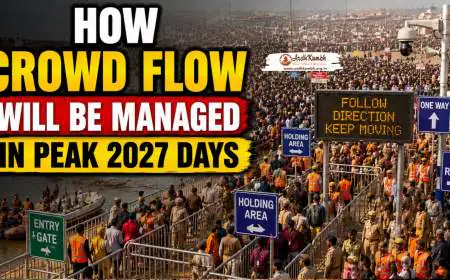
On the great Shahi Snan days, the entry rules transform into a temporary, highly controlled state of high alert. The entire Sacred Core Zone becomes a fortress of one-way paths, designated entry gates, and strictly enforced timings. Understanding these peak day entry rules is not optional; it is a matter of safety. The key rule is that you cannot simply walk to the ghat from any direction. The entire area is mapped into color-coded sectors. You must identify your designated entry gate (often named by color or number) based on the sector you are coming from, and follow the signage to it. You will be directed along a specific, one-way path to the water. After your bath, you will be directed out via a completely separate exit gate, often along a different route.
One of the most critical rules is that stopping is prohibited on the main arteries and pontoon bridges. The flow must be maintained to prevent dangerous pressure from the crowd behind. You must not sit down in the middle of a path, you must not stop to take photographs in a bottleneck, and you must not attempt to move against the designated flow. These rules are enforced firmly by police and volunteers. The peak days are not the time for a leisurely stroll. They are an intense, collective, and deeply spiritual rush hour, and following the rules is your contribution to the safety of the entire sea of humanity. Arrive early, during the Brahma Muhurta, when the crowd is thinner and the energy is most potent. Know your exit route in advance, and trust the flow.
Security Checkpoints: What to Expect and How to Prepare ✅
The security checkpoints at the Kumbh are thorough, efficient, and designed to process a staggering volume of people as quickly as possible. Approaching them with the right knowledge will save you time and anxiety. Expect to be asked to open your bag for inspection. Metal detectors and body frisking are standard, often separated by gender for privacy. The queues can be long, but they move steadily. The most important entry rule for these checkpoints is to cooperate fully and patiently. The police officers are under immense pressure, often standing in the cold for hours on end. A smile and a calm demeanor will make your passage smoother.
Prepare for the checkpoint by having your bag ready to open. Keep your ID easily accessible, not buried at the bottom of your pack. Remove any metal items from your pockets before you reach the front of the line. Do not make jokes about bombs or weapons; such comments are taken with the utmost seriousness in India and can lead to immediate detention. If you are carrying any medication, especially in syringes or unusual containers, carry a doctor's prescription. The security check is a moment of pause before you enter the sacred core. Treat it not as an annoyance but as a final, secular purification, a letting go of any last, hidden burdens before you approach the divine water.
Common Mistakes That Get Pilgrims Turned Away ⚠️
Even the most sincere pilgrim can be caught out by a lack of preparation. The most common and heartbreaking mistake is arriving without a valid ID. Security will not bend this rule, and you will be turned away from your pre-booked accommodation or from sensitive inner zones. Another common mistake is carrying prohibited items, especially large kitchen knives brought for preparing food, or alcohol smuggled in water bottles. These will be confiscated, and you risk being denied entry. Many pilgrims underestimate the vehicle rules, assuming they can talk their way past a police barricade. The consequence is a long, frustrating argument they will inevitably lose, and a long walk back from where they started.
A more subtle mistake is overpacking. A pilgrim struggling with a heavy, bulky suitcase will be slow, exhausted, and will struggle in the crowds, making themselves a target for petty theft and a source of frustration for those behind them. Another error is ignoring the weather rules. Dressing inadequately for the freezing pre-dawn will not bar your entry, but it will make the hours waiting for the gates to open a miserable, spirit-crushing ordeal. Finally, a mistake of attitude: arguing with the police or volunteers. These individuals are your guardians. Treat them with respect, and they will often go out of their way to help you. Treat them with arrogance, and you will find every rule rigidly enforced to the letter. Humility is the key that opens every gate at the Kumbh.
Practical Tips for a Frictionless Entry 🚶
The pilgrim who glides through the Kumbh's entry system is the one who has made it a part of their spiritual preparation. Start by downloading the official Kumbh Mela app or bookmarking the official website. This is your authoritative source for the latest zone maps, traffic advisories, and rule updates. Study the map of your specific Mela site, whether Prayagraj or Ujjain, and identify the location of your accommodation relative to the main bathing ghats and the designated parking lots. Pack a day in advance, using a checklist that cross-references the prohibited items list. Lay out everything you intend to carry, and then remove a third of it. Less is more. Keep your most essential items—ID, phone, medical kit—in a small, waterproof pouch that stays on your body even while bathing.
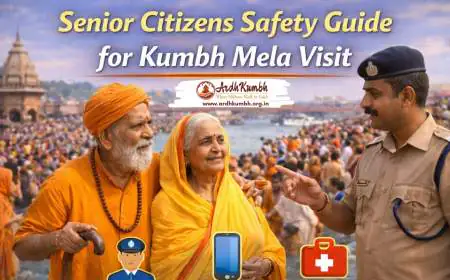
On the day of entry, wear your most comfortable, broken-in walking shoes. Carry a reusable water bottle and a few energy-rich snacks like nuts or dried fruit, as you may be walking for hours. If you are traveling with elderly family members, check in advance for any special assistance lanes or entry provisions. The administration often sets up specific help desks for the elderly and disabled. Finally, cultivate an inner posture of patience and surrender. The queue is a meditation. The security check is a ritual. The long walk is a pilgrimage within the pilgrimage. The pilgrim who approaches the gates with this spirit will find that they are not barriers at all. They are the first sacred threshold, and crossing them with grace sets the tone for the entire, life-altering experience that awaits.
The Final Gate: Entering the Sangam With a Pure Heart 🙏
The last and most important entry rule of the Kumbh is the one written in the heart, not on any signboard. You can pass every security check, follow every zone regulation, and carry exactly the right bag, and still fail to enter the true spirit of the pilgrimage if your heart is not ready. The final gate is your own intention. The tradition asks that you approach the sacred river with a clear sankalpa—a focused, pure intention. This means leaving behind, as much as you can, the mental baggage of grudges, worries, and selfish desires. The external rules are simply training wheels for this inner purification. The long walk strips away your restlessness. The security check asks you to let go of unnecessary burdens. The crowd teaches you patience and the dissolution of ego. All of these entry rules are, in their deepest meaning, a spiritual technology to prepare you for the moment when you finally stand at the water's edge, stripped of all pretense, ready to receive.
The river does not ask for your ID. She does not check your bag. Her only rule is faith. And if you have followed the human rules with humility, you will arrive at her banks with a mind that is quiet, a heart that is open, and a body that is ready. The gates of the Kumbh, both the physical and the spiritual, will have served their purpose, and you will step into the water not as a rule-follower, but as a pilgrim who has arrived home.
Frequently Asked Questions