
























































Can Ardh Kumbh Change Your Priorities
Can Ardh Kumbh change your priorities? Yes, profoundly. Discover how the cold snan, shared meals, and impermanence of the Mela shift what you value most in life—from wealth to inner peace.

The Silent Reordering That Begins at the Water’s Edge 🌊
The first crack in your old priorities appears the moment you step into the freezing water before dawn. In that instant of total, mind-blanking shock, the entire elaborate architecture of your worries and ambitions collapses. The mortgage, the office politics, the social media validation, the five-year plan—all of it is stripped away, leaving you with nothing but the raw, undeniable reality of being cold, being alive, and being immersed in a river that has purified souls for millennia. This is the first lesson in priority: the only moment that truly exists is this one. The past is gone. The future is a phantom. The cold water teaches you, more effectively than any meditation app, that presence is not a luxury. It is the only real thing.
When you emerge, gasping and reborn, the world looks different. The simple act of drinking a hot chai from a clay cup becomes a source of profound, unexpected joy. The sight of the sun rising over the river, painting the mist in gold, fills you with a gratitude that no promotion ever has. You begin to notice that the things that truly nourish you—silence, beauty, human connection, a moment of quiet prayer—cost nothing. And the things that you had been chasing so desperately now seem like a heavy, unnecessary burden. This reordering of priorities happens not through willpower but through a direct, embodied experience of what it feels like to be fully alive. The Ardh Kumbh does not ask you to renounce the world. It simply shows you, in the cold light of dawn, what the world is actually worth.
Why the Kumbh Unravels Your Old List of What Matters 🌫️
Your old list of priorities was not created in a vacuum. It was shaped by a culture that constantly whispers that you are not enough, that you need more—more money, more status, more possessions—to be safe and loved. The Ardh Kumbh is a temporary escape from this relentless cultural programming. For the days you are at the Mela, you are not bombarded by advertisements. You are not comparing your life to carefully curated social media feeds. You are not being measured by your productivity. You are simply a pilgrim among millions, and in this sacred anonymity, the old list of what matters begins to unravel. You see, with startling clarity, that the endless pursuit of "more" was not a path to happiness. It was a treadmill, and you were running yourself to exhaustion.
The Mela replaces this cultural noise with a different set of signals. It tells you that feeding a hungry stranger is a better use of your time than closing a deal. It tells you that sitting in silence by the river is more restorative than any luxury vacation. It tells you that the respect of a wise sadhu, earned through your sincere seeking, is worth more than the applause of a thousand colleagues. This is a profound shift in the currency of meaning. The Ardh Kumbh does not just change a single priority, like deciding to spend more time with family. It changes the entire scale upon which you weigh the value of your actions. It swaps out the false gold of material success for the true gold of inner peace and genuine human connection.
Trending Guides Now

What Makes Ardh Kumbh Spiritually So Powerful?
Read Guide →
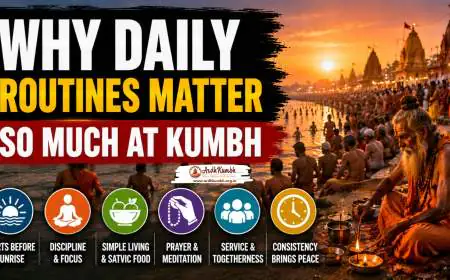
Can Ardh Kumbh Shape Your Daily Discipline? A Journey That Lasts Longer Than the Dip
Read Guide →
What Ardh Kumbh Symbolizes in Sanatan Dharma
Read Guide →
Why Ardh Kumbh Becomes a Turning Point in Life
Read Guide →
Best Routes to Reach Haridwar for Ardh Kumbh Mela
Read Guide →
Ardh Kumbh 2027 Dates (Official) - Haridwar Snan Schedule
Read Guide →
Is Ardh Kumbh Worth Attending at Least Once?
Read Guide →
Why Snan Dates Create Massive Spiritual Momentum
Read Guide →The Bhandara Lesson: How Shared Food Redefines Wealth 🍚
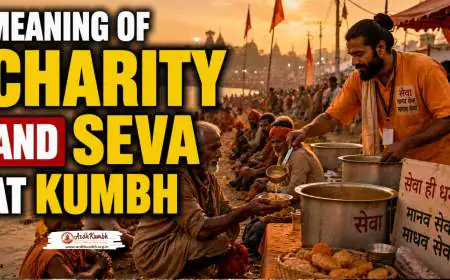
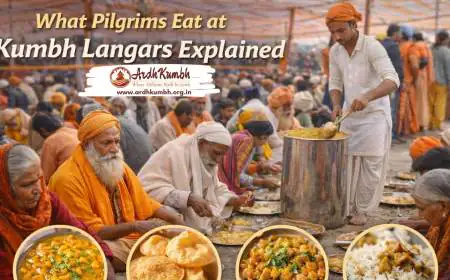
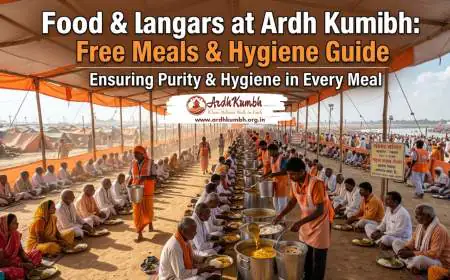
One of the most powerful priority shifts at the Ardh Kumbh happens in the long, unbroken rows of the bhandara, the free community kitchen. You sit on the earth, shoulder to shoulder with strangers—millionaires and laborers, saints and sinners, all equal in the moment of hunger. You eat simple dal and roti from a leaf plate, and it is, inexplicably, one of the most satisfying meals of your life. This experience directly challenges the consumerist definition of wealth that you have absorbed. You discover that joy is not linked to the price of the food or the ambiance of the restaurant. It is linked to your presence while eating, to the gratitude you feel for the nourishment, and to the profound sense of community that sharing a meal creates.
This bhandara lesson rewires your understanding of wealth and priorities. You realize that the constant craving for more expensive experiences, more elaborate dinners, and more status-signaling consumption is a kind of madness. The Kumbh shows you, in the most concrete terms, that a simple, sattvic meal, eaten with a grateful heart, is a form of wealth that no amount of money can buy. When you return home, your relationship with food—and with the money you spend on it—is forever changed. You may find yourself craving simplicity, cooking more, and valuing the shared, undistracted meal over the expensive, performative one. The priority shifts from consuming to connecting, from the price on the menu to the quality of the presence you bring to the table.
The Long Walk That Teaches You What Is Truly Urgent 🚶
At the Ardh Kumbh, you will walk. Miles of it. There is no Uber to the ghat, no shortcut through the crowd, no way to speed up the pilgrimage. You simply put one foot in front of the other, for hours, and you learn a quiet, profound lesson: most of what you considered urgent in your life is not. The frantic pace of your ordinary existence, the constant rushing from one meeting to another, the anxiety over deadlines—all of it is revealed as a kind of self-important illusion. The world will not end if you slow down. In fact, slowing down is the only way to notice that you are alive.
This long walk reshapes your priorities around time itself. You learn that your time is not a resource to be maximized and exploited. It is the very substance of your life. To rush through it is to rush past your own existence. The pilgrimage teaches you to value slowness, to see the spaces between events not as empty, wasted time but as fertile ground for presence and reflection. You return home with a new sense of what is truly urgent. The screaming email can wait. The impossible deadline is often negotiable. The urgent need to do nothing, to sit with a loved one, to watch the sunset, to simply breathe—that is the real priority that you have been neglecting. The Kumbh gives you permission, and a visceral memory, of what a life lived at a human pace feels like.
The Akhara Mirror: Renunciation Shows You Your Attachments 🔱
The sadhus of the akharas, especially the ash-smeared naga babas, hold up a powerful, unsettling mirror to your own priorities. They own nothing. They have no career, no family, no social status. According to the metrics of your old life, they are the most unsuccessful people on earth. Yet, as you sit near their dhuni fires and look into their eyes, you often see a peace and a radiance that you, with all your achievements, have rarely felt. This encounter forces a radical question: what if your attachments—to possessions, to reputation, to comfort—are not the source of your happiness but the very obstacles to it?
The akharas do not ask you to become a renunciate. They simply demonstrate, through their living example, that a life of radical simplicity is not a life of deprivation. It is a life of immense, liberating freedom. This realization chips away at your attachment to material priorities. You begin to see that the security you have been chasing is an illusion, and that genuine peace of mind comes from letting go, not from accumulating more. The Ardh Kumbh changes your priorities by showing you, in the flesh, that the path of "more" is not the only path. There is another way, and it is walked by these silent, ash-smeared, and utterly free human beings.
The Impermanence That Frees You From False Goals 🏕️
The Ardh Kumbh is a temporary city, a vast metropolis of millions that is built in a matter of weeks and then completely dismantled. Watching this happen is a direct, visceral teaching on impermanence that no philosophy book can match. You have spent your life pursuing goals that you believed were permanent—a secure career, a stable identity, a lasting legacy. The Mela shows you that everything, literally everything, is temporary. And this realization, far from being depressing, is profoundly liberating. If everything passes, then the only sane priority is to be fully present for the beauty of what is here, now, while it lasts.
This impermanence lesson directly attacks the false goal of building an everlasting monument to yourself. You see that the grandest akhara camp, the most elaborate tent, the most powerful mahant—all of it will be folded away and gone in a fortnight. What remains is the river, the stars, and the invisible merit of the sincere prayers that were offered. Your priorities shift from building to being, from achieving to experiencing, from hoarding to sharing. You stop postponing joy for some imagined future. You start living, with a new and urgent gratitude, for the fleeting, precious present.
The Sankalpa: A New North Star Forged in Sacred Space 💭
At the heart of the Kumbh snan is the sankalpa, a sacred vow or intention. This is not a casual New Year's resolution. It is a formal, focused commitment made in the presence of the divine, the river, and the cosmos. The Ardh Kumbh changes your priorities by giving you a specific, powerful tool to anchor your new insights. After days of having your old values stripped away, you stand at the water's edge and you consciously choose a new direction. You might vow to prioritize your health, to spend more time with your children, to let go of a long-held resentment, or to dedicate a portion of your time to selfless service.
The sankalpa made at the Kumbh carries an extraordinary weight. It is forged in the fire of physical hardship, emotional release, and collective spiritual intensity. When you return home, this vow becomes your new North Star. The old habits and patterns will try to reassert themselves, but now you have a weapon against them. You can close your eyes and remember the cold water, the fire of the aarti, the face of the sadhu who blessed you. That memory, and the vow you made in that sacred moment, can pull you back on course, again and again, until the new priority becomes a permanent part of who you are.
The Return Home: When the World Tests Your New Priorities 🏠
The real test of whether the Ardh Kumbh has changed your priorities comes not at the Sangam but in your own living room. You walk back into your old life, with its familiar demands and temptations, and you feel a strange, quiet resistance. The television seems louder. The shopping mall feels hollow. The office gossip seems not just pointless but toxic. You have been rewired, and the old world no longer fits comfortably. This is a vulnerable, crucial time. The world will try to seduce you back into the old race for more, and the only way to protect your new priorities is to build a bridge between the pilgrimage and your daily life.
You do this by creating small, sacred routines. A few minutes of morning silence, recalling the peace of the ghats. A weekly simple meal, eaten with the gratitude of the bhandara. A regular practice of giving, in secret, without expectation of return. These are the anchors that hold your new priorities in place while the storms of ordinary life rage around them. The Ardh Kumbh has planted a seed. Your daily practice is the water and sunlight that allows it to grow. The transformation is not instantaneous; it is a slow, organic unfolding. But the direction of your life has been permanently altered. You are no longer running on the old treadmill. You are walking a new, quieter, and infinitely more meaningful path.
Common Mistakes: How the Ego Hijacks a Shift in Priorities ⚠️
A shift in priorities is a spiritual victory, but the ego is a subtle adversary. It can easily hijack even this profound transformation. One common mistake is to turn the new priorities into a new identity, a new way of feeling superior to others. The pilgrim who returns home and constantly talks about their "spiritual simplicity," subtly judging friends who still enjoy material comforts, has had their ego co-opt the entire experience. The true shift in priorities is humble. It does not need to be announced. It is lived, quietly, without comparison or self-righteousness.
Another mistake is to make the new priorities into a rigid, joyless set of rules. You may feel that you must now live like a sadhu, renouncing all pleasures. This is a misunderstanding. The Kumbh did not teach you to hate the world. It taught you to see it clearly and to choose what is genuinely nourishing over what is merely distracting. Balance is essential. The goal is not a grim austerity but a joyful simplicity. Finally, beware of the spiritualised procrastination that says, "Once I have perfected my new priorities, then I will be happy." This is just the old rat race in new clothes. The shift in priorities is not a destination. It is a continuous, daily practice of returning to what truly matters, and it is available in every moment, starting now.
Practical Tips for Anchoring Your New Priorities After the Mela ✅
To ensure the Ardh Kumbh's transformation of your priorities lasts, you need practical, grounded strategies. First, journal your insights now, while the memory of the cold water and the aarti flames is still vivid. Write down the specific shifts you felt. What is less important now? What is more important? This written record will be an invaluable anchor in the months to come. Second, redesign your environment. If you want to prioritize family time, remove the television from the dining room. If you want to prioritize silence, turn off non-essential notifications on your phone. Make the healthy choice the easy choice by shaping your surroundings to support your new values.
Third, find or create a small sangha, a community of like-minded people. This could be a meditation group, a study circle, or simply one or two friends who also attended the Kumbh and share your commitment to a simpler, more present life. The collective energy of a sangha is a powerful antidote to the pull of the old, materialistic culture. Fourth, tie your new priorities to a regular practice of daan (charity) and seva (selfless service). These practices directly counteract the ego's tendency to hoard and self-obsess, keeping the river of generosity flowing. The Ardh Kumbh was the catalyst. Your daily choices, supported by these practical structures, will determine whether the transformation becomes a lasting chapter in your life or a fleeting, beautiful memory.
The Pilgrimage That Refuses to End
The tents of the Ardh Kumbh will be folded. The river will flow on, indifferent to the departure of the millions. But the pilgrimage does not end. It continues inside you, a quiet, persistent reordering of your soul. The priorities that were forged in the cold water and the sacred fire will keep unfolding, revealing new layers of meaning as the years pass. You will find that the things you let go of were never truly yours, and the things you gained—a sense of peace, a capacity for presence, a deep trust in the flow of life—are the only things that can never be taken away.
The Ardh Kumbh changed your priorities by reminding you of who you were before the world told you who to be. It stripped away the noise and revealed the signal: love, service, stillness, and an unshakeable connection to the divine. This is the true wealth you bring home, not in your suitcase but in the silent, radiant core of your being. And every time you pause, breathe, and remember the river, you are there again, a pilgrim forever, walking the sacred path of what truly matters.
Frequently Asked Questions