































































Can Ardh Kumbh Shape Your Daily Discipline? A Journey That Lasts Longer Than the Dip
Can Ardh Kumbh shape your daily discipline? Yes. Beyond the holy dip, this half-fair teaches waking early, eating simple, and walking long. Real lessons inside.

What Even Is Ardh Kumbh? (And Why It’s Different from Full Kumbh)
Ardh Kumbh means “half Kumbh.” It happens every six years at Prayagraj, while the full Kumbh Mela comes every twelve. But don’t let the word “half” fool you. The crowd is still crores of people. The energy is still deafening. And the discipline required to survive – let alone thrive – is still brutal.
The difference? Ardh Kumbh is slightly less crowded. Slightly. That small gap changes everything for someone trying to build habits. Because you still face the cold, the waiting, the walking, and the early mornings – but with a tiny bit of breathing room. That breathing room is where discipline actually gets a chance to stick.
So when someone asks “Can Ardh Kumbh shape your daily discipline?” – the honest answer is: it shaped mine, and I didn’t even know it was happening until I was back home brushing my teeth at 5 AM without thinking.
The Five Brutal Truths of Ardh Kumbh That Become Your New Normal
1. You Wake Up Before the Sun – Whether You Like It or Not
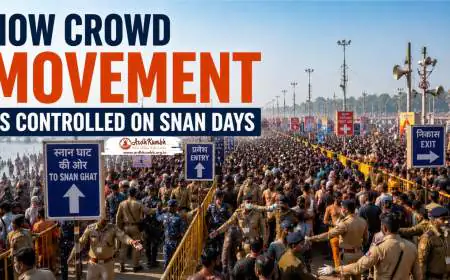
There is no sleeping in at Ardh Kumbh. By 5 AM, the ground is vibrating with mantras, bells, and the sound of lakhs of feet moving toward the Sangam. Your tent has no soundproofing. Your neighbor’s child is crying. Someone is already frying poori-bhaji two tents away. You cannot fight it. So you rise.
Trending Guides Now

Who Decides Ardh Kumbh Dates and Why They Never Change
Read Guide →
Is Ardh Kumbh a Form of Tapasya?
Read Guide →
Ardh Kumbh Explained for First-Time Pilgrims
Read Guide →
Is Ardh Kumbh a Once-in-a-Lifetime Experience?
Read Guide →
Best Routes to Reach Haridwar for Ardh Kumbh Mela
Read Guide →
Ardh Kumbh 2027 Dates (Official) - Haridwar Snan Schedule
Read Guide →
How Kumbh Keeps India’s Civilizational Memory Alive
Read Guide →
February Weather Reality at Ardh Kumbh
Read Guide →And here’s the sneaky part – after three days, you stop resenting it. Your body adjusts. You start enjoying the quiet before the crowd. You sip chai while the stars are still out. And when you return to your city life, your 7 AM alarm feels lazy. You wake up at 5:30 naturally. That is discipline without effort.
2. You Walk. Then You Walk More. Then You Walk Again.
At home, you drive 500 meters to buy milk. At Ardh Kumbh, you walk 5 kilometers just to reach the bathing ghat – and then 5 kilometers back. No shortcuts. No autos in the inner mela area. Just your two feet and the dust.
The first day, your thighs scream. By day five, you stop noticing. By day ten, you crave the walk. And here is the lesson: your body was always capable. Your mind was just lazy. After returning home, you start taking stairs. You park your car farther from the mall entrance. You walk to the nearby grocery store. Ardh Kumbh doesn’t just move your feet – it moves your baseline of what feels normal.
3. You Eat Simple – And You Don’t Miss the Junk
There is no pizza delivery inside the mela. No burger stalls. No cold drink ads screaming at you. What you get is khichdi, roti-sabzi, chana, poori, and chai that tastes like cardamom and resilience.
The first two days, you crave sugar. By day four, your stomach stops bloat. By day seven, oily food actually repels you. You start noticing how fresh, simple, vegetarian food makes you feel light, not heavy. And when you go home, you don’t immediately order Zomato. You boil dal and rice. You drink warm water with lemon. A temporary fair changed your permanent palate. That is discipline of the plate.
4. You Stand in Queues – And Learn to Wait Without Anger
Ardh Kumbh queues are not lines. They are oceans of patience. You wait 2 hours for the holy dip. You wait 45 minutes for women’s toilet. You wait 30 minutes for chai.
At first, you fume. Then you realize – no one cares about your hurry. The Ganga will not move faster because you have a train to catch. So you breathe. You watch families around you. You talk to a grandmother from a village. You stop checking your phone every 10 seconds (network is weak anyway). And slowly, patience becomes your default, not your exception. Back home, you stop honking at traffic lights. You stop refreshing delivery tracking. You stop being angry at waiting. The queue trained you.
5. You Have No Privacy – And You Become Okay With It
Modern life has made us soft about space. We need our own room, our own bathroom, our own silence. Ardh Kumbh gives you none of that. You sleep in a tent with strangers. You change clothes behind a flimsy cloth. You brush your teeth next to a dozen people doing the same.
And something shifts. You stop feeling watched. You realize no one cares about your morning face. You become less self-conscious. That translates to discipline of the ego – you stop performing. You just live. And when you return home, you spend less time in front of the mirror. You need fewer things to feel like yourself.
The Morning Routine That Ardh Kumbh Forces on You (And How to Keep It)
Let me write down what your average Ardh Kumbh morning looks like if you are a solo woman or a disciplined pilgrim:
-
3:30 AM – Wake up (tent is cold, no heating)
-
4:00 AM – Chai from a nearby stall (you carry your own cup)
-
4:30 AM – Walk toward the Sangam (flashlight, woolen cap)
-
5:30 AM – Stand in women’s queue for bathing
-
6:30 AM – Holy dip (cold water, but you don't cry this time)
-
7:00 AM – Change into dry clothes behind a curtain
-
7:30 AM – Puja at a small temple inside the mela
-
8:00 AM – Simple breakfast (poori, sabzi, halwa)
-
9:00 AM – Walk back to camp
-
10:00 AM – Rest or listen to spiritual discourse
Now read that again. That is discipline without a coach. That is routine without a planner. You didn’t decide to wake at 3:30 AM. The fair decided for you. And within a week, your body stopped fighting.
Now the real question – how do you take this home?
Start small. Tomorrow morning, wake up just 30 minutes earlier than usual. Do not check your phone for the first hour. Drink warm water. Stand outside for 2 minutes. Walk to a nearby temple or park. Eat one simple meal without salt or sugar. Do this for 21 days. You are not becoming a saint. You are becoming a person who doesn't need external pressure to live well. That is what Ardh Kumbh plants in you – the seed of internal order.
Why Most Pilgrims Lose the Discipline After Returning (And How You Won’t)
Here is the sad truth. 90% of people who go to Ardh Kumbh come back to their old habits within three weeks. Why? Because they treat the fair as a vacation, not a training camp.
They sleep in until 10 AM on the first Monday back. They order butter chicken because “I deserve it after all that walking.” They drive 200 meters to the gym they never enter. The discipline evaporates because they never understood what was happening to them.
How to be the 10%:
-
Don’t break the wake-up time on day one. Keep the same 5 AM wake-up for at least one week after return.
-
Recreate the morning walk. Even 20 minutes around your block. No phone. No music.
-
Keep one Kumbh meal per day. Khichdi on Tuesday. Simple dal-rice on Thursday.
-
Remember the queue feeling. When you feel angry waiting for coffee, smile. Say “This is my Ardh Kumbh training.”
-
Stay in touch with a fellow pilgrim. Call each other once a week. Ask “Did you walk today?”
Discipline is not a souvenir. You cannot buy it in a shop. You have to rehearse it every single day until it becomes tissue memory. Ardh Kumbh gave you the blueprint. Now you build the house.
Real Signs That Ardh Kumbh Has Changed Your Daily Discipline
You will know it has worked when these things happen without you forcing them:
-
You wake up before your alarm and you don’t hit snooze
-
You drink water first thing in the morning, not tea or coffee
-
You walk to the nearby market instead of taking the scooty
-
You feel uncomfortable eating deep-fried food, not because of calories but because your body rejects the heaviness
-
You don’t get angry standing in a queue at the bank
-
You don’t check your phone for the first hour after waking
-
You need less – fewer clothes, fewer products, fewer complaints
If even two of these feel true one month after Ardh Kumbh – the pilgrimage worked. Your daily discipline has been reshaped.
The Deeper Secret – Discipline as Devotion, Not Punishment
Most people think discipline is punishment. Waking early is torture. Eating simple is deprivation. Walking is exhausting. But Ardh Kumbh teaches you the opposite.
When you wake at 3:30 AM and walk in the cold dark with thousands of strangers, all moving toward the same holy river – it doesn’t feel like punishment. It feels like belonging. When you eat simple khichdi sitting on the ground next to a farmer’s family – it doesn’t feel like sacrifice. It feels like enough. When you wait two hours for a dip – you stop counting time. You start feeling time.
That is the secret. Ardh Kumbh does not impose discipline on you. It reveals the discipline that was always possible. You just never had a reason to try. The fair gives you that reason. Not through fear. Through shared purpose.
So if you want daily discipline to last – don’t call it discipline. Call it sadhana. Call it love. Call it small death of laziness. Call it anything that makes you smile when the alarm rings at 5 AM.
Frequently Asked Questions