










































Is Ardh Kumbh a Form of Tapasya?
Discover how Ardh Kumbh functions as living tapasya. Endurance, sacrifice, and spiritual heat transform every pilgrim who takes the holy dip.

What Tapasya Actually Means - Burning for a Reason
Let me start by clearing up a huge misunderstanding. Most people think tapasya means austerity or penance or self-punishment. And yes, those words are related. But the literal meaning of tapas is heat. Tapasya is the practice of generating spiritual heat through effort, endurance, and sacrifice. When you do something difficult, when you say no to your comfort, when you push through your limits - you generate heat. That heat burns away your impurities. Your attachments. Your ego. Your laziness. What remains after the burning is something purer. Something closer to the divine.
Now think about Ardh Kumbh through this lens. What happens there? Millions of people do difficult things for days on end. They walk when their feet hurt. They wait when their patience is gone. They sleep on ground that destroys their backs. They bathe in water that steals their breath. They share when they have nothing. They help strangers when they are exhausted themselves.
All of this generates heat. Not the physical heat of a fire. The spiritual heat of effort. Every moment of discomfort at Kumbh is a log on the fire. Every time you choose to stay when you want to leave, the fire burns hotter. Every time you help when you want to hoard, the fire burns brighter.
By the time you leave Kumbh, something has been burned away. You might not be able to name what. But you feel lighter. You feel cleaner. You feel... different. That is tapasya. That is the heat doing its work. Ardh Kumbh is not just a pilgrimage. It is a furnace. And every pilgrim is fuel and metal at the same time. Burning. Being purified. Emerging changed.
Trending Guides Now
Is Ardh Kumbh About Renunciation or Inner Awareness?
Read Guide →
Why Ardh Kumbh Becomes a Turning Point in Life
Read Guide →
Why Ardh Kumbh Feels Like a Spiritual Reset
Read Guide →
Is Ardh Kumbh Truly a Collective Spiritual Practice?
Read Guide →
Best Routes to Reach Haridwar for Ardh Kumbh Mela
Read Guide →
Essential Rules Every Ardh Kumbh 2027 Pilgrim Must Follow
Read Guide →
Who Are Naga Sadhus and Why They Lead Kumbh
Read Guide →
Biggest Crowds Ever Recorded at Ardh Kumbh
Read Guide →The Cold Water Shock - Your First Lesson in Tapas
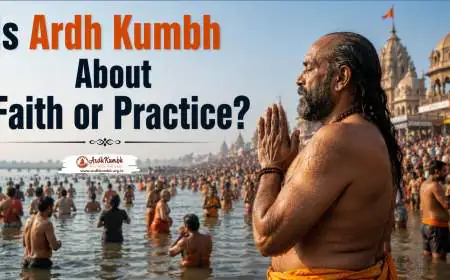
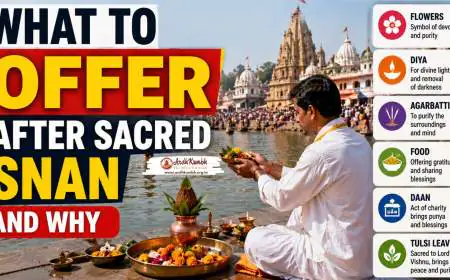
Let me describe the most obvious form of tapasya at Ardh Kumbh. The one that nobody can avoid. The cold water. You wake up at 3 AM. It is freezing. The ground is cold under your feet. The air is cold in your lungs. And you know that in a few minutes, you will be standing at the edge of the Ganga, and you will need to walk into water that is even colder than the air.
Your body will fight you. Your mind will offer brilliant excuses. "You can bathe later when it is warmer." "One dip is enough, you do not need to go all the way under." "This is not safe, what if you get sick?" The excuses will be endless. And they will all sound reasonable.
This is the moment of tapas. The moment when you must choose between comfort and growth. Between listening to your fear and walking through it.
When you step into that cold water, when your breath stops and your chest tightens and every cell screams "GET OUT" - that is tapasya happening. You are generating heat in the middle of cold. You are proving to yourself that you are stronger than your discomfort. You are burning away the part of you that believes comfort is a right.
And here is the secret that every Kumbh pilgrim knows. After you come out of the water, something happens. You feel alive. You feel clean. You feel triumphant. Not because the water did anything magical. Because you did something hard. You generated heat. You practiced tapasya. And that heat is still radiating through your body hours later.
This is not theory. This is experience. Every dip at Kumbh is a small tapasya. A small burning. A small death of your comfort-seeking self. Do it once, and you feel a little braver. Do it every day for a week, and you become someone who does not run from discomfort anymore. Someone who walks toward it. Someone who knows that cold water cannot hurt you. Only your fear of cold water can hurt you. Tapasya burns that fear away.
The Waiting Game - Tapasya of the Mind
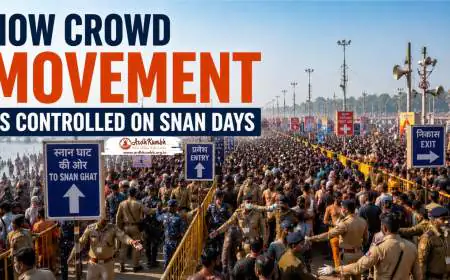
Let me talk about another form of tapasya at Ardh Kumbh that is harder than the cold water for most people. Waiting. At Kumbh, you will wait for everything. You will wait to enter the grounds. You will wait to find a spot on the ghats. You will wait to take your dip. You will wait for food. You will wait for a place to sit. You will wait for your train home. You will wait for hours. Sometimes for a whole day.
Waiting is not physically painful like cold water. But it is mentally exhausting in a different way. Waiting attacks your patience. Your sense of importance. Your belief that your time is valuable. You stand in line, and your mind starts its familiar tantrum. "I am a busy person. I have things to do. This is inefficient. These people are so slow. Why didn't they organize this better?"
This tantrum is your ego screaming. Your ego believes that you are special. That you should not have to wait like everyone else. That your time is more valuable than the time of the person in front of you and the person behind you.
Waiting at Kumbh is tapasya for the ego. Every minute you stand in line without complaining, without checking your phone, without trying to cut ahead - you are generating heat. You are burning away the part of you that believes you are more important than others.
Watch the old pilgrims at Kumbh. They do not complain about the wait. They settle into it. They sit down. They close their eyes. They pull out mala beads. They chant softly. They have turned waiting into meditation. They have mastered the tapasya of patience.
You can learn this too. Not by reading about it. By doing it. By standing in line at Kumbh for six hours and noticing when your ego starts screaming, and choosing not to obey the scream. That is tapasya. That is heat. That is transformation.
Sleeping on the Ground - The Tapasya of Comfort
Let me describe something that sounds small but is actually one of the deepest tapasya at Ardh Kumbh. Sleeping on the ground. At Kumbh, there are no hotels for most pilgrims. There are tents. There are open fields. There are dusty paths. And there is the ground. Hard, cold, uneven, pebble-filled ground.
You will lie down at night, exhausted from the day's walking and waiting. And you will feel every pebble. Every cold draft. Every distant noise. Your body will ache. Your mind will complain. "I deserve a soft bed. I worked hard for my money. Why am I doing this to myself?"
This is tapasya for your attachment to comfort. Modern life has convinced you that you need a soft bed. That you need temperature control. That you need quiet. But you do not. You want these things. And confusing want with need is one of the biggest sources of suffering in modern life.
At Kumbh, you sleep on the ground. And you survive. You wake up sore, but you wake up. You walk to the Ganga with stiff muscles, but you walk. You take your dip, and somehow, the cold water makes your back feel better. By the third night, you stop noticing the pebbles. By the fifth night, you sleep as soundly on the ground as you ever slept on memory foam.
What happened? Your attachment to comfort got burned away. You discovered that you do not need a soft bed. You only think you do. That discovery is liberating. It means you can sleep anywhere. It means you are not dependent on your comforts. It means you are free.
This is the tapasya of Ardh Kumbh. Not dramatic. Not extreme. But real. And it changes you in ways that a memory foam mattress never could.
Walking on Blistered Feet - The Tapasya of the Body
Let me be honest about the physical reality of Ardh Kumbh. You will walk. A lot. Miles every day. On hard ground. In cheap sandals or bare feet. Your feet will blister. Your calves will burn. Your knees will ache. Your back will scream.
The modern world has made your body soft. You sit in chairs. You ride in cars. You take elevators. Your body has forgotten what it feels like to work hard for days on end. Kumbh reminds it.
This physical suffering is tapasya. Not because suffering is good. Because effort is good. Your body is a vehicle. Vehicles need to be used. When you use your body hard, when you push it past its comfort zone, you generate heat. That heat burns away laziness. Inertia. The belief that you are weak.
Watch what happens to your body at Kumbh. Day one, you are sore. Day two, you are sore. Day three, you are still sore. But something else is happening. You are getting stronger. Not gym-strong. Pilgrim-strong. The strength of someone who can walk all day without complaining. The strength of someone who does not collapse at the first sign of discomfort.
This strength stays with you after Kumbh. You return home, and suddenly, walking to the grocery store feels easy. Climbing stairs feels easy. Standing in line feels easy. Why? Because Kumbh raised your baseline of what your body can handle. That is tapasya. That is heat that permanently changes your physical capacity.
The sadhus know this. That is why they walk everywhere. That is why they sleep on the ground. That is why they bathe in cold water. They are not trying to be extreme. They are training their bodies to need less. To endure more. To be vehicles that can carry them wherever the spirit wants to go. At Kumbh, you get a small taste of that training. A small tapasya for your body. A small burn that makes you stronger.
The Tapasya of Sharing When You Have Nothing
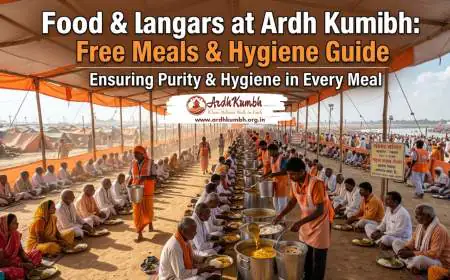
Let me talk about a form of tapasya at Ardh Kumbh that has nothing to do with physical discomfort. Sharing. At Kumbh, you will be asked to share. Constantly. A stranger will ask for some of your water. A family will ask to share your patch of ground. A sadhu will ask for food. A lost child will ask for help.
Your first instinct might be to hoard. "This is my water. I might need it later. If I give it away, I might not have enough." That instinct is your ego protecting its possessions. That instinct is what tapasya is designed to burn away.
When you share at Kumbh, you are practicing non-attachment to your possessions. You are saying, "What I have is not really mine. It was given to me, and I can give it to someone else." This is hard. Especially if you have very little. The poor pilgrim who shares his last roti with a hungrier stranger is practicing a tapasya that is more powerful than any sadhu's twelve-year fast. Because that poor pilgrim has more attachment to that roti than the sadhu has to anything.
Ardh Kumbh gives you endless opportunities to practice this tapasya. Someone needs your seat. Someone needs your place in line. Someone needs your help finding their family. Someone needs your phone to make a call. Someone needs your blanket because theirs got stolen.
Every time you say "yes" to these requests, you generate heat. You burn away the part of you that says "me first, me only, what is mine is mine." That burning hurts. But it also frees. Because attachment to possessions is a chain. Sharing breaks the chain.
This is tapasya that you can practice anywhere, not just at Kumbh. But Kumbh gives you more practice than anywhere else. Because at Kumbh, everyone needs something. And you have something to give. Even if it is just a smile. Even if it is just a moment of attention. Even if it is just a small "I see you, you are not alone in this crowd."
The Silent Tapasya - Controlling Your Tongue
Let me talk about the hardest tapasya at Ardh Kumbh. The one that nobody sees. Controlling your tongue. At Kumbh, you will be pushed, stepped on, cut in line, splashed, bumped, and generally treated like you do not matter. Your first instinct will be to react. To shout. To complain. To fight back.
This is the tapasya of mauna (silence) and akrodha (non-anger). Every time you are wronged at Kumbh and you choose to stay silent instead of shouting, you generate heat. Every time you are pushed and you choose to move instead of push back, you generate heat. Every time you are cut in line and you choose to breathe instead of confront, you generate heat.
This tapasya is hard because it goes against every instinct. Your ego wants to defend itself. Your ego wants justice. Your ego wants the other person to know that they wronged you. But tapasya asks you to let it go. To burn the ego that needs to be right. To burn the ego that needs to win.
Watch the old pilgrims at Kumbh when someone cuts in front of them. They do not shout. They do not glare. They barely notice. They have practiced this tapasya so many times that the ego no longer screams for justice. They know that a few minutes in line do not matter. They know that being right does not matter. They know that peace matters more.
This tapasya is the hardest to learn and the most valuable to master. Because if you can stay calm when a stranger pushes you at Kumbh, you can stay calm when your boss criticizes you. When your partner forgets your birthday. When your child talks back. Kumbh is a training ground for emotional regulation. A furnace where your reactivity gets burned away. Do not waste the opportunity.
Why the Heat Is Worth It - What Gets Burned and What Remains
Let me end this with an honest reflection on why this tapasya matters. Why should you willingly walk into discomfort? Why should you wait and shiver and sleep on the ground and share your last roti? What do you get in return?
You get freedom. Not the fake freedom of "I can buy whatever I want." The real freedom of not needing anything specific to be okay. After Kumbh, you do not need a soft bed. You do not need perfect weather. You do not need everyone to treat you fairly. You do not need to be right. You do not need to win. You are free because your attachments have been burned away.
You get strength. Not the strength of muscles. The strength of knowing that you can handle discomfort. After Kumbh, when life gets hard - when you lose a job, when someone dies, when your health fails - you will remember the cold water. You will remember that you survived that. You can survive this.
You get humility. After Kumbh, you know that you are not special. You are not more important than the person sleeping next to you on the ground. You are not more deserving than the person who has been waiting in line twice as long as you. This humility is not weakness. It is strength. Because the humble person cannot be insulted. The humble person cannot be diminished. The humble person is free.
This is what tapasya gives you. This is why Ardh Kumbh is a form of tapasya. Not because the sadhus say so. Because you feel it. In your body. In your mind. In your heart. The heat is real. The burning is real. The transformation is real.
Do not go to Kumbh for the sightseeing. Go for the tapasya. Go to be burned. Go to be cleaned. Go to be changed. The cold water is waiting. The queue is waiting. The ground is waiting. The heat is waiting for you to generate it. All you have to do is show up. And stay. And let the burning begin.
Frequently Asked Questions