












































































What Pilgrims Should and Should Not Carry in 2027
Complete packing guide for Ardh Kumbh 2027 in Haridwar. Essential items list, prohibited items, safety tips, and smart packing advice for pilgrims.

The Golden Rule of Kumbh Packing: Less Is Liberation
Before I list a single item, let me give you the philosophy that should guide your packing. The Kumbh is a test of simplicity. You will not have a closet. You will not have a dresser. You will have a bag — one bag — and a small corner of a room or tent. Every extra item you carry is something you must watch, carry, and worry about. The pilgrims who suffer the most at the Kumbh are not the ones who forgot something. They are the ones who brought too much.
So here is your golden rule. Pack everything you think you need. Then remove one-third of it. Then remove another third. What remains is probably still too much, but it is a start. Prioritize versatility — one item that serves three purposes is better than three single-purpose items. Prioritize warmth — you can always remove layers, but you cannot create them from nothing. Prioritize safety — your documents, medications, and ID bands for children are non-negotiable. Everything else is optional. The Kumbh is not a fashion show. It is not a camping trip. It is a pilgrimage. Pack like one.
What to Carry: The Complete Essentials List
Let me break down your packing list into clear categories. Use this as your shopping list and checklist.
Clothing Essentials
Winter months (January to February) are cold in Haridwar, with temperatures ranging from 2°C to 22°C . January is the coldest month, with the Ganga water temperature dropping to 8-12°C . Morning fog is common. You need heavy woolens.
Trending Guides Now

Essential Rules Every Ardh Kumbh 2027 Pilgrim Must Follow
Read Guide →
Live Like a Sadhu for One Day at Kumbh Mela
Read Guide →
Entry Rules and Conduct Guidelines for 2027
Read Guide →
Why Pilgrims Feel Reborn After Kumbh Mela
Read Guide →
Ardh Kumbh 2027 Dates (Official) - Haridwar Snan Schedule
Read Guide →
Dharamshala Stay During Ardh Kumbh: Free & Budget Guide
Read Guide →
Official Progress Report of Haridwar Ardh Kumbh 2027 Infrastructure Projects
Read Guide →
Where to Find 24-Hour Pharmacies in Haridwar During Ardh Kumbh 2027 Emergencies
Read Guide →-
Thermal innerwear (2-3 sets) — top and bottom. This is your base layer and the most important item for winter pilgrims.
-
Woolen sweaters or fleece jackets (2) — medium weight for layering.
-
Heavy winter jacket or down jacket (1) — for early mornings and evenings .
-
Woolen caps/beanies (2) — ears must be covered.
-
Gloves (2 pairs) — small children lose heat through their hands extremely quickly.
-
Woolen socks (5-6 pairs) — cotton socks are useless in winter.
-
Comfortable, closed walking shoes (1 pair, broken in before you go) — you will walk kilometers every day.
-
Waterproof footwear or sandals with grip — for ghat steps, which are wet and slippery .
Spring months (March to April) are warmer with temperatures reaching 35°C during the day, but mornings and evenings remain cool . Pack layers.
-
Light cotton clothes (3-4 sets) — breathable and comfortable for daytime.
-
Light shawl or medium-weight layer — for evenings and early mornings .
-
Hat or cap — for sun protection.
-
Comfortable walking shoes — still essential.
-
Sunglasses — the sun gets strong by April .
For all pilgrims regardless of season:
-
Quick-dry towels (2) — essential after the holy dip. Regular towels stay wet for hours .
-
Extra set of clothes in a waterproof bag — to change into immediately after bathing .
-
Modest, comfortable clothing — the Kumbh is a sacred space. Avoid shorts, sleeveless tops, or anything revealing.
Hygiene and Toiletries
-
Hand sanitizer (large bottle + small portable) — this is non-negotiable. You will touch surfaces that millions have touched .
-
Wet wipes (large pack) — for quick cleaning when water is not available .
-
Toilet paper — public toilets may not have any.
-
Soap, shampoo, toothpaste, toothbrush — travel sizes .
-
Biodegradable toiletries — to avoid polluting the Ganga .
-
Lip balm and moisturizer — the cold dry air cracks skin.
-
Sunscreen — for March and April visits .
-
Insect repellent — especially if staying in tents .
Health and First Aid
This is the most important category. Do not rely on Kumbh medical camps for basic supplies.
-
Prescription medications — at least 10 days extra beyond your planned stay. Keep them in original bottles with clear labels .
-
Doctor's letter — listing all conditions and prescriptions.
-
Oral Rehydration Salts (ORS) — at least 10-20 packets. Dehydration is a serious risk for pilgrims of all ages .
-
Paracetamol — for fever and pain.
-
Antacids and anti-diarrhea medication — stomach infections are common .
-
Antiseptic cream (Soframycin or similar) — for cuts and blisters .
-
Bandages and band-aids — for blistered feet.
-
Cough syrup and cold medication.
-
Motion sickness tablets — if traveling by road.
-
Electrolyte powder — add to water for quick hydration .
Documents and Safety Items
-
Government ID (Aadhaar, Voter ID, Passport, or Driving License) — essential for verification at accommodations and checkpoints .
-
Copies of all documents — kept separately from originals.
-
Train, flight, or bus tickets — printed and digital copies .
-
Hotel or tent booking confirmation — printed or saved offline.
-
Cash in small denominations — ATMs may run out of cash during peak days. Many smaller vendors do not accept digital payments .
-
ID bands for children — write your phone number and child's name on a silicone bracelet or paper inside their clothing.
-
Recent photo of each family member — stored on your phone to show authorities if someone gets lost.
Tech Gear
-
Mobile phone — fully charged before you leave each day.
-
Power bank (10,000 mAh minimum) — charging points may not be easily accessible .
-
Charging cables — pack extras.
-
Flashlight or headlamp — for navigating at night and in tent areas .
-
Portable water filter or purification tablets — if you are concerned about water quality .
Spiritual Essentials
-
Mala (prayer beads) — for chanting .
-
Small prayer book or scripture — if you wish to read .
-
Portable mat or small blanket — for sitting during discourses or meditation .
-
Eco-friendly offerings — flowers, rice, or other puja items. Avoid plastic packaging .
Food and Snacks
-
Dry fruits, energy bars, biscuits — for long queues or when you cannot find safe food .
-
Reusable water bottle — ideally with a built-in filtration system .
-
ORS packets — already mentioned, but worth repeating.
Bags and Luggage
-
Lightweight backpack — for carrying your daily essentials while walking .
-
Crossbody bag or waist pouch — for valuables (cash, phone, documents). Keep it on your body at all times, not in your main bag .
-
Waterproof bags or pouches — for wet clothes after bathing and to protect electronics from rain or splashes .
-
Small lock — for your main luggage if staying in shared accommodation .
-
Plastic bags — for separating wet clothes from dry clothes .
What NOT to Carry: The Prohibited and Impractical List
Now let me tell you what to leave at home. Some items are officially prohibited. Others are simply stupid to bring — they will weigh you down, get lost, or cause you trouble.
Officially Prohibited Items
Based on the Haridwar Municipal Corporation bylaws, the following are prohibited within a five-kilometer radius of Ardhkumbh.org.in/ardh-kumbh-2027-official-dates-haridwar" class="contextual-link" data-post-id="18">Har Ki Pauri, the main bathing ghat :
-
Meat and eggs — sale and consumption are banned in the sacred zone .
-
Liquor and alcohol — strictly prohibited .
-
Non-vegetarian food of any kind.
These restrictions are in place to maintain the purity and sanctity of the Kumbh grounds. Violating them can lead to fines or legal action. Even if you are not a vegetarian at home, you must respect this rule during your pilgrimage.
Items to Avoid for Practical Reasons
-
Expensive jewelry or watches — the Kumbh is not the place for display. These items attract theft and cause anxiety .
-
Large suitcases or multiple bags — you will walk. You will carry your own luggage. One lightweight backpack is ideal. A small rolling suitcase might work on paved roads but will be a nightmare on uneven paths and in crowds .
-
Strollers for toddlers — crowds make strollers nearly impossible to maneuver. Use a baby carrier or hip seat instead .
-
Drones — civilian drones are banned at the Kumbh for security reasons. Only authorized media with special permits can fly them. Bringing a drone can lead to confiscation and arrest.
-
Expensive cameras with large lenses — these mark you as a tourist and make you a target for theft. If you must take photos, use a smartphone or a small point-and-shoot camera. Always ask permission before photographing people .
-
Heavy books — one small prayer book is fine. Do not bring your entire library.
-
Perishable food — it will spoil in the heat or cold and attract pests .
-
Single-use plastics — increasingly restricted at large gatherings. Bring reusable items instead .
-
Weapons of any kind — including knives, pepper spray, or anything that could be considered a weapon. Security checks are present at entry points.
-
Illegal substances — strictly prohibited and severely punished.
Seasonal Packing: January vs. February vs. March vs. April
The Ardh Kumbh 2027 spans four months, and the weather changes dramatically within that period . Your packing must match your travel dates.
January (Peak Winter) : Temperature 2-18°C. Morning fog. Coldest month. Ganga water temperature 8-12°C .
-
Must carry: Thermal innerwear, heavy woolen jacket, woolen cap, gloves, woolen socks, closed walking shoes, extra towels for after bathing.
-
Can leave: Cotton clothes (except as a thin inner layer), sunscreen (unlikely to need it), light shawls (not warm enough).
February (Late Winter) : Temperature 5-22°C. Still cold, especially early mornings and evenings. By late February, temperatures begin to moderate .
-
Must carry: Thermal innerwear, medium-weight fleece or sweater, woolen cap and gloves (still needed for morning baths), waterproof footwear.
-
Can leave: Heavy down jacket may be too warm by late February.
March (Spring) : Temperature 12-28°C. Days are pleasant, nights are cool. Amrit Snan on March 6 and March 8 .
-
Must carry: Light cotton clothes for daytime, light shawl or jacket for evenings and early mornings, hat for sun protection, sunscreen .
-
Can leave: Thermal innerwear, heavy woolens, thick gloves.
April (Spring to Early Summer) : Temperature 18-35°C. Afternoons are warm to hot. Mornings and evenings remain pleasant .
-
Must carry: Light cotton clothes (3-4 sets), hat, sunscreen, sunglasses, reusable water bottle (dehydration risk increases), light layer for evenings .
-
Can leave: Any winter woolens except one light shawl or jacket.
Special Considerations for Different Pilgrims
For Elderly Pilgrims
-
Extra medications — at least 10 days beyond your stay.
-
Walking stick or folding cane — for stability on uneven ground and slippery ghat steps.
-
Medical records — printed and easily accessible.
-
Wheelchair — if mobility is limited. Some ghats have ramp access, but not all.
-
Comfortable, non-slip shoes — this is critical. Falls are a major risk for elderly pilgrims.
For Parents with Children
-
ID bands for each child — with your phone number written clearly .
-
Recent photo of each child — stored on your phone in case they get lost.
-
Baby carrier or hip seat — not a stroller .
-
Extra diapers, changing pad, wipes.
-
Favorite small toy or comfort object — to calm anxiety in crowds.
-
Children's medications — with dosage instructions clearly written.
For Women Pilgrims
-
Modest, comfortable clothing — salwar kameez, cotton kurtas, or loose pants with long tops.
-
Women-only zones at ghats have changing areas — pack a small bag with dry clothes for after bathing.
-
Personal safety items — whistle, phone with saved emergency contacts.
-
Sanitary products — bring enough for your entire stay. They may not be easily available at the Mela.
For International Visitors (NRIs and Foreigners)
-
Passport and visa — keep copies separate from originals.
-
International SIM card or eSIM — for communication .
-
Travel insurance documents — medical evacuation insurance is strongly recommended.
-
Adaptor plugs — India uses 230V, 50Hz, with Type C, D, and M plugs.
-
Cash in Indian Rupees — small denominations. Not all vendors accept cards or digital payments.
-
Registered guide or translator — if you plan to visit akharas or participate in complex rituals .
The One Bag Challenge: How to Pack Light
You will thank me for this advice when you are walking your second kilometer of the day with your bag on your back. Pack light. Here is how.
Choose the right bag. A 40-50 liter backpack is ideal. It keeps your hands free. It distributes weight evenly. It is easier to carry on crowded trains and buses. A rolling suitcase will break your spirit.
Use packing cubes. These small zippered organizers compress your clothes and keep categories separate. One cube for tops, one for bottoms, one for underwear and socks. You can find what you need without unpacking everything.
Wear your heaviest items on travel days. Your winter jacket, your walking shoes, your woolen cap — wear them on the train or flight. Do not pack them.
Plan to do laundry. You do not need 14 sets of clothes for a 10-day trip. Bring 3-4 sets and wash them in your accommodation. Quick-dry fabrics are your friend.
Share among family members. One tube of toothpaste serves four people. One bottle of sunscreen serves everyone. One power bank can charge multiple phones. Do not each pack your own.
Security and Safety: Keeping Your Belongings Safe
The Kumbh is remarkably safe for such a massive gathering, but petty theft does happen. Crowded spaces are where pickpockets operate. Protect yourself.
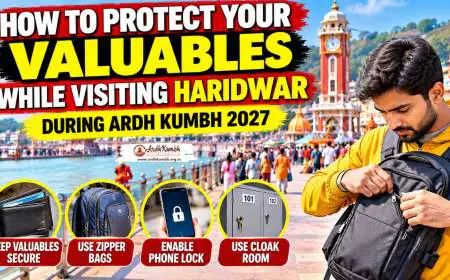
Keep valuables on your body. Your cash, phone, and documents should never leave your person. Use a crossbody bag or waist pouch worn under your outer clothing . Do not put valuables in your main backpack.
Use the locker facility. Many ashrams, hotels, and tent cities offer locker facilities. Leave your passport, extra cash, and backup documents in the locker. Carry only what you need for the day.
Do not display wealth. Leave expensive watches, jewelry, and designer bags at home. You do not need them. They make you a target.
Stay aware in crowds. Pickpockets look for distracted people — those on their phones, those struggling with heavy bags, those looking lost. Keep your phone in your crossbody bag, not in your back pocket.
Label your luggage. Write your name, phone number, and accommodation address on a tag attached to your main bag. If it gets lost, someone can return it.
The Final Word: Pack for the Pilgrim, Not the Tourist
Let me end with this. The Ardh Kumbh 2027 is not a vacation. It is a pilgrimage. The items you carry should reflect that. Do not pack your entire wardrobe. Do not pack your entire medicine cabinet. Do not pack your entire kitchen. Pack what you need to be safe, warm, and healthy. And then pack a little less. The simplicity of the Kumbh is not an inconvenience. It is a gift. It strips away the clutter of modern life and leaves you with what matters — your faith, your family, and your presence in the sacred waters of the Ganga. Pack for that. And when you stand at Har ki Pauri with nothing but a small bag on your back and an open heart in your chest, you will know. You packed exactly right.
Frequently Asked Questions