
















Who Built Har Ki Pauri? Haridwar History, Legends and Ardh Kumbh 2027 Guide
Discover who built Har Ki Pauri in Haridwar, the legends of Brahmakund and Samudra Manthan, and a complete Ardh Kumbh 2027 guide with dates, Snan schedule and travel tips.

Who Built Har Ki Pauri? Haridwar History, Legends and Ardh Kumbh 2027 Guide
Quick Answer ⚡
Har Ki Pauri was built by King Vikramaditya in the 1st century BC in memory of his brother Bharthari, who came to Haridwar to meditate on the banks of the Ganga. The ghat’s most sacred point is Brahmakund, believed to be where drops of Amrit fell during the Samudra Manthan. Today, Har Ki Pauri is the epicentre of the Ardh Kumbh 2027, with ten major bathing festivals scheduled between 14 January and 20 April 2027, including three Amrit Snans.
At a Glance 🔎
| Detail | Information |
|---|---|
| Who built Har Ki Pauri | King Vikramaditya, 1st century BC |
| Built in memory of | Bharthari, his brother and a meditating ascetic |
| Sacred core | Brahmakund |
| Legendary origin | Drops of Amrit from the Samudra Manthan |
| Ardh Kumbh 2027 duration | 14 January – 20 April 2027 |
| Major bathing festivals | 10, including 3 Amrit Snans |
| Amrit Snan dates | 6 March, 8 March, 14 April 2027 |
| Best-known daily ritual | Evening Ganga Aarti at Har Ki Pauri |
The Historical Origins: Who Built Har Ki Pauri?
The question “who built Har Ki Pauri” has a clear traditional answer, though historians continue to debate the finer details. The most widely accepted account credits King Vikramaditya of the 1st century BC with constructing the ghat. Haridwar history records that the king built it as a memorial to his elder brother, Bharthari, who had renounced his kingdom to meditate on the banks of the Ganga at this very spot.
King Vikramaditya and the Bharthari Connection
Bharthari was a philosopher-king and ascetic whose renunciation story is deeply embedded in Haridwar legends. According to tradition, he spent years in meditation at the riverbank before his death. King Vikramaditya, grieving his brother, commissioned a ghat in his memory. Over time, the name evolved into Har Ki Pauri — literally “the steps of Hari,” referring to Lord Vishnu.
Trending Guides Now

Who Are Naga Sadhus and Why They Lead Kumbh
Read Guide →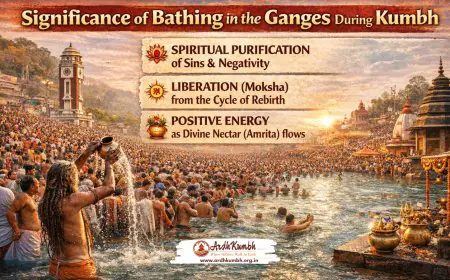
Significance of Bathing in the Ganges During Kumbh Mela Explained
Read Guide →
Biggest Crowds Ever Recorded at Ardh Kumbh
Read Guide →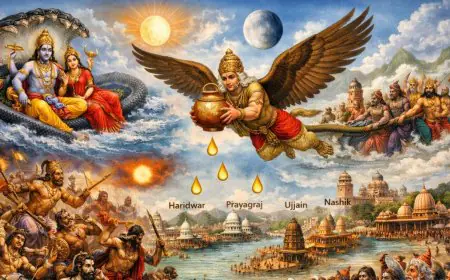
What Is the Story Behind the Ardh Kumbh Mela?
Read Guide →
Ardh Kumbh 2027 Dates (Official) - Haridwar Snan Schedule
Read Guide →
Dharamshala Stay During Ardh Kumbh: Free & Budget Guide
Read Guide →
Official Progress Report of Haridwar Ardh Kumbh 2027 Infrastructure Projects
Read Guide →
Where to Find 24-Hour Pharmacies in Haridwar During Ardh Kumbh 2027 Emergencies
Read Guide →-
Bharthari is also remembered in Haridwar culture as a symbol of detachment and spiritual pursuit.
-
The ghat was originally a modest structure; most of the present-day Haridwar ghats were expanded in the 1800s.
-
Some local oral traditions credit Bharthari himself with the earliest construction, while King Vikramaditya is credited with the formal ghat.
Expert Tip 💡: When locals say Har Ki Pauri, they are referring not just to the ghat but to the entire sacred precinct around Brahmakund. The historical core and the ritual core overlap almost perfectly.
The Ganga Canal and Later Developments
The Ganga canal, completed in the 19th century, fundamentally reshaped the Haridwar ghat landscape. The canal diverts the Ganga just north of Har Ki Pauri, and the ghat sits on the canal’s western bank. This engineering intervention created the calmer bathing waters that pilgrims experience today.
| Era | Development |
|---|---|
| 1st century BC | Original ghat built by King Vikramaditya |
| 16th century CE | Shri Ganga Mandir constructed by Raja Mansingh of Amer near Har Ki Pauri |
| 19th century | Ganga canal built; ghats expanded |
| 1916 | Ganga Aarti formalised by Pandit Madan Mohan Malviya |
| 2027 | Ardh Kumbh Mela with unprecedented Amrit Snans |
Local Insight 📍: The Shri Ganga Mandir near Har Ki Pauri is often overlooked by pilgrims rushing to the Ganga Aarti. Its quiet courtyard offers a rare moment of stillness in an otherwise bustling Haridwar pilgrimage circuit.
The Legends of Har Ki Pauri
Haridwar legends are inseparable from the ghat’s identity. The most powerful is the Samudra Manthan narrative, which explains why Brahmakund is considered the holiest spot in Haridwar.
Samudra Manthan and the Fall of Amrit
Hindu tradition holds that gods and demons churned the cosmic ocean to obtain Amrit, the nectar of immortality. Lord Vishnu, in his Mohini form, carried the pitcher of Amrit away to protect it from the demons. During the chase, drops of Amrit fell at four places — Haridwar, Prayag, Nashik, and Ujjain. At Haridwar, the drops fell at Brahmakund, which lies within Har Ki Pauri.
-
Brahmakund is the precise point where the Amrit is believed to have landed.
-
The Kumbh Mela and Ardh Kumbh Mela are ritually linked to this legend.
-
Ganga snan at Har Ki Pauri is believed to carry the merit of bathing in Amrit itself.
Pro Tip 🧭: The Brahmakund is not a separate tank but a defined section of the ghat closest to the Ganga canal bridge. Priests usually point it out during the Ganga Aarti briefing.
Brahmakund: The Sacred Core
Brahmakund is the most sacred enclosure within Har Ki Pauri. It is here that the Ganga Aarti takes place every evening. Tradition holds that Brahma, Vishnu, and Mahesh have all graced this kund, making it a rare tri-deity sanctum.
| Feature | Significance |
|---|---|
| Brahmakund | Spot where Amrit fell |
| Vishnu footprint | Etched on a stone at the ghat |
| Ganga Aarti | Performed at Brahmakund every evening |
| Ritual bathing | Pilgrims queue here for Ganga snan |
Lord Vishnu’s Footprint
One of the stones at Har Ki Pauri bears what devotees believe is Lord Vishnu’s footprint. This imprint is the literal source of the name Har Ki Pauri — “Hari” (Vishnu) and “Pauri” (steps). Whether viewed as sacred relic or symbolic marker, the footprint anchors the ghat’s theological identity.
Expert Advice ✨: Do not rush past the footprint stone. It is usually located near the main bathing area and is often indicated by a small shrine. Ask a local priest if you cannot locate it.
Har Ki Pauri Through the Centuries
Har Ki Pauri history is not only about construction but also about crowd management, ritual standardisation, and resilience.
The 1819 Kumbh Mela Tragedy
Historical records describe a deadly crush at the Kumbh Mela in 1819, when 430 people died as thousands pushed toward the narrow ghat. This event prompted early efforts to widen access and manage pilgrim flow — a concern that remains central to Ardh Kumbh 2027 planning.
The Ganga Aarti Tradition
The world-famous Ganga Aarti at Har Ki Pauri was formalised in 1916 by Pandit Madan Mohan Malviya and is now organised by Shri Ganga Sabha. Two aartis are held daily: Mangala Aarti at sunrise and Shringar Aarti at sunset.
| Season | Morning Aarti | Evening Aarti |
|---|---|---|
| Summer (March–October) | 5:00–6:30 AM | 6:00–7:00 PM |
| Winter (November–February) | 6:00–6:45 AM | 5:30–6:30 PM |
Note: Timings shift gradually with sunrise and sunset; confirm locally on the day of your visit.
Local Insight 📍: The best view of the Ganga Aarti is not from the main steps but from the upper terraces near Shri Ganga Mandir. Arrive at least 45 minutes early during Ardh Kumbh 2027.
Ardh Kumbh 2027: Complete Guide
The Ardh Kumbh 2027 is the most anticipated Haridwar festival in years. It will run for 97 days, from 14 January to 20 April 2027, and will feature ten major bathing festivals.
Key Dates and Bathing Festivals
| # | Date | Occasion | Snan Type |
|---|---|---|---|
| 1 | 14 January 2027 | Makar Sankranti | Regular |
| 2 | 6 February 2027 | Mauni Amavasya | Regular |
| 3 | 11 February 2027 | Basant Panchami | Regular |
| 4 | 20 February 2027 | Magh Purnima | Regular |
| 5 | 6 March 2027 | Mahashivratri | Amrit Snan |
| 6 | 8 March 2027 | Phalguna Amavasya | Amrit Snan |
| 7 | 7 April 2027 | Nav Samvatsar | Regular |
| 8 | 14 April 2027 | Mesh Sankranti | Amrit Snan |
| 9 | 15 April 2027 | — | Regular |
| 10 | 20 April 2027 | Chaitra Purnima | Regular |
Source note: Dates are as announced by the Mela administration and may be subject to minor administrative adjustments.
Quick Answer ⚡: The three Amrit Snan dates for Ardh Kumbh 2027 are 6 March (Mahashivratri), 8 March (Phalguna Amavasya), and 14 April (Mesh Sankranti).
Shahi Snan and Akhara Processions
What makes Ardh Kumbh 2027 historically significant is that, for the first time in an Ardh Kumbh, the Akharas will hold Amrit (Shahi) Snan processions. This means the scale and spectacle will resemble a full Kumbh Mela rather than a smaller Ardh Kumbh.
-
All 13 Akharas have approved the schedule.
-
Naga Sadhus will lead the Shahi Snan processions.
-
Expect large crowds and restricted movement on Amrit Snan days.
Expert Tip 💡: If you want to witness the Akhara processions without being caught in the densest crush, position yourself along the Upper Road stretch between Har Ki Pauri and the railway station approach. The processions pass through this corridor before reaching the ghat.
What Makes 2027 Special
Three factors make Ardh Kumbh 2027 exceptional:
-
First-ever Amrit Snans at an Ardh Kumbh — a shift in ritual status.
-
97-day duration — longer than many previous Ardh Kumbh editions.
-
Post-pandemic infrastructure — expanded ghat access, crowd management, and digital information systems.
Practical Haridwar Travel Guide
Planning for Ardh Kumbh 2027 requires more than spiritual preparation. Haridwar travel logistics matter.
How to Reach Har Ki Pauri
| Mode | Details |
|---|---|
| Train | Haridwar Junction is the nearest major railhead; Har Ki Pauri is about 2 km away |
| Air | Jolly Grant Airport, Dehradun, is the closest airport |
| Road | Regular buses from Delhi, Rishikesh, and Dehradun |
| Local transport | E-rickshaws and shared autos ply to Har Ki Pauri |
Pro Tip 🧭: During Ardh Kumbh 2027, vehicular access to Har Ki Pauri will be restricted on Shahi Snan days. Plan to walk the final 1–2 km.
Best Time to Visit
-
For darshan and aarti: October to March offers comfortable weather.
-
For Ardh Kumbh: January to April 2027.
-
For quieter visits: Avoid Amrit Snan dates if crowd density is a concern.
Where to Stay
Haridwar accommodation ranges from dharamshalas to premium hotels. Areas near Har Ki Pauri are convenient but noisy; areas along Jwalapur Road and near Haridwar Junction offer quieter options.
Local Insight 📍: Many regular visitors prefer staying near Mansa Devi side, using the ropeway side as a quieter base while still being within 15–20 minutes of Har Ki Pauri.
Local Markets and Food
Haridwar market life revolves around Upper Road and Moti Bazar. The Upper Road stretch from the post office to Har Ki Pauri is famous for rudraksha malas, religious books, brassware, and Haridwar food like kachori, jalebi, and seasonal sweets.
| Market | Known For |
|---|---|
| Upper Road | Rudraksha, religious books, prasad |
| Moti Bazar | Brass diyas, souvenirs, Ganga water bottles |
| Bara Bazar | Utensils, toys, everyday items |
Expert Advice ✨: Buy Ganga water only from authorised sealed bottles. Open containers sold informally may not meet safety standards.
Expert Tips for Ardh Kumbh 2027
-
Book accommodation early. Ardh Kumbh 2027 will draw millions; hotels near Har Ki Pauri fill up months in advance.
-
Use the Haridwar itinerary wisely. Pair Ganga Aarti with Mansa Devi and Chandi Devi on non-Snan days.
-
Respect ritual protocols. At Brahmakund, follow priest instructions and avoid carrying leather items into the inner bathing area.
-
Stay hydrated and carry ORS. Crowds and heat can be taxing, especially in March–April.
-
Keep digital copies of documents. Lost items are common in heavy crowds.
-
Use designated bathing zones. The Ganga canal current near Har Ki Pauri can be strong; swim only where priests and lifeguards indicate.
-
Plan for no-vehicle zones. On Amrit Snan days, walk from designated parking areas.
Local Insight 📍: Long-time Haridwar locals often visit Har Ki Pauri at dawn rather than during the evening Ganga Aarti during Kumbh periods. The morning Mangala Aarti is shorter, quieter, and equally atmospheric.
Understanding the Spiritual Significance
Har Ki Pauri is not merely a historical monument. It is a living ritual space where Haridwar spiritual life unfolds daily. The Ganga snan here is believed to cleanse sins and liberate ancestors. During Ardh Kumbh 2027, this belief intensifies, with pilgrims arriving from across India and abroad.
EEAT note: This article distinguishes historical claims (such as the 1st century BC construction by King Vikramaditya) from religious belief (such as the Amrit legend). Both are presented as they are understood within Haridwar culture and tradition.
Frequently Asked Questions