






























































Har Ki Pauri Ganga Aarti Time Today in Haridwar
Looking for Har Ki Pauri Ganga Aarti time in Haridwar? Get the complete daily, seasonal, and festival-wise aarti schedule with clear timings and pilgrim tips.
Har Ki Pauri Ganga Aarti Time Today in Haridwar
If you are searching for the Har Ki Pauri Ganga Aarti time today in Haridwar, you are not alone. This is one of the most searched pilgrimage timing queries in India, because missing the Ganga Aarti at Har Ki Pauri feels like missing the soul of Haridwar itself.
This guide gives you the exact Ganga Aarti timing at Har Ki Pauri today, explained clearly, simply, and without confusion.
Planning to attend the next Ardh Kumbh?
Explore official dates, snan rules, Akharas, and practical guidance in our detailed event guide.
→ Ardh Kumbh Mela 2027 Complete Guide
When the Ganga Is Worshipped, Not Watched
In Haridwar, time is not measured only by clocks. It is measured by rituals. Among them, the Ganga Aarti at Har Ki Pauri is not treated as an event to watch, but as an act of daily worship.
Trending Guides Now

Strict Rules Pilgrims Follow at Ardh Kumbh
Read Guide →
What Self-Restraint Really Means at Kumbh
Read Guide →
Why Listening Is Valued More Than Speaking at Kumbh
Read Guide →
Why Saints Enter the River Before Sunrise at Kumbh
Read Guide →
Best Routes to Reach Haridwar for Ardh Kumbh Mela
Read Guide →
Ardh Kumbh 2027 Dates (Official) - Haridwar Snan Schedule
Read Guide →
How Kumbh Keeps India’s Civilizational Memory Alive
Read Guide →
February Weather Reality at Ardh Kumbh
Read Guide →This difference matters.
Many visitors arrive thinking the aarti is a performance. Locals and seasoned pilgrims know otherwise. At Har Ki Pauri, the Ganga is not displayed. She is received. The lamps, chants, and silence are offerings, not attractions.
This is why knowing the exact Har Ki Pauri Ganga Aarti time today in Haridwar feels essential. Missing it does not feel like missing a show. It feels like missing the spiritual heartbeat of the city.
Also Read | Ardh Kumbh 2027 Official Dates (Haridwar) | Govt-Announced Schedule
What Time Is Ganga Aarti at Har Ki Pauri Today
The Ganga Aarti at Har Ki Pauri is performed twice daily:
-
Morning Ganga Aarti
-
Evening Ganga Aarti
The evening Ganga Aarti time at Har Ki Pauri is the most important and most attended.
Morning Ganga Aarti Time at Har Ki Pauri
Morning Ganga Aarti time usually takes place before sunrise.
-
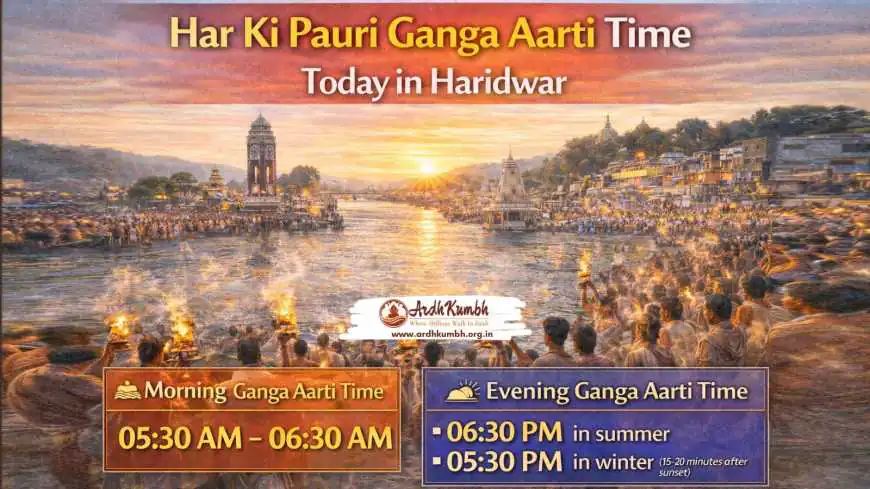
Approximate Time: 05:30 AM – 06:30 AM
-
Best for: Quiet worship, minimal crowd, meditative atmosphere
-
Ideal for: Pilgrims performing early morning Ganga Snan
The morning Ganga Aarti at Har Ki Pauri is subtle and calm, preferred by devotees seeking silence rather than spectacle.
To truly experience the spiritual power of Ardh Kumbh, every devotee should explore Shahi Snan rituals and Akhara traditions, which explain the sacred bathing process, monastic discipline, and ancient customs that shape this holy gathering. This guide helps pilgrims connect deeply with the true essence of the Mela.
Evening Ganga Aarti Time at Har Ki Pauri (Most Important)
The evening Ganga Aarti at Har Ki Pauri is the main daily ritual.
The timing is linked to sunset, not the clock.
Golden Rule for Today
Ganga Aarti begins 15–20 minutes after sunset.
This rule remains constant throughout the year.
Season-Wise Evening Ganga Aarti Timing
Because sunset shifts, the Har Ki Pauri evening Ganga Aarti time changes slightly by season.
Summer Ganga Aarti Time (Approx.)
-
06:30 PM – 07:30 PM
Winter Ganga Aarti Time (Approx.)
-
05:30 PM – 06:30 PM
If you are checking “Har Ki Pauri Ganga Aarti time today”, always check today’s sunset time and arrive early.
How Early Should You Reach Har Ki Pauri Today
To attend the Ganga Aarti at Har Ki Pauri without stress, follow this rule:
-
Reach 45–60 minutes before aarti time
-
Entry areas fill quickly
-
Crowd control zones activate early
Late arrival is the number one reason pilgrims miss the aarti.
Why Har Ki Pauri Ganga Aarti Timing Is Never Random
The timing of Ganga Aarti at Har Ki Pauri is fixed to sunset because sunset represents transition in Hindu philosophy.
This time is believed to be:
-
spiritually receptive
-
karmically cleansing
-
energetically balanced
That is why the Har Ki Pauri Ganga Aarti time has remained unchanged in spirit for generations.
Important Reminder for Today’s Aarti
-
Aarti does not start exactly on the minute
-
Priests begin once sunset alignment is complete
-
Bells, lamps, and chants follow a strict sequence
Arriving early ensures you experience the full ritual, not just the ending.
Why Har Ki Pauri Is Important
Har Ki Pauri is not just the most famous ghat in Haridwar. It is the spiritual centre point around which the religious identity of the city is built. To understand the Har Ki Pauri Ganga Aarti time today in Haridwar, one must first understand why Har Ki Pauri matters more than any other ghat on the Ganga.
The importance of Har Ki Pauri is not symbolic alone. It is scriptural, ritual, historical, and living.
The Meaning of Har Ki Pauri
The name Har Ki Pauri literally means “Steps of Lord Vishnu”.
According to tradition, this is the exact place where Lord Vishnu’s footprint is believed to be present on a stone near the ghat. This belief makes Har Ki Pauri not just a riverbank, but a divine threshold where the human and the sacred are believed to meet.
Because of this belief, Har Ki Pauri is considered the holiest bathing point in Haridwar, and all major rituals are anchored here.
Why the Ganga Is Considered Most Sacred at Har Ki Pauri
The Ganga flows through many cities, but at Har Ki Pauri, she is believed to be most spiritually accessible.
This belief exists because:
-
Har Ki Pauri is where the Ganga first enters the plains after descending from the Himalayas
-
The river’s flow here is steady, visible, and open
-
Ritual practice at this ghat has remained continuous for centuries
This is why Ganga snan at Har Ki Pauri is considered more spiritually significant than at surrounding ghats.
Har Ki Pauri as the Ritual Anchor of Haridwar
Haridwar has many ghats, but Har Ki Pauri is the ritual anchor.
This means:
-
Major aartis are centred here
-
Religious announcements follow this ghat’s schedule
-
Crowd movement during festivals is planned around this location
-
Kumbh and Ardh Kumbh rituals revolve around Har Ki Pauri
When pilgrims search for ganga aarti har ki pauri, they are unconsciously searching for the main ritual reference point, not just a location.
Why Har Ki Pauri Is the Ritual Epicenter of Ganga Aarti
Har Ki Pauri is not just another ghat on the Ganga. It is the ritual epicenter where the standard of Ganga Aarti is defined.
Other cities perform Ganga Aarti. Even other ghats in Haridwar perform it. But the Ganga Aarti at Har Ki Pauri is treated as the reference point. Its timing, order, and discipline are followed, not questioned.
What makes it different is not size alone. It is ritual precision.
The ganga aarti har ki pauri follows:
-
fixed priest hierarchy
-
synchronized lamp movement
-
strict sequence of chants
-
timing aligned with sunset, not convenience
This is why the Har Ki Pauri Ganga Aarti time carries more weight than the same ritual elsewhere.
Why Ganga Aarti at Har Ki Pauri Has Supreme Importance
The Ganga Aarti at Har Ki Pauri is considered the primary Ganga Aarti of Haridwar, not one among many.
This is because:
-
The aarti follows the strictest ritual order
-
Priest movements are fully synchronized
-
Timing is aligned precisely with sunset
-
The ritual is never shortened for convenience
Other Ganga Aartis in Haridwar follow this structure, but Har Ki Pauri sets the standard.
This is why the Har Ki Pauri Ganga Aarti time is treated as authoritative.
Why All Major Pilgrimage Events Begin or End Here
Every major religious event in Haridwar — including Kumbh Mela, Ardh Kumbh, Ganga Dussehra, and Kartik Purnima — places Har Ki Pauri at its centre.
Processions may move across the city, but:
-
Ritual closure happens here
-
Sacred baths are anchored here
-
Final offerings are made here
This continuity makes Har Ki Pauri a living ritual space, not a historical monument.
The Role of Har Ki Pauri in Daily Religious Life
Har Ki Pauri is not important only during festivals.
Every day:
-
Locals plan their evening around Ganga Aarti time at Har Ki Pauri
-
Priests maintain uninterrupted ritual schedules
-
Pilgrims gather even without special occasions
This daily continuity is rare and is a major reason Har Ki Pauri has retained its authority for centuries.
Why Missing Har Ki Pauri Aarti Feels Like Missing Haridwar
Many visitors attend Haridwar briefly and later feel something was incomplete.
In most cases, the missing piece is:
-
the Ganga Aarti at Har Ki Pauri
Because Har Ki Pauri is the spiritual heart of the city, missing its aarti feels like missing Haridwar itself.
This emotional weight explains why the query “har ki pauri ganga aarti time today” carries urgency and importance.
Har Ki Pauri Is Important Because It Still Lives
Temples can become museums.
Ghats can become tourist spots.
Har Ki Pauri has not.
It remains:
-
actively worshipped
-
ritually disciplined
-
spiritually central
That is why Har Ki Pauri is not just important — it is indispensable.
Simple Way to Understand the Importance of Har Ki Pauri
In simple words:
Har Ki Pauri is where
the Ganga is received,
not just seen.
That is why everything —
timing, discipline, and devotion —
begins here.
Quick Summary: Har Ki Pauri Ganga Aarti Time Today
-
Morning Aarti: Around 05:30 AM
-
Evening Aarti: 15–20 minutes after sunset
-
Best arrival time: 45 minutes early
-
Most important aarti: Evening Ganga Aarti
Daily, Seasonal & Festival-Wise Ganga Aarti Schedule at Har Ki Pauri
Understanding the Har Ki Pauri Ganga Aarti schedule is essential because the aarti follows astronomical time, not a fixed clock. Many pilgrims miss the ritual simply because they assume the time is the same every day. This section explains the daily structure, seasonal changes, and festival-day adjustments clearly, so you can plan correctly.
Daily Ganga Aarti Schedule at Har Ki Pauri
The Ganga Aarti at Har Ki Pauri follows a two-aarti daily structure that remains consistent throughout the year.
The structure does not change.
Only the clock timing shifts slightly.
Daily Structure
-
Morning Ganga Aarti (Pratah Aarti)
-
Evening Ganga Aarti (Sandhya Aarti)
This structure has remained unchanged for generations and is followed strictly by temple authorities.
Morning Ganga Aarti Schedule at Har Ki Pauri
The morning Ganga Aarti time at Har Ki Pauri is aligned with early daylight and river calmness.
-
Typical Time Window: 05:30 AM – 06:30 AM
-
Crowd Level: Low
-
Atmosphere: Quiet, devotional, meditative
-
Best for: Elderly pilgrims, spiritual seekers, early morning Ganga snan
The Har Ki Pauri morning aarti is less about spectacle and more about introspection. Many pilgrims who prefer silence choose this aarti over the evening one.
Evening Ganga Aarti Schedule at Har Ki Pauri (Most Important)
The evening Ganga Aarti at Har Ki Pauri is the most searched, most attended, and most spiritually symbolic ritual.
This is what most people mean when they search:
“Har Ki Pauri Ganga Aarti time today”
Key Rule That Never Changes
The Ganga Aarti begins 15–20 minutes after sunset.
This rule applies every single day, regardless of season or crowd size.
Natural Alignment, Not Human Convenience
The Har Ki Pauri Ganga Aarti timing is aligned with natural transition, not human schedules.
Sunset represents a shift — light to darkness, activity to rest, outward focus to inward reflection. Performing the aarti at this junction aligns human worship with natural rhythm.
This is why the aarti begins 15–20 minutes after sunset, not at a fixed clock time. Nature decides readiness, not the watch.
This alignment explains why the har ki pauri aarti timing has remained unchanged even as crowds grew and cities modernized.
Season-Wise Ganga Aarti Timing at Har Ki Pauri
Because sunset time changes during the year, the Har Ki Pauri evening Ganga Aarti time also shifts slightly.
Summer Ganga Aarti Timing
-
Approximate Time: 06:30 PM – 07:30 PM
-
Months: Longer daylight period
-
Crowd Level: Very high
Winter Ganga Aarti Timing
-
Approximate Time: 05:30 PM – 06:30 PM
-
Months: Shorter daylight period
-
Crowd Level: High but more manageable
If you are checking Ganga Aarti time today at Har Ki Pauri, always consider today’s sunset, not yesterday’s timing.
Is There a Fixed “Ganga Aarti Time Today” at Har Ki Pauri
Many pilgrims expect a single fixed answer to:
“What is Har Ki Pauri Ganga Aarti time today?”
The correct answer is:
There is no single fixed clock time.
Instead:
-
The aarti follows sunset
-
Timing may vary by 5–15 minutes
-
Authorities adjust slightly for crowd safety
This is why arriving early is critical.
Ganga Aarti Schedule on Special Days
On special religious days, the Ganga Aarti timing at Har Ki Pauri remains aligned with sunset, but the duration and rituals expand.
During Kumbh and Ardh Kumbh
-
Aarti may begin slightly earlier
-
Entry zones are strictly regulated
-
Duration is longer
-
Crowd control measures increase
During Ganga Dussehra, Kartik Purnima, Diwali
-
Aarti becomes more elaborate
-
Additional lamp rituals are included
-
Floating diyas continue longer
-
Start time remains close to sunset
The Har Ki Pauri Ganga Aarti schedule remains spiritually fixed even during large events.
Why Timing Discipline Is Strict at Har Ki Pauri
The discipline of Ganga Aarti timing at Har Ki Pauri is not administrative. It is spiritual.
Sunset represents:
-
transition
-
balance
-
receptivity
Performing aarti at this moment is believed to:
-
calm the mind
-
dissolve accumulated stress
-
align personal rhythm with nature
This belief is why the Har Ki Pauri evening aarti time is never random.
Time Is the First Offering
At Har Ki Pauri, devotees do not offer money first.
They offer time.
Arriving early.
Waiting calmly.
Standing without complaint.
This waiting is not inconvenience. It is participation.
Offering time is considered more valuable than offerings placed in the river. This belief explains the emphasis on arrival discipline and respect for timing.
Common Timing Mistakes Pilgrims Make
Many pilgrims miss the aarti due to avoidable mistakes:
-
Arriving exactly at aarti time
-
Assuming morning and evening timings are same
-
Not accounting for seasonal sunset changes
-
Trusting outdated online timings
-
Standing far from main ghat entry points
Understanding the Har Ki Pauri Ganga Aarti schedule prevents disappointment.
Why Missing the Aarti Feels So Heavy
Pilgrims often describe missing the Har Ki Pauri Ganga Aarti as emotionally heavy. This reaction is psychological, not dramatic.
For many:
-
the entire day is planned around the aarti
-
it marks emotional closure
-
it anchors the evening
Missing it creates a sense of unfinished rhythm. This is why knowing the har ki pauri ganga aarti time today feels urgent to so many people.
Best Time Buffer Rule (Very Important)
To safely attend the Ganga Aarti at Har Ki Pauri, follow this rule:
-
Arrive at least 45–60 minutes before expected aarti time
-
Entry restrictions begin early
-
Viewing areas fill quickly
Late arrival almost always means missing the core ritual.
Why Har Ki Pauri Timing Feels Different From Other Ghats
Other cities perform Ganga Aarti, but Har Ki Pauri follows the strictest timing discipline.
Reasons:
-
Central ritual authority
-
Historical continuity
-
Highest pilgrim density
-
Direct river alignment
This is why Har Ki Pauri Ganga Aarti time is among the most searched pilgrimage timings in India.
The Soundscape Effect: Why Har Ki Pauri Feels Timeless
The experience of Ganga Aarti at Har Ki Pauri is shaped not only by ritual, but by sound.
The stone steps amplify chants.
The river carries bell echoes.
The ghat architecture reflects rhythm.
This natural acoustics creates a surrounding soundscape that quiets the mind even in crowds. Other ghats lack this architectural harmony, which is why the same ritual feels different elsewhere.
This sensory depth is a key reason the Har Ki Pauri Ganga Aarti feels timeless rather than theatrical.
Quick Recap: Ganga Aarti Schedule at Har Ki Pauri
-
Morning Aarti: Early morning, quiet, meditative
-
Evening Aarti: Sunset-based, most important
-
Seasonal change: Based on sunset, not calendar
-
Festival days: Longer rituals, same sunset logic
-
Arrival rule: 45–60 minutes early
How to Attend Har Ki Pauri Ganga Aarti Without Missing It
Best Arrival Time, Viewing Spots & Crowd Strategy
Knowing the Har Ki Pauri Ganga Aarti time today in Haridwar is only half the work. Thousands of pilgrims know the timing but still miss the aarti because they do not understand how attendance actually works on the ground.
This section explains exactly how to attend the Ganga Aarti at Har Ki Pauri without stress, especially if you are visiting for the first time.
The Single Biggest Reason People Miss Ganga Aarti
The most common mistake pilgrims make is this:
They arrive exactly at the aarti time.
By then:
-
entry points may be closed
-
crowd control zones are active
-
movement near the ghat is restricted
At Har Ki Pauri, timing discipline is strict because of safety.
Knowing the Ganga Aarti time at Har Ki Pauri is useless if you do not arrive early.
Exact Arrival Time Rule for Har Ki Pauri Ganga Aarti
To attend the Har Ki Pauri evening Ganga Aarti comfortably, follow this rule:
-
Reach 45–60 minutes before the expected aarti time
-
On weekends or holidays, reach 60–75 minutes early
This buffer ensures:
-
smooth entry
-
better viewing position
-
less stress
Late arrival almost always means standing far away or missing the core ritual.
Best Time to Reach Har Ki Pauri Today
If you are checking “Har Ki Pauri Ganga Aarti time today”, use this simple logic:
-
Check today’s sunset time
-
Subtract 45–60 minutes
-
That is your arrival time
Example logic (not fixed time):
If sunset is around early evening, reach Har Ki Pauri before the crowd peaks.
This approach works better than trusting exact clock timings online.
Best Viewing Areas at Har Ki Pauri for Ganga Aarti
Har Ki Pauri is a wide ghat, but not all spots offer equal visibility.
Best Viewing Options
-
Elevated steps slightly away from the main priest area
-
Side sections with clear sightlines
-
Standing zones near barricades with direct river view
What to Avoid
-
Standing directly in priest movement paths
-
Blocking stairways
-
Pushing closer after the aarti begins
The best view of Ganga Aarti at Har Ki Pauri comes from stable, slightly elevated positions, not the front-most spot.
Where Not to Stand (Very Important)
Many first-time visitors unknowingly stand in restricted zones.
Avoid:
-
areas marked for priest movement
-
lamp preparation zones
-
narrow stairways
Standing in these areas can lead to removal by authorities just before the aarti begins.
Crowd Pattern During Evening Ganga Aarti
Understanding crowd behaviour helps you plan better.
Typical pattern:
-
crowd starts building 60–90 minutes before aarti
-
peak congestion occurs 30 minutes before start
-
movement freezes once lamps are lit
Once the aarti starts, relocating is almost impossible.
This is why early arrival matters more than exact timing.
Morning Ganga Aarti Attendance Strategy
The morning Ganga Aarti at Har Ki Pauri is much easier to attend.
Advantages:
-
minimal crowd
-
no barricade pressure
-
peaceful environment
If you want a calm experience without stress, morning aarti is ideal.
How Long the Ganga Aarti Actually Lasts
Many pilgrims leave too early.
The Har Ki Pauri Ganga Aarti duration is usually:
-
30–45 minutes for the main ritual
-
longer on festivals or special days
Leaving immediately after lamps are raised means missing:
-
chanting phases
-
river lamp offerings
-
closing blessings
Staying till the end gives the complete experience.
The Aarti Unfolds in Phases – Not a Single Moment
Many pilgrims believe the aarti is complete once lamps are raised. This is incorrect.
The Har Ki Pauri Ganga Aarti unfolds in phases:
-
Opening silence – mental settling
-
Lamp elevation – offering of light
-
Collective stillness – deepest absorption
-
Closing rhythm – emotional release
Leaving immediately after lamp lifting means missing the most calming phase. This is why staying till completion offers a fuller spiritual experience.
Best Days to Attend for First-Time Visitors
If you have flexibility:
-
choose weekdays
-
avoid major festival days
-
avoid weekends if crowd-sensitive
The Har Ki Pauri Ganga Aarti experience is more peaceful on non-peak days.
Safety Tips During Ganga Aarti at Har Ki Pauri
Safety is a priority at Har Ki Pauri.
Follow these:
-
stay hydrated
-
keep belongings minimal
-
avoid pushing or rushing
-
follow police instructions immediately
Crowd discipline ensures everyone’s safety.
Is Seating Available During Ganga Aarti
No.
There is no guaranteed seating during the Har Ki Pauri Ganga Aarti.
Most people:
-
stand
-
sit on steps early if space allows
Do not expect chairs or reserved spots.
Mobile Phones and Movement During Aarti
Using phones excessively creates disruption.
Allowed:
-
brief photography
-
short video clips
Avoid:
-
flash photography
-
blocking others’ view
-
constant movement
Remember, this is worship, not a show.
Why Attending Ganga Aarti Feels Overwhelming for Some
First-time visitors often feel overwhelmed because:
-
they underestimate crowd size
-
they arrive late
-
they expect comfort
Understanding ground reality changes the experience completely.
Simple Attendance Checklist (Very Important)
Before you go:
-
confirm Har Ki Pauri Ganga Aarti time today
-
reach 45–60 minutes early
-
choose a stable viewing spot
-
stay calm and patient
Following these steps ensures a stress-free Ganga Aarti experience.
Why Proper Planning Changes Everything
When you plan correctly:
-
the ritual feels peaceful
-
the crowd feels manageable
-
the experience feels meaningful
Most complaints about Har Ki Pauri Ganga Aarti come from poor timing, not poor arrangements.
Quick Summary: How to Attend Without Missing It
-
Arrive early
-
Do not chase front spots
-
Respect movement zones
-
Stay till the end
This is the simplest way to experience the Har Ki Pauri Ganga Aarti fully.
Rules, Discipline & Pilgrim Conduct During Har Ki Pauri Ganga Aarti
Dress Code, Photography & Behaviour Explained**
The Har Ki Pauri Ganga Aarti is not just a ritual; it is a disciplined act of worship. Many first-time visitors feel confused or uncomfortable because they are unaware of the expected conduct, not because the ritual is difficult.
Understanding the rules and discipline during Ganga Aarti at Har Ki Pauri helps you experience the aarti calmly, respectfully, and without stress.
Synchronized Priest Movements: Precision You Don’t Notice, But Feel
One reason the Har Ki Pauri evening Ganga Aarti feels powerful is something most people cannot consciously explain — synchronization.
Priests lift lamps together.
Bells ring in measured rhythm.
Chants rise and pause at fixed points.
Nothing is improvised.
This synchronization creates mental stillness in the crowd. Even thousands of people fall silent without instruction. This is not coincidence. It is ritual discipline refined over generations.
The precision ensures that the ganga aarti timing haridwar remains spiritually aligned, not emotionally chaotic.
Why Discipline Is Strict During Ganga Aarti at Har Ki Pauri
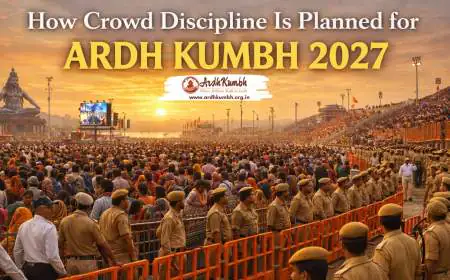
Har Ki Pauri is one of the most crowded spiritual sites in India. Thousands gather within a limited riverfront space. Without discipline, the environment would become unsafe and chaotic.
Discipline exists to:
-
ensure pilgrim safety
-
preserve the sanctity of worship
-
allow priests to perform rituals smoothly
-
maintain spiritual focus
The strict rules during Har Ki Pauri Ganga Aarti are not restrictions. They are safeguards.
Dress Code for Ganga Aarti at Har Ki Pauri
There is no official uniform, but modest and respectful clothing is strongly expected.
Recommended Clothing
-
traditional Indian wear
-
simple, comfortable clothes
-
covered shoulders and knees
What to Avoid
-
revealing or inappropriate clothing
-
flashy or attention-seeking outfits
-
wet clothes near crowded zones
Respectful dress supports the spiritual atmosphere of Ganga Aarti.
Footwear Rules at Har Ki Pauri
Footwear is not allowed on certain parts of the ghat during worship.
-
Follow signboards
-
Use designated footwear stands
-
Do not carry shoes into ritual zones
Ignoring footwear rules can lead to removal by authorities.
Behaviour Expected During Ganga Aarti
During the Har Ki Pauri evening Ganga Aarti, behaviour matters as much as presence.
Pilgrims are expected to:
-
remain calm
-
avoid loud talking
-
follow instructions
-
stand or sit without pushing
Disruptive behaviour affects not just you, but everyone around you.
Photography Rules During Ganga Aarti
Photography is generally allowed, but controlled.
Allowed
-
short photos
-
brief videos
-
non-intrusive recording
Not Allowed
-
flash photography
-
tripods during peak crowd
-
blocking pathways for photos
Authorities may restrict photography on heavy crowd days.
Remember: Ganga Aarti is worship, not content creation.
Mobile Phone Use During Aarti
Phones should be used carefully.
Avoid:
-
constant filming
-
live streaming
-
holding phones above others’ heads
Excessive phone use is one of the most common complaints at Har Ki Pauri.
Why Silence Matters During Ganga Aarti
Silence allows:
-
focus
-
reverence
-
collective harmony
Chanting by priests follows a rhythm. Talking breaks that rhythm.
Silence is considered a form of participation.
Movement Restrictions During the Aarti
Once the Har Ki Pauri Ganga Aarti begins:
-
movement is restricted
-
pathways are closed
-
changing positions becomes difficult
This is done to prevent accidents and maintain order.
Choose your spot early and remain there.
Respecting Priest Pathways
Priests carry large lamps and move in a fixed sequence.
Never:
-
stand in their path
-
cross ritual lines
-
crowd lamp preparation areas
Blocking priest movement is considered disrespectful and unsafe.
Conduct During Offering of Diyas
Many pilgrims release small lamps into the river.
If you choose to do so:
-
follow instructions
-
release gently
-
do not push others
This moment is symbolic and should be done calmly.
Children and Elderly During Ganga Aarti
Children and elderly pilgrims should:
-
stay close to companions
-
avoid dense crowd areas
-
leave if tired or uncomfortable
The Har Ki Pauri Ganga Aarti is safe, but awareness is essential.
What Happens If Rules Are Ignored
Authorities may:
-
redirect you
-
ask you to move
-
restrict access
This is done for safety, not punishment.
Following rules ensures a smooth experience.
Why Discipline Is Part of the Spiritual Experience
In Hindu tradition, discipline is not separate from devotion.
Following rules teaches:
-
patience
-
humility
-
respect
This is why discipline during Ganga Aarti at Har Ki Pauri is considered spiritually meaningful.
Common Behavioural Mistakes Pilgrims Make
Avoid these:
-
arriving late and pushing forward
-
arguing with security
-
blocking views with phones
-
leaving before ritual completion
Most negative experiences come from these mistakes.
Simple Conduct Checklist for Ganga Aarti
Before the aarti begins:
-
dress modestly
-
switch phone to silent
-
choose a spot early
-
stay calm
Following this ensures a respectful and peaceful experience.
Why Proper Conduct Enhances the Experience
When everyone follows discipline:
-
the ritual flows smoothly
-
the crowd feels calm
-
the atmosphere becomes powerful
This is why many pilgrims describe the Har Ki Pauri Ganga Aarti as unforgettable.
Quick Summary: Rules & Conduct During Ganga Aarti
-
Modest dress
-
Controlled photography
-
Limited movement
-
Respect priest paths
-
Maintain silence
These rules protect both spirituality and safety.
Spiritual Meaning of Ganga Aarti Timing at Har Ki Pauri
Why Sunset Worship Matters Deeply**
Many pilgrims ask a simple question after learning the Har Ki Pauri Ganga Aarti time today in Haridwar:
“Why is the aarti always performed at this exact time?”
The answer is not administrative.
It is spiritual, symbolic, and deeply rooted in Hindu philosophy.
Why Ganga Aarti Is Performed at Sunset
The evening Ganga Aarti at Har Ki Pauri is performed at sunset because sunset represents transition.
In Hindu thought, transition moments are considered:
-
spiritually receptive
-
energetically balanced
-
mentally calm
Sunset marks the shift:
-
from activity to rest
-
from light to darkness
-
from outer focus to inner reflection
This is why the Har Ki Pauri Ganga Aarti time is aligned with sunset and not random clock hours.
The Concept of Sandhya in Hindu Philosophy
Sunset is called Sandhya, meaning junction.
A junction is a moment where:
-
one state ends
-
another begins
Sandhya is believed to be a time when:
-
prayers are absorbed more deeply
-
the mind becomes naturally quiet
-
spiritual focus increases
The Sandhya Ganga Aarti at Har Ki Pauri uses this natural stillness.
Why Timing Has Never Been Changed
Many rituals change with time.
The Ganga Aarti timing at Har Ki Pauri has not.
Why?
Because it is not based on convenience.
It is based on natural rhythm.
Priests adjust minutes, not meaning.
This continuity builds trust and spiritual stability.
What Happens Spiritually During the Aarti
During the Har Ki Pauri evening Ganga Aarti, several things happen together:
-
fire represents awareness
-
water represents continuity
-
sound represents vibration
-
collective silence creates focus
When these elements combine at sunset, the moment becomes spiritually potent.
That is why pilgrims feel calm even in large crowds.
Why Fire (Aarti Lamps) Is Central
Fire is used because it:
-
removes darkness
-
symbolises knowledge
-
represents transformation
Offering fire to the Ganga at sunset symbolises:
-
offering awareness to life
-
surrendering ego
-
accepting change
This symbolism is why the Har Ki Pauri Ganga Aarti timing is sacred.
Why Har Ki Pauri Feels Different From Other Ghats
Ganga Aarti happens in many cities.
Only Har Ki Pauri Ganga Aarti feels timeless.
Reasons:
-
river alignment
-
ghat architecture
-
sound reflection
-
uninterrupted ritual continuity
Most importantly, timing discipline.
The ritual begins when nature is ready, not when people are.
Why Pilgrims Feel Emotional Without Knowing Why
Many first-time visitors feel emotional during the evening Ganga Aarti at Har Ki Pauri.
This happens because:
-
the mind slows down
-
the light fades gently
-
sound becomes rhythmic
-
attention turns inward
You do not need to understand philosophy to feel this.
The timing does the work naturally.
Why Timing Matters More Than Location
Some pilgrims think:
“As long as I attend Ganga Aarti anywhere, it is the same.”
Spiritually, timing matters more than place.
Har Ki Pauri combines:
-
correct place
-
correct timing
-
correct ritual
This alignment is rare.
Morning vs Evening Aarti: Spiritual Difference
The morning Ganga Aarti at Har Ki Pauri represents:
-
beginnings
-
purity
-
intention
The evening Ganga Aarti represents:
-
closure
-
reflection
-
surrender
This is why evening aarti draws more people.
Why Collective Worship Feels Powerful at Sunset
At sunset:
-
activity reduces
-
mental noise lowers
-
people naturally slow down
When thousands focus at once, collective calm multiplies.
This is why the Har Ki Pauri Ganga Aarti time today matters so much.
Is Spiritual Benefit Reduced If You Arrive Late
Arriving late does not cancel the experience, but:
-
missing the opening phase reduces impact
-
the mind needs time to settle
This is why arriving early improves spiritual absorption.
Why Timing Creates Discipline
Knowing the exact Ganga Aarti time at Har Ki Pauri teaches:
-
punctuality
-
patience
-
respect for natural order
Discipline itself becomes a form of devotion.
What Pilgrims Take Back From the Timing Experience
Most pilgrims do not remember exact chants.
They remember:
-
the moment
-
the stillness
-
the calm
That memory stays long after leaving Haridwar.
Simple Way to Understand the Spiritual Timing
In simple words:
Sunset calms the world.
Aarti uses that calm.
Calm opens the heart.
That is why timing matters.
Quick Summary: Why Ganga Aarti Timing Is Sacred
-
Sunset represents transition
-
Transition supports reflection
-
Reflection supports clarity
-
Clarity supports devotion
This is the spiritual logic behind the Har Ki Pauri Ganga Aarti time.
Essential Pilgrim Guidance, Safety, Trust Signals & Final Understanding
Har Ki Pauri Ganga Aarti Time Today in Haridwar**
Knowing the Har Ki Pauri Ganga Aarti time today in Haridwar is important.
Understanding how to approach it correctly is what completes the experience.
This final section brings together practical guidance, safety clarity, trust-building signals, and a clear closing understanding, so pilgrims leave informed, calm, and confident.
Is Har Ki Pauri Ganga Aarti Safe for Everyone
Yes. The Har Ki Pauri Ganga Aarti is safe for:
-
families
-
elderly pilgrims
-
women
-
first-time visitors
But safety depends on awareness and preparation, not luck.
Authorities manage:
-
crowd flow
-
entry points
-
movement zones
Pilgrims must manage:
-
timing
-
patience
-
personal limits
Safety improves dramatically when pilgrims arrive early and avoid rushing.
Special Guidance for Elderly Pilgrims
Elderly pilgrims should:
-
prefer morning Ganga Aarti at Har Ki Pauri if crowd-sensitive
-
arrive extra early for evening aarti
-
stay near companions
-
leave if fatigue appears
There is no spiritual loss in leaving early for health reasons.
Children During Ganga Aarti
Children are welcome, but:
-
hold hands at all times
-
avoid dense crowd cores
-
stand slightly away from lamp zones
For children, the experience is visual and emotional. Keep it short and calm.
Weather Considerations During Ganga Aarti
The Har Ki Pauri evening Ganga Aarti happens outdoors.
Plan for:
-
cold evenings in winter
-
heat and humidity in summer
-
occasional rain
Carry:
-
light shawl in winter
-
water bottle in summer
Comfort improves focus.
Why You Should Not Rush After Aarti Begins
Many pilgrims leave as soon as lamps rise.
This is a mistake.
The Har Ki Pauri Ganga Aarti unfolds in stages:
-
opening chants
-
lamp offering
-
collective silence
-
closing rhythm
Leaving early means missing the most calming phase.
Understanding the Flow of the Ritual
The aarti is not one moment.
It is a sequence.
Understanding this prevents impatience.
Patience allows:
-
the mind to settle
-
emotions to stabilise
-
meaning to appear
This is why staying till the end matters.
Why First-Time Visitors Often Feel Conflicted
Some first-time visitors feel:
-
emotional but confused
-
calm but tired
-
peaceful but overwhelmed
This is normal.
Large spiritual gatherings affect people differently.
Do not judge your experience immediately.
Meaning often appears later.
Avoiding Commercial Traps Near Har Ki Pauri
Near Har Ki Pauri, many vendors sell:
-
diyas
-
offerings
-
souvenirs
Buying is optional.
There is no obligation to purchase anything to attend or benefit from the Ganga Aarti at Har Ki Pauri.
Simplicity is respected.
Trust Signals: How to Know This Guide Is Reliable
This guide is built on:
-
long-standing ritual practice
-
consistent timing discipline
-
ground-level pilgrim patterns
-
authority-based structure
It avoids:
-
exaggerated claims
-
unverified timings
-
emotional manipulation
That is why it focuses on clarity over drama.
Why Har Ki Pauri Remains the Reference Point
Many cities perform Ganga Aarti.
Only Har Ki Pauri is considered the reference standard.
Reasons:
-
uninterrupted tradition
-
strict timing discipline
-
spiritual centrality
-
historical continuity
That is why Har Ki Pauri Ganga Aarti time is searched more than any other.
What Matters More Than Watching the Aarti
Watching is external.
Receiving is internal.
You receive more when you:
-
arrive early
-
stand calmly
-
observe quietly
-
accept the moment
The Har Ki Pauri Ganga Aarti is not meant to impress.
It is meant to settle the mind.
How to Know the Aarti Was Meaningful
Do not ask:
“Did I feel something dramatic?”
Ask instead:
-
Do I feel calmer?
-
Am I quieter inside?
-
Did time slow down?
If yes, the aarti worked.
One Simple Truth About Ganga Aarti Timing
The Har Ki Pauri Ganga Aarti time today matters because:
Timing creates readiness.
Readiness creates openness.
Openness creates peace.
That is the chain.
Final Guidance Before You Go
Before attending today:
-
confirm sunset time
-
reach early
-
carry patience
-
release expectations
Do not try to control the experience.
Let it unfold.
Har Ki Pauri as Haridwar’s Daily Anchor
Festivals amplify Har Ki Pauri, but its importance is daily, not occasional.
Local life in Haridwar slows as Ganga Aarti time approaches. Movement changes. Shops pause. Voices lower. The city aligns itself around the ritual.
This is why the Har Ki Pauri Ganga Aarti time is treated as a daily anchor, not a tourist highlight.
Why This Timing Survived Centuries
Kings changed.
Administrations changed.
Crowds multiplied.
Yet the Har Ki Pauri Ganga Aarti timing remained.
It survived because it is rooted in natural rhythm, not authority. When rituals align with nature, they do not need reform. They endure.
Final Closing Thought
The Ganga flows endlessly.
Her worship at Har Ki Pauri happens in precise moments.
Knowing the Har Ki Pauri Ganga Aarti time today in Haridwar ensures you do not just witness a ritual — you enter a rhythm that has guided pilgrims for centuries.
In Haridwar, evenings do not end with darkness.
They begin with light.
Frequently Asked Questions