





















































Is Ardh Kumbh a Test of Inner Strength
Is Ardh Kumbh a test of inner strength? Yes, and it is the most rewarding one you will ever take. Discover how the pilgrimage's physical, mental, and emotional challenges become the crucible for profound spiritual transformation.
The Cold Plunge as a Mirror for the Mind ❄️
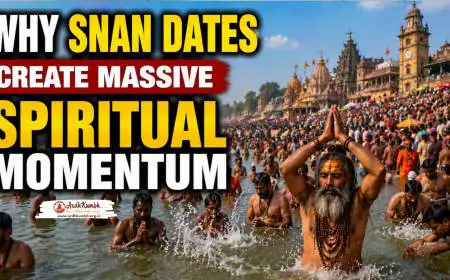
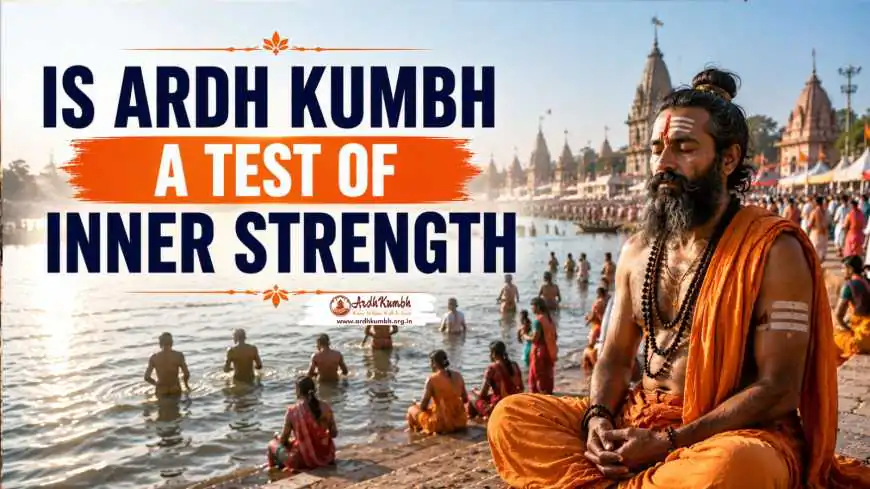
The most immediate, undeniable test of inner strength at the Ardh Kumbh arrives before the sun, in the form of freezing water. You stand at the river's edge, the February air somewhere just above freezing, and your mind does what minds do: it screams at you to turn back. Every cell in your body is wired for self-preservation, and submerging yourself in icy water for a spiritual purpose seems, to that ancient biological programming, like a very bad idea. This is the first threshold. The moment of hesitation is the test. Will you be ruled by the voice of comfort, or will you step forward into the unknown with faith?
What you discover in that cold shock is a profound truth about your own nature: you are not your mind's frightened chatter. When you plunge into the water, the mind's noise is completely, brilliantly silenced by the physical sensation. In that sudden, involuntary stillness, you touch a place of pure awareness, a strength that was always there but was buried under the daily anxieties. Every subsequent immersion becomes less of a physical trial and more of a remembered homecoming. The inner strength you build here is not the rigid, teeth-gritting endurance of a soldier. It is the pliable, resilient strength of surrender—the ability to meet a challenging moment not with resistance but with a deep, centering breath. This lesson, learned in the freezing water of the Sangam, translates directly into how you handle every difficult, cold, and shocking situation life throws at you after you return home.
The Crowd That Dissolves the Walls Around Your Heart 🚶
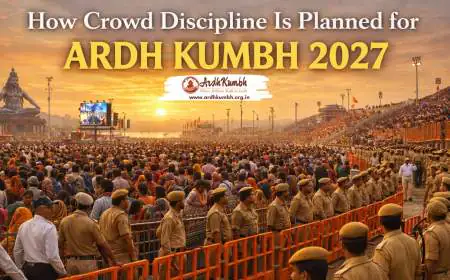
If the cold is the test of your body's courage, the crowd is the test of your ego's grasp. For the modern individual, personal space is a sacred, non-negotiable right. The Ardh Kumbh obliterates this. In the dense, moving throng on a main bathing day, you are not an isolated self. You are a single drop in a human river. Your movement is not entirely your own. Your preferences are irrelevant. This is an immense psychological test, and it can trigger a powerful wave of claustrophobia and anxiety.
Yet, this is where the real alchemy happens. The test is not to fight the crowd, to resist and complain, which only exhausts you. The test is to surrender to its flow and, in doing so, discover a type of inner strength you never knew existed: the strength of trust. You learn that you are safe in the hands of this massive, peaceful organism. You see elderly grandmothers, far frailer than you, moving with a quiet, unshakeable resolve. You feel anonymous hands steady you when you stumble. The walls you built around your heart, the ones that made you feel so separate and so lonely in the world, begin to dissolve. The crowd that you feared would crush you has, instead, taught you that you are part of an indivisible whole. The inner strength you gain from this is not the power to stand alone, but the wisdom to know you never truly do. This is a fundamental, life-altering shift in perspective that silences the fearful, isolated ego.
Trending Guides Now

Why It’s Called Ardh Kumbh: The Real Meaning
Read Guide →
Is Ardh Kumbh a Form of Tapasya?
Read Guide →
Is Ardh Kumbh About Renunciation or Inner Awareness?
Read Guide →
What Ardh Kumbh Symbolizes in Sanatan Dharma
Read Guide →
Best Routes to Reach Haridwar for Ardh Kumbh Mela
Read Guide →
Ardh Kumbh 2027 Dates (Official) - Haridwar Snan Schedule
Read Guide →
The Untold Stories of Har Ki Pauri
Read Guide →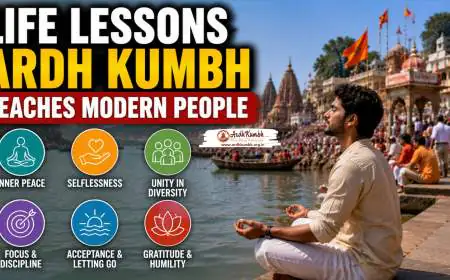
Life Lessons Ardh Kumbh Teaches Modern People
Read Guide →The Long Walk That Builds a Patient Resilience 👣
There is no Uber at the Kumbh. No shortcuts. You will walk for miles, on uneven ground, often in the dark, sometimes lost. After days of this, your feet will ache, your back will be sore, and your body will feel depleted. The Ardh Kumbh is a slow, physical grind, and it is a deliberate, centuries-old test of your capacity for patient endurance. We live in a world of instant gratification, where discomfort is a problem to be solved immediately. The Kumbh offers no such quick fixes. The temple darshan you seek is still a kilometer away. The food at the bhandara is not ready for another hour. The snan ghat will take as long to reach as it takes.
This forced slowness is a masterclass in building a different kind of inner strength: the strength of a quiet, persistent spirit. You learn that discomfort is not an emergency. The aching legs are just a sensation; they do not need to become a narrative of suffering in your mind. You watch the sadhus, who have walked the length and breadth of India, and you see the stillness in their eyes. The walking itself becomes a meditation. Every step is a mantra. The destination—the sacred bath, the akhara camp, the temple spire—loses its desperate urgency, and the journey itself, the simple act of moving, breathing, and being, becomes the whole point. This capacity for patient, joyful endurance in the face of difficulty is one of the most practical and powerful forms of inner strength you can cultivate, and the Kumbh etches it into your very bones.
The Emotional Turbulence That Purifies Your Inner World 🌧️
An often unexpected test of inner strength at the Ardh Kumbh is the sudden, powerful surge of unprocessed emotions. The constant sensory overload, the lack of sleep, the stripping away of your normal coping mechanisms like work and entertainment—all of this creates the conditions for a deep psychic cleansing. You might find yourself weeping during the evening aarti for no reason you can name. An old, buried grief may surface while you are sitting by the river. Irrational anger or profound fear might wash over you in the middle of the crowd.
This is the yogic concept of samskara shuddhi—the purification of deep mental impressions. The Kumbh is not just a physical and mental test; it is an emotional one. The test is not to suppress these feelings or to believe that you are failing the pilgrimage by having them. The test is to let them move through you without judgment, to sit on the banks of the river and allow her to carry your tears away. The inner strength required here is not the masculine force of control, but the feminine power of unconditional acceptance. You learn to hold space for your own wounded self. You discover that you are vast enough to contain joy and sorrow, peace and turmoil, all at once. The pilgrim who passes this test returns home not just with clearer sinuses, but with a deeply unburdened heart, having released a weight they may have carried for a lifetime.
The Simplicity That Dismantles Your Dependency on Things 🏕️
Your daily life is supported by an invisible web of comforts: on-demand hot water, a soft bed, a refrigerator full of choices, and the numbing, familiar glow of a screen. The Ardh Kumbh systematically strips these away. You sleep on a thin mattress in a cold tent. You eat simple dal and rice at a fixed time, whether you are hungry or not. You have no private transport, no Wi-Fi, and no control over the weather. This is a direct, unavoidable test of your attachment to material comfort and your addiction to external stimulation.
Initially, this feels like a terrible deprivation. But then, a quiet miracle happens. The test reveals its hidden gift. You discover that you are genuinely happy without any of it. The warm chai in a small clay cup becomes the most exquisite luxury. The shared blanket, the laughter of strangers, the star-filled sky unpolluted by city lights—these become your new treasures. The inner strength born of this simplicity is an unshakeable self-sufficiency. You discover that your baseline well-being does not depend on your bank balance, your job title, or the thread count of your sheets. You are enough. The world is enough. This is a liberating secret that the consumerist culture desperately tries to hide. Once you have passed this test of the Kumbh, the frantic, competitive acquisition of "more" loses its power over you.
The Dharma Sankata of the Privileged: A Test of Your Shadow ⚠️
The Kumbh will test your shadow. In a place where the destitute, the leper, and the mentally ill are often found on the pilgrim routes seeking alms as an act of devotion, you will be confronted with the overwhelming scale of human suffering. Your first instinct might be to help everyone, which is impossible, or to shut down entirely and walk past with a hardened heart. This is a sharp, spiritual test of your inner strength and your ability to hold complexity. It tests the quality of your compassion, pushing you to find a response that is neither naively messianic nor coldly indifferent.
You must find the strength to make eye contact, to offer a small, genuine kindness—a piece of fruit, a moment of respect—without drowning in despair. You must find the strength to accept your own limitations, to offer what you can and release the rest to the river. The Kumbh teaches a mature compassion that is grounded in wisdom, not in sentimentality. This is a deep, often uncomfortable test of the heart, one that asks you to keep it open even when it hurts, which is perhaps the truest measure of a human being.
The Strength You Find in the Silence After the Test 🧘
The ultimate reward for passing through the crucible of the Ardh Kumbh's tests is not a certificate. It is a newfound, unshakeable inner silence. After days of physical exertion, sensory overload, and emotional release, there is a moment—usually after the final snan—when everything falls quiet. The mind, exhausted from its constant struggles, finally gives up. And in that surrender, you find a peace you may never have felt before. It is the strength of a calm mind.
This is not a fragile, fleeting peace that disappears with the first work email. It is a direct, embodied experience of your own spiritual core. You have walked through fire, cold, and chaos, and you have emerged. The inner strength of the Kumbh is the silent, knowing confidence of a soul that has been tested and found to be indestructible. The river flows. The fire burns. The crowd moves. And at the center of it all, you have discovered a still point that nothing external can disturb. This is the diamond-body of the yogis, forged in the pressure of the pilgrimage, and it is yours to keep forever.
The Pilgrimage That Builds What the World Cannot Break
So, is Ardh Kumbh a test of inner strength? It is the ultimate test, but it is one designed with infinite compassion. It does not test you to judge you. It tests you to show you what you are made of. It reveals that the strength you were seeking outside—in achievements, in status, in the approval of others—has been lying dormant inside you all along, waiting to be awakened by a cold dawn, a long walk, and a river that has been purifying souls since before time was measured.
When you stand on the final day, watching the tents being dismantled, you will realize that your inner architecture has been permanently rebuilt. You are more patient. You are less afraid. You know that joy does not require a palace. You know that your essence is not your chattering mind but the silent, eternal witness behind it. The Ardh Kumbh will test you, yes. It will push you to your limits. And then, it will gift you the most precious thing in the universe: the unshakeable knowledge of your own sacred strength. The only question that remains is not whether you will pass the test, but when you will give yourself the blessing of taking it.
Frequently Asked Questions