Ardh Kumbh Travel Guide for Families: Kids, Elders & Safe Stay Planning
Visiting the Ardh Kumbh as a family is a deeply meaningful spiritual journey — but it requires careful planning, especially when traveling with children and elderly members. Unlike solo pilgrimages, family participation demands attention to safety, comfort, health, mobility, and structured scheduling.
This pillar guide provides a complete, practical, and safety-first roadmap for families attending Ardh Kumbh in sacred cities like Haridwar.
This is not a general overview — it is a detailed operational guide designed for real-world family travel conditions.
Want to experience Ardh Kumbh in person?
Get official dates, snan guidelines, Akharas, and travel planning tips in our dedicated event guide.
→ Ardh Kumbh Mela 2027 Complete Guide
Why Family Planning for Ardh Kumbh Is Different
Ardh Kumbh draws millions of pilgrims over a concentrated period. Crowd density increases dramatically on Shahi Snan and major bathing dates. Infrastructure expands temporarily, but so do logistical challenges.
When traveling with:
Preparation shifts from “pilgrimage” to “managed spiritual travel.”
The goal is to balance devotion with protection.
Also Read | Ardh Kumbh 2027 Official Dates (Haridwar)
Choosing the Right Dates for Family Travel
Not all Ardh Kumbh days are equal in crowd intensity.
Best for Families:
Avoid If Traveling With Elders:
-
Main Shahi Snan dates
-
Peak Amavasya days
-
Late-night ghat visits
-
Procession-heavy days
Families should prioritize spiritual experience over symbolic peak attendance.
Accommodation Planning: Safety First Strategy
Accommodation is the most critical decision for families.
Option 1: Government-Approved Tent Cities
Pros:
-
Organized layouts
-
Security presence
-
Medical camps nearby
-
Basic amenities
Cons:
-
Temporary infrastructure
-
Shared sanitation
Option 2: Hotels in City Limits
Pros:
Cons:
Option 3: Dharamshalas and Ashram Stays
Pros:
-
Affordable
-
Spiritual environment
Cons:
-
Limited privacy
-
Basic facilities
For families with elders, choose:
Safety and accessibility override proximity to water.
Room Selection Checklist for Families
Before booking, confirm:
-
24/7 electricity
-
Backup power
-
Clean drinking water
-
Attached bathroom
-
Secure locks
-
Reception contact availability
-
Medical facility distance
-
Lift access (for elderly)
Avoid last-minute bookings near peak dates.
Transportation Strategy for Families
Reaching the City
Train travel is practical but crowded.
For families:
-
Prefer 3AC or 2AC classes.
-
Avoid unreserved compartments.
-
Book tickets 60–90 days early.
If flying:
Local Movement Strategy
Within cities like Haridwar:
-
Road closures are common.
-
Vehicles may be stopped 1–3 km from ghats.
-
Walking becomes mandatory.
Plan for:
-
Comfortable walking footwear
-
Wheelchair options if required
-
Early departure to avoid rush
Never rely on last-minute auto availability during peak hours.
Health & Medical Planning for Elders
Senior citizens require additional attention.
Carry:
-
Full medication kit
-
Doctor prescriptions
-
Basic first-aid supplies
-
ORS sachets
-
Glucose tablets
Avoid:
If an elder has:
-
Heart condition
-
Joint issues
-
Breathing difficulties
Consider symbolic bathing (sprinkling water instead of full immersion).
Spiritual merit is intention-based — not physical endurance-based.
Safety Protocols for Children
Children are vulnerable in high-density gatherings.
Before Leaving Room:
During Ghat Visit:
-
Hold hands at all times.
-
Avoid crowded center points.
-
Never allow independent movement.
-
Identify nearest police or help desk location.
Teach Children:
-
Stay in place if separated.
-
Approach uniformed officials only.
-
Avoid accepting food from strangers.
Preparation prevents panic.
Crowd Management Strategy for Families
Golden rule: Avoid peak hours.
Best timing:
Avoid:
-
Late evening rush
-
Procession routes
-
Narrow ghat staircases
Move as a compact unit.
If crowd pressure increases:
Family safety > ritual enthusiasm.
Safe Bathing Guidelines for Families
If performing Snan:
-
Choose less congested ghat areas.
-
Avoid deep sections.
-
Do not rush for center positions.
-
Keep bath short and controlled.
For children:
For elders:
Remember: Ritual discipline includes safety consciousness.
Food & Hygiene Planning
Festival food options are abundant but quality varies.
For families:
-
Prefer known establishments.
-
Avoid street-cut fruits.
-
Drink only sealed bottled water.
-
Carry dry snacks for children.
Recommended items:
-
Energy bars
-
Nuts
-
Biscuits
-
Electrolyte drinks
Avoid overeating heavy fried food before bathing.
Hydration is critical.
Sanitation & Cleanliness Awareness
Temporary washrooms may be crowded.
Carry:
-
Hand sanitizer
-
Wet wipes
-
Tissue paper
-
Soap strips
Maintain hygiene especially for children.
Never ignore minor health symptoms.
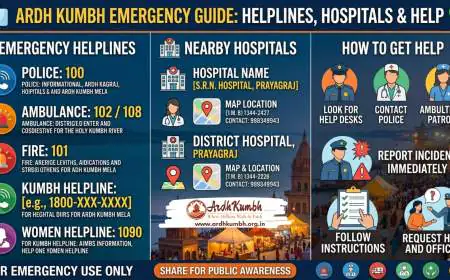
Emergency Preparedness Plan
Before visiting ghats, identify:
-
Nearest medical camp
-
Police help desk
-
Lost-and-found center
-
Emergency assembly point
Keep:
Network congestion may block calls.
Preparation reduces chaos.
Financial Safety Planning
Carry:
Avoid:
Distribute money across family members.
Spiritual Planning for Families
Ardh Kumbh can be overwhelming for children.
Make it educational:
-
Explain meaning of ritual.
-
Discuss discipline and humility.
-
Teach importance of charity.
-
Encourage silent prayer moments.
Turn the pilgrimage into value transmission.
Psychological Preparedness
Crowds can create anxiety in children and elders.
Prepare them:
Confidence prevents fear reactions.
When to Avoid Traveling With Family
Postpone visit if:
-
Infant below 1 year.
-
Serious medical conditions.
-
Extreme weather forecast.
-
Accommodation unavailable.
-
Transport uncertainty.
Spiritual discipline includes wise decision-making.
Ideal 2-Day Family Itinerary (Balanced & Safe)
Day 1:
Day 2:
-
Early morning Snan.
-
Brief Puja.
-
Breakfast.
-
Return to accommodation.
-
Departure.
Keep schedule light.
Overpacking itinerary increases fatigue.
Step-By-Step Family Travel Plan for Ardh Kumbh in Haridwar
This section focuses only on planning your family pilgrimage to Haridwar, especially around the sacred ghats of Har Ki Pauri.
Step 1: Fix Your Travel Window for Haridwar
-
Choose early morning ritual hours to avoid heavy crowd pressure.
-
Prefer weekday arrival instead of weekends.
-
Avoid arriving on the main bathing date itself — reach at least one day earlier.
-
Check local weather (Haridwar mornings can be cold even if afternoons are warm).
Step 2: Book Stay Near Har Ki Pauri (But Not Inside Congested Lanes)
-
Select hotels within 1–2 km radius of Har Ki Pauri.
-
Avoid deep inner market lanes with limited vehicle access.
-
Confirm lift access if traveling with elders.
-
Ensure attached western toilet for senior comfort.
-
Check 24-hour water and power backup.
Tip: Slightly outer zones offer better mobility and less noise.
Step 3: Plan Arrival Route Carefully
By Train:
By Air:
By Road:
Step 4: Prepare a Haridwar-Specific Walking Plan
-
Study the ghat layout before stepping out.
-
Identify entry and exit routes near Har Ki Pauri.
-
Fix a visible landmark meeting point (clock tower, police post, or bridge).
-
Avoid crossing crowd streams during aarti time.
For elders: keep daily walking under manageable limits.
Step 5: Safe Snan at Har Ki Pauri – Execution Plan
-
Reach before sunrise.
-
Carry only essential items in waterproof pouch.
-
Hold children firmly; avoid letting them step independently into water.
-
Use chain barriers installed at the ghat.
-
Avoid deeper current sections.
-
Dry off and exit immediately after bath.
Elders should bathe in supported railing zones only.
Step 6: Attend Ganga Aarti Safely
-
Reach 45–60 minutes early.
-
Sit toward outer boundary, not center crowd core.
-
Keep children seated beside adults.
-
Avoid standing up during peak aarti moment.
-
Exit calmly after main flame ritual ends.
Step 7: Food & Hygiene Strategy in Haridwar
-
Eat at reputed vegetarian restaurants near main roads.
-
Avoid uncovered sweets sold in open air.
-
Drink sealed bottled water only.
-
Carry personal sanitizer and tissues.
Prefer simple meals like roti, sabzi, khichdi.
Step 8: Crowd Discipline Near Har Ki Pauri
-
Move with the flow of pilgrims.
-
Do not stop suddenly for photos.
-
Keep kids in front, elders in middle, strongest adult behind.
-
Avoid shortcut alleys during rush hours.
Step 9: Emergency Protocol in Haridwar
-
Locate nearest police help booth immediately after arrival.
-
Save local emergency helpline numbers.
-
If separated, go directly to the nearest police tower.
-
Do not attempt random searching in dense areas.
Step 10: Daily Rest & Recovery Plan
-
Return to hotel before afternoon heat.
-
Allow elders to rest at least 2–3 hours mid-day.
-
Keep evening plan light if morning involved snan.
-
Stay hydrated consistently.
Step 11: Departure Planning
-
Leave hotel 3–4 hours before train departure (traffic congestion common).
-
Keep luggage packed the previous night.
-
Avoid last-minute ghat visit on departure day.
Post-Pilgrimage Care
After returning:
-
Hydrate well.
-
Monitor health for 2–3 days.
-
Resume routine gradually.
-
Encourage children to reflect on experience.
Spiritual integration matters.
Related Ardh Kumbh Guides :