































































How Ardh Kumbh Evolved Over Centuries of Faith ?
Explore how Ardh Kumbh evolved across centuries through Sanatan faith, from ancient sage gatherings to today’s living spiritual tradition.
How Ardh Kumbh Evolved Over Centuries of Faith
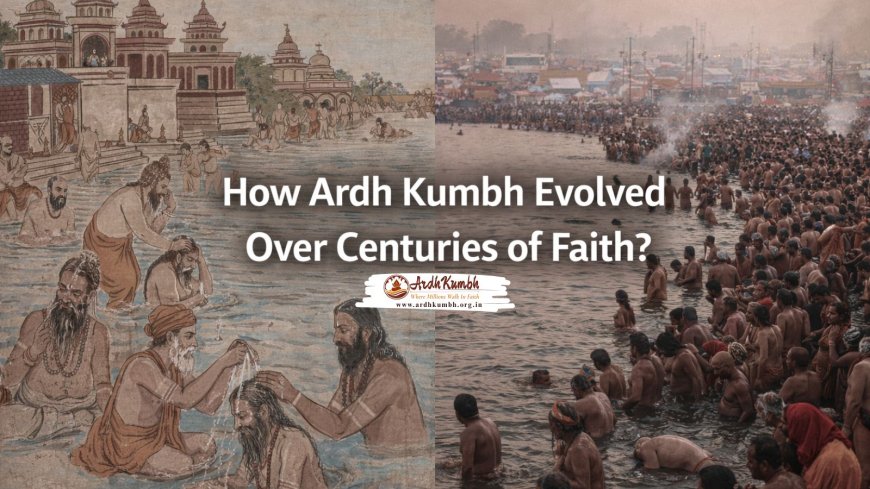
Ardh Kumbh did not appear suddenly as a grand festival. It evolved slowly, shaped by centuries of belief, observation, discipline, and lived faith. Its journey mirrors the journey of Sanatan civilization itself: adaptive in form, unchanging in essence.
To understand how Ardh Kumbh evolved, one must see it not as an event, but as a continuously refined spiritual mechanism.
Attending the next Ardh Kumbh?
Get official dates, snan rules, Akharas, and planning guidance in our complete event guide.
→ Ardh Kumbh Mela 2027 Complete Guide
The Earliest Phase: Sage Gatherings and Sacred Time
In ancient India, long before organized pilgrimages, sages gathered at sacred rivers during astronomically significant periods. These gatherings were small, purposeful, and inward-looking.
Trending Guides Now
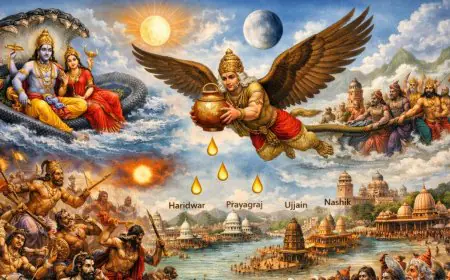
What Is the Story Behind the Ardh Kumbh Mela?
Read Guide →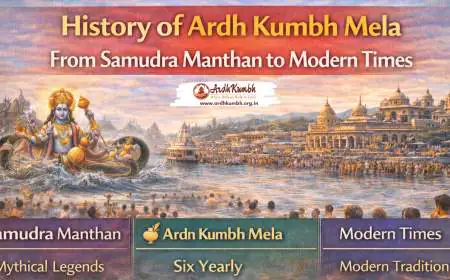
History of Ardh Kumbh Mela From Samudra Manthan to Modern Times
Read Guide →
How Ardh Kumbh Preserved India’s Oral Traditions
Read Guide →
Why Ardh Kumbh Occurs Every Six Years Explained
Read Guide →
Best Routes to Reach Haridwar for Ardh Kumbh Mela
Read Guide →
Ardh Kumbh 2027 Dates (Official) - Haridwar Snan Schedule
Read Guide →
How Kumbh Keeps India’s Civilizational Memory Alive
Read Guide →
February Weather Reality at Ardh Kumbh
Read Guide →The focus was not on crowds, but on:
-
Knowledge transmission
-
Tapasya and discipline
-
River-based purification
-
Observing cosmic rhythm
These assemblies formed the spiritual seed of what would later mature into Kumbh traditions.
The Formation of Periodic Gatherings
As Sanatan society expanded, the need for collective spiritual renewal grew. Oral traditions ensured continuity, but large populations required structured intervals for re-alignment.
At this stage, the twelve-year Kumbh cycle gained clarity, with the midpoint becoming increasingly important. Faith communities recognized that waiting twelve years risked dilution of discipline.
Thus, the idea of a mid-cycle congregation emerged organically. This was the philosophical birth of Ardh Kumbh.
From the divine legend of Samudra Manthan to today’s massive spiritual gatherings, the History of Ardh Kumbh Mela reflects centuries of faith and devotion. This sacred festival continues to unite millions at holy rivers, blending ancient mythology with modern pilgrimage
Puranic Era: Codification Without Rigidity
During the Puranic period, stories, cosmology, and sacred geography became widely shared. Rivers gained defined sanctity, and planetary alignments were more clearly understood.
Ardh Kumbh was not declared through decree. Instead, it became socially recognized as a necessary spiritual checkpoint. Faith communities began aligning travel, fasting, charity, and bathing practices around this midpoint.
This era shaped Ardh Kumbh’s identity without freezing it into rigid rules.
Medieval Period: Preservation Through Discipline
During times of political change and uncertainty, Ardh Kumbh played a crucial role in preserving Sanatan continuity.
Ascetic orders strengthened discipline, ensuring:
-
Ritual accuracy
-
Ethical conduct
-
Scriptural transmission
Pilgrims followed stricter codes of behavior. The gathering remained inward-focused, even when external circumstances were unstable.
Ardh Kumbh survived because it required no central authority, only shared faith.
To truly experience the spiritual power of Ardh Kumbh, every devotee should explore Shahi Snan rituals and Akhara traditions, which explain the sacred bathing process, monastic discipline, and ancient customs that shape this holy gathering. This guide helps pilgrims connect deeply with the true essence of the Mela.
Colonial Era: Quiet Persistence
During colonial rule, many indigenous traditions weakened. Ardh Kumbh did not.
It adapted in scale but retained ritual core. Pilgrims continued to attend, often with limited facilities, guided purely by belief. The gathering was neither promoted nor suppressed successfully because it operated beyond political relevance.
Faith carried it forward when infrastructure could not.
Modern Era: Expansion Without Dilution
In contemporary times, Ardh Kumbh has expanded dramatically in visibility and scale. Infrastructure, communication, and administration have grown around it.
Yet its evolution remains structural, not philosophical.
-
Sacred bathing remains central
-
Dates remain astronomically fixed
-
Discipline remains expected
-
Faith remains the driving force
Modern Ardh Kumbh is not a new form. It is an old form accommodating new bodies.
What Never Changed Across Centuries
Despite all external changes, certain elements have remained untouched:
-
Alignment with cosmic time
-
Centrality of sacred rivers
-
Emphasis on discipline
-
Equality of seekers at the river
These constants explain why Ardh Kumbh feels ancient even today.
Evolution Without Loss of Soul
Ardh Kumbh’s greatest strength is its ability to evolve without losing its soul.
It did not grow by invention.
It grew by remembering what mattered.
That is why centuries of faith did not erode it.
They refined it.
Ardh Kumbh stands today not as a relic of the past,
but as proof that faith, when aligned with time, does not age.
Frequently Asked Questions