




















































Why Order and Cleanliness Are Strictly Enforced
Discover why Kumbh Mela enforces strict order and cleanliness. Safety, dignity, health, and spiritual purity depend on these non-negotiable rules.
The Mathematics of Disaster - Why Order Saves Lives
Let me start with the cold, hard math. Fifty million people. A temporary city that springs up in weeks and disappears in months. Narrow paths that lead to the ghats. A single river that everyone wants to enter at the same auspicious times. This is a recipe for disaster if order is not strictly enforced.
What kind of disaster? Stampedes. When a crowd panics, when people push, when there is no order, human beings get crushed. They cannot breathe. They cannot move. They fall, and others fall on top of them, and within minutes, hundreds can be dead. This has happened at Kumbh in the past. In 1954, a stampede at Kumbh killed hundreds. The memory of that disaster haunts every Kumbh organizer to this day.
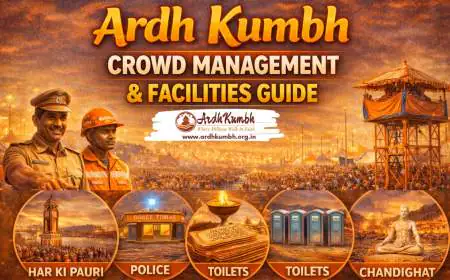
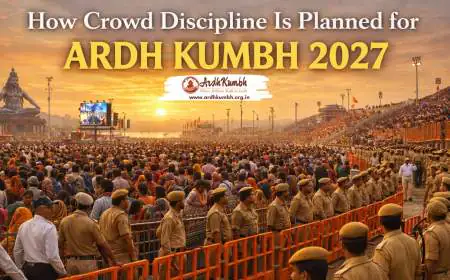
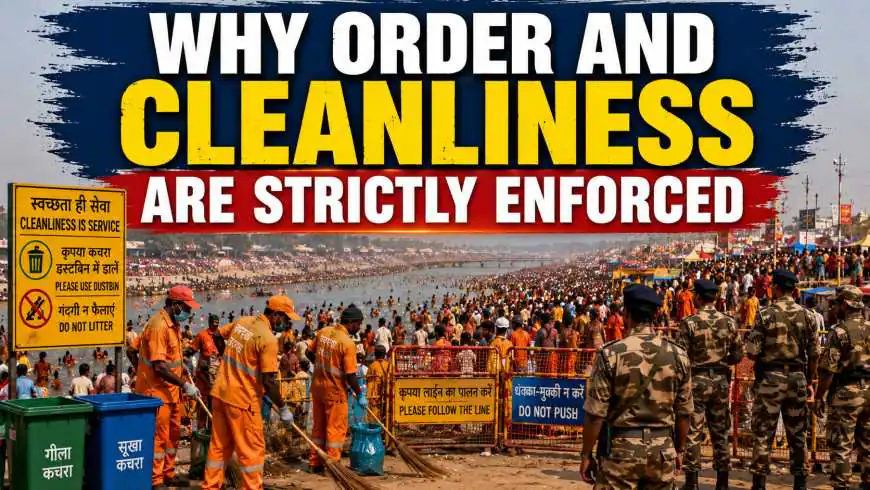
That is why order is not a suggestion. Barriers are erected to channel the crowd in one direction. One-way systems are enforced so that people going to the ghat do not collide with people leaving. Time slots are assigned to different akhadas so that millions do not try to enter the water at the exact same second. Police and volunteers are stationed everywhere to guide the flow.
And here is the hard truth that nobody likes to say out loud. Pilgrims cannot be trusted to do this themselves. In moments of spiritual excitement, people forget safety. They push. They run. They ignore barriers. That is why strict enforcement is necessary. Not because pilgrims are bad. Because crowds are dangerous. And danger requires control.
Trending Guides Now
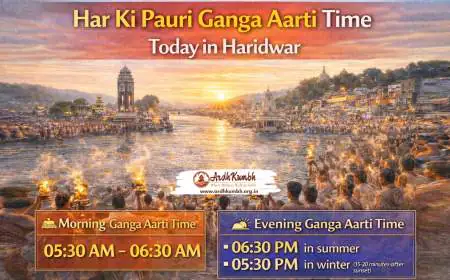
Har Ki Pauri Ganga Aarti Time Today in Haridwar
Read Guide →
Ardh Kumbh Mela Rituals Explained Shahi Snan & Akhara Traditions
Read Guide →
Daily Spiritual Practices Only Seen at Ardh Kumbh
Read Guide →
Why Devotees Deliberately Avoid Luxury at Kumbh
Read Guide →
Best Routes to Reach Haridwar for Ardh Kumbh Mela
Read Guide →
Essential Rules Every Ardh Kumbh 2027 Pilgrim Must Follow
Read Guide →
Who Are Naga Sadhus and Why They Lead Kumbh
Read Guide →
Biggest Crowds Ever Recorded at Ardh Kumbh
Read Guide →When a policeman shouts at you to move faster or slower or in a different direction, they are not trying to ruin your spiritual experience. They are trying to keep you alive. When a volunteer blocks your path and tells you to wait, they are not on a power trip. They are preventing a stampede that could kill your children.
Order at Kumbh is enforced with strictness because the alternative is bodies in the mud. That is not an exaggeration. That is mathematics. And mathematics does not care about your feelings. So when you are at Kumbh, obey the order. Do not argue. Do not cut lines. Do not push. Follow the rules. Your life depends on it. So do the lives of the people around you.
The Ganga Is Not a Sewer - Why Cleanliness Is Sacred
Let me talk about the second reason why cleanliness is strictly enforced at Kumbh. The Ganga. For Hindus, the Ganga is not just a river. She is a goddess. She is Mother Ganga. She purifies everything she touches. But here is the problem. Human beings are dirty. We produce waste - solid waste, liquid waste, chemical waste, biological waste. If fifty million people are allowed to throw their garbage into the Ganga, the river will become a sewer. Not a goddess. A sewer.
That is why cleanliness is strictly enforced at Kumbh. Trash bins are placed everywhere. Sweepers work around the clock. Plastic is banned or heavily restricted. Toilets are installed by the thousands. Waste treatment plants are set up to process sewage before it reaches the river.
And again, pilgrims cannot be trusted to do this themselves. There will always be someone who thinks, "One plastic bottle will not hurt." There will always be someone who is too lazy to walk to the trash bin. There will always be someone who thinks the Ganga can purify anything, so why bother with cleanliness?
This is where strict enforcement comes in. Fines are levied for littering. Volunteers patrol with garbage bags. Announcements are made constantly reminding pilgrims to keep the Ganga clean. Police confiscate plastic at the entrance.
Is this harsh? Yes. Is it necessary? Also yes. Because once the Ganga is polluted, the pollution does not go away when Kumbh ends. It stays in the river. It poisons the fish. It makes people sick. It destroys the sacredness of the water.
Cleanliness at Kumbh is not about hygiene alone. It is about respect. Respect for Mother Ganga. Respect for the pilgrims who will come after you. Respect for the tradition that has kept the river relatively clean for thousands of years. When you throw garbage into the Ganga, you are not just littering. You are violating something sacred. And that is why cleanliness is strictly enforced. Not because the authorities want to be bossy. Because the Ganga deserves better. And so do the pilgrims who will bathe in her waters long after you are gone.
The Living River - Health as a Spiritual Duty
Let me talk about the third reason for strict cleanliness enforcement. Health. Fifty million people in close quarters is a perfect breeding ground for disease. Cholera. Typhoid. Hepatitis A. Dysentery. These are not abstract threats. They are real. They have killed pilgrims at Kumbh in the past.
How do you prevent disease outbreaks at Kumbh? You enforce cleanliness. You make sure human waste is disposed of properly. You make sure garbage does not pile up and attract vermin. You make sure drinking water is safe. You make sure food is handled hygienically.
This requires strict rules. Toilets must be used, not the open ground. Hand washing stations are provided and must be used. Food vendors must follow hygiene regulations or be shut down. Medical camps are set up to treat anyone who gets sick, but the goal is to prevent sickness in the first place.
Here is the thing about disease at Kumbh. It does not stay at Kumbh. Pilgrims who get sick return to their villages and cities and spread the disease to their families and neighbors. A cholera outbreak at Kumbh can become a cholera outbreak across India. That is why cleanliness at Kumbh is not just about protecting pilgrims at the Mela. It is about protecting the entire nation.
Strict enforcement of cleanliness is public health policy disguised as spiritual discipline. And it works. Despite the massive crowds, Kumbh has not seen a major disease outbreak in decades. That is a miracle of organization and enforcement. It is also a testament to the pilgrims who follow the rules - not always happily, but usually compliantly.
When a volunteer tells you to wash your hands before eating, they are not insulting your cleanliness. They are protecting you from typhoid. When a policeman tells you not to throw garbage on the ground, they are not judging your habits. They are preventing a rat infestation that could spread plague. Health is the hidden reason behind most cleanliness rules at Kumbh. And health is not optional.
The Dignity of the Pilgrim - Order as Respect
Let me talk about a reason for strict order that is not about safety or health. It is about dignity. At Kumbh, pilgrims come from every walk of life. Elderly people who can barely walk. Disabled people in wheelchairs. Pregnant women. Newborn babies. Sick people hoping for a miracle. These vulnerable pilgrims depend on order for their dignity.
Without order, the strong push the weak aside. Without order, the fast trample the slow. Without order, the desperate take what they want, and the needy get nothing. This is not spirituality. This is jungle.
Strict order at Kumbh protects the weak. The queue ensures that an elderly woman is not pushed aside by a young man. The barriers ensure that a family with children can reach the ghat without being separated. The time slots ensure that disabled pilgrims have a chance to bathe before the crowds become overwhelming.
When you follow the rules, you are not just obeying authority. You are protecting the dignity of every pilgrim around you. You are saying, "Your need is as important as mine. Your time is as valuable as mine. Your life matters as much as mine."
This is the spiritual heart of order at Kumbh. It is not about control. It is about care. The order is strict because the care must be equal. No exceptions. No VIP treatment. No shortcuts. Everyone waits. Everyone follows the rules. Everyone is treated with the same dignity.
When a volunteer tells you to wait your turn, they are not being bossy. They are ensuring that the person behind you gets their turn too. When a policeman tells you to move along, they are not being rude. They are clearing the path for the ambulance that is bringing a sick pilgrim to the hospital.
Order at Kumbh is respect. Respect for every pilgrim. Respect for the weak. Respect for the vulnerable. Respect for the collective over the individual. That is why it is strictly enforced. Because respect does not negotiate. Respect does not make exceptions. Respect applies to everyone, equally, without favor.
The Sadhu's Example - Discipline as Spiritual Practice
Let me talk about a less obvious reason for strict order and cleanliness at Kumbh. The example of the sadhus. Sadhus are not exempt from the rules. They wait in the same queues. They use the same toilets. They throw their garbage in the same bins. And here is the thing that might surprise you. Sadhus are often stricter about order and cleanliness than anyone else.
Why? Because discipline is spiritual practice. A sadhu who cannot wait in line without complaining is not a sadhu at all. A sadhu who throws garbage on the ground has missed the whole point of renunciation. Renunciation is not just about giving up possessions. It is about giving up carelessness. Laziness. Entitlement.
When pilgrims see sadhus following the rules, they are inspired to follow them too. The sadhu's example is more powerful than any policeman's shout. Because the sadhu has no authority to enforce rules. The sadhu only has example. And example is the most powerful teacher.
That is why order is strictly enforced not just by authorities but by the sadhus themselves. A sadhu will tell a disciple to pick up their trash. A sadhu will tell a pilgrim to wait their turn. A sadhu will model patience and cleanliness in everything they do.
This is spiritual leadership. It is not about preaching. It is about doing. Sadhus show pilgrims what discipline looks like. And pilgrims learn. Not because they are forced. Because they are inspired. The strict enforcement of order and cleanliness at Kumbh is not just top-down. It is bottom-up. The sadhus set the standard. The pilgrims follow. And the authorities fill the gaps where example is not enough.
The Legacy of 1954 - Why Memory Enforces Rules
Let me talk about the memory that enforces order at Kumbh more strictly than any policeman. The stampede of 1954. On February 3, 1954, at the Kumbh Mela in Prayagraj, a stampede killed between 500 and 800 pilgrims. Hundreds more were injured. The exact number was never confirmed because bodies were swept away by the Ganga before they could be counted.
That disaster changed Kumbh forever. Before 1954, order at Kumbh was lax. Pilgrims did whatever they wanted. The authorities assumed that faith would keep people safe. They were wrong. Faith did not stop the stampede. Faith did not bring back the dead. Faith did not comfort the mothers who lost their children.
After 1954, order became strict. Barriers were built. One-way systems were introduced. Time slots were assigned. Police were stationed everywhere. Volunteers were trained in crowd management. The memory of the dead enforces these rules. Every policeman who shouts at you to move remembers the history. Every volunteer who blocks your path remembers the bodies. Every elderly pilgrim who follows the rules without complaint remembers the year when disorder meant death.
This memory is passed down. Parents tell their children about 1954. Gurus tell their disciples. Sadhus tell pilgrims. The story becomes legend. And legend becomes law.
That is why order is strictly enforced at Kumbh even when the crowds are manageable. Because the next stampede could happen at any time. Complacency kills. Disorder kills. Rule-breaking kills. The memory of 1954 will not let Kumbh forget. And that memory is the strictest enforcer of all.
The Cleanliness Revolution - How Kumbh Leads India
Let me end this section with a hopeful note. Kumbh is not just responding to problems of order and cleanliness. It is leading a cleanliness revolution in India. The Swachh Bharat Mission (Clean India Mission) has made sanitation a national priority. But Kumbh has been practicing intensive sanitation for decades.
The toilets at Kumbh are not just hole in the ground. They are modern, well-lit, ventilated, and regularly cleaned. Waste treatment plants at Kumbh are state-of-the-art. Solid waste management at Kumbh is world-class. Plastic bans are strictly enforced.
Why does this matter for India's identity? Because pilgrims who experience cleanliness at Kumbh take that experience home. They demand better toilets in their villages. They stop littering in their neighborhoods. They start composting their waste. Kumbh is a giant classroom for cleanliness. And India is the student.
Strict enforcement of cleanliness at Kumbh is not just about the Mela. It is about changing India. One pilgrim at a time. One habit at a time. One community at a time. When a policeman fines you for littering at Kumbh, you will remember that fine. You will think twice before throwing garbage on the ground at home.
That is the hidden curriculum of Kumbh. Order and cleanliness are not just rules. They are lessons. Lessons that India desperately needs. And Kumbh teaches them strictly, consistently, and effectively. Not through lectures. Through enforcement. Through example. Through memory. Through discipline that saves lives, protects the Ganga, and builds a cleaner, safer, more dignified India for everyone.
Frequently Asked Questions