













































































Why Ardh Kumbh Is Called a Sacred Discipline
Discover why the Ardh Kumbh Mela is more than a festival—it is a sacred discipline of patience, endurance, and self-control that transforms millions of pilgrims.

Quick Answer: Why Ardh Kumbh Is Called a Sacred Discipline
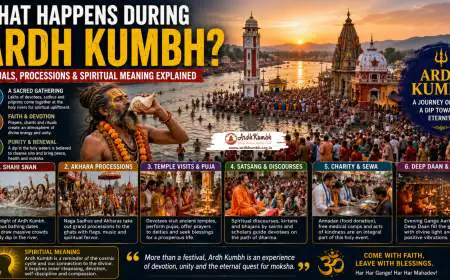
Ardh Kumbh is often described as a form of sacred discipline because the pilgrimage can involve more than attending a religious gathering. Traditionally, pilgrims may follow structured practices involving sacred bathing, prayer, fasting, self-restraint, meditation, cleanliness, and participation in religious observances. These practices emphasize discipline of daily habits, physical conduct, and spiritual attention. 🕉️
The idea of sacred discipline at Ardh Kumbh is therefore connected with the pilgrim’s commitment to simplicity, devotion, restraint, and respectful participation. Different individuals and religious traditions may observe different practices, so there is no single discipline followed by every pilgrim. For many participants, the experience provides an opportunity to temporarily simplify daily life, focus on spiritual practices, respect sacred spaces, and participate mindfully in Kumbh Mela traditions. Understanding this perspective helps explain why Ardh Kumbh is viewed not only as a pilgrimage gathering but also as a period of personal and spiritual discipline.
The Roots of Tapasya: Discipline as Heat
In Sanatan Dharma, the word Tapasya (austerity) literally means "to generate heat." The rishis of old sat in the forest, enduring heat and cold, hunger and thirst, to generate a spiritual heat that burned away their impurities. The Ardh Kumbh is a collective Tapasya. The cold of the Ganga water in January (8°C–12°C) is the heat. The exhaustion of the long walk is the fuel. The frustration of the queue is the fire.
You are not just enduring these hardships; you are choosing them. That choice is the essence of sacred discipline. It separates the pilgrim from the tourist. The tourist complains about the cold; the pilgrim offers it as a prayer. The tourist looks for a shortcut; the pilgrim accepts the queue as a meditation. The Kumbh transforms passive suffering into active sacrifice. That is why it is called sacred. It is not a vacation. It is work—the hardest, most rewarding work of the soul.
Trending Guides Now

Is Ardh Kumbh a Once-in-a-Lifetime Experience?
Read Guide →
Can Ardh Kumbh Be Understood Without Scriptures?
Read Guide →
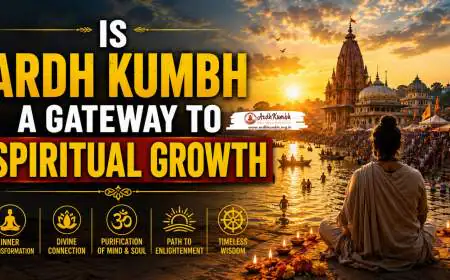
Is Ardh Kumbh a Gateway to Spiritual Life? Or Just a Dip in Cold Water?
Read Guide →
Can Ardh Kumbh Reshape Daily Living
Read Guide →
Ardh Kumbh 2027 Dates (Official) - Haridwar Snan Schedule
Read Guide →
Dharamshala Stay During Ardh Kumbh: Free & Budget Guide
Read Guide →
Official Progress Report of Haridwar Ardh Kumbh 2027 Infrastructure Projects
Read Guide →
Is October a Good Time to Visit Haridwar Before Ardh Kumbh 2027?
Read Guide →The Science of Self-Control: Why the Kumbh Trains the Brain
Modern psychology confirms what the ancients knew: discipline is a muscle. The more you exercise it, the stronger it gets. The Kumbh is the ultimate gym for self-control. You are tired, but you keep walking. You are hungry, but you wait for the langar. You are angry at the person who pushed you, but you hold your tongue. Every single one of these tiny victories builds willpower.
Psychologists call this "depletion and restoration." The Kumbh depletes your immediate reserves of patience, forcing you to dig deeper. When you succeed, you realize you have a well of inner strength you never knew existed. This is the discipline of the soldier, the athlete, and the saint. The Ardh Kumbh does not require you to be a saint beforehand. It makes you one—step by step, queue by queue, dip by dip. By the time you leave Haridwar, your capacity for grace under pressure has permanently expanded.
The Akharas: Living Monasteries of Discipline
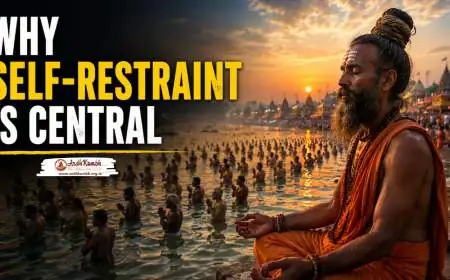
The 13 Akharas of the Kumbh are the special forces of sacred discipline. When you see a Naga Sadhu standing naked in the freezing water without shivering, you are witnessing a person who has spent decades disciplining their body to ignore the signals of pain. They are the proof that discipline works.
The Akharas maintain rigorous daily schedules. Wake up before dawn. Meditate for hours. Eat only what is offered. Sleep on the ground. Remain celibate. This is not about hating the body. It is about mastering it. The Naga Sadhu shows the ordinary pilgrim what is possible. You may never be able to do what he does, but his presence asks a question: "If he can renounce everything, why am I so attached to my comfort?" That question is the seed of discipline. The Akharas do not just perform rituals at the Kumbh. They model a way of life. They are the living textbooks of sacred discipline.
The Hierarchy of the Shahi Snan: Order as Devotion
The Shahi Snan (royal bath) is not a free-for-all. It follows a strict hierarchy that is a discipline in itself. The Sanyasi Akharas (followers of Lord Shiva) bathe first. Then the Bairagi Akharas (followers of Lord Vishnu). Then the Udasin Akharas. Within this, there are further rankings. This is not discrimination. It is order.
For the pilgrim, watching this procession is a lesson in humility. You want to jump in the water now. But you must wait for the sadhus to go first. You must accept that you are not the center of the universe. That waiting—the acceptance of a hierarchy based on sacrifice rather than wealth—is a profound act of discipline. It trains the ego to sit down and be quiet. The Kumbh calls this "maryada" (respect for boundaries). It is the glue that holds the sacred chaos together.
The Discipline of Identity: Who Are You Without Your Labels?
In your daily life, you know who you are. You are a parent, a boss, a teacher, a student. You wear a uniform—a suit, a badge, a uniform. The Kumbh strips these labels away. You are just a body in a crowd. For many, this is terrifying. For the disciplined pilgrim, it is liberating.
The Kumbh practices the discipline of anonymity. You are judged not by your job or your caste, but by how you behave in the queue. Do you share your blanket with a stranger? Do you help an elderly person carry their bag? Without your usual labels, you are forced to re-define yourself by your actions, not your status. This is the discipline of authenticity. It is a practice in remembering that you are a soul having a human experience, not a human trying to have a spiritual experience.
The Physical Discipline: The Body as Temple
You cannot have sacred discipline without the body. The Kumbh is a physical ordeal. The walk from the parking lot to the Har Ki Pauri ghat is roughly 2.5 kilometers, but on crowded days, the detours and waiting can turn that into a 10-kilometer journey. You will carry your own bag. You will stand for hours. You will sleep on a thin mattress.
This is physical discipline. It is the practice of using the body to purify the mind. When your legs ache and you keep walking, you are telling your brain that you are in charge, not your comfort. This is the same principle as fasting or holding a yoga pose. The discomfort is not the enemy; it is the teacher. The Kumbh teaches that your body is a vehicle for the soul, not a master to be obeyed. By mastering the body’s complaints, you master the mind’s whims.
The Emotional Discipline: Not Losing Your Temper
The greatest test of the Kumbh is not the cold water; it is the emotional pressure. Someone will step on your foot. Someone will cut the line. Someone will shout at a volunteer. The crowd is a pressure cooker of anger, fear, and frustration.
To maintain grace in this environment is the highest discipline. It is easy to be a saint in a meditation cave. It is very hard to be a saint when a stranger is pushing you from behind. The Kumbh is a stress test for the nervous system. If you can stand in that line without screaming, you have mastered emotional discipline. You have learned that anger is a choice, and you have chosen peace. That skill—the ability to pause before reacting—will save your relationships, your career, and your health long after the Kumbh is over.
The Discipline of Letting Go of Control
Modern life is obsessed with control. We control our schedules, our diets, our social media feeds. The Kumbh is uncontrollable. You cannot control the weather, the crowd, or the queue. You cannot control if the train is late or if the tent is cold.
The Kumbh practices the discipline of surrender. You accept what comes. You flow with the crowd instead of fighting it. This is not passivity. It is strategic surrender—the recognition that fighting reality is a waste of energy. By letting go of the need to control everything, you free up immense mental energy. You realize that most of your daily stress comes from fighting things you cannot change. The Kumbh is a boot camp for acceptance. It teaches you to say, "It is what it is," and to be okay with that.
The Collective Discipline: Millions Moving as One
How do 17 crore people move in and out of the ghats without total chaos? Collective discipline. Every pilgrim agrees to certain unspoken rules: walk on the left, do not push, keep your voice down, follow the traffic flow. This collective discipline is the true miracle of the Kumbh.
This is sacred discipline at the societal level. It proves that humans are capable of mass cooperation without a police officer standing over every shoulder. When you participate in the Kumbh, you are contributing to this collective good. By holding your temper, you help the person next to you hold theirs. By following the route, you help the millions behind you move faster. The Kumbh is a reminder that discipline is not just about the self. It is about the community. Your small act of self-control creates the space for a billion acts of faith.
The Eternal Student: Why You Keep Coming Back
If the Kumbh were easy, you would only go once. But it is hard. And that is why people return every six or twelve years. The discipline of the Kumbh is never fully mastered. There is always a longer queue. There is always a colder night. There is always a new lesson in humility.
The Ardh Kumbh is called a sacred discipline because it is a practice, not a destination. You do not "finish" the Kumbh. You practice it. You practice patience in the queue. You practice generosity in the langar. You practice presence in the snan. And then you go home and practice some more. The Kumbh is the examination hall; life is the classroom. By calling it a discipline, the tradition reminds us that spirituality is not something you buy or believe. It is something you do. Every. Single. Day.
Frequently Asked Questions