




















































Is Ardh Kumbh a Once-in-a-Lifetime Experience?
Ardh Kumbh happens every six years. For some it is once-in-a-lifetime. For others it is a lifelong tradition. Both are true.

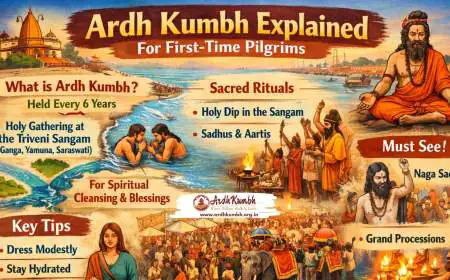
The Calendar - Ardh Kumbh Happens Every Six Years
Ardh Kumbh follows a fixed celestial schedule. The Ardh Kumbh at Haridwar occurs when Jupiter enters Aquarius and the Sun enters Aries. The Ardh Kumbh at Prayagraj occurs when Jupiter enters Aries and the Sun enters Capricorn. The calculation is astronomical, not arbitrary. The result is a six-year cycle between Ardh Kumbhs.
This means a pilgrim can attend Ardh Kumbh multiple times. A person who starts attending at age 30 can attend again at 36, 42, 48, 54, 60, 66, and 72. That is eight Ardh Kumbhs in one lifetime. This is not speculation. This is mathematics.
Historical records show that many sadhus and elderly pilgrims attend every Kumbh. They are not "once-in-a-lifetime" visitors. They are regulars. They have their favorite camps, their preferred ghats, their network of fellow pilgrims. For them, Ardh Kumbh is a recurring appointment with the sacred.
The Purna Kumbh and Maha Kumbh - Larger Cycles
Ardh Kumbh is not the only Kumbh. The Purna Kumbh happens every 12 years. The Maha Kumbh happens every 144 years (after 12 Purna Kumbhs). The Maha Kumbh in Prayagraj (2013, 2057) is the largest and most auspicious. Most pilgrims will see only one Maha Kumbh in their lifetime, if any.
Trending Guides Now

Why Ardh Kumbh Feels Like a Spiritual Reset
Read Guide →
Is Ardh Kumbh a Gateway to Spiritual Life? Or Just a Dip in Cold Water?
Read Guide →
Can Ardh Kumbh Be Understood Without Scriptures?
Read Guide →
Is Ardh Kumbh a Test of Discipline?
Read Guide →
Best Routes to Reach Haridwar for Ardh Kumbh Mela
Read Guide →
Ardh Kumbh 2027 Dates (Official) - Haridwar Snan Schedule
Read Guide →
How Kumbh Keeps India’s Civilizational Memory Alive
Read Guide →
February Weather Reality at Ardh Kumbh
Read Guide →So a pilgrim can choose. They can attend Ardh Kumbh every six years. They can wait for Purna Kumbh every 12 years. They can aim for Maha Kumbh once in their life. Many Hindus do all three.
The phrase "once-in-a-lifetime" applies more accurately to Maha Kumbh than to Ardh Kumbh. Maha Kumbh occurs once every 144 years. No person attends two Maha Kumbhs. But Ardh Kumbh occurs six times in a typical lifespan.
Why Pilgrims Return - The Pull of Repeated Attendance
Pilgrims return to Ardh Kumbh for multiple documented reasons.
Tradition. Families have attended Kumbh for generations. A grandfather brought his son. The son brings his son. The pattern continues. Kumbh becomes family ritual, not once-in-a-lifetime event.
Spiritual renewal. Pilgrims report that the dip in the Ganga at Kumbh provides spiritual cleansing. They want that cleansing again. They return every six years to renew their spiritual energy.
Community. Pilgrims have friends and fellow devotees they see only at Kumbh. The gathering is a reunion. They come to meet, share, and worship together.
Habit. Elderly pilgrims have attended so many Kumbhs that not attending feels wrong. Kumbh is part of their calendar. They plan their years around the six-year cycle.
Increased spiritual merit. Hindu tradition teaches that attending Kumbh generates spiritual merit (punya). More attendance means more merit. This is a stated belief, not speculation.
These reasons are observable. Ask any repeat pilgrim why they return. They will give you one of these answers.
Why It Is Once-in-a-Lifetime for Others
For many pilgrims, Ardh Kumbh is truly a once-in-a-lifetime experience. The reasons are practical, not spiritual.
Distance. A pilgrim from Tamil Nadu or Assam may travel thousands of kilometers to attend Kumbh at Haridwar or Prayagraj. The journey is expensive. The time away from work is costly. They may not be able to afford the trip again.
Age and health. Elderly pilgrims attend Kumbh when they are still mobile. A 75-year-old may attend one Ardh Kumbh. By the next Kumbh at age 81, they may be too frail to travel. For them, that one Kumbh was once-in-a-lifetime.
Financial constraints. Kumbh is free to enter, but travel, food, and accommodation cost money. A poor family may save for years to attend one Kumbh. They cannot afford to do this every six years. Their one Kumbh is their only Kumbh.
Foreign tourists. A tourist from Germany, Japan, or Brazil may attend Ardh Kumbh as part of a larger India trip. They are unlikely to schedule another India trip specifically for Kumbh six years later. For them, Kumbh is a one-time bucket list item.
Death. Some pilgrims attend Kumbh and die before the next one. This is not speculation. Kumbh medical records show that elderly pilgrims sometimes pass away during or shortly after the Mela. Their single Kumbh was their only Kumbh.
For these reasons, Ardh Kumbh is accurately described as once-in-a-lifetime for a significant portion of pilgrims. The phrase is not false. It just does not apply to everyone.
What the Scriptures Say - No Limit on Attendance
Hindu scriptures do not limit Kumbh attendance. The Puranas describe the spiritual benefits of bathing at the Sangam during Kumbh. They do not say "only once." They do not say "once in a lifetime." They describe the benefits without frequency limits.
This means a pilgrim can attend Kumbh as many times as they wish. No religious authority will tell them they have attended "too many" Kumbhs. No guru will say "you already got your blessing, do not come again."
The only limits are practical - money, health, distance, time. The tradition itself imposes no once-in-a-lifetime restriction.
The Experience Itself - Why One Visit Can Feel Like Enough
Even though pilgrims can attend Ardh Kumbh multiple times, one visit can feel complete. The experience is intense. The crowds, the waiting, the cold water, the noise, the physical exhaustion - these are not small things. A pilgrim may attend one Kumbh, feel they have done it, and never feel the need to return.
Observations from pilgrims support this. Some say "I am glad I went. I do not need to go again." They are not wrong. They are not less devout. They got what they came for. The dip worked. The blessings were received. Another dip would not add anything.
Kumbh is not a competition. There is no score for most visits. One dip in the Ganga during Ardh Kumbh is considered highly meritorious in Hindu tradition. Multiple dips are also meritorious but not required.
So Ardh Kumbh can be once-in-a-lifetime for a pilgrim who chooses not to return. That choice is valid. The tradition does not demand repetition.
The Generational View - One Lifetime, Many Kumbhs
From the perspective of a family lineage, Kumbh is not once-in-a-lifetime. It is once-in-a-generation. A grandfather attends Kumbh at 70. His grandson attends at 10 (accompanied by parents). The grandfather dies before the next Kumbh. The grandson grows up and brings his own son at age 30.
The family has attended Kumbh multiple times across generations. No single individual attended more than a few Kumbhs. But the tradition continues. The family's relationship with Kumbh is lifelong for the lineage, even if each member attends only once or twice.
This is the traditional model for many Hindu families. Kumbh is not a bucket list item. It is a family inheritance. Parents bring children. Children grow up and bring their children. The Kumbh continues. The individuals change.
What Makes Ardh Kumbh Unique Regardless of Frequency
Whether a person attends Ardh Kumbh once or twelve times, the experience is unique in several ways.
Scale. No other gathering on earth brings together 50 million people for a single purpose. Not Hajj (2.5 million). Not the Olympics (tens of thousands). Not political rallies (hundreds of thousands). Kumbh is in a category of its own.
Duration. Ardh Kumbh lasts 45 days . Pilgrims can stay for weeks. This is not a one-day festival. It is a prolonged immersion in pilgrimage life.
Diversity. Kumbh brings sadhus from every akhara, devotees from every state, and tourists from every continent. No other event gathers such diversity of Hindu traditions.
Spiritual intensity. The atmosphere at Kumbh is observably different from daily life. The chanting, the rituals, the blessings, the shared purpose - these create an intensity that pilgrims report as unique.
These features do not change with frequency. The first Kumbh and the fifth Kumbh both have massive crowds, cold water, and spiritual intensity. The experience is repeatable but never ordinary.
The Verdict - It Depends on the Pilgrim
So is Ardh Kumbh truly a once-in-a-lifetime experience? The answer depends on the pilgrim.
For a poor villager who saves for a decade to afford the trip, yes. For a foreign tourist who flies across the world once, yes. For an elderly pilgrim who attends at 75 and passes away before the next Kumbh, yes.
For a sadhu who attends every Kumbh as part of his spiritual discipline, no. For a local resident of Haridwar or Prayagraj who walks to the ghats every Kumbh, no. For a devout householder who plans his calendar around the six-year cycle, no.
The phrase "once-in-a-lifetime" is marketing language. It is not religious doctrine. Ardh Kumbh happens every six years. A pilgrim can attend zero, one, or many. All are valid. The tradition does not prescribe a frequency.
What matters is not how many times a pilgrim attends. What matters is the experience itself. The cold water. The queue. The blessing. The memory. One Kumbh can change a person's life. Twelve Kumbhs can deepen that change. Both are true. Both are valid. Ardh Kumbh is what each pilgrim makes of it.
Frequently Asked Questions