



































Is Ardh Kumbh Truly a Collective Spiritual Practice?
Is Ardh Kumbh truly a collective spiritual practice or just a crowd? A heartfelt exploration of shared faith, group energy, and the power of millions praying together.
Is Ardh Kumbh Truly a Collective Spiritual Practice?
Let me ask you a question that might make you uncomfortable. When you pray, do you pray alone? When you meditate, do you sit in a quiet room by yourself? When you practice your spiritual discipline, do you keep it private, hidden, between you and your chosen God? There is nothing wrong with that. In fact, most of us are taught that spirituality is a personal journey. "Find your own path." "Look within." "God is in your heart." All of that is true. But here is the other truth that we have forgotten. Humans are social animals. We are not meant to do everything alone. We eat together. We celebrate together. We grieve together. So why would we pray alone? The Ardh Kumbh Mela is the answer to that question. It is the loudest, messiest, most beautiful argument for collective spiritual practice that exists on this planet. It says: come alone, but pray together. Bring your individual pain, but dip it in the collective faith of millions. Seek your personal liberation, but find it in a crowd. And somehow, impossibly, it works. Let me show you how.
The Energy of a Million Mantras
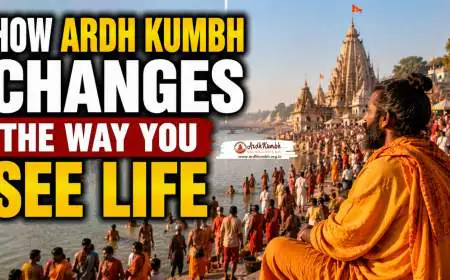
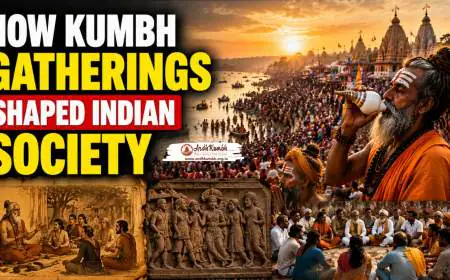
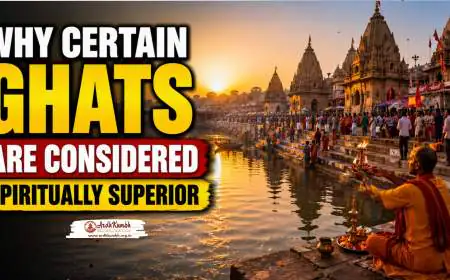
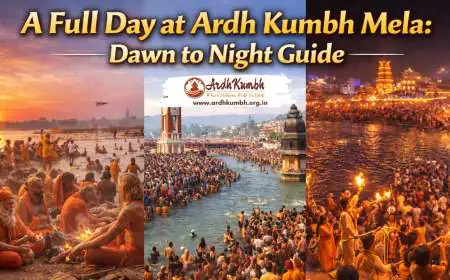
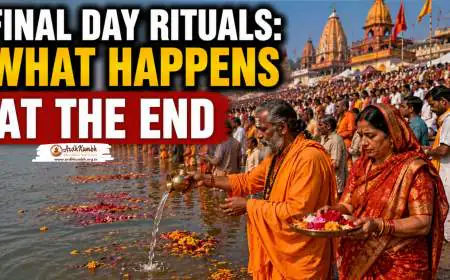
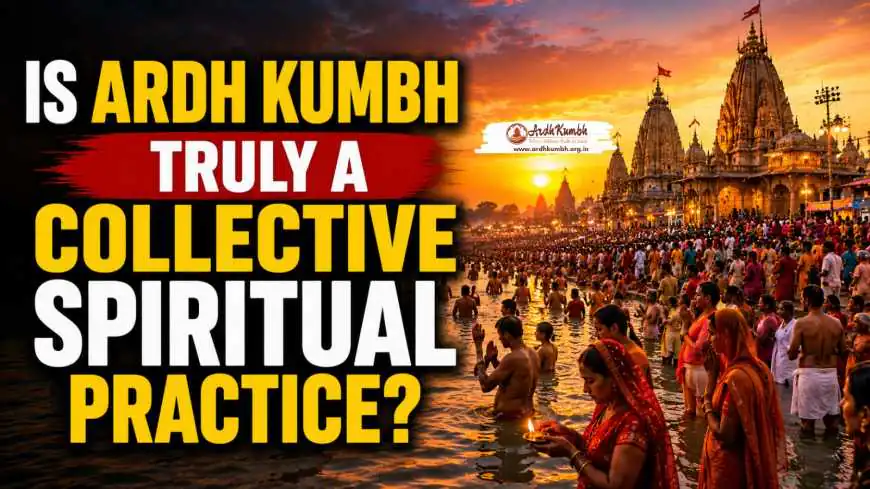
Sound is not just sound. It is vibration. It is energy. When one person chants a mantra in a room, the walls absorb that vibration. When a thousand people chant the same mantra in a temple, you can feel the floor trembling. Now imagine the banks of the Ganges at Har Ki Pauri during the evening aarti. Tens of thousands of people are not just chanting. They are breathing together. They are clapping together. They are swaying together. The sound of "Har Har Gange" does not just travel through the air. It travels through your chest. It vibrates in your bones. It synchronizes your heartbeat with the heartbeat of the person next to you. This is not poetry. This is physiology. Scientists have studied collective chanting and found that it can synchronize brain waves, reduce stress hormones, and create a feeling of oneness that is measurable . The Kumbh takes this to an extreme. When you are standing in a sea of humanity, all chanting the same words, all facing the same river, your individual identity softens. You are no longer "Ramesh from Delhi" or "Priya from Mumbai." You are a voice in a million-voiced prayer. That is collective spiritual practice at its most primal. And it is real.
The Dip That Only Works Because Everyone Else Is Dipping
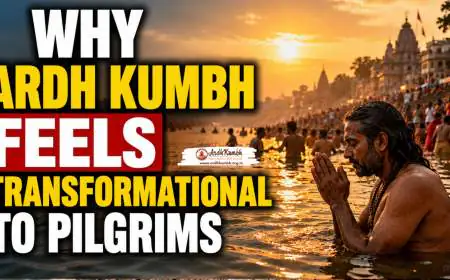
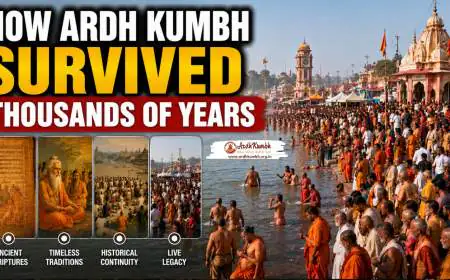
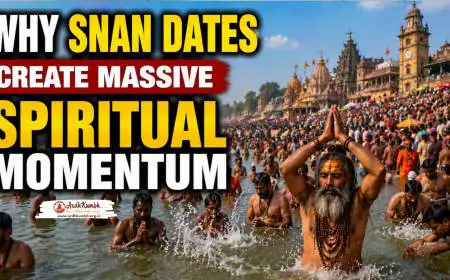
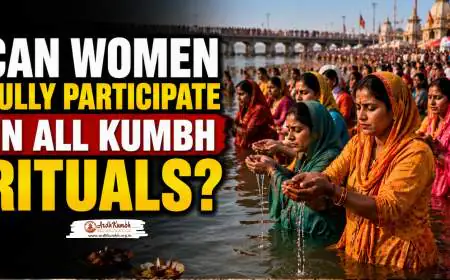
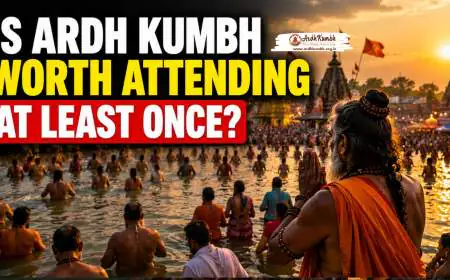
Here is a strange truth about the Shahi Snan. The holy dip itself is an individual act. You walk into the water alone. You duck your head alone. You say your prayer alone. But the power of that dip comes from the fact that millions of others are doing the exact same thing at the exact same time. Think about it. If you woke up tomorrow and went to a completely empty Ganges and took a dip, would it feel the same? No. Of course not. The sacredness of the Kumbh dip is not in the water. The water is the same water that flows every other day. The sacredness is in the collective intention. It is in the knowledge that right now, at this moment, crores of people are asking the river for forgiveness. Right now, crores of people are making the same vow to be better. Right now, crores of people are letting go of their past. Your small prayer joins their massive prayer. And together, that prayer becomes unstoppable. That is collective spiritual practice. You are not just dipping for yourself. You are dipping as part of a human wave of faith that has been crashing on the shores of the Ganges for thousands of years.
The Bhandara – Where Service Becomes Collective
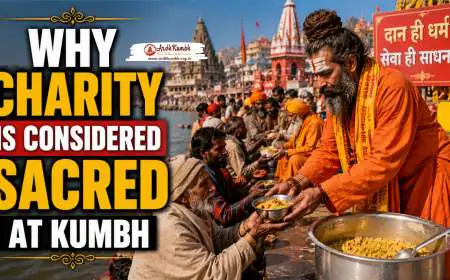
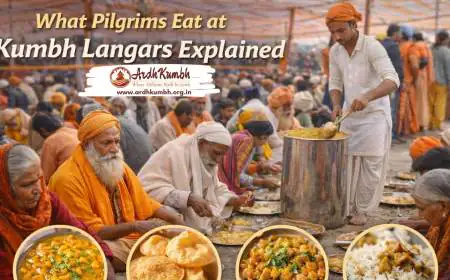
Let me take you to the Bhandaras (community kitchens). Watch closely. You will see a businessman serving rice to a beggar. You will see a teenage girl washing plates next to a grandmother. You will see a doctor chopping vegetables beside a daily wage laborer. No one is being paid. No one is getting credit. No one is posting on Instagram (well, some are, but ignore them). This is collective spiritual practice in action. Seva (selfless service) is usually a personal discipline. You decide to serve. You serve. You feel good. But at the Kumbh, Seva becomes collective. You are not just serving. You are serving with thousands of others. You are part of a river of giving that never stops. And that changes the experience. When you see the person next to you working just as hard as you, with no expectation of reward, something in your ego cracks. You stop thinking "I am so generous" and start thinking "we are serving." That shift from "I" to "we" is the heart of collective spiritual practice. The Bhandaras teach it better than any sermon.
Trending Guides Now

What Is Ardh Kumbh Mela? Meaning, History & Significance
Read Guide →
Who Decides Ardh Kumbh Dates and Why They Never Change
Read Guide →
Why It’s Called Ardh Kumbh: The Real Meaning
Read Guide →
Is Ardh Kumbh a Form of Tapasya?
Read Guide →
Best Routes to Reach Haridwar for Ardh Kumbh Mela
Read Guide →
Ardh Kumbh 2027 Dates (Official) - Haridwar Snan Schedule
Read Guide →
How Kumbh Keeps India’s Civilizational Memory Alive
Read Guide →
February Weather Reality at Ardh Kumbh
Read Guide →The Shared Suffering That Becomes Shared Strength
I am not going to lie to you. The Kumbh is hard. The cold is hard. The walking is hard. The crowds are hard. The lack of sleep is hard. But here is the miracle. When you are suffering alone, it is just suffering. When you are suffering together, it becomes tapasya (austerity). It becomes sacred. Watch the faces of the pilgrims as they stand in the freezing water. They are not smiling because it is comfortable. They are smiling because they know that everyone else is also cold. Everyone else also walked ten kilometers. Everyone else also has blisters. That shared suffering creates a bond. It creates empathy. You look at the old woman shivering next to you, and you do not feel sorry for her. You feel connected to her. You think: "She is doing this for her family. I am doing this for mine. We are the same." That realization — that your pain is not special, that your struggle is not unique — is a profound spiritual breakthrough. And it only happens in a collective setting. The Kumbh forces you to see that you are not an island. You are part of a continent of struggling, hoping, praying humans. And that is strangely comforting.
The Akharas – When Monks Pray as an Army
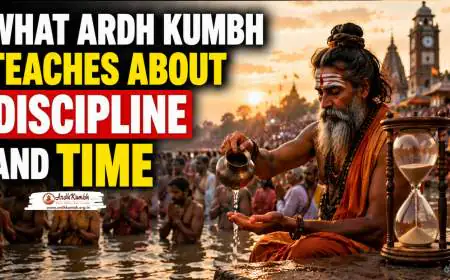
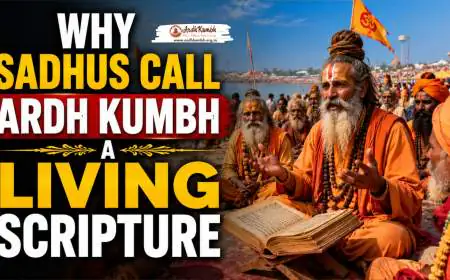
If you want to see collective spiritual practice at its most organized, watch the akharas (sects of sadhus) during the Shahi Snan. These are not just groups of monks meditating in silence. These are armies of renunciates moving together, chanting together, dipping together. They have commanders (mahants). They have discipline. They have rules. When a Naga Sadhu walks to the river, he is not walking alone. He is walking as a representative of his akhara. His dip is not just for his liberation. It is for the blessing of his entire lineage. This is collective spiritual practice taken to the level of a military operation. And it is ancient. Some akharas are over a thousand years old. They have been doing this collective dip for centuries, passing down the tradition from guru to disciple. When you witness an akhara procession, you are watching collective faith that has survived empires, invasions, famines, and pandemics. It is humbling. It is terrifying. It is beautiful. And it is the purest example of why the Kumbh is not just a bunch of individuals who happen to be in the same place.
The Silence of a Million People
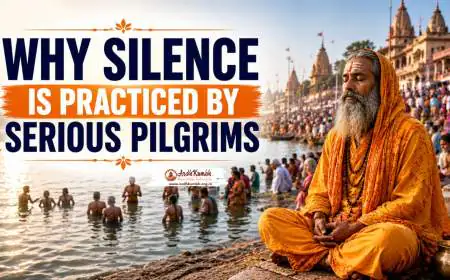
Now let me describe something that will surprise you. For all the noise of the Kumbh, there are moments of collective silence that will break your heart. The moment before the aarti begins, when the priests raise their lamps and the crowd holds its breath. The moment after the Shahi Snan, when the last Naga Sadhu has left the water and the river is still. The moment at dawn, when the first ray of sun hits the Himalayan peaks and for five seconds, no one speaks. These silences are not empty. They are full. They are pregnant with the prayers of millions. They are collective spiritual practice in its most refined form — not chanting, not moving, not serving, but simply being. Together. In silence. If you have ever sat in a group meditation, you know that the silence feels different when others are sharing it with you. It feels thicker. It feels alive. The Kumbh offers that on a scale that is almost impossible to comprehend. Fifty million people, silent together, for a few sacred seconds. That is not a crowd. That is a single soul breathing through fifty million lungs.
Why Your Individual Practice Needs the Collective
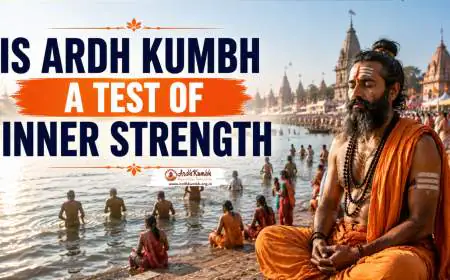
Let me say something that might offend some people. Your individual spiritual practice — your daily meditation, your weekly temple visit, your monthly fast — is wonderful. It is necessary. It is the foundation. But it is not enough. Because your individual practice happens in a bubble. You control the environment. You choose the time. You are not tested by a stranger pushing you or a child crying or a sudden rainstorm. Your individual practice is safe. The Kumbh is not safe. The collective practice of the Kumbh throws you into the real world — messy, unpredictable, uncomfortable, loud. And in that mess, your real spiritual maturity is tested. Can you keep your peace when a thousand people are screaming? Can you keep your compassion when someone steps on your foot? Can you keep your focus when your body is freezing and your stomach is empty? The Kumbh is the exam after years of individual practice. It is where your theory meets reality. And you cannot pass that exam alone. You need the collective to push you, to challenge you, to hold you accountable. That is why the Ardh Kumbh is not just a nice addition to your spiritual life. It is essential.
The Forgotten Power of Sankirtan – Group Chanting
Let me talk about Sankirtan — the practice of group chanting of holy names. In many Hindu traditions, Sankirtan is considered more powerful than individual japa (chanting on beads). Why? Because when voices merge, the divine is attracted to the collective devotion. At the Kumbh, Sankirtan happens everywhere — at the ghats, in the tents, on the roads, even on the trains coming to Haridwar. Groups of pilgrims sit in circles and chant for hours. The harmonium plays. The dholak beats. The voices rise and fall together. And if you close your eyes, you cannot tell where your voice ends and the next person's begins. That merging is the goal. That is collective spiritual practice at its most joyful. It is not serious or somber. It is celebratory. It is loud. It is dance. And it teaches you that God is not a distant judge to be approached with fear. God is a friend to be celebrated with a party. The Kumbh is that party. And everyone is invited.
What the River Holds – Collective Memory
The Ganges has witnessed a billion prayers. Think about that for a moment. Every mantra ever chanted on her banks, every tear ever shed in her water, every ash ever scattered in her flow — the river remembers. Not in a human way, but in an energetic way. The Ganges is a repository of collective spiritual practice stretching back thousands of years. When you dip in that water, you are not just connecting with the people around you. You are connecting with every pilgrim who has ever stood there. Your grandmother's grandmother. The sadhus of a thousand years ago. The kings and beggars and saints and sinners of every era. That is collective spiritual practice across time, not just across space. The Kumbh is a portal to that collective memory. And the only way to access it is to join the collective — to add your prayer to the river's memory so that a pilgrim a hundred years from now can feel your presence in the water. You are not just practicing collective spirituality for yourself. You are practicing it for the future. For the ancestors you never met and the descendants you will never know. That is the deepest meaning of the Kumbh.
When One Person's Faith Lifts a Million Others
Let me end this section with a story. I watched an old man at the last Ardh Kumbh. He was maybe eighty years old. Crippled. He crawled to the river on his knees because his legs would not work. It took him forty-five minutes to crawl from the road to the water. And as he crawled, something strange happened. The crowd parted for him. People stopped their own rushing and stared. Some cried. Some folded their hands. Some helped him, carrying him the last few meters. By the time he reached the water, the entire section of the ghat was silent. And when he finally dipped his head, a thousand people — strangers — let out a collective sigh of relief. That old man's individual faith had become collective inspiration. He was not just dipping for himself. He was dipping for everyone watching. He was reminding them why they had come. That is the power of collective spiritual practice. It does not require everyone to be equally strong. It requires everyone to show up. The strong carry the weak. The weak inspire the strong. And together, everyone reaches the river. That is the Ardh Kumbh. That is the collective. That is the practice.
The Question That Remains – Is It Truly Collective?
So, after all these words, let me answer the title question directly. Is the Ardh Kumbh truly a collective spiritual practice? Yes. But with one important qualification. It can be a collective spiritual practice if you choose to make it one. You can attend the Kumbh and remain completely isolated. You can wear headphones. You can avoid eye contact. You can treat the crowd as an obstacle. You can take your dip and leave. That is possible. But that is also a waste. The Kumbh offers you collective energy for free. It is the only place on Earth where fifty million people are all pointing in the same direction, all asking for the same thing — peace, forgiveness, liberation. All you have to do is join them. Put down your phone. Open your ears. Look at the faces around you. Chant with the crowd. Serve at the Bhandara. Crawl with the old man if you have to. The collective is waiting for you. It has been waiting for thousands of years. Do not stand outside the circle. Step into it. And feel what happens when fifty million hearts beat as one.
Frequently Asked Questions