














































What Makes Ardh Kumbh Spiritually Intense
Discover what makes Ardh Kumbh Mela spiritually intense — the astrological alignment, raw faith, collective energy, and sacred geography of Haridwar.
What Makes Ardh Kumbh Spiritually Intense
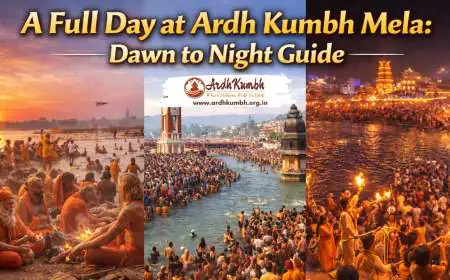
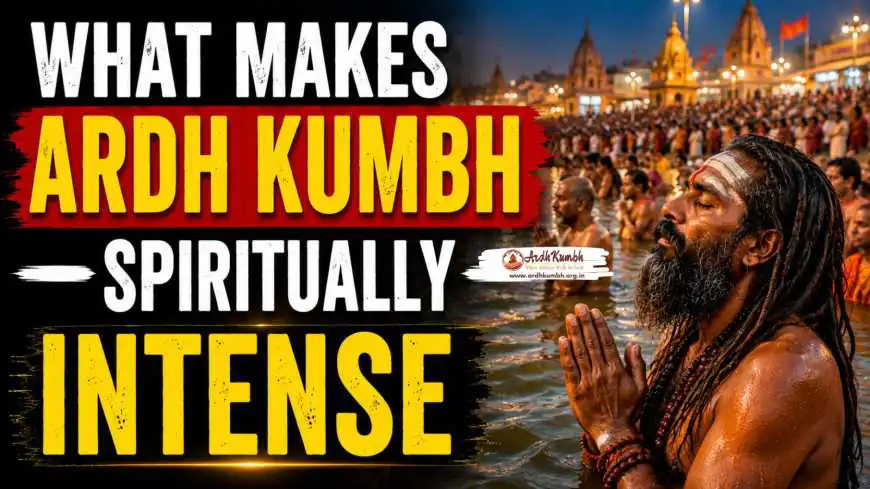
Let me start with a story that still gives me chills. I was standing at Har Ki Pauri during the evening aarti. The priest raised the lamp. The crowd raised their hands. The chant of "Har Har Gange" started as a whisper and grew into a roar. And then, for about ten seconds, I forgot where I was. I forgot my name. I forgot my worries. I was just a voice in a million-voiced prayer, floating toward the stars. When the aarti ended, the person next to me — a complete stranger — turned and hugged me. Not awkwardly. Not briefly. A real hug. Like I was her son returning from war. She was crying. I was crying. Neither of us knew why. That is spiritual intensity. You cannot manufacture it. You cannot buy it. You cannot fake it. It either happens or it does not. And at the Ardh Kumbh, it happens constantly. To the elderly. To the young. To the rich. To the poor. To the devout and to the doubtful. So what is the secret? Let me break down the ingredients that make this specific Mela so spiritually intense.
The Astrological Alignment – The Sky Participates
You cannot understand the spiritual intensity of the Ardh Kumbh without understanding the sky. The Kumbh is not a random date picked by a tourism board. It is timed to a specific celestial alignment that happens once every six years. During the Ardh Kumbh, Jupiter (Brihaspati) moves into Aquarius (Kumbh Rashi) , while the Sun moves into Aries (Mesh Rashi) . This alignment is believed to open a spiritual gateway in the Ganges . The water is said to transform into 'Amrit' — the nectar of immortality — for the duration of the alignment .
Now, you can believe this literally or metaphorically. Either way, the effect is the same. Crores of people believe that the stars themselves are blessing the river. That belief creates an intensity that is impossible to ignore. When you stand in that water, knowing that the same alignment that the ancient rishis described is happening above your head right now, you feel connected to something vast — not just the crowd, but the cosmos itself. That is not psychology. That is astrology lived as spirituality. And it is intense.
The Ganges at Haridwar – A Different Kind of Holy
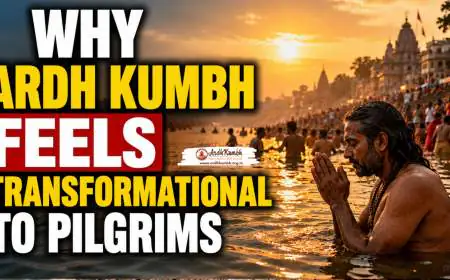
Let me talk about the river itself. The Ganges at Haridwar is different from the Ganges at Prayagraj or Varanasi. Here, the river emerges from the mountains. It is still wild, still cold, still fresh from the Himalayan glaciers. You can feel the difference. The water bites harder. The current pulls stronger. The sound of the river is louder — more like a roar than a flow. This is the Ganges in her youthful form. Not yet tired by the plains. Not yet polluted by the cities. Pure, cold, and alive. Pilgrims believe that bathing at Har Ki Pauri — the specific spot where the Ganges leaves the mountains — is particularly meritorious . There is a legend that Lord Shiva stood here, and the river touched his hair for the first time . Whether you believe the legend or not, the geography is real. The water is colder. The current is stronger. The mountains are visible in the distance. All of that adds to the spiritual intensity. Your body knows it is somewhere special. Your body does not care about legends. Your body feels the cold and the roar and the height, and it responds with awe.
Trending Guides Now

What Makes Ardh Kumbh Spiritually So Powerful?
Read Guide →
Can Ardh Kumbh Shape Your Daily Discipline? A Journey That Lasts Longer Than the Dip
Read Guide →
What Ardh Kumbh Symbolizes in Sanatan Dharma
Read Guide →
Why Ardh Kumbh Becomes a Turning Point in Life
Read Guide →
Best Routes to Reach Haridwar for Ardh Kumbh Mela
Read Guide →
Ardh Kumbh 2027 Dates (Official) - Haridwar Snan Schedule
Read Guide →
How Kumbh Keeps India’s Civilizational Memory Alive
Read Guide →
February Weather Reality at Ardh Kumbh
Read Guide →The Naga Sadhus – Walking Intensity
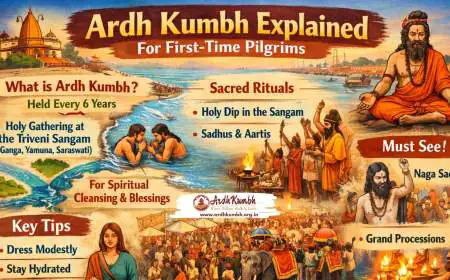
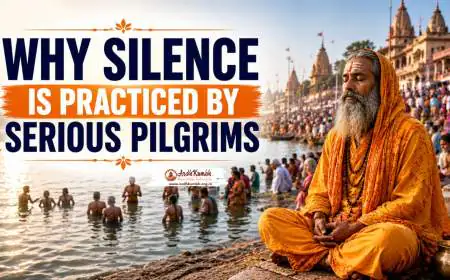
Let me talk about the Naga Sadhus. These are not your average monks. They are intensity made flesh. They live in Himalayan caves for years. They meditate naked in the snow. They cover their bodies with ash from cremation grounds. They let their dreadlocks grow to the ground. And then, once every six years, they descend to the Kumbh like an avalanche. Watching them run toward the river during the Shahi Snan is terrifying and beautiful at the same time. They do not walk. They charge. They shout "Jai Ganga Maiyya" with a ferocity that vibrates in your chest. They are not performing. They are not showing off. They are releasing six years of tapasya (austerity) into the river. And you, standing twenty feet away, are caught in the shockwave of that release. That is spiritual intensity transmitted from one human to another without a single word. You do not need to become a Naga Sadhu to feel it. You just need to stand close enough.
The Cold – Your Body's Spiritual Alarm
Here is something that most spiritual books will not tell you. Discomfort creates intensity. When your body is pushed to its edge — when you are cold, tired, hungry, and surrounded — your normal mental chatter stops. You stop worrying about your job. You stop replaying that argument from three years ago. Your brain goes into survival mode. And in that mode, you become hyper-aware. You notice the color of the sky. You notice the sound of the water. You notice the face of the person next to you. That hyper-awareness is the doorway to spiritual experience. The Ardh Kumbh happens in January and February. The temperature in Haridwar drops to 2 to 4 degrees Celsius at night . The water is near freezing. Your body will scream. And that scream is exactly what you need to wake up from the coma of ordinary life. The cold is not an obstacle to spirituality. The cold is the spirituality. It strips away your comfort. And without comfort, you have nowhere to hide from yourself.
The Crowd – Mirror of the Divine
Most people think the crowd at the Kumbh is a problem to be solved. Get in, get your dip, get out. Avoid the masses. But that is the wrong approach. The crowd is not an obstacle. The crowd is the mirror. Because here is the truth. If you cannot find God in the crowd, you will not find God in the cave. The crowd challenges your patience. It challenges your judgment. It challenges your fear of others. And every time you choose kindness over irritation, you take a step closer to the divine. The spiritual intensity of the Kumbh comes from being forced to see yourself reflected in millions of faces. That woman pushing past you? That is you, in a different body, equally desperate to reach the water. That crying child? That is your inner child, equally lost and scared. That exhausted old man? That is your future self, equally determined not to give up. When you see yourself in everyone, something shifts. The boundaries soften. The ego shrinks. And what remains is intensity — raw, unfiltered, terrifying, beautiful.
The Sound – Mantras in the Air
Let me talk about sound. The Kumbh is never silent. There is always chanting. Always bells. Always drums. Always the aarti from some distant ghat. But here is the strange thing. After a few days, you stop hearing the noise as noise. It becomes a frequency. A hum that underlies everything. Scientists have studied group chanting and found that it can synchronize brain waves across a crowd . At the Kumbh, with millions chanting the same mantras, the effect is magnified beyond measurement. Your brain literally tunes to the frequency of the crowd. That is not mysticism. That is neurophysiology. And that tuning — that synchronization — produces feelings of oneness, bliss, and transcendence. It is the same mechanism that makes a concert feel euphoric, but multiplied by a factor of a million. The sound of the Kumbh is not background noise. It is a technology of spiritual intensity.
The Rituals – Ancient, Unbroken, Alive
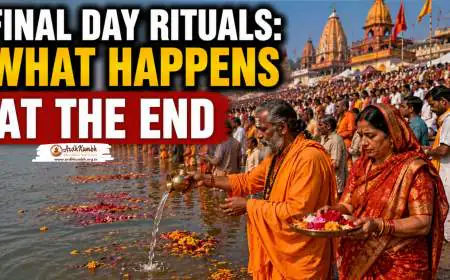
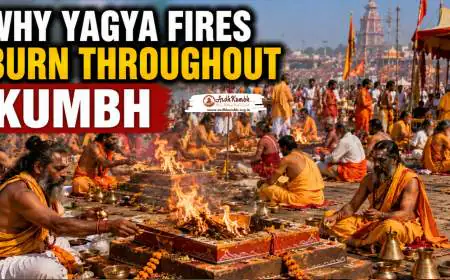
Here is something that makes the Ardh Kumbh different from a modern music festival or a political rally. The rituals are ancient. The Shahi Snan procession has been happening in roughly the same way for over a thousand years. The akharas have maintained their lineages for centuries. The mantras chanted today are the same mantras chanted by your ancestors. That unbroken chain of practice creates a thickness in the air. You are not just a person in a crowd. You are a link in a chain that stretches back to the Vedic age. And that chain extends forward to your grandchildren's grandchildren. When you participate in an ancient ritual, you are not alone. You are joined by every person who has ever performed that ritual. That is spiritual intensity across time, not just across space. And it is palpable. You can feel the weight of history pressing on your shoulders. Not as a burden. As a blessing.
The Surrender – When Control Becomes the Enemy
Let me be honest with you. The Ardh Kumbh is not for control freaks. If you need to know where you will sleep tonight, do not go. If you need hot water and a clean toilet, do not go. If you cannot handle uncertainty, do not go. The Kumbh will break you. But here is the paradox. That breaking is the intensity. Because when you finally stop trying to control everything — when you accept that you will be cold, that you will be tired, that you will be lost — something amazing happens. You surrender. And surrender is the highest form of spiritual practice. It is the admission that you are not in charge. That the universe is bigger than you. That the Ganges will take care of you. That God (however you define that word) has a plan. That surrender is terrifying. It is also incredibly intense. It is the feeling of falling backward and trusting that something will catch you. The Kumbh forces you to surrender. And in that forced surrender, you find a freedom you did not know existed.
The Shared Vulnerability – No One Is Strong Here
Finally, let me talk about shared vulnerability. At the Kumbh, everyone is vulnerable. The CEO and the beggar both have cold feet. The celebrity and the farmer both have tired backs. The politician and the saint both need to find a toilet. That shared vulnerability breaks down the walls that normally separate us. When you see that everyone is struggling, you stop pretending that you are not. And when you stop pretending, you become authentic. Authenticity is intense. It is the opposite of the fake smiles and polite lies of daily life. At the Kumbh, you are too cold and too tired to be fake. You are just... you. Raw. Unfiltered. Needy. Grateful. And that rawness is what allows spiritual intensity to enter. Because spirituality is not about being perfect. It is about being real. The Kumbh makes you real. Whether you like it or not.
The Question You Must Ask Yourself
So after all these words, let me leave you with this. The Ardh Kumbh is spiritually intense because of the stars, the river, the sadhus, the cold, the crowd, the sound, the rituals, the surrender, and the vulnerability. But all of these are just triggers. The real source of intensity is you. You bring your pain. You bring your longing. You bring your hope. The Kumbh simply provides the mirror, the fire, and the permission to feel it all. If you go with a closed heart, the Kumbh will feel like a crowded, dirty, overrated festival. If you go with an open heart, the Kumbh will feel like standing at the edge of the universe. The choice is yours. The intensity is waiting. But it will not chase you. You have to walk into it. Into the cold. Into the crowd. Into the river. Into yourself. That is the spiritual intensity of the Ardh Kumbh. And that is why millions return, every six years, to freeze and cry and pray and hug strangers. They are not looking for comfort. They are looking for truth. And the Ganges does not give comfort. The Ganges gives truth. Cold, loud, crowded, beautiful truth.
Frequently Asked Questions