


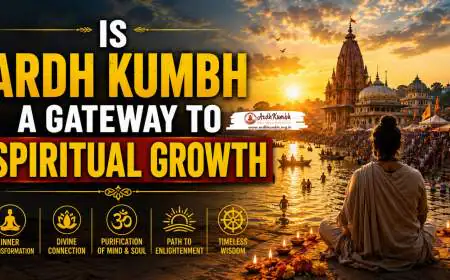







































































Is Ardh Kumbh Truly a Spiritual Reset?
Can the Kumbh Mela really reset your soul? Explore the evidence, experiences, and ancient wisdom behind the world's largest spiritual reboot.

The Mythological Reset: Amrit and Immortality
The story of the Kumbh is the story of a reset. According to the Puranas, the devas and asuras churned the cosmic ocean for amrit — the nectar of immortality. When the nectar emerged, a divine battle began, and drops fell at Haridwar, Prayag, Nashik, and Ujjain . The Kumbh recreates that moment. When you bathe during the Kumbh, you are not just cleaning your skin. You are touching the same nectar that granted the gods eternal life.
That is the mythological reset. It promises moksha — liberation from the endless cycle of birth and death . In a single dip, lifetimes of karma are supposedly erased. Your slate is wiped clean. Your ancestors are freed. Your future is blessed. This is not a small claim. It is the ultimate reset — not just of your mood, but of your eternal trajectory.
Does it work? That depends on what you mean by "work." If you believe the myth, then yes — the Ganga during the Kumbh is amrit. Your faith activates the reset. If you are a skeptic, you might call it a metaphor. But even metaphors have power. The belief that you are starting over can change your behavior, your self-image, and your future choices. That is not nothing. That is transformation.
The Psychological Reset: Breaking the Autopilot
Let me move from myth to mind. Your brain runs on habit. You wake up, check your phone, rush to work, eat the same lunch, scroll the same apps, worry the same worries, fall asleep, repeat. This is autopilot. It is efficient. It is also deadening. The Kumbh breaks the autopilot. How? By forcing you into novelty and discomfort.
Trending Guides Now

Who Decides Ardh Kumbh Dates and Why They Never Change
Read Guide →
Is Ardh Kumbh a Once-in-a-Lifetime Experience?
Read Guide →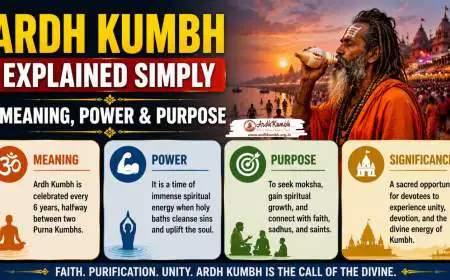
Ardh Kumbh Explained Simply: Meaning, Power & Purpose
Read Guide →
Is Ardh Kumbh a Form of Tapasya?
Read Guide →
Ardh Kumbh 2027 Dates (Official) - Haridwar Snan Schedule
Read Guide →
Dharamshala Stay During Ardh Kumbh: Free & Budget Guide
Read Guide →
Official Progress Report of Haridwar Ardh Kumbh 2027 Infrastructure Projects
Read Guide →
Where to Find 24-Hour Pharmacies in Haridwar During Ardh Kumbh 2027 Emergencies
Read Guide →You walk for miles. You wait for hours. You sleep on a floor. You eat simple food. You stand in freezing water. These are not comfortable experiences. They are dissonant. And dissonance forces your brain to wake up. You cannot be on autopilot when you are shivering in a river. You cannot scroll mindlessly when you are navigating a crowd of millions. The Kumbh breaks the trance of daily life. It resets your attention. It reminds you that you are alive.
This is a psychological reset. It does not require faith. It requires presence. And the Kumbh delivers presence in overwhelming doses. Many pilgrims report feeling "different" for weeks after returning home. That is the autopilot trying to re-engage — and the memory of the Kumbh refusing to let it.
The Emotional Reset: Sorrow Washed Away
Here is a story. A woman lost her husband. She was stuck in grief — unable to move, unable to eat, unable to see a future. Her daughter brought her to the Kumbh. She did not want to come. She stood in the queue, numb. She stepped into the Ganga, numb. But as the water touched her chest, something cracked. She cried. Not a polite tear. The ugly, heaving, snotty cry of someone who has been holding death inside for too long. She cried until she had nothing left. Then she walked out. She was not "cured." Grief does not work that way. But something had shifted. The Ganga had given her permission to feel.
The Kumbh is full of such stories. The reset is not magical. It is cathartic. The cold water shocks the nervous system. The anonymity of the crowd allows you to let go of your persona. The chanting vibrates in your chest. The fatigue lowers your defenses. And in that vulnerable state, emotions that have been locked away for years can finally surface. The Kumbh does not wash away your sorrow. It gives you a container where it is safe to release.
The Relational Reset: Strangers Become Mirrors
You come to the Kumbh focused on yourself. Your snan. Your prayers. Your reset. But the Kumbh has other plans. It places you next to strangers — in the queue, in the tent, at the langar. And those strangers become mirrors.
You see an elderly woman walking barefoot with a broken sandal. She is not complaining. You see a young man carrying his disabled father on his back. He is not rushing. You see a volunteer serving food for the twelfth hour straight. She is not tired (or she hides it well). These encounters reset your perspective. Your problems shrink. Your gratitude grows. You realize that your "bad day" is someone else's "blessed day."
This relational reset does not happen in a classroom. It happens in the mud, in the cold, in the exhaustion. The Kumbh does not preach compassion. It forces you to witness it. And once you have seen it, you cannot unsee it. You go home and treat the grocery store cashier differently. You go home and call your mother. The reset is not in the water. It is in the eyes of the pilgrims beside you.
The Somatic Reset: The Body Remembers
Let me talk about the body. You think of spirituality as something in your head or heart. But the Kumbh is a bodily experience. The walk — miles and miles of it — exhausts your muscles. The cold — the Ganga at 8°C — shocks your nervous system. The queue — standing for hours — tests your endurance. Your body is pushed to its limits. And when the body is pushed, the mind quiets.
You cannot ruminate about your ex-boss when your feet are blistering. You cannot worry about your mortgage when you are shivering. The Kumbh forces you into your body — and out of your head. This is a somatic reset. It is the opposite of dissociation. It is embodiment. And embodiment is healing.
After the Kumbh, your body remembers. It remembers the cold. It remembers the fatigue. It also remembers the relief of finally sitting down, the warmth of hot tea, the softness of a thin mattress. These somatic memories ground you. They remind you that you are not just a brain in a jar. You are flesh, bone, and breath. That is a reset that no app can provide.
The Social Reset: Caste, Class, and Connection
Let me talk about something uncomfortable. In your daily life, you are surrounded by people like you. Same class. Same education. Same social circle. The Kumbh shatters that bubble. You stand next to a millionaire and a beggar in the same queue. You eat the same dal from the same metal plate. You sleep on the same floor.
This is a social reset. It does not erase caste or class forever. But for a few days, the usual hierarchies lose their power. You realize that the millionaire is also anxious about losing his phone. The beggar also wants to be seen. The professor also cannot find their tent. These realizations do not change society. But they change you. You become less impressed by status. Less dismissive of the poor. Less certain that your way is the only way.
This reset is not permanent. Back home, the old patterns return. But the memory of the queue — of standing equal in the cold — lingers. It makes you question. It makes you kinder. That is the social reset. It is not revolution. It is evolution.
The Temporal Reset: Past, Present, and Future
The Kumbh plays with time. You come carrying your past — your sins, your regrets, your failures. The dip is supposed to wash them away. You come hoping for a different future — blessings, prosperity, moksha. The dip is supposed to secure it.
But the Kumbh also forces you into the present. The cold water will not let you escape into memory or fantasy. You are here. Now. Shivering. Alive. This temporal reset — collapsing past, present, and future into a single moment of presence — is the deepest gift of the Kumbh. You stop worrying about what you did. You stop planning for what you will do. You just are.
When you leave, you carry that presence with you. Not always. Not perfectly. But enough. Enough to pause before reacting. Enough to breathe before speaking. Enough to remember that the only moment that exists is this one. That is a reset. And it costs nothing but attention.
The Skeptic's Reset: When Nothing Happens
Let me be honest. Not everyone experiences a reset. Some people go to the Kumbh and feel... nothing. The water is cold. The crowd is annoying. The walk is tiring. They bathe, they leave, they go home. No tears. No visions. No transformation.
Does that mean the reset is fake? No. It means that reset requires openness. If you go to the Kumbh with a closed heart, expecting to be bored, you will be bored. The Ganga does not force herself on anyone. She waits. She offers. You have to receive.
If you went to the Kumbh and felt nothing, do not despair. The reset may come later — in a dream, in a memory, in a moment of crisis when the image of the queue suddenly returns. Or it may never come. That is okay. The Kumbh does not demand that you change. It only offers the possibility. Whether you take it is up to you.
The Slow Reset: What Happens After You Go Home
The Kumbh does not end when you leave Haridwar. It continues in the weeks and months after. You unpack. You return to work. You fall back into old habits. But something is different. You notice it in small ways. You are less angry in traffic. You are less impatient with your children. You are less attached to your phone.
This is the slow reset. It is not a lightning bolt. It is a trickle. The Kumbh plants seeds. They grow slowly — in the background, while you are living your life. One day, you realize that you have not gossiped in weeks. That you have been volunteering at a local langar. That you have not checked your stock portfolio in a month. The reset has been happening all along. You just did not notice.
This is the most reliable reset the Kumbh offers. Not a dramatic transformation. A gradual alignment with your deeper values. The Ganga does not change you overnight. She changes you over time. If you let her.
The Reset That Never Ends
Let me end with this. The Ardh Kumbh is not a reset button that you press and forget. It is a practice. It is a reminder. Every time you stand in a queue, you can remember the Kumbh queue. Every time you feel cold water, you can remember the Ganga. Every time you see a stranger, you can remember the pilgrim beside you.
The reset is not a one-time event. It is a reorientation. The Kumbh gives you a compass. It points you toward patience, humility, generosity, and presence. You will lose your way. You will forget. That is human. But the Kumbh will happen again. And you can return. And remember. And reset. Again. And again. That is not failure. That is the cycle. The same cycle that the Ganga has been flowing for millennia. The same cycle that the pilgrims have been walking for centuries.
So go. Take the dip. Let the water shock you. Let the crowd humble you. Let the langar feed you. Let the queue teach you. And when you go home, do not expect to be a different person. Expect to be a more conscious version of the person you already are. That is the reset. That is the Kumbh. That is enough.
Frequently Asked Questions