













































































Is Ardh Kumbh 2027 Safe and Suitable for Children?
Complete guide for parents: Is Ardh Kumbh 2027 safe for kids? Health tips, crowd management, ID bands, and everything families need to know before going.

Quick Answer: Is Ardh Kumbh 2027 Safe and Suitable for Children?
Ardh Kumbh 2027 in Haridwar can be a meaningful religious and cultural experience for children when families plan carefully and take appropriate safety precautions. However, suitability depends on the child's age, health, ability to manage crowded environments, and the family's travel arrangements. Large gatherings can involve heavy foot traffic, long walks, changing weather, loud surroundings, and limited personal space, which may be challenging for younger children.
Parents should choose less crowded visiting hours where possible, keep children under constant supervision, establish a meeting point, carry identification and emergency contact details, and pack drinking water, suitable clothing, snacks, and essential medicines. Avoid forcing children into congested bathing areas or long queues, and follow official crowd-control and river-safety instructions. 👨👩👧 Ardh Kumbh 2027 can be suitable for children with responsible adult supervision, age-appropriate planning, and flexible expectations, but families should check official arrangements and safety advisories before travelling.
The 2027 Schedule: Choosing the Right Time for Your Family
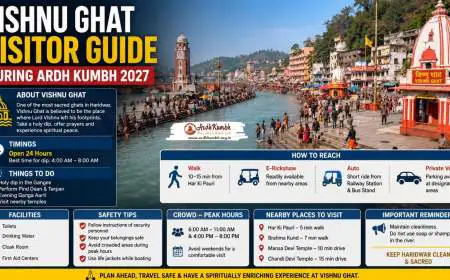
The first and most important decision you will make is when to go. The Ardh Kumbh 2027 is not a single-day event. It spans from January 13 to April 20, 2027 . Within this window, there are 10 major bathing festivals. Among these, four will be Amrit Snans (royal baths) — March 6 (Mahashivratri), March 8 (Phalguna Amavasya), April 14 (Mesh Sankranti), and April 20 (Chaitra Purnima) . Some sources mention three Amrit Snans, but the latest announcements confirm a historic four Amrit Snans for the 2027 Ardh Kumbh .
Here is the most important advice I can give you. Do not take young children to the Amrit Snan days unless you are prepared for extreme crowds. On these days, the population of Haridwar swells from a few lakhs to millions. The queues stretch for kilometers. The pressure of the crowd is physically intense. Even adults find it overwhelming. For a child, it can be terrifying.
Trending Guides Now

Ardh Kumbh vs Maha Kumbh: The Real Difference Explained
Read Guide →
Can Women Take Shahi Snan at Ardh Kumbh?
Read Guide →
Are Women Allowed in All Ritual Areas at Kumbh?
Read Guide →
Can Ardh Kumbh Be Experienced Online or Virtually?
Read Guide →
Ardh Kumbh 2027 Dates (Official) - Haridwar Snan Schedule
Read Guide →
Dharamshala Stay During Ardh Kumbh: Free & Budget Guide
Read Guide →
Official Progress Report of Haridwar Ardh Kumbh 2027 Infrastructure Projects
Read Guide →
Is October a Good Time to Visit Haridwar Before Ardh Kumbh 2027?
Read Guide →Instead, target the regular bathing days — January 14 (Makar Sankranti), February 6 (Mauni Amavasya), February 11 (Basant Panchami), February 20 (Magh Purnima), or the days immediately after the peak crowds (like April 15) . These days will still have crowds — the Kumbh is never empty — but they will be manageable. You will be able to walk without being pushed. You will find space to sit. You will not spend your entire day worrying about losing your child in a sea of bodies.
Weather Matters: Packing for Haridwar's Climate
Haridwar in January and February is cold. The average temperature ranges from 8°C to 20°C during winter, with January being the coldest month . Mornings can be foggy. The Ganga water is bone-chilling. Evenings require heavy woolens. If you are bringing a child, you must pack for cold weather — not just "a little chilly."
Here is your packing list for winter months (January to February). Thermal innerwear for layering. Woolen sweaters or fleece jackets. Heavy winter jackets for early mornings. Woolen caps (beanies) that cover the ears. Gloves — small children lose heat through their hands quickly. Woolen socks and closed, comfortable shoes. A soft scarf or muffler to protect the neck and face. Lip balm and moisturizer — the dry cold cracks young skin.
If you visit in March or April, the weather becomes more pleasant — warm days (up to 29°C) and cool nights . Pack light cotton clothes for daytime, but still carry a light jacket or shawl for evenings. The temperature drops significantly after sunset. Sunscreen and hats become important in March and April as the sun gets stronger .
Do not visit during monsoon — but the Kumbh ends in April, so this is not a concern. The window you have is the best weather window for Haridwar — cool, dry, and comfortable .
Health Precautions: Vaccinations, First Aid, and Common Illnesses
Let me talk about something that many family guides avoid. The Kumbh Mela is a germ factory. Millions of people from every corner of India and the world share the same water, the same toilets, the same eating spaces, the same air. Children — with their developing immune systems and their tendency to touch everything — are particularly vulnerable.
First, consult your pediatrician before you go. Ask specifically about the cholera vaccine. Cholera is an acute illness spread through contaminated food or water, causing severe diarrhea and vomiting. It is "usually seen during the aftermath of natural calamities or when there is a congregation of large numbers of persons for religious festivals" . The oral cholera vaccine is recommended for children over one year of age, given in a two-dose schedule two weeks apart. It is specifically advised for "areas where there is risk of an outbreak such as during pilgrimages like Kumbh Mela" . The vaccine is very safe with practically no reported side effects .
Second, pack a comprehensive first aid kit. Based on recommendations from experienced pilgrims, here is what you need :
-
Fever and pain: Paracetamol 500 mg (children's dosage as per weight)
-
Stomach issues: Oral Rehydration Salts (ORS) — this is critical for children. Dehydration from diarrhea can become severe very quickly in small bodies. Also pack antacid syrup and Loperamide for diarrhea.
-
Cold and cough: Cetirizine (for allergies), cough syrup suitable for children, cold relief medication.
-
Injuries: Soframycin or antiseptic cream, cotton, bandages, and band-aids.
-
Motion sickness: If your child gets carsick on the journey, pack appropriate medication.
Important: Have any medication checked by your doctor. Every child's body is different. Do not assume that what works for one child works for another .
Third, boil or filter all water for your child. Do not rely on bottled water alone — seals can be fake. Carry a portable water filter or purification tablets. Avoid cut fruits, raw salads, and ice from street vendors. Stick to freshly cooked hot food — the langar meals (dal, roti, rice, vegetables) are generally safe because they are cooked in massive quantities and served immediately.
Fourth, hand sanitizer is not optional. It is essential. Use it before every meal, after every toilet visit, and anytime your child touches surfaces in crowded areas. Teach your child to keep their hands away from their face — eyes, nose, and mouth are entry points for germs.
Safety in Crowds: The Number One Concern
Let me be completely honest with you. The crowd is the biggest risk to your child at the Ardh Kumbh — not the water, not the food, not the cold. Children get lost. Children get crushed. Children get separated from their parents in seconds, even when parents are vigilant. This is not fear-mongering. This is reality. But reality can be managed.
Here is the parent's safety checklist for the Kumbh :
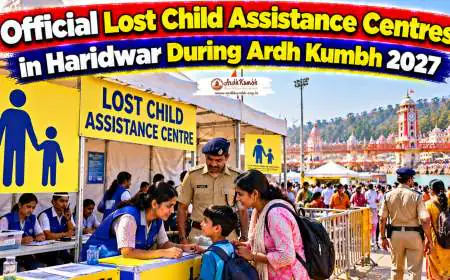
1. Identification is non-negotiable. Write your child's name, your name, and your mobile number on a piece of paper and place it inside their clothing (pocket, collar, or pinned discreetly). Better yet, purchase medical ID bands or custom silicone bracelets that your child wears around their wrist. If your child gets lost, whoever finds them can immediately call you .
2. Teach your child what to do. Before you leave home, teach your child these three things: Find a police officer or security guard (the Kumbh has thousands). Do not leave that spot — do not go looking for parents. Shout your parents' names, not just "Mummy" or "Papa" (teach them your actual names). Practice this at home before you go .
3. Dress your child in bright, distinctive colors. A neon orange jacket. A bright pink hat. A fluorescent yellow backpack. In a sea of millions wearing muted cotton colors, bright clothing makes your child visible to you from a distance .
4. Never let go. In crowded areas, hold your child's hand firmly. Not their sleeve. Not their backpack strap. Their hand. For very young children, carry them in your arms or in a front carrier. Strollers are difficult to maneuver in crowds — consider a baby carrier or hip seat instead .
5. Choose a family meeting point. Before you enter the Mela grounds, pick a distinct, permanent landmark — a specific temple entrance, a police booth, a particular lamp post. Tell your child, "If you cannot find us, go here and wait. Do not move." Make sure multiple adults in your group know the location .
6. Avoid peak times and peak ghats. Do not take your child to Har ki Pauri on Amrit Snan days. Choose a less crowded ghat and a non-peak bathing day. The spiritual benefit is the same. The safety is dramatically different.
Bathing with Children: Making the Snan Safe and Joyful
The holy dip is the heart of the Kumbh. But for a child, the experience needs to be adapted. Here is how to make the snan safe, comfortable, and memorable for your little one.
Choose the right time. Do not go at 4 AM when the water is coldest and the crowd is densest. Go at mid-morning (10 AM to 12 PM) on a non-peak day. The sun will have warmed the air slightly. The crowd will be thinner. Your child will not be shivering uncontrollably.
Do not force full immersion. A child does not need to go completely underwater to receive the blessings. A symbolic dip — where you cup the Ganga water and pour it over their head — is perfectly acceptable. Hold them in your arms at the edge of the water. Let their feet touch. Let them see you bathe. That is enough.
Bring a change of clothes. Pack a warm, dry change of clothes in a waterproof bag. Immediately after the snan, dry your child with a soft towel and put on dry clothes. Wet clothes in cold wind can cause hypothermia even in adults — in children, it is a serious risk.
Warm them from the inside. Carry a thermos with warm water or warm milk. Give your child something warm to drink within minutes of leaving the water. This restores internal body temperature.
Do not stay in the water long. Two minutes is plenty. For a child, thirty seconds is enough. The blessing does not increase with time spent shivering. Get in, dip, get out, dry off, warm up.
Accommodation and Food for Families
Where you stay and what you eat are as important as the snan itself when you have children.
Choose family-friendly accommodation. Do not book the cheapest tent in the most crowded sector. Look for ashrams, guest houses, or private tent accommodations that offer attached bathrooms (cleaning a child without running water is a nightmare), heating (winter nights are cold), and quiet (children need sleep). Book months in advance — family-friendly options sell out first.
Avoid street food completely for children. I know the jalebis look tempting. I know the chaat smells delicious. But street food at the Kumbh is prepared in conditions that are not child-safe. Stick to langar food (freshly cooked, simple, hot) or food from reputable, busy restaurants with high turnover. Carry snacks from home — biscuits, dry fruits, crackers — for between meals.
Hydration is critical. Children dehydrate faster than adults. Carry ORS packets and mix them with filtered water every morning. Encourage your child to drink small amounts frequently, even if they are not thirsty. Signs of dehydration in children include dry lips, reduced urination, crying without tears, and unusual sleepiness.
What to Pack: The Family Checklist
Here is your complete packing checklist for bringing children to the Ardh Kumbh 2027.
Clothing:
-
Thermal innerwear (2-3 sets)
-
Woolen sweaters or fleece jackets (2)
-
Heavy winter jacket (1)
-
Woolen caps/beanies (2)
-
Gloves (2 pairs — they get lost)
-
Woolen socks (5-6 pairs)
-
Comfortable, closed walking shoes (1 pair, broken in)
-
Light cotton clothes for warmer days
-
Hat/cap for sun protection (for March-April visits)
Health and Hygiene:
-
Complete first aid kit (medications as listed above)
-
ORS packets (at least 10)
-
Hand sanitizer (large bottle + small portable)
-
Wet wipes (large pack)
-
Toilet paper and tissues
-
Diapers and changing pad (if applicable)
-
Baby carrier or hip seat (not a stroller)
-
Soft towels (2-3)
-
Water bottle with filter or purification tablets
Safety:
-
ID bands for each child (custom printed with your phone number)
-
Printed emergency contact cards in each child's pocket
-
A recent photo of each child stored on your phone (to show police if lost)
-
Whistle (teach child to blow if lost)
-
Small flashlight or headlamp
Comfort:
-
Favorite small toy or comfort object
-
Blanket for sleeping
-
Snacks from home
-
Entertainment for travel (books, coloring, tablet with downloaded shows)
When to Say No: The Honest Truth
Let me end with honesty. There are some children and some situations where the Ardh Kumbh is not the right choice.
Do not bring infants under six months. Their immune systems are not developed enough to handle the germ exposure. The cold is dangerous for them. The crowd has no space for a stroller. Wait for the next Kumbh.
Do not bring a child with a serious chronic illness — severe asthma, heart conditions, immune deficiencies, or recent surgery. The Kumbh is physically demanding. Medical facilities, while present, are designed for emergencies, not for ongoing pediatric care.
Do not bring a child who cannot follow basic instructions — especially a toddler who runs without warning or a child with cognitive challenges that make wandering a risk. The crowd does not forgive a moment of inattention.
Do not go if you are a single parent with no other adult help. Managing a child at the Kumbh is a two-person job at minimum — one to hold the child, one to navigate. Do not attempt it alone.
Do not go on Amrit Snan days. I have said this before, but I will say it again. The royal bath days are not for children. The crowd is too dense. The risk is too high. The experience, for a child, will be frightening, not inspiring. Go on a regular bathing day. The Ganga will still bless your child.
The Gift You Give Them
Despite all the warnings, all the precautions, all the lists — I want you to know something. Bringing a child to the Ardh Kumbh is a gift. A gift that no toy, no screen, no class can replicate. Your child will see millions of people moving toward a single purpose — something that does not happen anywhere else on earth. Your child will touch the Ganga — the same water that their ancestors touched, the same water that will flow for their grandchildren. Your child will see sadhus in ash, elephants in procession, devotion in a million forms. This is not just a trip. This is an inheritance. You are handing them their culture, their faith, their civilization — not in a textbook, but in a living, breathing, overwhelming experience. Yes, it is hard. Yes, it requires planning. Yes, there are risks. But children have been coming to the Kumbh for thousands of years. They have survived. They have thrived. And so will yours. Prepare well. Stay vigilant. Trust your instincts. And then watch your child's face as they stand at the Ganga for the first time. That is why you are going. That is why it is worth it.
Frequently Asked Questions