























Is Ardh Kumbh Truly a Once-in-a-Lifetime Experience?
Ardh Kumbh happens every six years. Many pilgrims attend multiple times. Discover why it can be once-in-a-lifetime or a lifelong tradition.
Is Ardh Kumbh Truly a Once-in-a-Lifetime Experience?
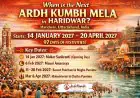
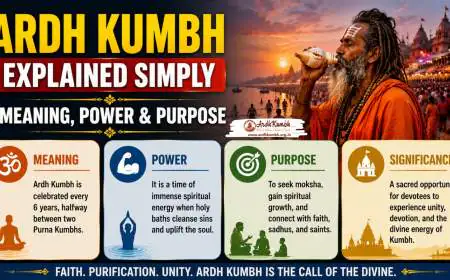
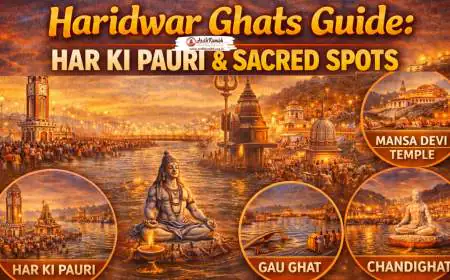
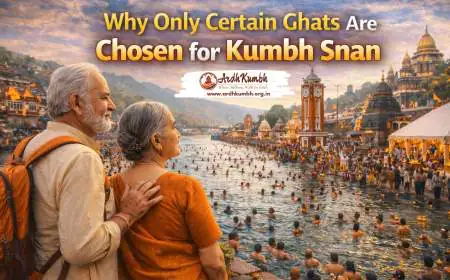
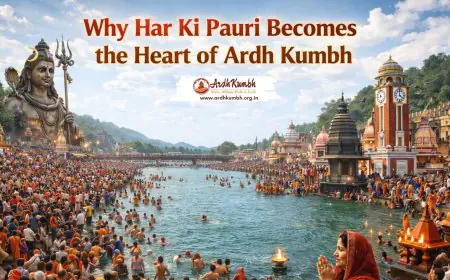
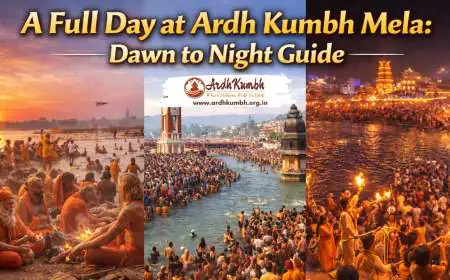
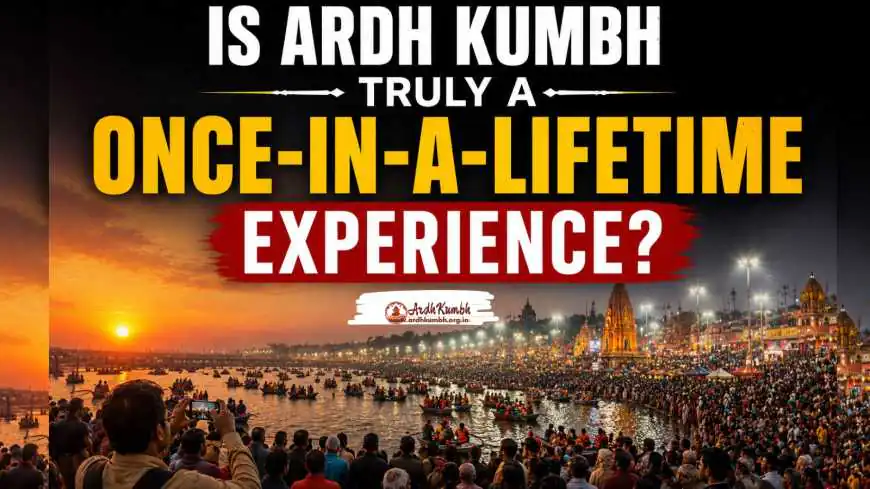
Let me take you on a little journey. Close your eyes for a second (well, after reading this). Imagine a temporary city so vast that it can be seen from space. Now, fill that city with over 50 million people over just 45 days. Add in temple tents, saffron-clad monks, drumbeats that never stop, and the continuous chanting of “Har Har Gange.” That is your Ardh Kumbh Mela. It happens every six years in Haridwar, rotating with the Purna Kumbh (every 12 years) and the Maha Kumbh (every 144 years). The “Ardh” means half, so technically, it is the halfway celebration to the big one. But let us be real for a moment. Calling it “half” anything feels wrong. When you are standing on the Har Ki Pauri ghats, surrounded by a sea of humanity that stretches as far as your eyes can see, there is nothing “half” about the experience. It is full-volume life. It is the kind of moment where your carefully planned itinerary goes out the window, and you just let the current of faith carry you.
The Astrological Clockwork Behind the Madness
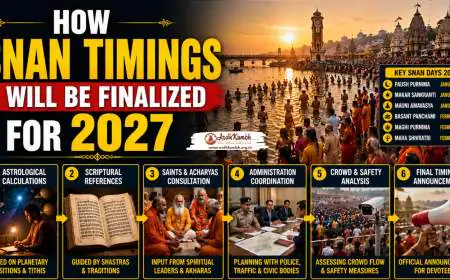
You cannot understand the Kumbh without understanding the sky. This is not a random date picked by a tourism board. The Ardh Kumbh happens when Jupiter (Brihaspati) is in Aquarius (Kumbh Rashi) and the Sun enters Aries (Mesh Rashi). For the nerds among us, that is a pretty rare celestial high-five. The belief is that during this specific alignment, the holy waters of the Ganges transform into ‘Amrit’ or the nectar of immortality. Now, whether you believe that literally or metaphorically, the effect is the same. You will see grandmothers who have saved their entire lives to be here. You will see young college kids with backpacks and confusion on their faces. You will see foreign tourists looking utterly shell-shocked but also weirdly peaceful. That astrological belief is the engine that drives the entire machine. It is the reason why taking a sacred dip (the Shahi Snan) at the exact brahma muhurta (around 4 AM) is considered so powerful. People believe you are not just washing your skin; you are washing away cycles of rebirth. No pressure, right?
The Naga Sadhus – The Naked Truth
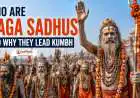
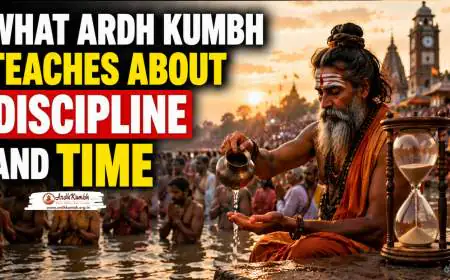
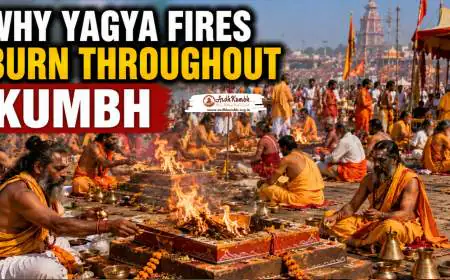
If there is one visual that defines the Ardh Kumbh for the outside world, it is the Naga Sadhus. These are Hindu monks who have renounced everything. And when I say everything, I mean everything. Clothes, comfort, family, identity. They smear their bodies with ash (symbolizing the cremation ground), let their dreadlocks (jata) grow down to their waists, and walk around with trishuls (tridents). On a normal Tuesday, you will never see them. But at the Kumbh, they emerge from the Himalayan caves where they meditate in isolation. Seeing them charge towards the river during the Shahi Snan is not a parade. It is a stampede of divine energy. They ride on chariots, elephants, and motorcycles (yes, modern Naga sadhus have a wild side). They shout ‘Jai Ganga Maiyya’ with a ferocity that vibrates in your ribcage. This is not a performance. This is their one moment to come down from the mountains and reconnect with the world. Watching them, you realize that your biggest worry—whether your phone has charge or if your hotel has hot water—is so incredibly tiny.
The Chaos Factor – Let’s Be Honest
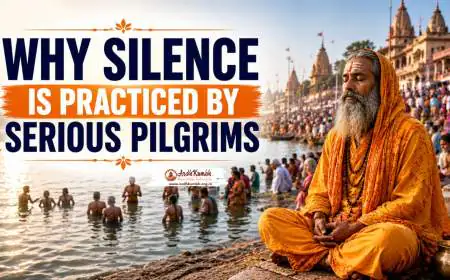
Because we are keeping it human here, I would be lying if I said the Ardh Kumbh is all peaceful meditation and soft flute music. It is loud. It is dirty in the way that 50 million people camping inevitably become. You will step in things you do not want to step in. You will lose cell service exactly when you need to find your group. You will be pushed, pulled, squeezed, and carried by the crowd even when your feet are not moving. The tent cities range from surprisingly luxurious (AC tents, hot showers, organic food) to basic tarps on mud floors. But here is the magic twist: the chaos is the point. In our sanitized, air-conditioned, socially-distanced modern world, the Kumbh forces you to feel. You will share a blanket with a stranger. A Punjabi family will force-feed you hot chai and samosas. A sadhu will look into your eyes and smile without saying a word. The dust gets in your hair, the cold bites your fingers, and the sound never fully stops. And yet, when you finally dip your head under that holy water, there is a silence that follows that no noise-canceling headphone in the world can replicate. That is the once-in-a-lifetime feeling.
Trending Guides Now

Is Ardh Kumbh a Once-in-a-Lifetime Experience?
Read Guide →
Why Ardh Kumbh Feels Like a Spiritual Reset
Read Guide →
Is Ardh Kumbh a Gateway to Spiritual Life? Or Just a Dip in Cold Water?
Read Guide →
Can Ardh Kumbh Be Understood Without Scriptures?
Read Guide →
Best Routes to Reach Haridwar for Ardh Kumbh Mela
Read Guide →
Ardh Kumbh 2027 Dates (Official) - Haridwar Snan Schedule
Read Guide →
How Kumbh Keeps India’s Civilizational Memory Alive
Read Guide →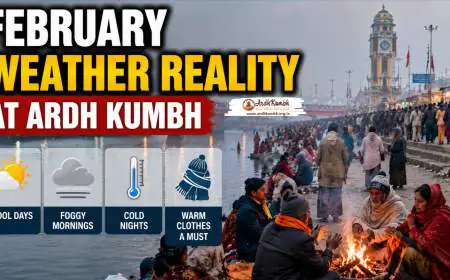
February Weather Reality at Ardh Kumbh
Read Guide →Shahi Snan – The Royal Bath
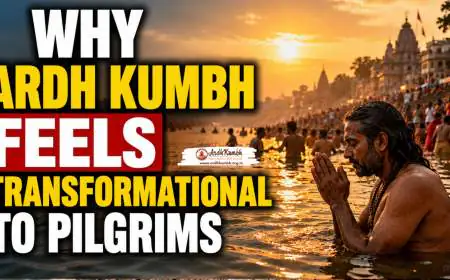
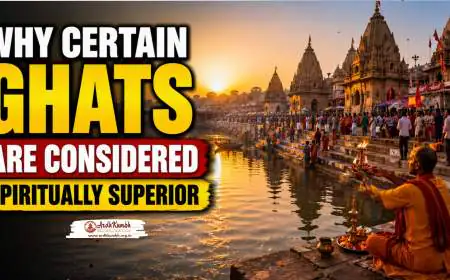
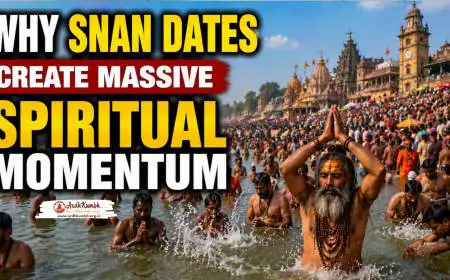
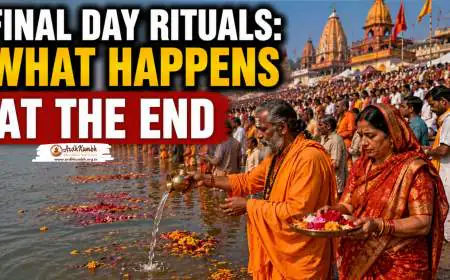
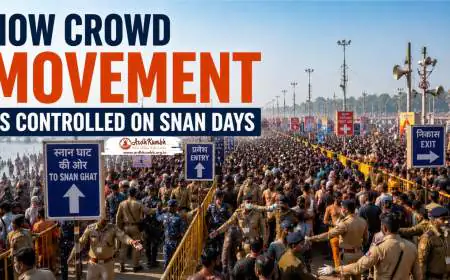
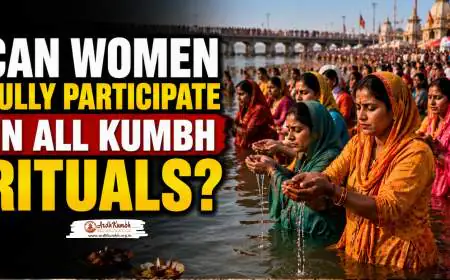
Let us talk about the big event: the Shahi Snan or the Royal Bath. Do not confuse this with the regular dips people take all day. The Shahi Snan happens on specific, astrologically powerful dates. This is when the akharas (sects of sadhus) process to the river in a specific royal order. If you are going to the Ardh Kumbh, you must plan your travel around these dates. The atmosphere on a Shahi Snan day is indescribable. By 2 AM, the streets are packed. Police barricades are everywhere. Loudspeakers are blaring devotional songs. By 4 AM, when the first rays of light hit the Himalayan peaks visible across the river, the Naga Sadhus take their dip. And then, the gates open for everyone else. You will see entire families wading in fully clothed. You will see disabled people being carried in on stretchers. You will see newborn babies being gently sprinkled with water. For those few hours, there is no rich or poor, no high caste or low caste. There is just a river, a sky, and a billion prayers. If you have a soul, your throat will tighten. If you have a heart, it will expand.
The Bhandaras – Food for the Soul (and Stomach)
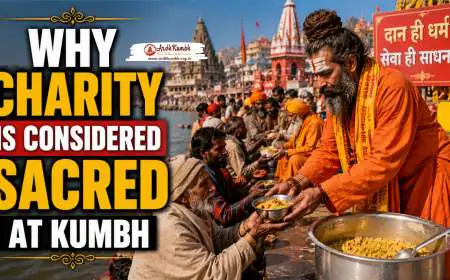
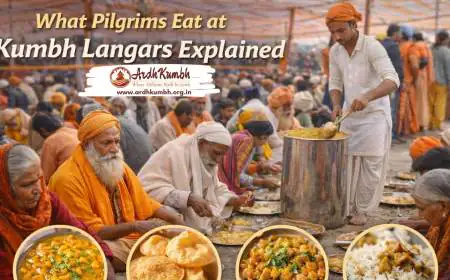
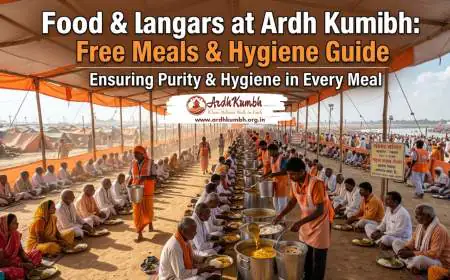
One of the most beautiful, overlooked parts of the Ardh Kumbh is the Bhandaras (community kitchens). You cannot walk 50 feet without someone shoving a plate of food into your hands. Various ashrams, spiritual groups, and even wealthy families set up massive free kitchens. You will eat khichdi, poori-sabzi, halwa, and chai that tastes like gold. There is no checking of tickets or asking for donations. You sit on the ground, you eat, you leave. This is Seva (selfless service) in its purest form. Watching a teenage volunteer wash thousands of plates or an old grandmother rolling chapatis for 12 hours straight will restore your faith in humanity. It reminds you that the Kumbh is not just about taking a dip for your salvation; it is about serving others. You will eat the best meal of your life sitting in the mud, surrounded by strangers, with rain threatening to fall. And you will be happy.
Is It Just for Hindus?
This is a big question. You see the swastikas (an ancient symbol of auspiciousness, not the twisted Nazi version), you hear the Sanskrit chants, and you might think, “This is not for me.” But here is the beautiful truth: the Kumbh Mela does not care about your religion. The Ganges does not check your passport or your prayer card. I have seen Christians getting blessed by sadhus. I have seen Muslims sipping tea at a Hindu ashram’s bhandara. I have seen atheists (like a friend of mine who went “for the photos”) end up crying on the ghats for reasons they could not explain. The once-in-a-lifetime experience of Ardh Kumbh is a human experience. It is about realizing that 7 billion people live on this planet, and yet, when we gather around a common idea of hope and redemption, we behave beautifully. You do not need to believe in Hindu gods to be moved by a million lamps floating on a river at dusk.
Practical Human Tips (From Someone Who Lost Their Socks)
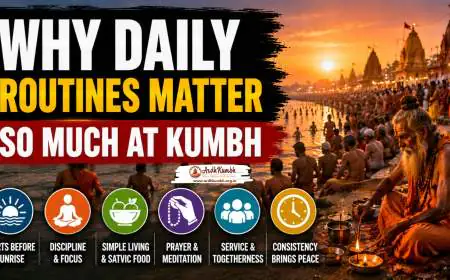
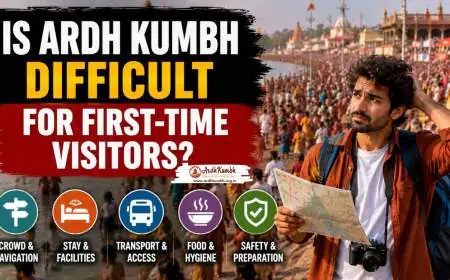
If this article has convinced you to go, let me give you some real, non-tourist-board advice. First, wear shoes you can throw away. The mud is relentless. Second, bring multiple power banks. Finding a charging point is a competitive sport. Third, do not book your stay too far from the ghats. You will be walking. A lot. Fourth, keep your valuables deep inside. Pickpocketing happens (sadly, even holy places have sinners). Fifth, manage your expectations. You will be cold (January in Haridwar is freezing). You will be tired. You will be overwhelmed. But here is the golden rule: surrender. Stop fighting the crowd, and float in it. Stop looking for your hotel, and sit on a step. Stop trying to capture the perfect photo, and just watch. The moment you stop trying to control the Kumbh, the Kumbh starts to control you—in the best way possible.
A Final Thought Before You Pack Your Bags
So, is the Ardh Kumbh truly a once-in-a-lifetime experience? Here is my honest answer after all these words: yes, but only if you let it be. You can go, take a quick dip, click a few photos of the Naga Sadhus, eat some bhandara food, and come back saying it was crowded and dirty. Many people do that. Or, you can go, lose your wallet, get separated from your group, cry from the cold, have a stranger give you their chai, sit on a broken step at Har Ki Pauri at midnight, and suddenly understand why your grandmother spoke about the Ganges with tears in her eyes. The Kumbh does not give you an experience. It gives you a mirror. What you see in that mirror is entirely up to you. But one thing is guaranteed: you will never, ever forget what you saw there.
Frequently Asked Questions