















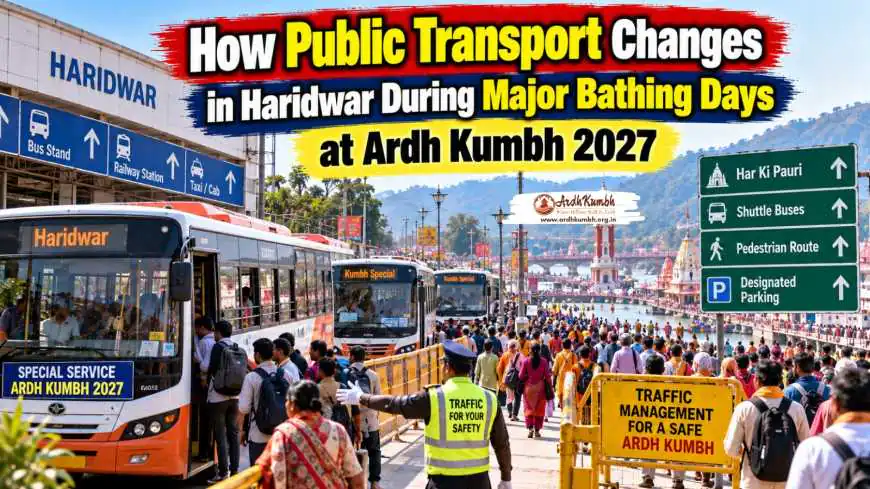
How Public Transport Changes in Haridwar During Major Bathing Days at Ardh Kumbh 2027
Complete guide to public transport changes in Haridwar during major bathing days at Ardh Kumbh 2027. Road closures, parking, shuttle services, e-buses and travel tips.
How Public Transport Changes in Haridwar During Major Bathing Days at Ardh Kumbh 2027
Quick Answer ⚡
During major bathing days at Ardh Kumbh 2027, public transport in Haridwar changes dramatically. The Mela administration introduces traffic diversions, parking restrictions, and crowd-control measures on Amrit Snan dates (6 March, 8 March, and 14 April 2027). Vehicle movement is not allowed inside the Mela area. Large parking spaces are being developed at entry points, from where shuttle services transport devotees directly to the fair area. 150 electric buses will operate within the Kumbh Mela campus for the first time. Indian Railways will run 15 additional trains on key bathing days, with five holding areas near Haridwar Railway Station to manage crowds. A 4 km pathway from Har Ki Pauri to Valmiki Chowk and a special evacuation route via Dhanush Pul will ensure safe pilgrim movement. Plan for 3–8 km of walking on Shahi Snan days as parking zones are located far from the main ghats.
At a Glance 🔎
| Transport Mode | Normal Days | Major Bathing Days | Key Change |
|---|---|---|---|
| Private Vehicles | Allowed near ghats | Not allowed in Mela area | Park at entry points |
| Buses | Regular routes | Shuttle from parking zones | Diverted routes |
| E-Rickshaws | Allowed in most areas | Restricted in Mela zone | Pedestrian priority |
| Electric Buses | Limited | 150 e-buses in Mela campus | First-time service |
| Trains | 33 pairs daily | 15 additional trains | Extra capacity |
| Parking | Near ghats | Entry points, 3–8 km away | Shuttle connectivity |
| Walking | Short distances | 3–8 km mandatory | Comfortable footwear essential |
| Amrit Snan Dates | — | 6 March, 8 March, 14 April | Peak restrictions |
| Holding Areas | — | 5 near railway stations | Crowd management |
| Helpline | — | 01334-223999 | Emergency coordination |
What Are the Major Bathing Days at Ardh Kumbh 2027?
The Ardh Kumbh Mela 2027 will feature ten major bathing festivals, including three Amrit Snans (royal baths). On these days, public transport changes are most pronounced due to the massive influx of pilgrims.
H3: Complete Snan Calendar for Ardh Kumbh 2027
| Snan Date | Occasion | Bathing Category | Crowd Level |
|---|---|---|---|
| 14 January 2027 | Makar Sankranti | Major Snan | Very High |
| 6 February 2027 | Mauni Amavasya | Major Snan | Very High |
| 11 February 2027 | Basant Panchami | Major Snan | High |
| 20 February 2027 | Magh Purnima | Major Snan | High |
| 6 March 2027 | Maha Shivratri | Amrit Snan | Highest |
| 8 March 2027 | Phalguna Amavasya | Amrit Snan | Highest |
| 7 April 2027 | Nav Samvatsar | Major Snan | High |
| 14 April 2027 | Mesh Sankranti | Amrit Snan | Highest |
| 15 April 2027 | Shri Ram Navami | Major Snan | High |
| 20 April 2027 | Chaitra Purnima | Final Snan | Very High |
Expert Tip 💡: The three Amrit Snan dates—6 March, 8 March, and 14 April 2027—will see the most severe transport restrictions. If you are travelling with children or elderly family members, consider visiting during non-Amrit Snan periods for a more manageable experience.
How Do Road Closures and Traffic Diversions Work on Major Bathing Days?
On major bathing days, the Mela administration implements extensive road closures and traffic diversions to manage the crores of pilgrims converging on Har Ki Pauri and other ghats.
Trending Guides Now
Ardh Kumbh Crowd Management & Facilities Guide
Read Guide →
How Crowd Discipline Is Planned for Ardh Kumbh 2027
Read Guide →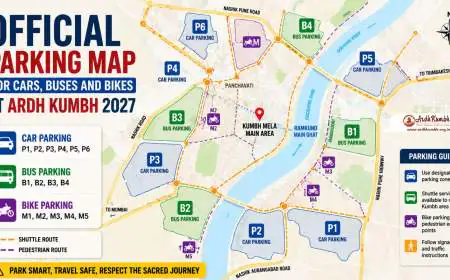
Official Parking Map for Cars, Buses and Bikes at Ardh Kumbh 2027
Read Guide →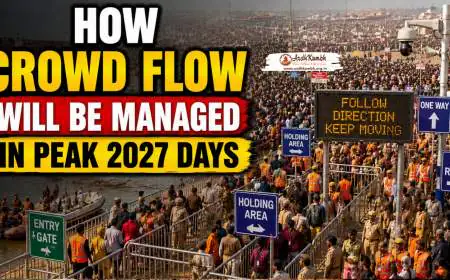
How Crowd Flow Will Be Managed in Peak 2027 Days
Read Guide →
Ardh Kumbh 2027 Dates (Official) - Haridwar Snan Schedule
Read Guide →
Dharamshala Stay During Ardh Kumbh: Free & Budget Guide
Read Guide →
Official Progress Report of Haridwar Ardh Kumbh 2027 Infrastructure Projects
Read Guide →
Where to Find 24-Hour Pharmacies in Haridwar During Ardh Kumbh 2027 Emergencies
Read Guide →H3: Roads Closed on Major Bathing Days
| Road/Area | Status on Major Bathing Days | Alternative Route |
|---|---|---|
| Har Ki Pauri approach roads | Closed to vehicles | Pedestrian only |
| Mela area internal roads | Closed to private vehicles | Shuttle/e-bus only |
| Bara Bazaar area | Closed to vehicles | Pedestrian only |
| Upper Road | Restricted | Diversion via bypass |
| Jwalapur Road | Partially restricted | Alternative routes marked |
| Bhimgoda area | Restricted | Diversion via ring road |
H3: Traffic Diversion Plan for Ardh Kumbh 2027
The Mela administration has prepared a comprehensive traffic diversion plan for Ardh Kumbh 2027. Key elements include:
-
Alternative routes for vehicles from western Uttar Pradesh to avoid city entry before reaching Haridwar
-
Diversion plans clearly marked at all entry points to the city
-
Ring road construction to facilitate traffic flow around the city
-
Bahadarabad-Shyampur bypass to reduce congestion on main routes
-
Administrative transit route to ensure smooth movement of emergency vehicles and VIPs
H3: What Happens to Autos and E-Rickshaws?
Vehicle movement is not allowed inside the Mela area during major bathing days. This applies to:
-
Auto-rickshaws – Restricted from Mela zone entry
-
E-rickshaws – Not allowed inside Mela area; only for local sightseeing outside
-
Bikes – Restricted in crowded zones
-
Private cars – Not allowed near ghats
Local Insight 📍: During Shahi Snan days, the entire approach to Har Ki Pauri becomes a pedestrian-only zone. Plan to walk the final 3–8 km from parking zones. Wear comfortable, broken-in footwear—this is not the day for new shoes.
What Is the Parking and Shuttle Service Plan for Ardh Kumbh 2027?
Parking and shuttle services are the backbone of the public transport plan for Ardh Kumbh 2027. The Mela administration has designed a hub-and-spoke model where pilgrims park at entry points and use shuttle services to reach the Mela area.
H3: Parking Zones for Ardh Kumbh 2027
| Parking Zone | Location | Capacity | Shuttle Service |
|---|---|---|---|
| Entry Point Parking | Various entry points to city | Large | ✅ Yes |
| Bahadrabad Parking | Bahadrabad area | Large | ✅ Yes |
| Shyampur Parking | Shyampur area | Large | ✅ Yes |
| Gaindikhata Parking | Mela area | Large | ✅ Yes |
| Chandighat Parking | Mela area | Large | ✅ Yes |
The CM has directed that large parking spaces be developed at entry points, from where devotees will be transported directly to the fair area. This will reduce traffic congestion within the city and facilitate smooth traffic flow in case of emergencies.
H3: How the Shuttle Service Works
For parking areas further away from the ghats, shuttle services will be arranged. The process works as follows:
-
Park your vehicle at the designated parking zone
-
Board a shuttle bus – These run on fixed routes to the Mela area
-
Disembark at designated stops – Within walking distance of ghats
-
Return via shuttle – After your Snan and darshan
H3: What Facilities Are Available at Parking Places?
All basic facilities are being provided at parking places, including:
-
Drinking water stations
-
Mobile toilets
-
Food stalls
-
Information kiosks
-
Medical assistance
-
Security personnel
Pro Tip 🧭: Arrive early on major bathing days—parking zones fill up quickly, especially at entry points closest to the Mela area. Note your parking zone number and shuttle route to avoid confusion on return.
What Is the Role of Electric Buses in Kumbh Mela Transport?
For the first time in Kumbh Mela history, electric buses will operate within the Kumbh Mela campus during Ardh Kumbh 2027. This is a significant upgrade from previous years when buses only connected the city to the Mela area.
H3: Electric Bus Service Details
| Feature | Details |
|---|---|
| Number of E-Buses | 150 |
| Scheme | Prime Minister E-Bus Service Yojana |
| Coverage | Within Kumbh Mela campus |
| Routes | Dehradun and Haridwar city |
| Purpose | Pilgrim transport within Mela area |
| Benefit | Reduced congestion, eco-friendly |
H3: Why This Matters for Pilgrims
-
Easier movement between different sectors of the Mela area
-
Less walking for elderly and differently-abled pilgrims
-
Cleaner air in the Mela zone
-
Reliable transport on major bathing days when private vehicles are banned
Expert Tip 💡: The Uttarakhand Transport Corporation has proposed 700 buses from the Kumbh fund and 665 crore rupees has been requested for 1,110 new buses. The e-buses will be a game-changer for intra-Mela movement.
How Are Train Services Changing on Major Bathing Days?
Indian Railways is the backbone of long-distance pilgrim transport to Haridwar. On major bathing days, train services are significantly augmented to handle the surge in pilgrims.
H3: Additional Trains for Ardh Kumbh 2027
| Service | Normal Days | Major Bathing Days | Increase |
|---|---|---|---|
| Regular Trains | 33 pairs | 33 pairs | — |
| Additional Trains | — | 15 trains | +45% |
| Potential Expansion | — | May increase | Based on footfall |
The Divisional Railway Manager (DRM) Vineeta Srivastava confirmed that 15 additional trains will run on major bathing days, supplementing the 33 pairs operating on normal days. The number may be increased based on expected pilgrim footfall.
H3: Holding Areas Near Railway Stations
Five holding areas will be created near Haridwar Railway Station and surrounding stations to manage crowd flows. These holding zones will regulate pilgrim movement, preventing stampedes by holding, stopping, or redirecting passengers at stations.
| Holding Area | Location | Capacity |
|---|---|---|
| Permanent Holding Area | Haridwar Railway Station | Part of 19,000+ total |
| Temporary Holding Areas | 4 additional locations | 19,000+ combined |
H3: Railway Station Upgrades
11 railway stations in and around Haridwar have been earmarked under the Kumbh Mela project. Key upgrades include:
-
Jwalapur – Revamp and expansion
-
Laksar – Infrastructure boost
-
Motichur – Extended train halts
-
Haridwar Junction – Improved facilities
Expert Advice ✨: Book train tickets 3–4 months in advance for major bathing days. Additional trains are announced closer to the event, so check for updates regularly. Arrive at the station 2–3 hours early on Amrit Snan days to navigate crowd management systems.
What Are Pedestrian Routes and Pathways for Major Bathing Days?
The Mela administration has developed extensive pedestrian infrastructure to ensure safe movement during major bathing days. Vehicle movement is not allowed inside the Mela area, making walking the primary mode of transport within the Kumbh zone.
H3: Key Pedestrian Routes for Ardh Kumbh 2027
| Route | Length | Connects | Features |
|---|---|---|---|
| Har Ki Pauri to Valmiki Chowk | 4 km | Har Ki Pauri, Railway Station, temples | Seating, water stalls, lighting |
| Aastha Path | Expanding | Har Ki Pauri, Bairagi Camp | Crowd management lifeline |
| Ghat Walkways | Various | All major ghats | Ramps, railings, anti-slip surfaces |
| Temple Pathways | Various | Mansa Devi, Chandi Devi, Har Ki Pauri | Modern pathways, footpaths |
H3: Special Evacuation Route for Peak Crowds
A special evacuation route has been designed to manage crowds at Har Ki Pauri and Brahmakund:
| Segment | Route |
|---|---|
| Start | Har Ki Pauri |
| Via | Dhanush Pul (Pontoon Bridge) |
| Then | Astha Path |
| Then | Anandvan Samadhi |
| Then | Chandi Ghat |
| End | Bairagi Camp |
This route allows pilgrims to exit safely within 15–20 minutes during peak bathing days.
H3: What Makes the 4 km Pathway Special?
The 4 km pathway from Har Ki Pauri to Valmiki Chowk via Haridwar Railway Station connects major temples including:
-
Daksheshwar Mahadev
-
Mansa Devi
-
Chandi Devi
-
Bilkeshwar Mahadev
-
Maya Devi
The pathway features seating arrangements, drinking water stalls, and modern lighting systems, making it comfortable for pilgrims of all ages.
Local Insight 📍: On Shahi Snan days, pedestrian routes are controlled and diverted by police. Follow signage and volunteer instructions—they are trained for crowd management. Do not attempt shortcuts through restricted areas.
How Does Ujjain's Simhastha Compare to Haridwar's Ardh Kumbh for Transport Changes?
Ujjain, Madhya Pradesh, hosts the Simhastha Kumbh Mela every 12 years, drawing crores of pilgrims to the Shipra River and Mahakaleshwar Temple. The transport changes at Ujjain Simhastha share similarities with Haridwar's Ardh Kumbh.
H3: Transport Comparison: Ujjain vs Haridwar
| Aspect | Ujjain Simhastha 2028 | Haridwar Ardh Kumbh 2027 |
|---|---|---|
| Event Dates | April 9 – May 9, 2028 | January 14 – April 20, 2027 |
| Vehicle Restrictions | Inside Mela area | Inside Mela area |
| Parking Zones | Entry points | Entry points, 3–8 km away |
| Shuttle Services | Yes | Yes, extensive |
| E-Buses | Limited | 150 e-buses in Mela campus |
| Additional Trains | During Simhastha | 15 additional trains |
| Holding Areas | At stations | 5 holding areas |
| Pedestrian Routes | Designated paths | 4 km pathway, Aastha Path |
| Key Ghat | Ram Ghat | Har Ki Pauri |
| Evacuation Routes | Designated | Special route via Dhanush Pul |
H3: Key Lessons from Ujjain for Haridwar
Pilgrims who have attended Simhastha in Ujjain will find the transport changes at Haridwar Ardh Kumbh strikingly similar:
-
Park at entry points – Do not expect to drive to ghats
-
Use shuttle services – They are reliable and frequent
-
Wear comfortable footwear – Walking is unavoidable
-
Arrive early – Parking fills up quickly on major bathing days
-
Follow crowd management – Police and volunteers are there for your safety
Local Insight 📍: The Ujjain Railway Station is a major arrival point for pilgrims heading to Haridwar for the Ardh Kumbh. The lessons learned from Simhastha—particularly the importance of early arrival and patience—apply equally to Haridwar.
What Should Pilgrims Know About Emergency Transport on Major Bathing Days?
Emergency transport is a critical component of the Ardh Kumbh 2027 transport plan. The Mela administration has made special provisions for medical emergencies during major bathing days.
H3: Emergency Transport Infrastructure
| Service | Details |
|---|---|
| Ambulances | 31 BLS, 2 ALS, 20 bike ambulances |
| Boat Ambulances | Proposed for Ganga region emergencies |
| Helipad | On top of CCR-2 for emergency evacuations |
| Administrative Transit Route | For emergency vehicles and VIPs |
| Rescue Teams | Trained SDRF teams at sensitive areas |
H3: How Emergency Transport Works on Shahi Snan Days
-
Call 108 or 112 – For medical or police emergencies
-
Control room dispatches nearest ambulance – GPS-guided for fastest route
-
Bike ambulances navigate dense crowds where larger vehicles cannot
-
Boat ambulances cover Ganga region emergencies
-
Helipad enables helicopter evacuation for critical cases
H3: Emergency Contacts for Major Bathing Days
| Service | Number |
|---|---|
| Police | 112 or 100 |
| Ambulance | 108 |
| Fire | 101 |
| Women Helpline | 1091 |
| Senior Citizen Helpline | 1291 |
| Kumbh Mela Helpline | +91-1334 222725 |
| District Emergency Operations Centre | 01334-223999 |
Expert Advice ✨: Save these numbers on your phone and keep a physical copy in your wallet. Phone batteries die and network issues can occur during peak hours. Approach police or volunteers for any assistance—they are trained to help.
What Are the Practical Tips for Navigating Public Transport on Major Bathing Days?
Navigating public transport on major bathing days requires careful planning and patience. Here are essential tips for Ardh Kumbh 2027 pilgrims.
H3: Pre-Travel Planning
-
Book accommodation within walking distance of ghats – Reduces transport dependence
-
Download offline maps – Network may be unreliable
-
Check train schedules – 15 additional trains on bathing days
-
Note parking zone numbers – For shuttle return
-
Charge power banks – Long days without electricity
-
Carry cash – Small denominations for shuttles and vendors
H3: On Major Bathing Days
| Do | Don't |
|---|---|
| Start early (before 4 AM) | Don't expect to drive to ghats |
| Use shuttle services | Don't rely on autos |
| Wear comfortable footwear | Don't carry heavy luggage |
| Keep group together | Don't venture into restricted areas |
| Follow police instructions | Don't argue with officials |
| Stay hydrated | Don't push through crowds |
H3: What to Carry on Major Bathing Days
-
Water bottle – Stay hydrated during long walks
-
ORS packets – For energy and hydration
-
Snacks – Dry fruits, biscuits for quick energy
-
Power bank – Phone will drain searching for signal
-
Light backpack – Hands-free is essential in crowds
-
Waterproof pouch – For phone and money during Snan
Pro Tip 🧭: On Shahi Snan days, the 68 km vehicle lockdown means no private vehicle is allowed within 6–8 km of Har Ki Pauri. Plan to park at outer lots and walk in. This is why comfortable footwear and light luggage are absolutely essential.
How Does the Ardh Kumbh 2027 Transport Plan Enhance Pilgrim Safety?
The Ardh Kumbh 2027 transport plan goes beyond logistics—it is fundamentally about pilgrim safety. The Uttarakhand government has integrated technology, infrastructure, and human resources to ensure a safe experience for crores of pilgrims.
H3: Technology-Driven Safety Measures
| Technology | Function |
|---|---|
| AI-Based Crowd Management | Monitor crowd density and movement patterns |
| IoT-Enabled Monitoring | Real-time tracking of pilgrim flows |
| CCR-2 Command Centre | Integrated control for security, health, traffic |
| Helipad | Emergency evacuation capability |
| CCTV Surveillance | Monitoring at ghats, transport hubs, Mela area |
| Mobile Applications | Real-time information for pilgrims |
H3: Infrastructure for Safety
-
Five holding areas near railway stations – Prevents stampedes
-
4 km pedestrian pathway – Safe, organized movement
-
Special evacuation route – 15–20 minute exit during peak crowds
-
Ramps and railings at ghats – Prevents falls on wet steps
-
Anti-slip surfaces – Safety for elderly and children
H3: Human Resources for Safety
-
Trained police personnel – Crowd management specialists
-
Volunteers – Guidance and assistance
-
SDRF teams – Rescue operations at sensitive areas
-
Medical teams – Temporary hospitals and ambulances
-
Lifeguards – At each ghat for water safety
Local Insight 📍: The Integrated Command and Control Centre (CCR-2) near Har Ki Pauri serves as the central hub for security, health services, and traffic management. A helipad on the top floor enables quick helicopter deployment during emergencies and rescue operations.
How Public Transport Changes in Haridwar During Major Bathing Days at Ardh Kumbh 2027: The Bottom Line
Public transport in Haridwar undergoes dramatic changes during major bathing days at Ardh Kumbh 2027. Road closures and traffic diversions make private vehicle access impossible near ghats. Large parking spaces at entry points and shuttle services become the primary mode of transport. 150 electric buses operate within the Mela campus for the first time. Indian Railways runs 15 additional trains with five holding areas for crowd management. Pedestrian routes including the 4 km pathway and Aastha Path ensure safe pilgrim movement. The special evacuation route via Dhanush Pul enables 15–20 minute exits during peak crowds. Plan for 3–8 km of walking on Shahi Snan days, wear comfortable footwear, carry water, and follow police instructions. The Ardh Kumbh Mela 2027 runs from 14 January to 20 April 2027 with three Amrit Snans on 6 March, 8 March, and 14 April. Prepare proactively, arrive early, and embrace the spiritual journey—the transport infrastructure at Ardh Kumbh 2027 is designed to ensure every pilgrim's safety and comfort.
Frequently Asked Questions