











































































How Security Screening Works at Ardh Kumbh 2027 Entry Points
Complete guide to security screening at Ardh Kumbh 2027 entry points. Learn about AI surveillance, bag checks, ID verification, and safety tips for pilgrims.

How Security Screening Works at Ardh Kumbh 2027 Entry Points
So, you are planning to attend the Ardh Kumbh 2027 in Haridwar, one of the largest spiritual gatherings on Earth. The excitement is real, but the scale of this event—with millions of pilgrims expected—can feel overwhelming. The question on your mind is simple: how does security screening actually work at the entry points, and what do you need to do to get through smoothly? Let us answer that directly. Security screening at Ardh Kumbh 2027 entry points is a multi-layered system combining physical barricades, AI-powered surveillance, drone monitoring, identity verification, and thousands of trained personnel to ensure every pilgrim's safety without compromising the spiritual experience.
The Ardh Kumbh 2027 is not just a religious festival—it is a massive logistical operation. The Uttarakhand government, under Chief Minister Pushkar Singh Dhami, has made devotee safety its highest priority. Mela Officer Sonika has emphasized that security and disaster management are top priorities for the Kumbh Mela-2027 preparations. The administration is deploying cutting-edge technology and extensive human resources to create a secure environment for the estimated 6 to 7 crore devotees expected over 97 days. This guide will walk you through every layer of the security screening process, so you know exactly what to expect when you arrive.
The Physical Infrastructure: How Entry Points Are Designed 🏗️
The first layer of security at Ardh Kumbh 2027 is physical. The mela ground spans approximately 130 square kilometers, with multiple entry and exit points designed to manage the flow of millions.
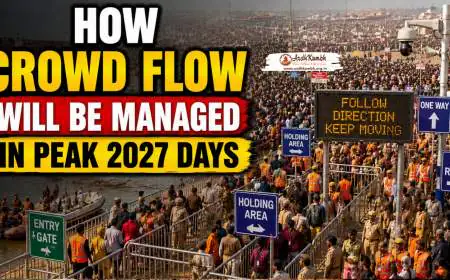
Entry and Exit Corridors
The bathing ghats are divided into multiple entry and exit lanes, ensuring that no single route becomes overloaded. Pilgrims move through controlled gates monitored by volunteers and security personnel.
Trending Guides Now
How Movement Will Be Regulated on Peak Days
Read Guide →
How Traffic Diversions Will Work in Haridwar During Ardh Kumbh 2027 Peak Days
Read Guide →
How Crowd Monitoring Technology Improves Pilgrim Safety in Haridwar During Ardh Kumbh 2027
Read Guide →
How Authorities Prepare for Peak Pressure
Read Guide →
Ardh Kumbh 2027 Dates (Official) - Haridwar Snan Schedule
Read Guide →
Dharamshala Stay During Ardh Kumbh: Free & Budget Guide
Read Guide →
Official Progress Report of Haridwar Ardh Kumbh 2027 Infrastructure Projects
Read Guide →
Is October a Good Time to Visit Haridwar Before Ardh Kumbh 2027?
Read Guide →| Feature | Purpose |
|---|---|
| Separate entry and exit corridors with barricades | Prevent head-on collisions and bottlenecks |
| Emergency access lanes | Kept reserved for response teams |
| Rope dividers | Ensure safe movement toward water and back |
| Hourly flow calculations | Regulate pilgrim density in real-time |
| Loudspeaker announcements | Advisory and safety alerts |
These physical measures create a calm, predictable environment for the holy dip. The goal is zero-congestion around ghats during peak bathing hours, ensuring safe access for elderly, women, and children.
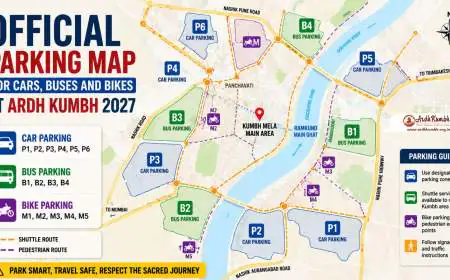
Large Parking Spaces at Entry Points
According to Mela Officer Sonika Singh, large parking spaces are being developed at entry points, from where devotees will be transported directly to the fair area. This reduces vehicle congestion near the ghats and helps control the flow of pilgrims into the mela ground.
A Special Evacuation Route
Recognizing the challenge of crowd pressure on Har Ki Pauri and Brahmakund, the administration has created a special evacuation route. This alternative path runs from Dhanush Pul through Astha Path, Anand Van Samadhi, and Chandi Ghat to the Bairagi Camp.
Why This Matters: During the bathing festivals, pilgrims can exit safely through this route in 15–20 minutes, helping control crowd pressure and ensuring rapid evacuation if needed.
Technology: AI, Drones, and Smart Surveillance 🤖
The 2027 Ardh Kumbh is being touted as a "Digital Kumbh," with technology playing a central role in security screening and crowd monitoring.
AI-Based Crowd Monitoring
The administration is deploying AI-based crowd density alerts sent to control rooms. These systems monitor crowd movement in real-time and predict potential bottlenecks before they form.
In the Bairagi Camp area—the designated ground for sadhus and pilgrims—the forest department has identified 50 locations for AI camera installation to monitor wildlife movement. The "Early Warning System for Elephants" uses AI cameras to detect elephant movement and trigger immediate alerts on a specialized mobile app installed on forest personnel's phones. This is a critical safety measure given the area's proximity to wildlife corridors.
CCTV and Drone Surveillance
The security framework includes:
-
CCTV coverage across ghats, walkways, and entry corridors
-
Drone monitoring for crowd analysis from the sky
-
Thermal-scanned entry zones after dusk
-
Surveillance teams in crowded family areas
Surveillance and Disaster Prevention
Smart surveillance systems include:
-
Public-address systems for urgent announcements and guidance
-
Radar-based flood and water monitoring near the river
-
Integrated Command and Control Centre (ICCC) for real-time emergency coordination
-
Disaster-control helplines available 24/7
The Human Element: Security Personnel and Volunteers 👮
Technology alone cannot manage millions. The human element is equally critical in security screening.
Police and Security Forces
A substantial police presence is deployed at every entry point. Security personnel are trained in crowd management and the identification of suspicious persons or packages.
The Kotwal: Internal Akhara Security
At the Akhara camps, the Kotwal is the internal enforcer. During the Shahi Snan, the Kotwal has the authority to discipline any sadhu who breaks the order. This is one of the rare occasions where the government police do not interfere.
Women Police
Dedicated women police are deployed for the safety of female pilgrims, with a women's helpline available 24/7. This ensures that women can report concerns or seek assistance in a safe environment.
Volunteer Marshals
Trained volunteers guide movement in walkways and assist pilgrims through the screening process. They are the friendly faces that help pilgrims navigate the entry points.
Identity Verification and Baggage Screening 🎒
What You Need to Carry
| Item | Purpose |
|---|---|
| Valid Photo ID Proof | Aadhaar, Voter ID, Passport, or Driving Licence |
| Hotel/Tent Booking Confirmation | For accommodation verification |
| Digital ID (if issued) | For the Digital Kumbh initiative |
Prohibited Items
| Item | Why Prohibited |
|---|---|
| Weapons (knives, firearms) | Security risk |
| Alcohol and cigarettes | Against the sanctity of the city |
| Large bags (on peak days) | Safety and crowd flow |
| Drones | Banned for security reasons |
| Non-vegetarian food | Prohibited in the holy city |
Baggage Screening Process
-
Baggage Drop: Pilgrims are required to place their bags on the screening tables or conveyor belts.
-
X-Ray Scanning: Bags are passed through X-ray machines at major entry points.
-
Manual Checks: Suspicious items are examined manually by security personnel.
-
Storage Options: If you have luggage that is not allowed, you can store it at public lockers or the railway station cloakroom.
Special Considerations: Women, Children, and Elderly 👨👩👧👦
Women's Safety
-
Dedicated women police are deployed at all entry points
-
Women's helpline (1090) is available 24/7
-
Women-only bathing enclosures are provided at ghats
-
Female-only toilet facilities are available
Lost and Found: Khoya Paya Kendras
If you get separated from your family during the screening process or within the mela ground:
-
Go to the nearest Khoya Paya Kendra
-
Provide your family's details and a recent photo
-
The staff will display your information on LED screens and make announcements
Children
-
Khoya Paya Kendras have toy centres to keep lost children calm
-
Waterproof markers are recommended to write contact details on children's wrists
-
Dress children in bright colors for easy identification
Restricted Zones and Special Access 🚫
Restricted Entry
| Zone | Restriction |
|---|---|
| Akhara Camps | Restricted entry; special permission needed |
| Women-only bathing enclosures | Women only |
| VIP and VVIP areas | Restricted access |
| Security checkpoints | No photography |
The Non-Hindu Entry Debate
There is a proposal under consideration to restrict non-Hindu entry to Har Ki Pauri and other Ganga ghats. The Haridwar Municipal Corporation is examining the 1916 Malviya bylaws for their legal validity. If approved, this could affect access to the ghats for non-Hindus.
Emergency Protocols During Security Screening 🆘
If You Need Help
-
Approach the nearest security personnel
-
Contact the Integrated Command and Control Centre
-
Dial emergency helplines: 100, 102, 108, 1090
Helpline Numbers
| Service | Helpline Number |
|---|---|
| Police Control Room | 100 |
| Medical Emergency / Ambulance | 102 or 108 |
| Women Helpline | 1090 |
| Mela Control Room | 1920 |
| Disaster Control Room | 1077 (Toll-Free) |
Smart Tips for a Smooth Entry 🎯
1. Arrive Early
Arrive before 9 AM to avoid the peak rush. On Amrit Snan days, plan to arrive by 4:00 AM to beat the crowd and screening bottlenecks.
2. Travel Light
Carry only essentials. Large bags or luggage can cause delays at screening. Use the public lockers available for luggage storage.
3. Keep Your ID Ready
Have your valid ID proof ready for verification. This speeds up the process significantly.
4. Follow Instructions
Listen to announcements and follow the directions of security personnel and volunteers.
5. Know the Prohibited Items
Pack wisely by checking the list of prohibited items before you arrive. Avoid carrying alcohol, cigarettes, or non-vegetarian food.
6. Use Digital Payments
UPI and digital payment methods are widely accepted, minimizing the need to carry large amounts of cash.
Quick Guide: Security Screening Process Flow 🔄
| Step | What Happens | What You Should Do |
|---|---|---|
| 1 | Arrival at entry point | Join the designated queue; keep your ID ready |
| 2 | Baggage screening | Place bags on X-ray conveyor |
| 3 | Identity verification | Show valid ID to security personnel |
| 4 | Entry granted | Proceed through controlled gates |
| 5 | Exit (after dip) | Follow designated exit corridors |
Final Thoughts: A Safe and Divine Pilgrimage 🙏
The Ardh Kumbh 2027 is a once-in-a-lifetime spiritual opportunity, and the security screening is there to ensure your safety. The multi-layered system—physical barricades, AI surveillance, drone monitoring, identity checks, and trained personnel—is designed to protect you without compromising the spiritual experience. The ₹54 crore health budget, the 35 temporary hospitals, and the 2,924 beds all work together with the security infrastructure to create a safe environment.
The administration is investing in surveillance systems, crowd management, and disaster preparedness to make the Kumbh smooth, safe, and spiritually fulfilling. By understanding the security screening process, following the rules, and staying aware, you can focus on the divine experience of Haridwar.
Plan your visit, arrive early, travel light, keep your ID ready, and trust the system. May your Ardh Kumbh 2027 journey be safe, blessed, and spiritually enriching. 🌊🛡️🙏
Frequently Asked Questions