















































































Top Mistakes First-Time Pilgrims Should Avoid at Ardh Kumbh 2027
Avoid common mistakes at Ardh Kumbh 2027 with this complete guide for first-time pilgrims. Learn about crowd management, accommodation tips, Amrit Snan planning and safety essentials.

What Are the Biggest Mistakes First-Time Pilgrims Make at Ardh Kumbh 2027? Here's Your Survival Guide 🙏
If you're planning your first visit to the Ardh Kumbh Mela 2027 in Haridwar, you're about to experience one of the most profound spiritual gatherings on Earth. But here's the honest truth—first-time pilgrims make predictable mistakes that can turn a divine journey into a stressful ordeal. The Ardh Kumbh 2027 is expected to draw approximately 17 crore devotees over its 96-day run, with the three Amrit Snan days witnessing unimaginable crowds . Whether you're coming for the sacred dip, the spectacular processions, or simply to witness this UNESCO-recognized intangible cultural heritage, this guide will help you avoid the costly errors that leave many first-timers overwhelmed. From accommodation blunders and crowd management mistakes to transportation oversights and health-related missteps, we've compiled the ultimate list of pitfalls to steer clear of. Consider this your survival manual for navigating the world's largest peaceful gathering with dignity, safety, and spiritual fulfillment! 🌊🙏
The Biggest Blunder: Underestimating Crowd Size and Scale 😱
The 17 Crore Reality Check
Here's mistake number one—thinking you've seen crowds before. You haven't. The Ardh Kumbh 2027 is expected to host around 17 crore pilgrims over its duration, with the Amrit Snan days witnessing unimaginable concentrations of humanity . The Maha Kumbh 2025 at Prayagraj drew 45 crore people—numbers that defy comprehension . For first-timers, this scale is impossible to visualize until you're standing in it.
The Amrit Snan Overconfidence
Treating all bathing days as equal is a classic beginner's error. The three Amrit Snans (6 March, 8 March, and 14 April 2027) are fundamentally different from regular bathing days . On these dates:
-
👥 Tens of millions descend on Har Ki Pauri simultaneously
Trending Guides Now

Personal Responsibility During Ardh Kumbh: Complete Guide
Read Guide →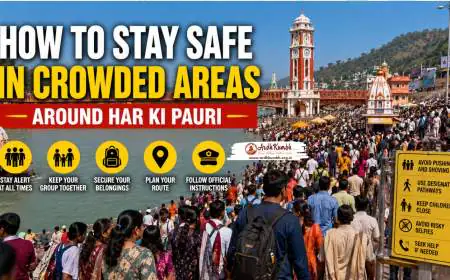
How to Stay Safe in Crowded Areas Around Har Ki Pauri
Read Guide →
Hidden Health Risks at Kumbh and How to Stay Safe
Read Guide →
Dharamshala Stay During Ardh Kumbh: Free & Budget Guide
Read Guide →
Best Routes to Reach Haridwar for Ardh Kumbh Mela
Read Guide →
Official Shahi Snan Bathing Sequence Explained for First-Time Visitors
Read Guide →
Camping and Luxury Tent Stays Near Haridwar: Complete Accommodation Guide
Read Guide →
Ardh Kumbh 2027 Dates (Official) - Haridwar Snan Schedule
Read Guide → -
🚗 6-8 km vehicle lockdown zone is enforced
-
🚶 Walking distances can reach 10-15 km per day
-
📱 Mobile networks become unreliable
Pro Tip: If you're a first-time pilgrim with elderly family or young children, attend an Amrit Snan as an observer from a designated public viewing area, and take your holy dip on an off-peak bathing day like Magh Purnima or Basant Panchami .
Accommodation Mistakes: The Proximity Trap 🏨
Booking Without Checking Actual Distance
One of the most common mistakes is booking accommodation without verifying the actual walking distance to Har Ki Pauri. A listing that claims to be "near Har Ki Pauri" could mean 500 metres or 4 kilometres . This difference becomes critical when you're walking at 4 AM in 5°C weather with elderly family members.
What to do instead: Always check the exact distance on Google Maps before booking. For groups with seniors, accommodation within 500 metres of the ghat is a safety requirement, not a comfort preference .
Booking Too Late or Too Early in the Wrong Season
Accommodation near Har Ki Pauri fills first, often months in advance . Many first-timers make the mistake of:
-
❌ Booking at the last minute – expecting availability
-
❌ Booking too far away – thinking they'll manage the distance
-
❌ Not understanding seasonal pricing – rates can double or triple during peak days
The Solution: Book your accommodation at least 6-8 months in advance, especially if you're targeting Amrit Snan dates . Dharamshalas and ashrams are affordable but fill extremely quickly .
Transportation and Travel Planning Mistakes 🚗
The Dehradun Airport Bottleneck
Here's a logistical truth that catches many first-timers off guard—Dehradun's Jolly Grant Airport is the bottleneck . This small airport feeds an event of impossible scale, and flights sell out and prices skyrocket as Amrit Snan dates approach .
What to do: Book your flights to Dehradun as early as possible, especially for the 14 April Baisakhi peak. Consider alternative routes like train to Haridwar Junction or road travel from Delhi (approximately 6-7 hours).
No Plan for the Return Journey
Every Kumbh, families plan the outward trip carefully but leave the return to chance . After a major Snan day, trains are sold out, buses are standing-room only, and taxi prices spike sharply .
The solution: Pre-book your return transport before you leave home. This single step can save you hours of stress and hundreds of rupees.
The Vehicle Lockdown Surprise
Many first-timers arrive on Amrit Snan days expecting to drive to Har Ki Pauri. Reality check: No private vehicle is allowed within a 6-8 km radius of Har Ki Pauri on these dates . Pilgrims park at designated outer lots and walk in .
Plan accordingly: If you're driving, park at the outer lots and use shuttle bus services which operate on limited fixed routes on peak days .
What to Carry: Packing and Preparation Mistakes 🎒
The Big Backpack Error
Carrying a large backpack to the ghat is a mistake you'll regret instantly. In body-to-body crowd density, a big bag doubles your footprint and multiplies the pushing you receive .
The right approach: Use a small waterproof front pouch with just your ID, phone, and cash. Everything else stays at your accommodation.
Underestimating the Winter Chill
Haridwar in January-February can drop to 4-8°C before sunrise . Add wind, a river immersion, and standing in a damp crowd, and you have a recipe for hypothermia if you're unprepared.
Essential winter kit:
-
🧥 Heavy jacket and thermals
-
🧣 Woollen cap and gloves
-
🧤 Quick-dry towel and complete change of clothes in a waterproof bag
-
🥾 Comfortable, closed-toe walking shoes
Forgetting the April Heat
Conversely, if you're visiting in April, daytime temperatures can rise to 32-38°C . Many first-timers pack only for cold weather and suffer in the afternoon heat.
Summer essentials:
-
👕 Light cotton clothing
-
👒 Wide-brim hat
-
🧴 High-SPF sunscreen
-
💧 Refillable water bottle
Digital and Connectivity Mistakes 📱
Relying Solely on WhatsApp for Group Coordination
Mobile networks struggle on peak days. Towers become overloaded by tens of millions of simultaneous users . WhatsApp and other messaging apps often fail to load.
The life-saving alternative: Fix a physical meeting point with your group before entering the ghat area—a permanently identifiable landmark like a named temple entrance, a police post, or a specific shop .
Not Carrying Physical Documents
Digital copies alone may not suffice at pass-controlled entry points on Amrit Snan days . Mobile networks fail, and QR codes often won't load.
What to carry:
-
🪪 Physical government-issued photo ID (Aadhaar, passport, or driver's license)
-
🏨 Printed hotel confirmation
-
🚂 Printed train tickets
Crowd Management and Safety Mistakes 👥
Getting Separated Without a Plan
In a crowd of millions, getting separated from your group is almost inevitable if you don't plan for it. First-timers often don't discuss meeting points or emergency protocols before entering the ghat area.
Best practice: Write an emergency contact number on the inner wrist of elderly relatives using a waterproof marker . Mela police are trained for these situations, but a written number makes resolution faster .
Not Using the Designated Evacuation Routes
The mela administration has created a special evacuation route from Har Ki Pauri through Dhanush Pul, Astha Path, Anandvan Samadhi, and Chandi Ghat to Bairagi Camp . This alternative route allows pilgrims to reach safety in 15-20 minutes during emergencies .
Mistake: First-timers often don't familiarize themselves with these routes in advance.
Solution: Study the evacuation map before you arrive and know the nearest exit route from your location.
Health and Hygiene Mistakes 💊
Ignoring Water Safety
Contaminated water is a real risk at large gatherings like the Kumbh . Studies after previous Kumbhs showed 130x rises in bacterial contamination from open dumps and sewage .
Protect yourself:
-
💧 Always use bottled or filtered water
-
🧴 Carry hand sanitizer
-
💊 Pack ORS sachets for dehydration
-
🍲 Eat at trusted community kitchens or established food stalls
Skipping the Medical Kit
Many first-timers rely on the presence of medical camps but don't carry basic personal medication. In peak crowds, reaching a medical tent can take hours.
Essential medical kit:
-
💊 Personal prescription medications (in original packaging with doctor's note)
-
💊 Basic pain relievers (paracetamol, ibuprofen)
-
💊 ORS sachets for dehydration
-
💊 Motion sickness tablets (especially if travelling by road)
-
💊 Antacids for digestive issues
Cultural and Ritual Mistakes 🙏
Mistaking Amrit Snan for the Only Bath
Many first-timers believe they must bathe on an Amrit Snan day for spiritual merit. This is not true. Bathing in the Ganga during the Kumbh carries the same spiritual weight on a quiet Tuesday at 5 AM as on Mauni Amavasya .
Smart strategy: For a peaceful, contemplative dip, choose an off-peak bathing day. Witness the Amrit Snan procession from a safe viewing distance and take your own bath on a quieter morning .
Photographing Without Permission
Asking before photographing sadhus or private rituals is a rule that first-timers often forget . A nod costs nothing and changes everything in terms of respect and cooperation .
Key rules:
-
📸 Always ask permission before photographing individuals
-
🙏 Respect the Amrit Snan—watch before you shoot
-
🚁 Leave the drone at home—airspace is controlled and patrolled
-
🚫 Avoid photography where it's restricted, especially near saints and akharas
Not Understanding the "Amrit Snan" vs "Shahi Snan" Change
For 2027, the term "Shahi Snan" (Royal Bath) has been officially retired in favour of "Amrit Snan" (Nectar Bath) . The ritual is unchanged; the name is not.
Mistake: First-timers searching for old terminology may miss important information. Both terms refer to the same three ascetic-led bathing dates—6 March, 8 March, and 14 April .
Digital Payment Mistakes 💳
Relying Exclusively on UPI
While UPI payments through Google Pay, Paytm, and PhonePe are widely accepted in Haridwar, relying exclusively on them is a mistake . On peak days, network congestion can make digital payments unreliable.
Smart approach: Carry small-denomination cash (₹10, ₹20, ₹50) for local transport, prasad, and street purchases. UPI works most of the time, but not always at the ghats on peak days .
Wildlife Safety Mistakes 🐘
Ignoring Elephant Intrusion Risks
This is a little-known but serious concern for first-timers. The Bairagi Camp area, where sadhus and pilgrims camp, is located on the fringes of wildlife movement corridors . Elephants frequently stray into this area after crossing the Ganges .
What the administration is doing:
-
🐘 8.5 km elephant-proof trench being constructed
-
📹 AI-based early warning cameras at 50 locations
-
📱 Specialized mobile app for forest personnel alerts
-
🔦 24-hour surveillance patrolling track
What you should do: Stay within designated pilgrim zones, follow official announcements, and don't wander into forested areas near Bairagi Camp.
Special Mistakes to Avoid for Specific Pilgrim Groups 👨👩👧👦
Families with Elderly Parents
Mistake: Booking accommodation far from the ghats to save money.
Reality: A 3 km walk at 4 AM in January cold, twice daily, is punishing for elderly relatives. Proximity is worth paying more for .
Smart strategy: Book accommodation within 500 metres of the ghat for groups with elderly members. Avoid the three Amrit Snans entirely—choose a mid-week non-snan day between 15 February and 5 March .
Women Travelers
Mistake: Not using designated safety resources.
Available resources:
-
🚺 Female-only bathing enclosures at all major ghats
-
🚨 Whistle and safety apps for emergency
-
🤝 Travel with a known contact and agree on a fixed meeting point
Foreign Nationals
Mistake: Not understanding the need for physical documents.
Essential:
-
🪪 Carry your passport at all times
-
🏨 Register at your accommodation on arrival
-
🕐 Arrive at designated viewing zones well before 4 AM on Amrit Snan days
Final Words: Your Kumbh Survival Mantra 🙏
The Ardh Kumbh 2027 is a once-in-a-lifetime spiritual experience that will rearrange something in you. But it's also a logistical challenge that demands respect, preparation, and humility. The mistakes first-timers make are all preventable with the right knowledge.
Your survival checklist:
-
📅 Plan around Amrit Snan dates—observe or bathe on off-peak days
-
🏨 Book accommodation early and verify walking distance
-
🚗 Pre-book return transport before you arrive
-
🎒 Pack light for the ghat—waterproof pouch only
-
🧥 Prepare for cold—January-February can be 4°C
-
📱 Fix a physical meeting point—don't rely on WhatsApp
-
🪪 Carry physical ID and printed reservations
-
💰 Bring small cash for local purchases
-
🙏 Respect rituals and photographers' ethics
-
🐘 Stay in designated zones away from forest edges
The Kumbh Mela is a testament to faith that has endured for millennia. Your pilgrimage can be profound and transformative—or it can be an ordeal of preventable mistakes. The choice is yours. Plan well, respect the sacred, and let the waters of the Ganges embrace you with the grace they've offered pilgrims for countless generations.
Har Har Gange! 💙🌊🙏
Frequently Asked Questions