

































































How Kumbh Shaped India’s Moral Compass
Discover how Kumbh Mela shaped India’s moral compass through radical equality, sacred vows, the power of collective conscience, and timeless teachings that embedded dharma deep in the national psyche.

The Bhandara as a School of Radical Equality and Compassion 🍚
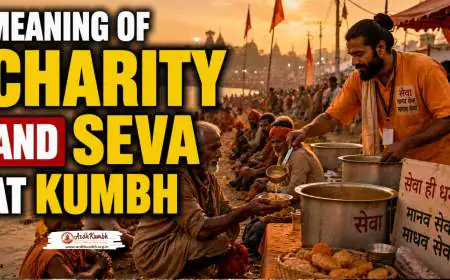
The most powerful engine of moral education at the Kumbh Mela was not a sermon delivered from a pulpit. It was a meal served on a leaf plate. The bhandaras, the massive free community kitchens, are arguably the longest-running and most effective experiment in creating a compassionate, egalitarian society. In a civilization that was historically stratified by rigid caste and class divisions, the Kumbh created a sacred space where those divisions were not just ignored but actively, ritually dissolved. In the long, unbroken rows of the bhandara, a Brahmin and a Dalit, a wealthy merchant and a landless laborer, a powerful official and a homeless widow sat side-by-side on the same cold earth. They were served the same simple dal and roti, from the same pots, by volunteers who offered the food with the same gesture of respect to every outstretched hand. This was not a charitable handout; it was a sacred ritual of equality, a daily, embodied lesson that at the most fundamental level of human need—hunger—all distinctions are illusions.
This experience of radical equality was a profound moral teacher. It taught the powerful humility and the powerless dignity. It challenged the deeply ingrained belief in the inherent superiority of certain groups and the inherent pollution of others. A high-caste pilgrim who ate food prepared and served by hands that, in the outside world, would be considered "untouchable," was performing a quiet, personal moral revolution. The bhandara demonstrated, in the most tangible way possible, that the shared human experience of hunger and nourishment is more real and more important than any socially constructed identity. The moral compass of India was shaped, meal by meal, in these sacred kitchens, as millions of pilgrims internalized the profound ethical truth that all human beings are fundamentally equal and deserving of compassion. The bhandara was a school where the tuition was free and the lesson was love.
The Sacred Gaze of the River: How Divine Witness Enforced Righteousness 👁️
A moral code is only as strong as the belief that one's actions are seen and will be accounted for. The Kumbh Mela placed the pilgrim under the most powerful and intimate surveillance system ever devised: the loving, all-seeing gaze of the divine Mother. The Ganga is not just a river; she is a living goddess, a mother who knows the secrets of every heart that approaches her. To stand at the edge of the Sangam, about to immerse oneself in her purifying waters, was to stand before the ultimate moral witness. The pilgrim knew, with a certainty that transcended logic, that no hidden sin, no secret cruelty, no unconfessed wrongdoing could be concealed from the river. This was not a fear of a punishing, angry deity; it was the profound, internalized awareness of being held in the presence of an unconditional love that required, as a condition of its embrace, a sincere turning toward the good.
This divine witness was the ultimate guarantor of the Kumbh's moral order. You could deceive a police officer. You could hide your actions from your neighbors. But you could not hide from the Ganga. The cold water that closed over your head was a baptism of conscience, a moment of profound, involuntary self-examination. The pilgrimage itself was a ritual of confession and purification. The pilgrim arrived at the river not just with a body to be washed but with a heart ready to release its burdens of guilt, shame, and moral failure. The fear of adharma (unrighteousness) was not a fear of external punishment but a deeply personal desire to be clean, to be worthy, to stand without the weight of hidden sin before the Mother who sees all. This internalized moral compass, calibrated by the sacred gaze of the river, was carried home and became the silent, watchful presence that guided countless daily decisions in the villages and towns of India.
Trending Guides Now

Who Are Naga Sadhus and Why They Lead Kumbh
Read Guide →
Biggest Crowds Ever Recorded at Ardh Kumbh
Read Guide →
Why Haridwar Is Spiritually Central to Ardh Kumbh
Read Guide →
How Ardh Kumbh Evolved Over Centuries of Faith ?
Read Guide →
Best Routes to Reach Haridwar for Ardh Kumbh Mela
Read Guide →
Ardh Kumbh 2027 Dates (Official) - Haridwar Snan Schedule
Read Guide →
Entry Rules Every Pilgrim Must Follow
Read Guide →
How Ardh Kumbh Sustained Leadership Traditions
Read Guide →The Sankalpa: A Sacred Vow That Forged Personal Integrity 💭
At the very heart of the Kumbh snan lies the sankalpa, the sacred vow or intention. This is not a casual wish but a solemn, formal commitment made in the presence of the divine, the river, the sun, and the cosmos. The pilgrim stands in the sacred water and speaks, silently or aloud, a vow to undertake a specific path of righteous action. It could be a commitment to speak only truth, to give up a destructive habit, to forgive a long-held grudge, to perform a specific act of charity, or to dedicate a portion of each day to prayer or service. The sankalpa is the moral compass made explicit and personal. It is the individual pilgrim, having been cleansed and humbled by the pilgrimage, consciously choosing a new, more righteous direction for their life. This was not a moral code imposed from above; it was a voluntary, sacred contract between the soul and the divine.
The power of the Kumbh sankalpa lies in its solemnity and its witness. The vow is not made in the privacy of one's own mind; it is offered before the gathered presence of the sacred. The river hears it. The sun hears it. The tradition teaches that the cosmos itself is the witness to this vow. Breaking such a sankalpa is not just a personal failure; it is a violation of a sacred trust. This gave the moral commitments made at the Kumbh a profound and enduring psychological weight. When a pilgrim returned home, the memory of the cold water, the dark pre-dawn sky, and the solemn promise made at the Sangam became a permanent anchor for their conscience. In moments of temptation, the sankalpa whispered its quiet, powerful reminder. The Kumbh shaped India's moral compass by facilitating millions of these private, sacred revolutions of the heart, each one a personal commitment to a life of greater integrity and virtue.
The Akharas and Sadhus: Living Embodiments of Righteous Authority 🔱
The Kumbh Mela provided not just moral instruction but living, breathing models of a life governed by Dharma. The sadhus, the naga babas, the mahants of the great akharas—these were not just religious functionaries. They were the spiritual aristocracy, and their moral authority was immense. Their ash-smeared bodies, their simple possessions, their lifelong vows of celibacy, non-violence, and truthfulness, their complete renunciation of the material world—all of this was a visible, undeniable testament to the possibility of a human life lived in perfect alignment with righteousness. The pilgrim who looked into the eyes of a silent, meditating sadhu saw a peace that no amount of wealth or power could provide. This was a moral teaching that required no words. The very presence of these holy beings was a challenge to the greed, the dishonesty, and the self-centeredness of ordinary life. They were the living proof that the path of Dharma, however difficult, led to a state of radiant, unshakeable freedom.
The akharas also provided a model of moral self-governance. Their internal codes of conduct were strict, and disputes were resolved not by external courts but by the wisdom of the elders, the Mahants. They were a community that regulated itself through shared spiritual values, demonstrating that a large, complex society could function without the coercive power of a state. For the lay pilgrim, the akharas were a school of moral order. The discipline, the service, the hierarchy based on spiritual attainment rather than birth—all of this taught the value of a life governed by principle. The sadhus were the living conscience of the Kumbh, and their silent, powerful presence shaped the moral aspirations of millions who came into their orbit.
The Public Witness of the Crowd: Collective Shame and Honor as Social Regulators 👀
In the vast, anonymous crowd of the Kumbh, a fascinating and powerful moral dynamic emerged. You were completely unknown, stripped of your social identity, yet your actions were constantly on public display. The dense, interwoven nature of the Mela meant that every act of kindness, every gesture of honesty, every selfless service was witnessed by a multitude. A young man who helped an elderly pilgrim was seen, and the quiet nod of approval from a passing sadhu or a fellow pilgrim was a powerful reinforcement of his good deed. Conversely, a person who tried to cheat a vendor, to push through a queue, or to speak disrespectfully was met with a thousand silent, disapproving stares. The collective gaze of the Mela was a powerful, organic regulator of conduct. There were no hidden corners, and the fear of public shame was a far more effective deterrent than any police baton. The Kumbh was a place where your moral character was constantly being tested and publicly validated. This was the village square magnified a million times, a society where your reputation mattered not because of your status but because of your visible actions.
This community enforcement of moral order was gentle but pervasive. It was not a mob justice but a quiet, collective expression of what was and was not acceptable in this sacred space. The Kumbh had its own unwritten code of honor. Theft, violence, and disrespect were simply unthinkable, not because they were against a posted rule, but because they were a desecration of the sacred purpose that united everyone. The pilgrim knew that a dishonest act at the Kumbh was not just a crime against a person; it was a cosmic offense. This internalized sense of the sacred, reinforced by the silent witness of the crowd, created a self-regulating community far more effective than any system of external control. The moral compass of the individual was aligned with the collective conscience of the Mela.
The Storytellers and the Saints: Moral Education Through Itihasa and Purana 🎭
When the sun set over the Kumbh and the crowds thinned, small circles of pilgrims gathered around storytellers, sadhus, and grandmothers. This was the time of the oral narrative, the ancient tradition of passing wisdom through stories. The tales of the Ramayana and the Mahabharata, the adventures of the Puranic gods, and the lives of the saints—these were not mere entertainment. They were the vehicles of the civilization's deepest moral and spiritual teachings. A child sitting wide-eyed, listening to the story of King Harishchandra who gave up everything for truth, was learning about integrity in a way that no school lesson could ever impart. The story of Prahlada, whose unwavering faith in Vishnu protected him from a murderous father, taught the child about the power of devotion and the ultimate triumph of good over evil. The stories were the moral curriculum of the civilization, and the Kumbh was the great, recurring festival of this education.
This generational storytelling was the most accessible and enduring form of moral education. The stories were memorable, emotionally engaging, and they encoded complex philosophical and ethical truths in a form that even a young child could understand. The grandmother who told the story added her own voice, her own emphasis, her own love. The wisdom was not cold and abstract; it was warm, personal, and alive. The child would grow up, have children of their own, and one day, by the flickering light of a campfire at the Kumbh, they would tell those same stories. The Kumbh ensured that every generation was steeped in the foundational moral narratives of the culture, and that the ethical compass embedded in those stories was never lost.
The Bhakti Voice: Singing a More Just and Loving World Into Being 🎶
The Ardh Kumbh and the larger Kumbh cycle were the great amplifiers for the voices of the Bhakti saints—Kabir, Ravidas, Mirabai, Chaitanya, Tukaram, and countless others—whose devotional poetry was a radical, soul-stirring call for a more just, compassionate, and equal society. These saints sang in the vernacular tongues of the common people, not in elite Sanskrit, and their message was a direct assault on the empty ritualism, the caste discrimination, and the hollow hypocrisy of the religious establishment. Kabir's fiery verses condemned both the Hindu pandit and the Muslim mullah who had lost the true spirit of love. Ravidas, a leather-worker, proclaimed that a heart full of devotion was the only true temple. Mirabai, a queen, abandoned her palace to sing and dance in ecstatic love for her Lord. The Kumbh gave these voices their largest audience, their most resonant stage. The singing of their bhajans, in languages from Hindi to Marathi to Bengali, created a shared, emotional, and deeply moral landscape that was truly pan-Indian. A pilgrim who heard a Kabir doha was being taught that the divine did not care about one's birth but about the purity of one's heart. The Bhakti movement, amplified by the Kumbh, was a moral revolution sung into existence.
This singing revolution democratized Indian spirituality and provided a powerful, grassroots moral compass. It taught that true righteousness was not found in expensive rituals or rigid social rules but in a direct, personal, and loving relationship with the divine, a relationship that naturally overflowed into compassion, honesty, and humility. The Kumbh became a place where the rigid moral codes of an unequal society were challenged not by political pamphlets but by the irresistible, heart-melting power of devotional music. The moral compass shaped by the Bhakti saints was a compass of the heart, guided by love, and it continues to point millions toward a more authentic and compassionate way of being.
The River's Eternal Judgment: The Kumbh's Most Enduring Moral Lesson
The tents of the Kumbh are folded. The pontoon bridges are dismantled. The pilgrims return to their villages, their businesses, their ordinary lives. But they do not return unchanged. They carry within them a moral compass that has been recalibrated by the cold water of the Sangam, by the humble meal of the bhandara, by the silent witness of the sadhu, and by the sacred vow they made in the presence of the divine. The Kumbh Mela shaped India's moral conscience not through force or fear but through an immersive, recurring, and deeply transformative experience of a society where righteousness was not an abstract ideal but a lived, breathing reality. It taught that the divine sees all, that all souls are equal, that a vow made in the sacred moment carries the weight of the cosmos, and that a life of compassion, truth, and self-discipline is the only path to lasting peace. The river flows on, an eternal, silent witness, and her judgment is the judgment of a mother: not of condemnation, but of an infinite, purifying love that forever calls her children toward the light of the good.
Frequently Asked Questions