



























































Why Ardh Kumbh Tests Commitment
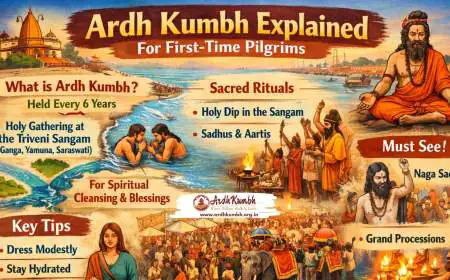
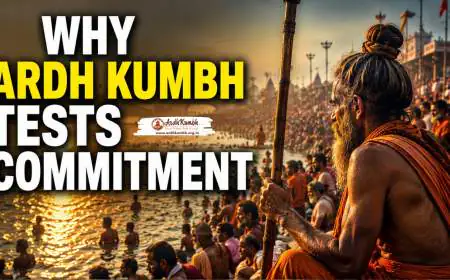
Discover why Ardh Kumbh tests commitment so profoundly. Learn how the six-year pilgrimage challenges your physical endurance, mental resolve, spiritual discipline, and deep inner faith, forging a soul that is unshakeable.

The Quiet Choice: Why the Ardh Kumbh Demands a Purer Decision 🌱
The first test of commitment that the Ardh Kumbh presents is in the very act of deciding to go. The Poorna Kumbh is a cultural juggernaut. It is on every calendar. Trains are booked a year in advance. Entire villages pool their resources. The momentum carries you. The Ardh Kumbh, despite its staggering scale of fifty to sixty million pilgrims, exists in a subtle shadow. You will hear people say, "Wait for the real Kumbh." You will read articles that call it a "mini" Mela. To choose the Ardh Kumbh in the face of this subtle cultural dismissal is to make a deeply personal, autonomous choice. Your motivation cannot be social conformity. It must come from a genuine, inner spiritual longing. This filters out the casually curious and leaves a congregation disproportionately composed of sincere seekers. When you stand on the ghats at the Ardh Kumbh, you are surrounded by people who have, like you, made a quiet, deliberate, and deeply personal decision to be there. This creates a uniquely focused spiritual atmosphere, but it also means that your own commitment is constantly held up to the mirror by the like-minded souls around you.
This test of intention is profoundly spiritual. It forces you to examine your own reasons. Are you seeking God, or are you seeking a story to tell? Are you answering a genuine inner call, or are you checking a box on a religious bucket list? The Ardh Kumbh does not give you the easy answer of cultural momentum. It leaves you in the silence of your own conscience. And in that silence, your true commitment—or your lack of it—is revealed. The pilgrim who has wrestled with this doubt and chosen to come anyway has already passed the first, and perhaps the most important, test of the pilgrimage.
The Physical Crucible: Endurance as a Measure of Devotion 💪
Every Kumbh is a physical challenge, but the Ardh Kumbh tests your commitment by demanding that you endure these hardships without the adrenaline and the crowd-energy of the larger spectacle. The pre-dawn wake-up calls, the miles of walking in the freezing cold, the shock of the icy river, the simple, sparse food, and the bare-bones accommodation—all of these are present in full force. At the Poorna Kumbh, the sheer magnitude of the event and the roaring energy of the processions can sometimes carry you through physical exhaustion on a wave of ecstatic adrenaline. The Ardh Kumbh, with its quieter and more intimate atmosphere, does not provide the same kind of external stimulation. The cold feels colder. The walks feel longer. The body's complaints are louder. Your commitment is tested at a muscular, cellular level. There is no roaring crowd to distract you from your aching feet. There is just you, the path, and the distant gleam of the river.
This is the test of tapas, of sacred austerity. The physical hardship is the fire in which your commitment is forged. Every step you take when you want to stop, every shivering minute you endure in the cold water when every nerve is screaming to get out, is a direct, physical conversation with your own will. The Ardh Kumbh asks you to prove your commitment not through grand declarations but through the quiet, stubborn persistence of your body. It teaches you that true devotion is not a feeling; it is a verb. It is the action of putting one foot in front of the other, long after the initial inspiration has faded. The pilgrim who emerges from this physical crucible has not just been purified by the Ganga; they have been forged into something stronger by their own sustained effort.
Trending Guides Now

Is Ardh Kumbh a Once-in-a-Lifetime Experience?
Read Guide →
Why Ardh Kumbh Feels Like a Spiritual Reset
Read Guide →
Can Ardh Kumbh Be Understood Without Scriptures?
Read Guide →
Is Ardh Kumbh a Gateway to Spiritual Life? Or Just a Dip in Cold Water?
Read Guide →
Best Routes to Reach Haridwar for Ardh Kumbh Mela
Read Guide →
Ardh Kumbh 2027 Dates (Official) - Haridwar Snan Schedule
Read Guide →
How Ardh Kumbh Sustained Leadership Traditions
Read Guide →
How Kumbh Maintained Continuity Without Institutions
Read Guide →The Mental Labyrinth: Facing the Inner Resistance 🧠
The body's complaints are loud, but the mind's are louder and far more cunning. The Ardh Kumbh tests your commitment by confronting you with the full force of your own mental resistance. The Poorna Kumbh can overwhelm the mind into a kind of stunned, sensory-saturated silence. The Ardh Kumbh, with its greater patches of quiet and solitude, leaves ample space for the inner voices to rise. The voice that says, "This is foolish. You could be warm and comfortable at home." The voice that whispers, "You are not feeling the spiritual ecstasy you expected. You are a failure." The voice that constructs elaborate logical arguments for why you should abandon the pilgrimage and return to your normal life. These voices are the guardians of the ego, and they will use every tool in their arsenal to get you to retreat back into the familiar prison of comfort and control.
Your commitment is tested in your ability to witness these voices without obeying them. The long, solitary walks, the silent waiting in queues, the dark, cold mornings—these are the arenas where this inner battle is fought. The Ardh Kumbh does not allow you to numb the mind with constant external stimulation. It forces you to sit with your own thoughts, and in doing so, it reveals the flimsiness of your own resistance. The pilgrim who learns to recognize these inner voices as just passing mental weather, and who continues to walk toward the river in spite of them, has developed a spiritual muscle that no comfortable life could ever build. The commitment that is tested here is not just to the pilgrimage but to the entire spiritual path, which is, at its core, a lifelong practice of mastering the mind.
The Spiritual Dryness: Faith Without the Ecstatic Crutch 😔
The most advanced test of commitment that the Ardh Kumbh offers is the test of spiritual dryness. The great peak experiences—the ecstatic chanting, the overwhelming visual spectacle of the Shahi Snan, the profound, spontaneous mystical openings—are gifts of grace, but they are not guaranteed. The Ardh Kumbh, with its quieter atmosphere, is more likely to present you with a period of spiritual aridity. You may stand in the sacred water and feel nothing. The aarti may seem like a mere performance. The face of the sadhu may not ignite any flame in your heart. This is a terrifying experience for a pilgrim. It feels like a betrayal, like your faith has abandoned you. But this is the dark night of the soul on pilgrimage, and it is the ultimate test of a mature, grounded commitment. The Poorna Kumbh can sometimes allow you to mistake the collective ecstasy for your own inner transformation. The Ardh Kumbh makes this delusion much harder to maintain.
When the feelings vanish, what remains? Your commitment. A faith that is dependent on good feelings is not faith at all; it is a mood. The Ardh Kumbh teaches this with a firm, loving hand. When you continue to bathe, continue to pray, continue to sit in silence, not because you feel anything but because you have made a sacred vow, you are discovering the bedrock of your own soul. This is the commitment that outlasts every dark night, that survives every spiritual winter. It is the pure, stubborn, choice-driven faith of a spiritual adult. The Ardh Kumbh tests your commitment by stripping away the candy of religious emotion and leaving you with the nourishing, if sometimes bland, sustenance of a simple, unwavering dedication to your chosen path.
The Planning and Sacrifice: Commitment Before the First Step 📋
The test of commitment for the Ardh Kumbh begins long before you set foot on the sacred ground. It begins in the mundane, unglamorous work of planning and sacrifice. Because the Ardh Kumbh does not have the same cultural momentum, you must be your own organizer, your own motivator. You must book the train tickets yourself, months in advance. You must research and secure your own accommodation. You must fight for the leave from work, explaining to a skeptical boss why you need to go on a pilgrimage that isn't even the "big one." You must save the money, often from a household budget that has no surplus. This is the test of prioritizing the invisible over the visible. The world will not support your Ardh Kumbh journey the way it might support a grand, once-in-a-lifetime trip. Your commitment is tested in a thousand small, practical decisions, made over many months, each one a quiet "yes" to the pilgrimage and a "no" to the countless other demands on your time and resources.
This practical, pre-pilgrimage commitment is the foundation upon which the entire spiritual journey rests. It is easy to be "spiritual" in a moment of inspiration. It is much harder to wake up early on a cold morning to book a ticket, to forgo a small luxury to save money for a dharamshala, or to say no to a social engagement because you are in training. The Ardh Kumbh tests your commitment by forcing you to build the physical and financial container for the pilgrimage, brick by brick, with your own hands. This work is not separate from the spiritual journey; it is the spiritual journey in its most practical form.
The Test of Time: Why the Six-Year Cycle Reveals Perseverance ⏳
The very rhythm of the Ardh Kumbh—the six-year cycle—is itself a test of commitment. Six years is a profoundly intimate period of a human life. A child of six returns as a young adolescent of twelve. A newlywed returns as a parent. A person in their prime returns noticing the first lines on their face. The six-year cycle acts as a spiritual mirror, reflecting the changes and the growth (or stagnation) in your inner life. To return to the Ardh Kumbh, cycle after cycle, is a testament to a lifelong commitment. It is a conscious choice to step back onto the sacred path, to measure your life not in fiscal quarters or career milestones but in the sacred rhythm of the river and the stars. This long-term commitment is the opposite of a one-time spiritual experience. It is the slow, patient work of a lifetime.
The Ardh Kumbh tests your commitment by asking you to trust the long arc of spiritual growth. The changes are often imperceptible from one cycle to the next. You may not feel dramatically transformed after a single six-year interval. The temptation is to say, "Nothing happened. It's not worth going back." But the pilgrim who persists, who keeps the six-year appointment with their soul, eventually realizes that a deep, subterranean transformation has been underway all along. This is the commitment of the gardener, not the gambler. You plant the seed of your sankalpa at one Kumbh, and you return to water it, cycle after cycle, trusting the slow, hidden wisdom of the spiritual life. The Ardh Kumbh is not a quick fix; it is a sacred marriage, and it tests the commitment required to sustain a lifelong relationship.
Practical Tips for Sustaining Your Commitment When It Wavers ✅
There will be moments—in the cold, on the long walk, in the quiet of your tent—when your commitment will waver. This is normal. The key is to have practical strategies to sustain you. First, anchor yourself in your sankalpa. Before you leave home, write down your sacred intention on a small piece of paper. Keep it in your pocket. When doubt arises, take it out and read it. Let your clear, pre-pilgrimage resolve speak to your temporarily weakened present self. Second, find a pilgrimage companion, even if just for a day. The shared struggle can reignite your own faltering spirit. A conversation with a fellow pilgrim who is also struggling can remind you that you are not alone in the test.
Third, treat every hardship as a conscious practice. When you are cold, internally name it: "This is the fire of tapas, burning away my resistance." When you are exhausted, say to yourself: "This is the purification of the body." Reframing the difficulty as a deliberate part of the spiritual process transforms it from a source of complaint into a source of strength. Fourth, allow for rest. A tested commitment is not a broken one. If you need to skip a pre-dawn snan and sleep for a few more hours, do so without guilt. A sustainable commitment is smarter than a rigid, brittle one. The goal is to finish the pilgrimage, not to win a contest of spiritual athleticism. Finally, remember the river. When all else fails, simply go and sit by the water. Do not try to pray. Do not try to meditate. Just watch the eternal flow. The river has been flowing since before your doubts were born and will continue flowing long after they have passed. Let her patience become your patience. The commitment you need is often found not in the struggle but in the surrender.
The Forged Soul: What Awaits on the Other Side of the Test
The Ardh Kumbh is not a test in the sense of a pass-or-fail examination. It is a test in the way a furnace tests metal. It applies heat and pressure not to destroy you but to burn away the dross and reveal the pure, strong, and precious material of your own soul. A commitment that has been tested and has endured is an unshakeable force. When you return from the Ardh Kumbh, you return with a quiet, inner confidence. You have faced the cold and the silence and the doubt, and you have not run away. You have proven to yourself that your spiritual life is not a passing fancy but a durable, chosen path. This is the priceless reward of the tested commitment.
The next time you face a crisis in your daily life—a professional failure, a painful relationship, a deep personal loss—you will have a deep well of proven strength to draw from. You will remember the cold dawns and the long walks and the inner voices you overcame. You will know, not as a belief but as a lived, embodied reality, that you are capable of enduring immense difficulty for the sake of a higher purpose. The Ardh Kumbh has forged in you a soul that is no longer a victim of circumstance. It is a soul that has chosen its path, tested its resolve, and emerged, quiet and radiant, on the other side. The river flows on, and the tested pilgrim flows with it, forever changed, forever committed to the sacred journey home.
Frequently Asked Questions