










































































Can You Skip Rituals and Still Benefit
Can you skip rituals at Kumbh and still receive its blessings? Discover why a sincere heart, the sacred snan, and inner stillness matter far more than perfect puja, and how to connect deeply without following every tradition.

The One Non-Negotiable Ritual: The Sacred Snan 🌊
If you strip away every puja, every offering, every mantra, and every ceremonial detail, what remains at the heart of the Kumbh is the snan, the sacred bath. And this is the one act that requires no intermediary and no script. It is the great equalizer, the core spiritual technology that is accessible to every human being regardless of religion, background, or knowledge. You can stand at the river's edge at the auspicious hour, formulate a silent intention in your own language, using your own words—or no words at all—and immerse yourself. That is it. The water does not check your caste, your passport, or your theological knowledge. The profound, mind-silencing shock of the cold water is a ritual in itself, a physical prayer that your body knows how to perform even if your mind is full of doubts. The snān on the sacred day, at the astrologically charged moment, is the essential act. Everything else is a beautiful, supportive, but ultimately optional addition.
Many pilgrims who attend the Kumbh Mela without following all the prescribed rituals describe this direct, unmediated encounter as the most spiritually authentic moment of their lives. They do not feel they have missed out on something because a priest did not chant for them. Instead, they feel a raw, immediate connection to the sacred that is often obscured by too much ceremonial complexity. The river becomes the guru, the cold becomes the mantra, and the rising sun becomes the aarti. For those who are uncomfortable with formal religion, this direct, nature-based mysticism is a gateway to a deeply satisfying spiritual experience that does not require adopting a new set of beliefs or violating their intellectual integrity. The snān is the one ritual you cannot, and should not, skip. And it requires nothing but your presence and your willingness.
The Power of Intention: Bhava Over Formality 🙏
The ancient texts that describe the glory of the Kumbh are filled with elaborate instructions for snana vidhi—the correct procedure for the sacred bath. They detail the auspicious hour, the direction to face, the mantras to chant, and the offerings to make. But these same scriptures, when read in their fullness, contain a recurring, radical insistence: bhava (inner feeling) and shraddha (faith) are superior to any external act. This is the foundational principle that makes the Kumbh Mela accessible to everyone, regardless of their knowledge of ritual. A pilgrim who comes to the Sangam and, not knowing the Vedic mantras, simply whispers "Mother Ganga, please cleanse my heart," has performed a complete and potent snan. The tradition honours this. The pandas, the hereditary priests, will often guide a pilgrim who is unfamiliar with the rituals, not scold them for their ignorance. They know that the river is the real priest, and the river asks no questions.
The anxiety that you are "doing it wrong" is a modern affliction, born of a culture of performance and perfectionism. The ancient pilgrim traditions knew that the pilgrimage itself—the long journey, the physical hardship, the willingness to step into the unknown—was itself the most powerful ritual, far exceeding any specific words uttered at the water's edge. If you arrive with a genuine desire for purification, for peace, or simply for a moment of quiet in a noisy world, your intention is the most powerful offering you can make. The Kumbh Mela without rituals becomes a pilgrimage of the heart, where the silent, authentic prayer of a sincere soul outweighs the most elaborate but empty ceremony.
Trending Guides Now

Are Special Facilities Available for Elderly Pilgrims?
Read Guide →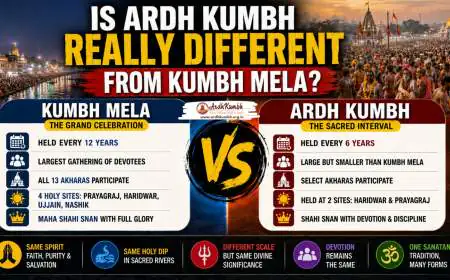
Is Ardh Kumbh Really Different From Kumbh Mela?
Read Guide →
Ardh Kumbh vs Maha Kumbh: The Real Difference Explained
Read Guide →
Can Women Take Shahi Snan at Ardh Kumbh?
Read Guide →
Ardh Kumbh 2027 Dates (Official) - Haridwar Snan Schedule
Read Guide →
Dharamshala Stay During Ardh Kumbh: Free & Budget Guide
Read Guide →
Official Progress Report of Haridwar Ardh Kumbh 2027 Infrastructure Projects
Read Guide →
Is October a Good Time to Visit Haridwar Before Ardh Kumbh 2027?
Read Guide →The Organic Spirituality: What Happens When You Let Go of Script ✅
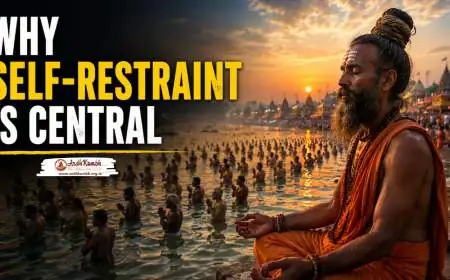
When you stop worrying about the prescribed rituals, you begin to notice that the Kumbh itself initiates you into a set of natural, organic rituals that are just as spiritually potent as any formal puja. The daily rhythm of waking before dawn, walking miles in the cold, and bathing in the river becomes a meditation of the body. The act of eating simple food, seated on the ground with thousands of others, becomes a ritual of gratitude and equality. The silence you find yourself slipping into, even in the midst of a roaring crowd, is a spontaneous mauna (vow of silence) that you did not plan. These organic practices often have a more lasting impact than any formal puja. They seep into your bones and change your default settings long after you return home. You might find, weeks later, that you wake earlier, crave simpler food, or feel a deeper patience in difficult situations. This is the Kumbh Mela without rituals doing its quiet, transformative work.
The pilgrimage has given you a new template for living, one based on presence, simplicity, and community. You did not need a manual to learn it. You simply needed to show up and let the Mela teach you, which it does with a gentle, persistent, and deeply intelligent force. The Kumbh is not a checklist of tasks to be performed correctly. It is an atmosphere, a state of consciousness, a temporary world where the usual barriers between the sacred and the mundane dissolve. The pilgrim who arrives without a rigid agenda is often the one who is most deeply transformed, because they have created an inner space for the unexpected and the spontaneous.
The Skeptic, the Foreigner, and the Non-Religious Seeker 🛕
The Kumbh Mela is, by its very nature, a deeply Hindu gathering, but its spiritual embrace extends far beyond the boundaries of any single religion. A foreigner with no knowledge of Hindu gods, an atheist drawn by the sheer spectacle of humanity, or a skeptic who sees the rituals as myth can all attend the Kumbh without following all rituals and have a legitimate, life-altering experience. The key is to approach with the same respect you would offer when entering any sacred space: dress modestly, speak softly, do not photograph people in moments of private devotion, and be willing to observe before you participate. You can sit quietly at the back of an akhara camp and simply watch the sadhus. The energy of their presence is a transmission that requires no translation. You can accept a meal at a bhandara, understanding that the simple act of sharing food is a universal spiritual language. You can walk the ghats in the pre-dawn darkness, absorbing the atmosphere of a million souls moving toward the water. None of this requires you to chant a mantra or make an offering.
The Kumbh will work on you regardless. It will challenge your cynicism, expand your definitions of community and devotion, and leave you with a sense of awe that no museum or monument can provide. The tradition does not demand that you believe; it simply invites you to be. For the non-religious pilgrim, the Kumbh offers a profound human experience: the spectacle of mass compassion in the bhandaras, the incredible logistics of a self-organizing city, the palpable peace that descends over millions of people gathered for a non-commercial, non-political purpose. This is a feast for the soul that requires no theological framework to be deeply nourishing.
The Unwritten Rituals: Seva, Silence, and Shared Humanity 🤲
The most powerful rituals at the Kumbh are often the ones that are not written in any book. They are the unwritten rituals of compassion, silence, and shared humanity that arise spontaneously in a sacred environment. The act of helping an elderly stranger down the slippery ghat steps is a ritual of seva (selfless service). The act of sitting in silence by the dhuni fire, watching the flames, and letting your mind settle, is a ritual of dhyana (meditation) that needs no instruction. The act of sharing a simple meal with a family who speaks a different language, communicating only through smiles and gestures, is a ritual of human connection. These are the rituals that truly transform the heart. They teach patience, humility, and the profound joy of being useful. They dissolve the ego's obsession with the self and open a doorway to a more connected, compassionate way of being.
When you skip the formal, prescribed rituals, you create a vacuum that these organic, living rituals can fill. You become more attentive to the present moment, more open to the spontaneous encounter with the divine. The sadhu who catches your eye and offers a silent blessing, the child who offers you a flower, the warm chai shared by a stranger on a cold morning—these become your pujas, your offerings, your sacred ceremonies. The Kumbh Mela without rituals becomes a pilgrimage not of doing but of being, a journey into a state of heightened awareness where every moment can become a prayer.
Common Misconceptions About Skipping Rituals ⚠️
A major barrier for many potential pilgrims is the belief that the Kumbh is an all-or-nothing affair—that you must perform complex pujas, shave your head, or follow strict dietary codes to be a "real" pilgrim. This is a misconception. While many devotees do choose to observe these powerful, symbolic acts, they are expressions of a personal journey, not tickets required for entry. Another common fear is that you will be judged or excluded if you do not know the mantras. In reality, the pandas are accustomed to guiding people of all levels of knowledge, and the crowd itself is so vast and diverse that no one is paying attention to whether you are performing a ritual perfectly. Some worry that attending Kumbh without following all rituals might be disrespectful. The opposite is true. Participating with a sincere heart, while respecting the sacred space and the devotion of others, is the highest form of respect.
What would be disrespectful is to treat the Mela as a mere tourist spectacle, to push and shove for a photo, or to mock what you do not understand. A silent, humble presence, even without a single traditional ritual, is deeply respectful and perfectly in line with the inclusive spirit of the Kumbh. The tradition knows that the river purifies the humble and the broken, the confused and the seeking. It does not require a flawless performance.
Practical Wisdom for the Ritual-Free Pilgrim ✅
If you are attending the Kumbh without following all rituals, a little practical wisdom can help you navigate the experience with peace and authenticity. First, do not pretend. If you do not know a mantra, do not mumble something that feels false. Stand in the water, be silent, and speak to the divine in the language of your own heart. A sincere "please help me" or a silent "thank you" is a complete prayer. Second, find your own sacred spot. You do not need to be at the most crowded, famous ghat for your bath to be powerful. Often, a quieter spot a little way along the river can provide the silence and solitude you need for a deeper connection. The river is the same, its grace equally present everywhere. Third, use the bhandaras. Eating at a community kitchen is not just a practical way to get a free meal; it is an immersion into the heart of the Kumbh's spirit of service and equality. You need no ritual to participate; you just sit down and receive.
Fourth, let the sadhus be your silent teachers. You do not need to ask them for a specific ritual or blessing. Simply sitting near a meditating sadhu, observing their stillness, and absorbing the peaceful atmosphere of their presence is a transmission that can be more powerful than any formal teaching. Finally, trust the process. The Kumbh is an intelligent, compassionate, and deeply transformative environment. If you arrive with an open heart and a respectful attitude, it will work on you in ways you cannot predict or control. The grace is not dependent on your ability to perform. It is a gift, freely given, and you are as worthy of it as the most learned pandit.
The Heart of the Kumbh: A Pilgrimage of Presence, Not Perfection
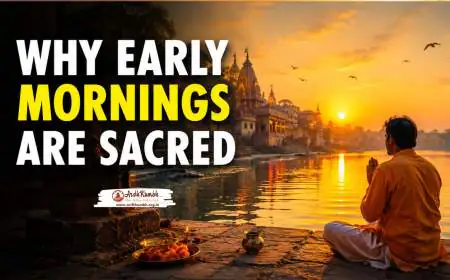
When you stand in the freezing water at dawn, the stars fading above you and the ancient mantras echoing across the river, you are participating in a ritual that is older than any written text. It is the ritual of a human soul, humbled and hopeful, seeking connection with the divine mystery that flows through all of existence. This ritual requires no priest, no offering, no specific words. It requires only your presence, your sincerity, and your willingness to let go. The Kumbh Mela will embrace you, whether you come with a complex puja list or with nothing but the clothes on your back and a silent prayer in your heart. The river is a mother, and a mother does not check her child's credentials before opening her arms. She simply loves. The Kumbh, in its deepest essence, is this love made tangible, a vast, flowing, and eternal invitation to come home. And you are always, already, worthy to accept it.
Frequently Asked Questions