














































Is Prior Spiritual Knowledge Required
Discover whether prior spiritual knowledge is required to attend Kumbh Mela. Learn why the sacred pilgrimage welcomes everyone, regardless of background, and how a sincere heart matters far more than scriptural learning.
The River That Only Asks for Your Heart, Not Your Credentials 🌊
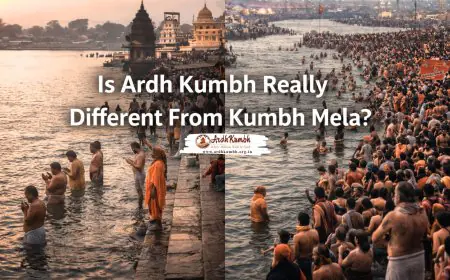
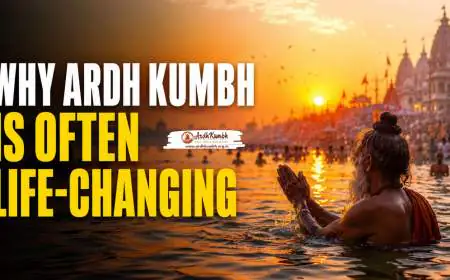
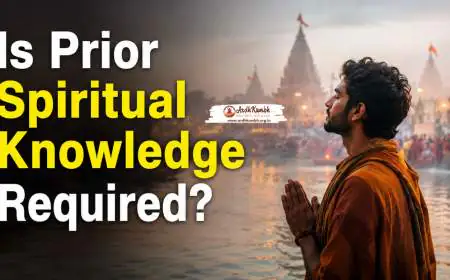
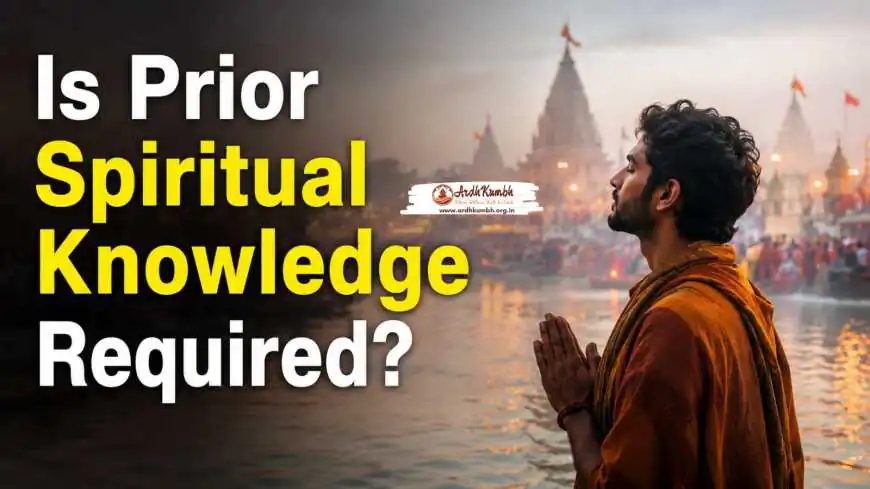
The greatest fear that holds people back from the Kumbh is the quiet, anxious belief that they are not "spiritual enough." They imagine that the Kumbh is a place only for saffron-clad ascetics, for learned pandits who chant Sanskrit with flawless precision, for those who have dedicated their entire lives to the study of the Vedas. This is a profound misunderstanding. Walk the ghats of the Sangam at any hour, and you will see the truth. You will see the old farmer who has never read a single holy book, standing knee-deep in the water, his eyes closed, his lips moving in a simple, silent prayer that no one taught him. You will see the wealthy businessman who cannot name a single Upanishad, standing with tears streaming down his face, overwhelmed by a presence he cannot explain. You will see the foreign traveler who knows not a word of Hindi, sitting quietly by the dhuni fire, absorbing a peace that requires no translation. The Ganga Ma does not check your credentials. She does not ask for a resume. She is a mother, and a mother loves all her children equally, the PhD and the illiterate, the saint and the sinner, the devout and the doubter.
The Kumbh Mela is built on a radical, ancient, and profoundly inclusive spiritual principle: that bhava, the inner feeling, is infinitely more important than any external knowledge. The scriptures themselves, which are often seen as the source of authority, explicitly state this. The great sage Vyasa, the compiler of the Vedas, wrote in the Mahabharata that a single act of pure, heartfelt devotion outweighs a thousand elaborate rituals performed by a learned scholar who lacks sincerity. The river is the real priest. The river is the real guru. And her only requirement is that you come with an open heart. This is not a modern, liberal reinterpretation of the tradition. It is the tradition's own deepest truth. The Kumbh is a place where you are allowed to not know. You are allowed to be a beginner. You are allowed to simply stand in the water and let the grace do its work without understanding a single thing about the complex, beautiful theology that surrounds you.
The Simple Snan: The Ritual That Requires No Instruction 💧
If you strip away every puja, every mantra, every offering, and every complex ceremony, what remains at the heart of the Kumbh is the snan, the sacred bath. And this single, central act requires absolutely no prior spiritual knowledge. You do not need a priest. You do not need a script. You do not need to know the correct Sanskrit verse. You can walk to the river's edge at the auspicious hour, hold a simple, silent intention in your heart—a prayer for a loved one, a wish for peace, a quiet desire to let go of a heavy burden—and immerse yourself in the cold, purifying water. That is it. That single act, performed with sincerity, is a complete and perfect pilgrimage. The water does not check your qualifications. The shock of the cold does not ask if you have studied the Vedas. It simply silences your chattering mind, brings you into the raw, immediate present moment, and washes away the accumulated fatigue of your life.
Many pilgrims who come to the Kumbh without any prior spiritual knowledge describe this direct, unmediated encounter with the sacred as the most authentic and transformative moment of their lives. They do not feel they have missed out on something because they did not know the mantras. On the contrary, they often feel that their experience was purer, more direct, less cluttered by the mind's need to understand and control. The river becomes the teacher. The cold becomes the mantra. The rising sun becomes the aarti. The simplicity of the act strips away the ego's pretense and leaves only the raw, vulnerable, and radiant soul, standing before the divine with nothing to offer but itself. And that, the tradition assures us, is the most precious offering of all.
Trending Guides Now
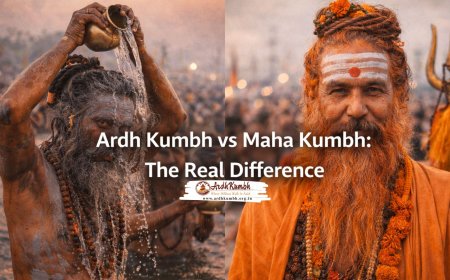
Ardh Kumbh vs Maha Kumbh: The Real Difference Explained
Read Guide →
Can Women Take Shahi Snan at Ardh Kumbh?
Read Guide →
Are Women Allowed in All Ritual Areas at Kumbh?
Read Guide →
Can Ardh Kumbh Be Experienced Online or Virtually?
Read Guide →
Best Routes to Reach Haridwar for Ardh Kumbh Mela
Read Guide →
Ardh Kumbh 2027 Dates (Official) - Haridwar Snan Schedule
Read Guide →
How Ardh Kumbh Sustained Leadership Traditions
Read Guide →
Can Ardh Kumbh Be Experienced Digitally
Read Guide →The Pandas and Sadhus: Your Guides Through the Unknown 🛕
For those who arrive at the Kumbh with little or no prior spiritual knowledge, the pilgrimage provides a vast, ancient, and deeply compassionate support system. The pandas, the hereditary pilgrim priests, are not there to judge your ignorance. They are there to guide you. For centuries, their families have served the families of pilgrims, and they are experts in meeting people exactly where they are. If you do not know the mantras, they will chant them for you. If you do not know the procedure, they will gently instruct you. They will take your simple, heartfelt intention and wrap it in the beautiful, ancient forms of the tradition, ensuring that your offering is made with dignity and grace. You do not need to be embarrassed by your lack of knowledge. The pandas have seen it all, and they serve the river, not a gatekeeping institution.
Similarly, the sadhus who gather at the Kumbh are among the most accessible and compassionate teachers you will ever meet. Many of them have renounced the world not to escape it but to serve it. You can approach a sadhu, sit quietly nearby, and simply absorb the peaceful, radiant atmosphere of their presence. You do not need to ask a profound philosophical question. You can simply be. If you do have a question, however simple or basic, many sadhus will respond with patience and kindness. Their wisdom is not locked away in inaccessible texts; it is a living, breathing presence that they are often eager to share. The Kumbh is a university where the greatest professors sit on the ground, clad in ash, and welcome every student, no matter how unlearned, with a silent, loving gaze.
The Organic Spirituality That Needs No Textbook ✅
When you stop worrying about what you do not know, you become open to the profound, organic spiritual teachings that the Kumbh itself provides without a single word of doctrine. The pilgrimage has its own silent curriculum, one that is learned through the body and the heart, not through the intellect. The discipline of waking at 3:30 AM in the freezing cold teaches you, more powerfully than any sermon, that you are stronger than your comfort-seeking mind. The long, slow walk to the ghat in the pre-dawn darkness teaches you the value of silence and presence. The simple, sattvic meal eaten sitting on the ground with strangers teaches you the joy of simplicity and the dignity of equality. The patience you are forced to cultivate in the endless, shuffling queues teaches you that waiting is not a waste of time but a sacred space.
This experiential learning is the true spiritual knowledge of the Kumbh, and it is available to everyone, regardless of their intellectual background. A farmer who has never read a book and a professor of philosophy are equal students in this school. They both feel the same cold. They both must cultivate the same patience. They both are offered the same profound silence by the river at dawn. The Kumbh teaches you through your own lived experience, imprinting its wisdom directly onto your soul. You return home not with a head full of new concepts but with a body that remembers the cold water, a heart that remembers the kindness of strangers, and a quiet mind that remembers the peace of the silent, pre-dawn darkness. This is a spiritual knowledge that cannot be acquired from any text; it can only be lived.
The Skeptic, the Foreigner, and the Non-Religious Seeker 🌏
The Kumbh Mela is, by its very nature, a deeply Hindu gathering. But its spiritual embrace extends far beyond the boundaries of any single religion or any requirement of prior spiritual knowledge. A foreigner who has never heard of the Vedas, an atheist who is drawn by the sheer spectacle of humanity, or a skeptic who views the rituals with intellectual doubt—all can attend the Kumbh and have a legitimate, deeply moving, and even life-altering experience. The key is to approach the pilgrimage with the same respect you would offer when entering any sacred space, regardless of your personal beliefs. Dress modestly. Speak softly. Do not photograph people in moments of private devotion without their permission. Be willing to observe before you participate.
You can sit quietly on the steps of a ghat and simply watch the endless river of humanity flowing toward the water. The energy of a million souls united in a single, peaceful purpose is a palpable, moving force that requires no theological framework to be felt. You can accept a simple meal at a bhandara, understanding that the act of sharing food with strangers is a universal human language of compassion. You can walk through the akhara camps and observe the sadhus, witnessing a way of life that challenges every assumption of modern consumer culture. The Kumbh will work on you regardless of your belief system. It will challenge your cynicism, expand your understanding of human community, and leave you with a profound sense of awe. The tradition does not demand that you believe before you can participate. It simply invites you to be present, and in that presence, a transformation often unfolds that no amount of prior study could have predicted.
The Child's Wisdom: Why Beginners Are Often Closest to the Divine 👶
There is a beautiful and often overlooked truth at the heart of the Kumbh: those who come with the least prior spiritual knowledge are often those who receive the most. The learned scholar, burdened by a lifetime of concepts and intellectual frameworks, can sometimes struggle to simply be present. The mind is so busy analysing, comparing, and categorising that it misses the direct, raw experience of the sacred. But the simple farmer, the uneducated grandmother, the curious foreigner with no background—they come with an open, empty cup. They come with a childlike wonder. They are not trying to fit the Kumbh into a pre-existing theological box. They are simply allowing the Kumbh to happen to them. This beginner's mind, this openness to direct experience, is one of the most powerful spiritual states a human being can cultivate.
The tradition itself honours this. The great Bhakti saints, who are the spiritual heart of the Kumbh, were often from the lowest and least educated strata of society. Kabir was a weaver. Ravidas was a leather-worker. Mirabai was a queen, but her devotion was simple, emotional, and utterly unlettered. Their songs and poems, which fill the air at the Kumbh, are a constant reminder that the divine is found not in the complexity of the mind but in the simplicity of the heart. The child who walks into the Ganga without knowing a single mantra, holding their father's hand and looking up with wide, trusting eyes, is often closer to God than the most learned pandit. The Kumbh is a place where the heart is the only true teacher, and the less you think you know, the more you are able to learn.
Practical Guidance for the First-Time Pilgrim With No Background ✅
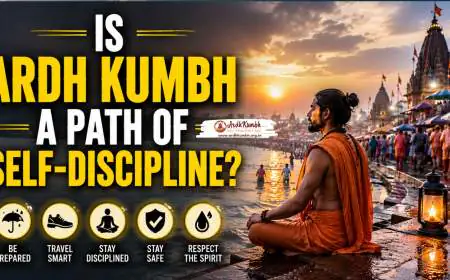
If you are attending the Kumbh with no prior spiritual knowledge, a few simple, practical steps can help you navigate the experience with peace and confidence. First, release the fear of doing it wrong. There is no wrong way to offer your heart to the river. A silent, sincere prayer in your own language is a complete and perfect ritual. Second, do not be afraid to ask for help. The pandas are there to guide you. A simple, respectful question will be met with kindness. Third, let the Kumbh itself be your teacher. Do not try to intellectually understand everything. Simply be present. Feel the cold. Watch the sun rise. Taste the simple food. Listen to the chanting. Let the experience wash over you like the river itself. Fourth, formulate a simple intention before you arrive. It doesn't need to be a complex sankalpa. It can be as simple as "I want to find peace" or "I want to let go of my anger." That intention will be the silent compass that guides your journey.
Fifth, find a quiet spot and just sit. The Kumbh is vast, and there are always quiet corners. Sit by the river and do nothing. Do not try to meditate. Do not try to pray. Just sit and allow the ancient, sacred atmosphere to seep into your bones. Sixth, eat at the bhandaras. The simple act of sharing a meal with strangers is one of the most powerful and accessible spiritual practices at the Kumbh. You do not need to know any mantras to sit in the row and receive a hot, nourishing meal offered with love. Finally, trust the process. The Kumbh is an intelligent, compassionate, and deeply transformative environment. If you arrive with an open heart and a respectful attitude, it will work on you in ways you cannot predict or control. The grace is not dependent on your knowledge. It is a gift, freely given, and you are as worthy of it as the most learned sage.
The Door Is Already Open
The Kumbh Mela does not have a gatekeeper. There is no bouncer at the river's edge checking your spiritual credentials. The door to the most sacred, transformative, and ancient pilgrimage on earth is already open, and it has always been open. The question is prior spiritual knowledge required is born of a modern anxiety, a fear that we are not qualified for the sacred. But the sacred, in its truest form, does not require qualifications. It requires only your presence. The river is flowing. The stars are aligning. The city of tents is rising, and the sadhus are lighting their dhuni fires. You are invited, not because you are learned, but because you are a human soul, and that is the only qualification that has ever mattered. Walk through the open door. The Mother is waiting.
Frequently Asked Questions