












































What Ardh Kumbh Teaches About Unity
Discover what Ardh Kumbh teaches about unity. From the leveling waters of the Sangam to shared meals in the bhandara, explore how this ancient pilgrimage dissolves divisions and reveals our profound interconnectedness.
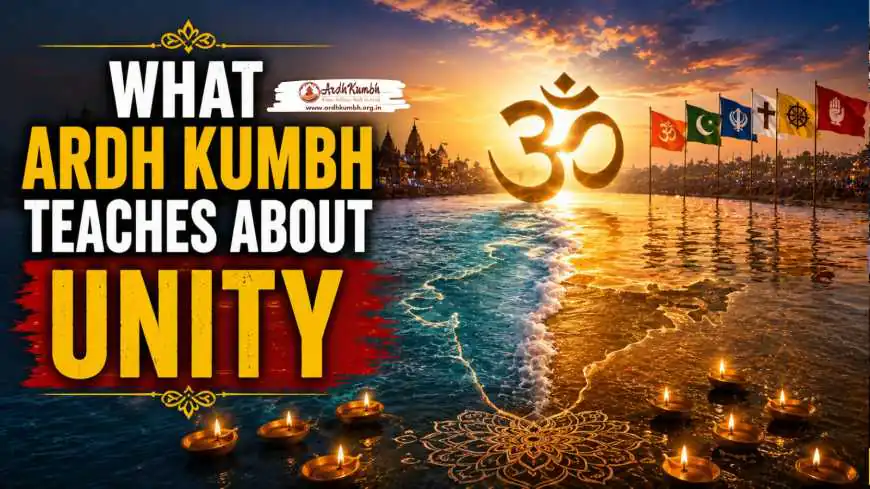
The Leveling Water: Where All Differences Dissolve 🌊
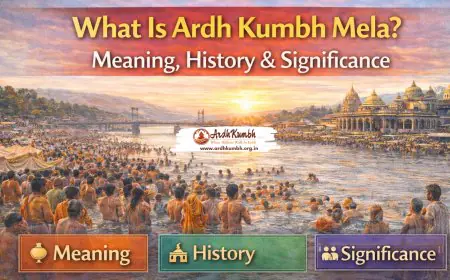
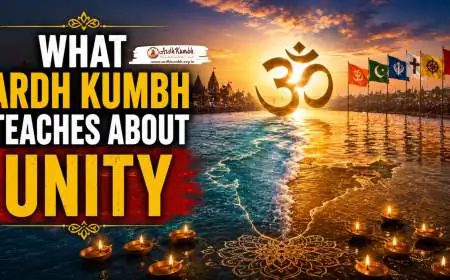
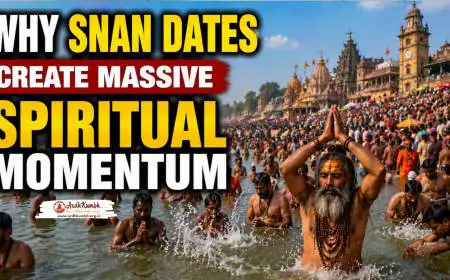
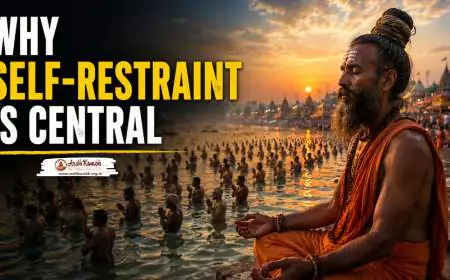
The first and most powerful teacher of unity at the Ardh Kumbh is the sacred river herself. The moment of the snan, the holy bath, is the great equalizer. The freezing, pre-dawn water does not ask for your caste before it steals your breath. It does not check your bank balance before it shocks you into a state of pure, involuntary presence. It does not care about your political party, your educational degrees, or your family lineage. The water that closes over the head of a prince is the exact same water that closes over the head of a pauper. In that instant of total, gasping vulnerability, every single pilgrim is reduced to the same fundamental human state: a soul in a body, seeking purification and grace. The river is a mother, and a true mother does not love one child more than another. This is the foundational, radical theology of the Kumbh, and it is the wellspring of its unifying power.
This embodied experience of equality is a profound, life-changing lesson. You cannot stand naked and shivering next to a stranger from a completely different walk of life, both of you united in a single, desperate, joyful act of faith, and ever truly believe in your own inherent superiority again. The Sangam dissolves the ego's attachment to social status, revealing the simple, radiant truth of our shared existence. The pilgrimage teaches that the distinctions we cling to are mere costumes, and that our true identity is something far deeper, far more ancient, and far more unified. The cold water is the baptism that washes away not just personal sin but the illusion of a separate, isolated self. This is the first and most essential lesson of unity: we are all, equally and unconditionally, children of the divine Mother.
The Bhandara: A Radical Experiment in Shared Nourishment 🍚
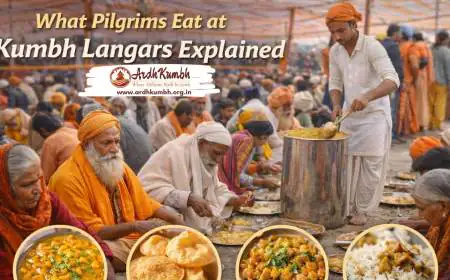
If the snan is the ritual of unity, the bhandara—the free community kitchen—is its daily, practical, and deeply nourishing sustenance. The bhandaras of the Ardh Kumbh are arguably the largest and most effective experiments in creating an egalitarian, classless society ever conducted. Every day, hundreds of thousands of meals are served, free of charge, to anyone who sits in the row. There is no VIP section. There is no premium menu for those who can pay. There is no means-testing, no qualification, and no questions asked. A wealthy philanthropist, a wandering sadhu, an impoverished widow, and a curious foreign traveler all receive the same simple, sattvic food, ladled onto the same type of leaf plate by volunteers who serve everyone with the same gesture of humble respect. The act of sharing a meal, which in every culture is a profound sign of kinship and equality, is performed on an industrial, soul-stirring scale.
The bhandara is a masterclass in unity. It teaches, through a full stomach and a grateful heart, that at the most fundamental level of human need—hunger—we are all absolutely the same. The food you eat is the same as the food eaten by the person beside you, regardless of their social standing. This is a radical dismantling of hierarchy, a daily, embodied refutation of the caste system that has divided Indian society for centuries. A high-caste pilgrim who eats food prepared and served by hands that, in the outside world, would be considered "polluted," is performing a quiet, personal, and deeply political act of spiritual revolution. The bhandara creates a fleeting but potent community of equals, a temporary family bound not by blood or social status but by the simple, sacred act of sharing a meal. This is the unity of the stomach and the heart, a unity that is felt in the bones and remembered long after the pilgrimage is over.
Trending Guides Now

Who Decides Ardh Kumbh Dates and Why They Never Change
Read Guide →
Is Ardh Kumbh a Form of Tapasya?
Read Guide →
Ardh Kumbh Explained for First-Time Pilgrims
Read Guide →
Ardh Kumbh Explained Simply: Meaning, Power & Purpose
Read Guide →
Best Routes to Reach Haridwar for Ardh Kumbh Mela
Read Guide →
Ardh Kumbh 2027 Dates (Official) - Haridwar Snan Schedule
Read Guide →
How Ardh Kumbh Sustained Leadership Traditions
Read Guide →
Why Ardh Kumbh Encourages Inner Silence
Read Guide →The Anonymous Crowd: Where the Ego Finds No Foothold 🤲
In the vast, moving ocean of humanity at the Ardh Kumbh, your carefully constructed social identity dissolves into a profound and liberating anonymity. The modern world is a relentless project of ego-construction, where we are constantly pressured to assert our individuality, to stand out, to be special. The Ardh Kumbh systematically dismantles this exhausting performance. In the dense, flowing crowd, your job title, your wealth, your social media following—none of it is visible, and none of it can help you navigate the cold or the long walk to the ghat. You are simply one dark shape among millions, moving with the same current toward the same sacred goal. This is the unity of anonymity, a strange, weightless freedom that comes from being no one in particular. The ego, which thrives on differentiation and recognition, suddenly finds itself out of work, and in that quiet, unforced retirement, a deep sense of connection with all the other anonymous, striving, beautiful souls around you blossoms.
This is not a dehumanizing loss of identity. It is a spiritual liberation. You are freed from the pressure to perform, to impress, to maintain a status. You are free to simply be, and in that simple being, you feel a profound kinship with everyone around you. The old woman struggling to walk, the young child laughing at a balloon, the sadhu lost in silent meditation—you feel a connection to all of them that is not based on any social similarity but on the simple, profound, shared fact of being alive, on pilgrimage, in this sacred place. The crowd, which you may have feared as a crushing, impersonal force, becomes instead a teacher of our deepest interconnectedness. The Ardh Kumbh reveals that the ego's desperate need to be special is a burden, and that the peace of being just one soul among millions is one of the most unifying and liberating experiences a human being can have.
The Shared Hardship: Solidarity Forged in the Cold ❄️
Unity is not just a philosophical concept at the Ardh Kumbh; it is forged in the shared, voluntary endurance of physical hardship. The freezing pre-dawn wake-up, the miles of walking on aching feet, the shock of the icy water, the simple, sparse food, and the basic, exposed accommodation—all of these are endured by everyone, regardless of their worldly status. A millionaire and a laborer shiver identically in the pre-dawn mist. A powerful politician and a homeless widow queue in the same, patient line for a simple meal. This shared physical vulnerability creates a powerful bond of solidarity. The cold is a great unifier. It strips away the insulation of privilege and reveals the common, fragile, and resilient humanity that we all share.
In this shared struggle, the artificial barriers that normally separate us crumble. You find yourself sharing a warm cup of chai with a stranger whose language you do not speak, communicating only through the universal language of a smile and a gesture of offering. You help an elderly woman steady herself on the slippery ghat steps, and your heart opens in a spontaneous act of compassion. The pilgrimage teaches that suffering, when it is shared and when it is undertaken for a sacred purpose, ceases to be a source of isolation and becomes a source of profound connection. The Ardh Kumbh is a reminder that we are all pilgrims on a difficult journey, and that the only way to walk the path is together, supporting each other, with patience, kindness, and an open heart.
The Sacred Geography: A Map That Unites a Subcontinent 🗺️
The very design of the Ardh Kumbh is a lesson in pan-Indian unity. The gathering rotates among four sacred sites—Prayagraj, Haridwar, Ujjain, and Nashik—each anchoring a different corner of the vast subcontinent. This rotation means that the Kumbh is not the exclusive possession of one region; it belongs to all of India. A pilgrim from the deep south traveling to the Godavari in Nashik is connected to a pilgrim from the Himalayas traveling to the Ganga in Haridwar. They are drawn by the same cosmic clock, the same ancient story of the amrit, the same longing for purification. The sacred geography itself teaches that the land is a single, holy entity, a Bharatavarsha whose rivers, mountains, and confluences are all part of a single, divine design. The pilgrimage routes, walked for centuries by millions, have woven the diverse peoples of this land into a single, interconnected spiritual family. The Kumbh creates a shared mental map, a sense of belonging to one sacred land that transcends the fragmented political boundaries of the world.
This geographical unity is reinforced by the akhara network, the great monastic orders whose monasteries span the entire subcontinent. Their sadhus, who wander freely across regions, are living threads that connect the spiritual map. At the Kumbh, they all converge, bringing with them the dialects, the songs, and the spiritual practices of their respective regions, creating a vibrant, living tapestry of India's diverse spiritual heritage. The Ardh Kumbh is a powerful, recurring demonstration that the staggering diversity of this land is not a weakness but a source of immense strength and beauty, a harmonious symphony of different voices all singing the same sacred song.
The Temporary City: A Living Model of a United Society 🏕️
For a few sacred weeks, the Ardh Kumbh creates a functioning city of millions that is itself a living, breathing model of a unified, compassionate society. This vast metropolis, with its own infrastructure, hospitals, markets, and security, operates not on the principles of profit or power but on the principles of seva (selfless service) and shared devotion. A trader from Bengal sets up a stall next to a farmer from Gujarat. A sadhu from the Tamil south gives a discourse attended by pilgrims from Punjab. The official signage is in multiple languages, and the air is filled with a beautiful, chaotic mix of dialects. The bhandaras feed everyone, irrespective of their background. This is the nation not as a political theory but as a lived, bustling, and peaceful reality. The experience of living in this temporary city, even for a few days, imprints on the pilgrim's soul a vision of a harmonious, pan-Indian community. It is a powerful, lived refutation of the forces of division and a compelling affirmation of the deep, underlying civilizational unity of India.
The Six-Year Pulse: A Rhythm of Collective Return 🔄
The intimate, six-year rhythm of the Ardh Kumbh creates a unique sense of collective unity across time. The pilgrim who returns every six years, joining the same river of humanity at the same cosmic moment, feels a deep, rhythmic connection with all the other pilgrims who are also returning. It is a shared, sacred appointment, a collective heartbeat that binds millions of strangers into a single, temporal community. This recurring rhythm teaches that unity is not a one-time event but a continuous, living relationship, a shared journey through time toward the same eternal source.
The River That Knows Only Children
The Ganga does not know the names of our castes, our nations, or our political ideologies. She knows only one name for us all: child. The Ardh Kumbh is the great homecoming where we remember this name. It is the place where the illusions of division are washed away by the cold, gray, eternally flowing water, and we stand revealed to ourselves and to each other as what we have always been: a single, luminous, and infinitely precious family. This is the ultimate, enduring lesson of the Ardh Kumbh. It teaches that unity is not a political slogan to be enforced but a spiritual reality to be recognized, a reality that is most vividly, joyfully, and undeniably experienced in the moment we step, together, into the sacred river and realize, with a shivering, ecstatic certainty, that we are all one.
Frequently Asked Questions