















































is Ardh Kumbh Similar to Other Yatras?
Compare Ardh Kumbh with Amarnath, Vaishno Devi, Char Dham, and other Hindu yatras. Discover what makes Kumbh unique and what it shares.
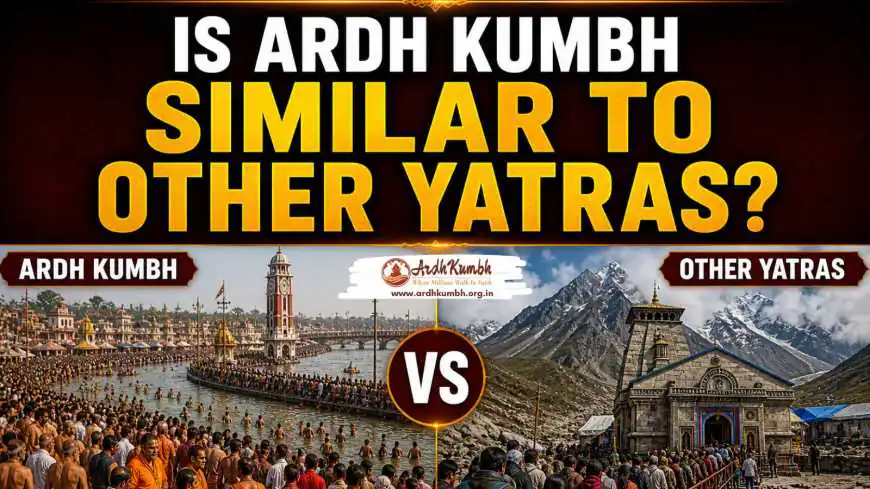
What All Hindu Yatras Share - The Common Spiritual Heart
Before I dive into the differences, let me honor what is the same. Because the similarities between Ardh Kumbh and other yatras run deep. They reveal the shared spiritual architecture of Hindu pilgrimage itself.
Every Hindu yatra involves leaving home. You step out of your familiar world - your bed, your kitchen, your routines, your distractions. You become a pilgrim, which literally means a stranger in a strange land. This leaving is not accidental. It is the whole point. Home keeps you comfortable. Comfort keeps you asleep. The yatra wakes you up by making you uncomfortable.
Every Hindu yatra involves physical effort. At Ardh Kumbh, you walk. At Amarnath, you climb. At Vaishno Devi, you trek. At Char Dham, you drive on dangerous mountain roads. The body must work. The body must sweat. The body must hurt. This physical effort is not a punishment. It is a purification. When your body is exhausted, your mind becomes quiet. And when your mind is quiet, you can hear things you cannot hear when you are comfortable.
Every Hindu yatra involves water. At Ardh Kumbh, you bathe in the Ganga. At Amarnath, you offer water to the ice lingam. At Vaishno Devi, you wash your feet before entering the cave. At Rameswaram, you bathe in the 22 theerthams. Water is the universal purifier in Hinduism. It washes away not just dirt, but karma, sin, and bad luck. Every yatra has its sacred water. Ardh Kumbh just has more of it.
Trending Guides Now

Can Families Attend Ardh Kumbh Comfortably Together?
Read Guide →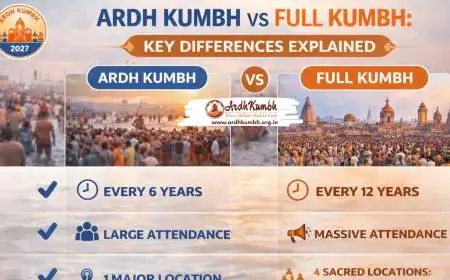
Ardh Kumbh vs Full Kumbh: Key Differences Explained
Read Guide →
Can Elderly Pilgrims Avoid Heavy Crowds at Kumbh?
Read Guide →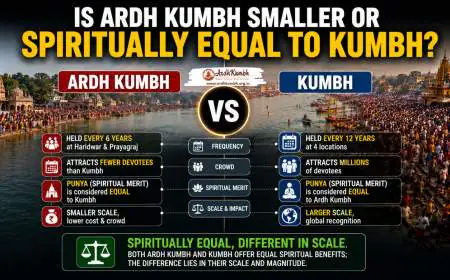
Is Ardh Kumbh Smaller or Spiritually Equal to Kumbh?
Read Guide →
Best Routes to Reach Haridwar for Ardh Kumbh Mela
Read Guide →
Essential Rules Every Ardh Kumbh 2027 Pilgrim Must Follow
Read Guide →
Who Are Naga Sadhus and Why They Lead Kumbh
Read Guide →
Biggest Crowds Ever Recorded at Ardh Kumbh
Read Guide →Every Hindu yatra involves community. You do not do a yatra alone. You walk with strangers who become family. You share food. You share stories. You share struggles. You share the dip or the darshan or the offering. This community is the yatra. Without it, you are just a tourist with a ticket. With it, you are a pilgrim on a sacred journey.
Every Hindu yatra involves letting go. You let go of your schedule. You let go of your cleanliness. You let go of your dignity when you are pushed and shoved and slept on the floor. You let go of your money when you donate. You let go of your ego when you stand in line behind a hundred people who are no different from you. Letting go is the secret teaching of every yatra. Ardh Kumbh just gives you more opportunities to practice.
So yes. Ardh Kumbh is deeply similar to other yatras in all the ways that matter most. The spiritual engine is the same. But the chassis, the body, the experience - that is where the differences become dramatic.
The Scale Difference - Kumbh Versus Everything Else
Let me start with the most obvious difference. Scale. The Amarnath Yatra sees about 3 to 5 lakh pilgrims per year. That is 300,000 to 500,000 people. Vaishno Devi sees about 1 crore pilgrims annually. That is 10 million people spread across the whole year. Char Dham sees similar numbers. These are huge numbers. They are impressive. They cause traffic jams and require massive logistics.
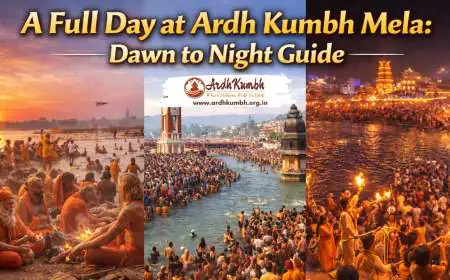
Ardh Kumbh sees 5 crore pilgrims. That is 50 million people. In six weeks.
Let me put that in perspective. The entire population of California goes to Ardh Kumbh every six years. The entire population of Spain goes. The entire population of Canada goes. All at the same time. In the same place. For the same dip.
No other yatra on earth comes close to this scale. Not Hajj (2.5 million). Not Kumbh's own regular Kumbh Melas (still smaller than Ardh Kumbh in some cycles). Not anything. Ardh Kumbh is the largest gathering of humans on planet earth for any religious purpose. Period.
What does this scale do to the pilgrimage experience? Everything. At Vaishno Devi, you wait in line for a few hours. At Ardh Kumbh, you wait in line for a whole day. At Amarnath, you see crowds but still have personal space. At Ardh Kumbh, you do not have personal space. You are pressed against strangers for hours. Your body is not your own. Your boundaries dissolve.
This scale changes the spiritual lesson. At a smaller yatra, you learn patience. At Ardh Kumbh, you learn surrender. You cannot fight the crowd. You cannot outsmart the crowd. You cannot demand that the crowd make space for you. You must become the crowd. You must flow like water. That is a different teaching. A harder teaching. A teaching that only Kumbh can give.
The Destination Difference - Rivers Versus Temples
Let me point out another fundamental difference. Ardh Kumbh has no temple. It has no shrine. It has no idol. It has no cave where a god is said to reside. The destination is the river. The Ganga. The Yamuna. The Saraswati (mythical, but represented by the confluence). The destination is water.
Almost every other major Hindu yatra is a journey to a temple or a natural shrine that contains a deity. Vaishno Devi is a cave with a pindi (stone) representing the Goddess. Amarnath is a cave with an ice lingam representing Shiva. Char Dham is four temples in the Himalayas. Jagannath Puri is a temple to Jagannath. Tirupati is a temple to Venkateswara.
Ardh Kumbh is different. The Ganga is not a temple. She is a river. She is alive. She moves. She changes. She floods and she shrinks. She has no roof. She has no walls. She has no priests who control access (though many try). She is wild in a way that no temple can be.
This difference changes everything about the pilgrimage experience. At a temple, the deity is fixed. You go to the deity. The deity does not come to you. At Kumbh, the Ganga has already come to you. She is flowing past you as you read this sentence. You do not need to find her. You just need to touch her.
At a temple, you need a priest to mediate. The priest knows the rituals. The priest knows the mantras. At Kumbh, you need no priest. You need no mediation. You walk into the water. You say your own prayer. You take your own dip. The Ganga does not ask for credentials. She receives everyone.
This makes Ardh Kumbh more democratic than any temple yatra. The poorest Dalit and the richest Brahmin enter the same water. No one checks your caste at the riverbank. No one asks for your gotra. The Ganga does not care. She flows for everyone. That is a spiritual teaching that no temple can offer in the same way.
The Schedule Difference - Planets Versus Calendars
Let me talk about something that makes Ardh Kumbh radically different from almost every other yatra. The schedule. Most Hindu yatras happen on fixed calendar dates. Vaishno Devi is open year-round, but certain months are more crowded. Amarnath happens in July-August. Char Dham opens in April-May and closes in October-November. These dates are decided by convention, weather, and tradition.
Ardh Kumbh is different. Ardh Kumbh happens when the planets say it happens. Specifically, when Jupiter enters certain zodiac signs and the Sun enters certain positions. The calculation is astronomical, not convenient. If the planets align in February, Kumbh happens in February, even if it is freezing. If the planets align in May, Kumbh happens in May, even if it is scorching.
This planetary schedule connects Ardh Kumbh to the cosmos in a way that no calendar-based yatra can match. The pilgrim is not following a human decision. The pilgrim is following the stars. There is something deeply humbling about that. You cannot argue with Jupiter. You cannot reschedule Kumbh because the weather is bad. The planets are the boss.
This also means that Ardh Kumbh has a rhythm that is not human. It happens every six years. Not every year. Not every month. Every six years. That is long enough for a generation to grow up between Kumbhs. It is short enough that a person can attend many Kumbhs in a lifetime. This six-year rhythm creates a long memory. Families plan for Kumbh years in advance. Children are told about the Kumbh their parents attended before they were born.
No other yatra has this planetary discipline. Most yatras are available whenever you want to go (within reason). Ardh Kumbh is available only when Jupiter says so. That scarcity makes it precious. That preciousness makes it sacred in a way that convenience can never be.
The Duration Difference - Weeks Versus Days
Let me point out another difference that changes everything. Ardh Kumbh lasts for weeks. A typical pilgrim spends 3 to 7 days at the Mela. Some spend the entire Kumbh duration - up to 45 days. Compare this to other yatras. Amarnath takes 3-5 days total, including travel. Vaishno Devi takes 1-2 days. Char Dham takes 2-3 weeks to complete all four sites, but each site is visited for a single day.
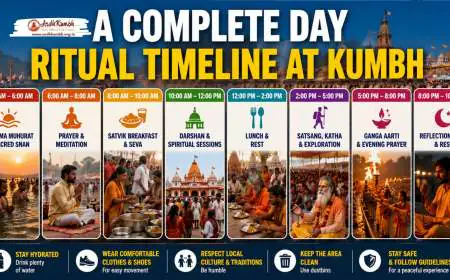
Ardh Kumbh is a prolonged immersion. You do not just visit. You live at Kumbh. You sleep there. You eat there. You wake up there. You walk the same paths every day. You see the same sadhus every morning. You develop routines. You develop relationships. The Mela becomes your home, however temporary.
This duration changes the spiritual impact. A short yatra gives you a peak experience. You climb the mountain, you see the ice lingam, you feel the awe, you go home. The memory fades. A long yatra like Kumbh gives you a plateau experience. The awe is not constant. Some days are boring. Some days are frustrating. Some days you just want to go home. But that ordinariness is the teaching. Kumbh teaches you that spirituality is not just about peak moments. It is about showing up on the boring days. About keeping the faith when nothing magical is happening. About being patient when you are tired and hungry and the crowd is not moving.
You cannot learn that in a 2-day yatra. You can only learn it in a prolonged immersion like Kumbh. This is one of the most important differences between Ardh Kumbh and other yatras. Kumbh is not a sprint. It is a slow, grinding, beautiful march that strips away your illusions one by one.
The Community Difference - Pilgrims Versus Tourists
Let me be honest about something that might upset people who love other yatras. At many Hindu pilgrimages today, the line between pilgrim and tourist has become blurry. You see people taking selfies at the Amarnath cave with the ice lingam in the background. You see people shopping for souvenirs at Vaishno Devi. You see people complaining about hotel quality at Char Dham.
Ardh Kumbh is different. You cannot be a tourist at Kumbh. There is nothing to consume. There are no comfortable hotels. There are no restaurants with menus. There are no guided tours that explain what you are seeing (though some try). There is just... the Mela. The crowds. The dust. The cold. The waiting. The water.
At Kumbh, you are forced to be a pilgrim. You cannot opt out. You cannot buy your way into comfort. The richest person in India sleeps on the same hard ground as the poorest. The most famous celebrity waits in the same line as everyone else. There is no VIP darshan at Kumbh. There is just the queue.
This leveling creates a community that is different from any other yatra. At Vaishno Devi, there are VIP passes that let you skip the line. At Tirupati, there are special darshan tickets for a fee. At Kumbh, there is no escape. You are equal. You suffer together. You wait together. You dip together.
That togetherness creates bonds that do not exist in more commercialized pilgrimages. The stranger who shared his blanket with you at 3 AM is not a stranger anymore. The family who offered you chai while you waited in line is not a different caste anymore. The sadhu who smiled at you when you were shivering is not a different religion anymore. You are all pilgrims. You are all human. You are all cold.
This community is the heart of Kumbh. And it is something that other yatras, with their hotels and their VIP passes and their souvenir shops, are slowly losing. Kumbh has not lost it yet. Hopefully, it never will.
What Makes Ardh Kumbh Truly Unique
Let me summarize what makes Ardh Kumbh different from other yatras in a way that is simple and clear.
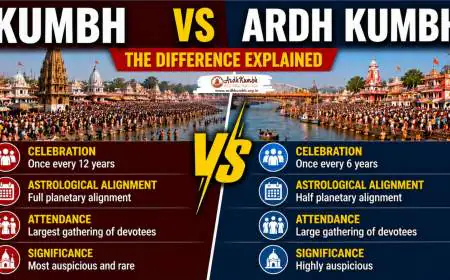
Scale - 50 million people. No other yatra comes close.
Destination - A river, not a temple. No walls. No roof. No priests.
Schedule - Planets, not a calendar. Every six years. Not every year.
Duration - Weeks, not days. A prolonged immersion, not a quick visit.
Community - No VIP passes. No shortcuts. Everyone suffers together. Everyone dips together.
Spiritual teaching - Surrender more than patience. Flow more than climb. Equality more than hierarchy.
These differences are not minor. They are fundamental. Ardh Kumbh is not just a bigger version of Vaishno Devi. It is not just a wetter version of Amarnath. It is a completely different category of pilgrimage. And that is why people travel from across India and around the world to attend it, even when there are perfectly good temples and caves much closer to home.
Kumbh offers something that no other yatra can offer. The chance to be one among millions. The chance to disappear into a crowd and find yourself. The chance to touch water that has been touched by centuries of pilgrims before you. The chance to wait so long that waiting becomes meditation. The chance to be uncomfortable for so long that comfort loses its grip on you.
That is Ardh Kumbh. That is why it is similar to other yatras in spirit but different from them in substance. And that is why, if you ever get the chance to go, you should go. Not because it is better than other yatra. Because it is different. And difference is the mother of learning.
The Family Resemblance - Why They Are All Yatras
Let me end this comparison on a note of unity. For all their differences, Ardh Kumbh and other Hindu yatras are family. They share DNA. They share a purpose. They share a structure. They are all attempts to answer the same human question: How do I become better than I am?
At Amarnath, you climb to the ice lingam and you ask: Shiva, make me stronger.
At Vaishno Devi, you trek to the cave and you ask: Mother, protect me.
At Char Dham, you circle the Himalayas and you ask: Vishnu, show me the way.
At Ardh Kumbh, you dip in the Ganga and you ask: Water, wash me clean.
The words are different. The destinations are different. The durations are different. But the longing is the same. The surrender is the same. The transformation - if you are lucky - is the same.
So is Ardh Kumbh similar to other yatras? Yes. Deeply. Fundamentally. Spiritually. And also no. Completely. Magnificently. Uniquely.
It is both. And that both/and is the truth that every pilgrim eventually discovers. All yatras are one yatra. And yet, each yatra is the only yatra that matters. Kumbh is special because it is Kumbh. Amarnath is special because it is Amarnath. They do not compete. They complete each other. Together, they form the pilgrimage tradition that has kept Hinduism alive for thousands of years.
That is the final answer. That is the truth. Go to Kumbh. Go to Amarnath. Go to Vaishno Devi. Go to Char Dham. Let each yatra teach you something different. And let all of them together teach you what it means to be a pilgrim on the long, strange, beautiful road of life.
Frequently Asked Questions