

































Can You Skip Rituals and Still Gain Benefits?
Can you gain spiritual benefits at Kumbh without performing rituals? Yes. Discover how presence, observation, and inner intention matter more.

What Rituals Actually Do - The Purpose Beneath the Performance
Let me start by clearing up a huge misunderstanding. Most people think rituals are about pleasing God or earning merit or following rules. That is what rituals look like from the outside. But from the inside, rituals do something completely different. Rituals are technology. They are tools designed to shape your inner state.
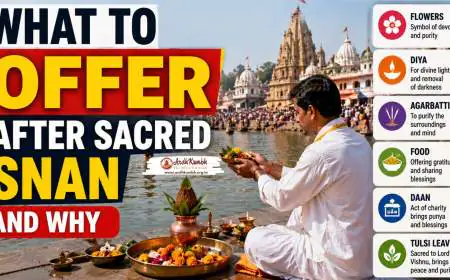
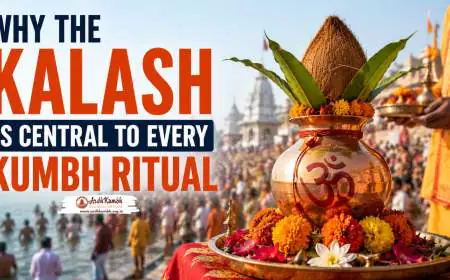
When you light a diya (lamp), you are not just offering light to a deity. You are training your mind to see light as sacred. When you chant a mantra, you are not just reciting words. You are using sound to vibrate your body into a different frequency. When you offer flowers or fruits, you are not just giving gifts. You are practicing letting go of possessions. When you take a dip in the Ganga, you are not just getting wet. You are practicing surrender to something larger than yourself.
Rituals work because humans are embodied creatures. You cannot just think your way into a different state. You have to do something. Your body has to move. Your hands have to act. Your mouth has to speak. Rituals give your body something to do while your mind catches up.
Now here is the crucial point. If you can achieve the same inner state without the external ritual, then the ritual is not necessary. The ritual is a means, not an end. The end is transformation. Rituals are one path to that transformation. But they are not the only path.
Trending Guides Now

Can Families Attend Ardh Kumbh Comfortably Together?
Read Guide →
Ardh Kumbh vs Full Kumbh: Key Differences Explained
Read Guide →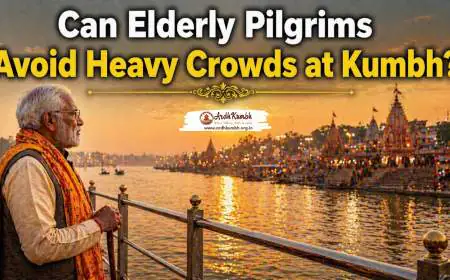
Can Elderly Pilgrims Avoid Heavy Crowds at Kumbh?
Read Guide →
Is Ardh Kumbh Smaller or Spiritually Equal to Kumbh?
Read Guide →
Best Routes to Reach Haridwar for Ardh Kumbh Mela
Read Guide →
Essential Rules Every Ardh Kumbh 2027 Pilgrim Must Follow
Read Guide →
Who Are Naga Sadhus and Why They Lead Kumbh
Read Guide →
Biggest Crowds Ever Recorded at Ardh Kumbh
Read Guide →At Kumbh, the rituals are everywhere. People are chanting. People are offering. People are bathing in specific ways at specific times. But underneath the rituals, the same transformation is available through other means. Through observation. Through presence. Through connection. Through endurance. Through silence. Through wonder.
So yes, you can skip the rituals. But you cannot skip the transformation. You have to find another way to get there. The rest of this article will show you how.
The Dip Without the Mantra - What the Water Does Anyway
Let me start with the most important ritual at Kumbh - the holy dip. Traditionally, you are supposed to chant specific mantras, face a specific direction, go under the water a specific number of times, and offer prayers to the Ganga as a goddess. That is the ritual package.
Now imagine you skip all of that. You walk into the Ganga without chanting. Without specific directions. Without counting. Without offering prayers. You just... dip. You go under the cold water. You come up. You stand there for a moment. You walk out.
Have you gained anything? Yes. You have gained the experience of the cold water on your skin. You have gained the shock that wakes you up from your mental fog. You have gained the feeling of being surrounded by millions of other human beings doing the same thing. You have gained the memory of that moment.
These are real benefits. They are not dependent on belief. They are physiological and psychological. The cold water triggers a mammalian dive reflex that slows your heart rate and calms your nervous system. The physical shock releases endorphins that make you feel good. The shared experience creates a sense of belonging that reduces stress.
Does the dip have more benefits if you chant the mantras? For someone who believes in the mantras, yes. Because belief adds another layer of meaning. But for someone who does not believe, the dip still works. The water does not check your beliefs before it touches your skin. The cold does not ask if you are Hindu before it shocks your system. The endorphins do not require a mantra.
So yes, you can skip the rituals around the dip and still gain benefits. The dip itself is a physical act. And physical acts have physical consequences. Those consequences are available to everyone, regardless of belief or ritual performance.
The Queue Without the Prayer - Waiting as Its Own Reward
Let me talk about another ritual that you might want to skip. The queue. At Kumbh, the queue is often treated as a spiritual practice. People chant while they wait. They count mala beads. They offer small prayers for patience. They treat the wait as tapasya.
Now imagine you skip all of that. You stand in the queue without chanting. Without beads. Without prayers. You just... wait. You stand there. You breathe. You look around. You feel your feet hurting. You watch the crowd. You notice your mind complaining. You notice your mind eventually getting bored and then quiet.
Have you gained anything? Yes. You have gained patience. Not because you prayed for it. Because you practiced it. Waiting is a skill. The more you do it, the better you get at it. At Kumbh, you will wait for hours. By the end, you will be better at waiting than when you started. That is a benefit. It will serve you in airports, in traffic, in grocery lines, in life.
You have also gained self-awareness. When you wait without distractions - without your phone, without a book, without chanting - you notice what your mind does. It complains. It fantasizes. It plans. It regrets. Watching your mind do these things is meditation. Not the fancy kind. The real kind. The kind that comes from just... being with yourself while the world moves slowly around you.
So yes, you can skip the rituals of the queue and still gain benefits. The queue itself is a teacher. It teaches patience, humility, and self-awareness. These lessons do not require prayers. They only require presence.
The Sadhu Without the Bowing - Learning Through Observation
Let me address something that might make you uncomfortable. At Kumbh, pilgrims bow to sadhus. They touch their feet. They offer prasad. They ask for blessings. This is a ritual of respect and surrender.
Now imagine you skip all of that. You do not bow. You do not touch feet. You do not offer anything. You just... watch. You observe the sadhus from a distance. You notice how they move. How they sit. How they interact with each other. How they treat their disciples. How they respond to the crowd.
Have you gained anything? Yes. You have gained understanding. Not the understanding that comes from belief. The understanding that comes from observation. You see that sadhus are not magical beings. They are humans who have chosen a difficult path. They are tired. They are hungry. They are sometimes irritable. They are sometimes kind.
This understanding breaks down stereotypes. It replaces fear with curiosity. It replaces judgment with compassion. You realize that the naked sadhu is not trying to shock you. He is just living his truth. You realize that the sadhu asking for alms is not a beggar. He is practicing non-attachment to money.
These realizations are benefits. They will change how you see other humans who are different from you. They will make you less judgmental and more open. They do not require you to bow. They only require you to watch with attention.
So yes, you can skip the rituals of bowing and offering and still gain benefits. The sadhus are teachers even if you never speak to them. Their lives are the lesson. And lessons can be learned through observation alone.
The Community Without the Chanting - Connection Through Shared Experience
Let me talk about the most powerful benefit of Kumbh that has nothing to do with rituals. Community. At Kumbh, you are surrounded by millions of people who are all there for the same purpose. You do not need to chant with them. You do not need to pray with them. You just need to be with them.
When you eat a meal cooked by a stranger, you are connected. When you help someone find their lost child, you are connected. When someone shares their blanket with you on a cold night, you are connected. When you stand in line together for hours, you are connected. These connections do not require rituals. They require presence and openness.
The benefits of community are well documented. Connected people are happier. They live longer. They are more resilient to stress. They recover from illness faster. Kumbh gives you community in abundance. Even if you never participate in a single ritual, you will still be part of the community. You will still eat the same food. Sleep in the same tents. Wait in the same lines. Walk the same paths.
This shared experience creates bonds. Not the kind of bonds that come from sharing beliefs. The kind that come from sharing struggles and joys. The bond of being cold together. The bond of being tired together. The bond of being amazed together.
These bonds are benefits. They will stay with you long after Kumbh ends. You will remember the stranger who smiled at you when you were exhausted. You will remember the family who shared their chai with you. You will remember the feeling of being part of something larger than yourself.
So yes, you can skip the rituals and still gain the benefits of community. Community is not a ritual. It is a human need. And Kumbh meets that need magnificently, regardless of your beliefs or practices.
The Silence Without the Mantra - Finding Inner Peace Naturally
Let me talk about something that Kumbh offers that most people miss entirely. Silence. Not the silence of a quiet room. The silence of a mind that has been exhausted into stillness. At Kumbh, after days of walking, waiting, cold, and crowds, something happens. Your mind stops its constant chatter. You are too tired to complain. Too tired to plan. Too tired to worry. You just... are.
This silence is a benefit. It is what meditation practitioners spend years trying to achieve. And at Kumbh, it comes for free. Not through mantras. Through exhaustion. Through surrender. Through the sheer overwhelming presence of fifty million people.
You do not need to chant to reach this silence. You do not need to pray. You just need to stay. Stay long enough for your mind to give up its resistance. Stay long enough for the noise of the crowd to become a rhythm rather than a disturbance. Stay long enough to realize that peace is not the absence of noise. It is the absence of resistance to noise.
This silence will change you. When you return home, you will be able to find peace in places that used to irritate you. In traffic. In crowded stores. In noisy offices. Because Kumbh taught you that peace is an inside job. It does not depend on external conditions. It depends on your internal state.
So yes, you can skip the rituals of meditation and chanting and still gain the benefit of inner silence. The silence is not hiding in the mantras. It is hiding in the exhaustion and surrender that Kumbh naturally produces. All you have to do is stay and let it find you.
The Intention That Matters More Than the Action
Let me end this section with the most important point. Rituals are actions. But what gives actions their power is intention. You can perform every ritual perfectly - chant the right mantras, offer the right flowers, dip at the right time - and gain nothing if your intention is wrong. If you are performing rituals to look good, to earn merit, to impress others, or to check boxes, the rituals are empty.
Conversely, you can perform no rituals at all and gain everything if your intention is right. If you come to Kumbh with humility. With openness. With curiosity. With a willingness to learn. With a willingness to be uncomfortable. With a willingness to connect. If these are your intentions, you will leave Kumbh transformed. Even if you never touch a mantra or light a diya.
Intention is the engine. Rituals are just the wheels. The wheels can help the engine move. But if the engine is not running, the wheels go nowhere. And if the engine is running, the wheels are optional. You can roll on bare rims if you have to.
So here is my honest advice. Do not worry about the rituals. Worry about your intention. Why are you going to Kumbh? To check it off a list? To take photos for Instagram? To prove something to yourself or others? Those intentions will not serve you. Or are you going to grow? To challenge yourself? To connect with something larger than your daily life? To learn something about humanity and about yourself? Those intentions will transform you, rituals or no rituals.
Can you skip rituals and still gain benefits? Yes. Absolutely. But you cannot skip intention. You cannot skip effort. You cannot skip presence. You cannot skip openness. Those are the real requirements of Kumbh. The rituals are just one way to meet them. Find your own way. But do not try to cheat. Kumbh will know. And Kumbh will give you nothing if you come with a closed heart, regardless of how many mantras you chant.
Go with openness. Go with humility. Go with curiosity. And you will come back changed. Rituals or no rituals. That is the truth. That is the promise. That is Kumbh.
Frequently Asked Questions